What an Idler Bracket Does on a Conveyor
An idler bracket is the mounting component that holds conveyor idler rollers in position along the belt line. It connects the roller shaft to the conveyor frame, setting the roller height, angle, and spacing so the belt stays supported and tracked. In a quarry or a limestone mine, a loose or worn bracket quickly shows up as belt wander, edge damage, or spillage. The bracket itself is a simple fabrication, but its geometry directly affects how the belt runs.
Brackets are often grouped by function: carrying brackets on the load side, return brackets under the belt, impact brackets at transfer points, and self-aligning brackets that help correct mistracking. The same bracket family can appear on a bulk material conveyor belt handling stone, or on a coal mining conveyor belt moving fuel to a stockpile.
Construction and Common Forms
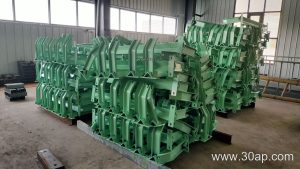
Most idler brackets are made from angle steel, channel steel, or folded steel plate. The fabrication must hold the roller shaft squarely so the roller turns freely without binding. Common bracket types include troughing brackets for the carrying side, transition brackets near pulleys, V-return brackets, impact brackets with resilient mounts, and adjustable brackets that allow the trough angle to be changed.
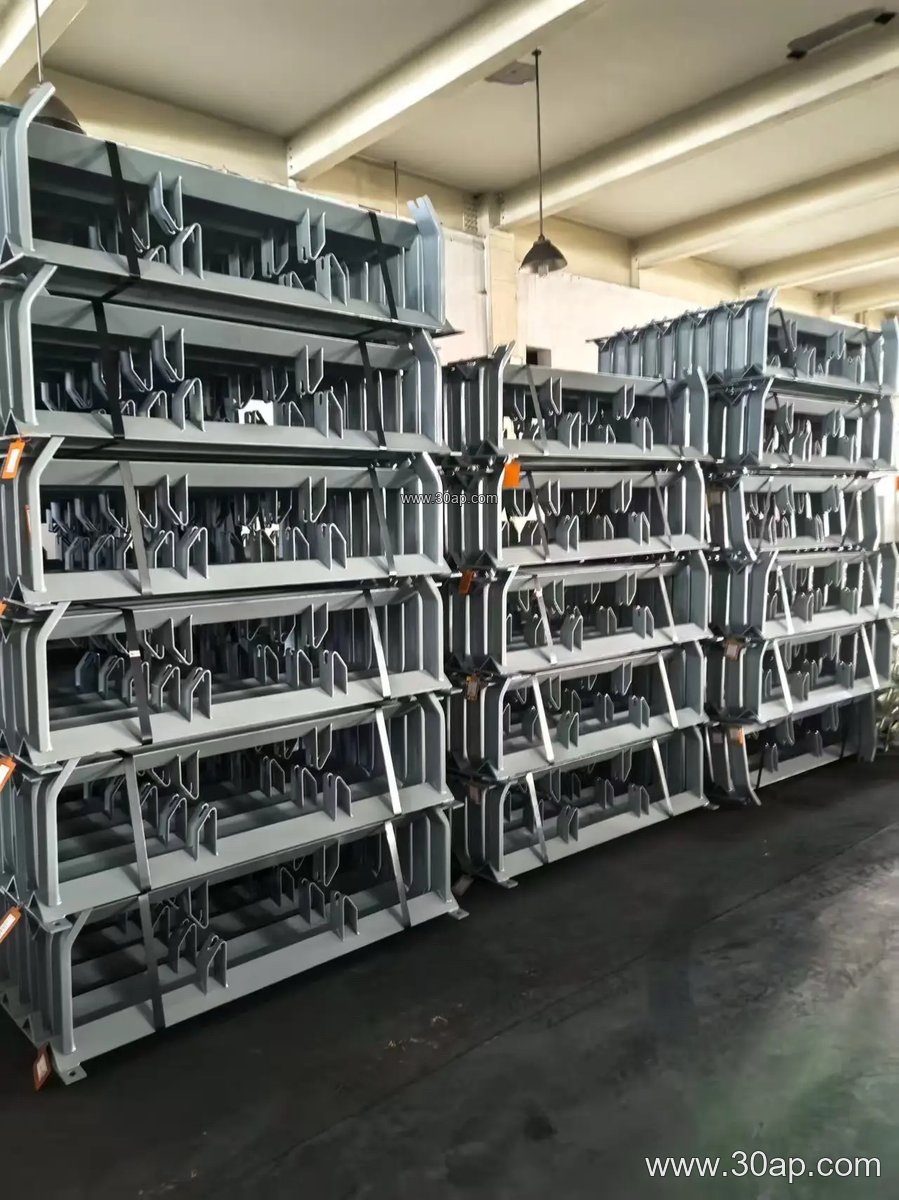
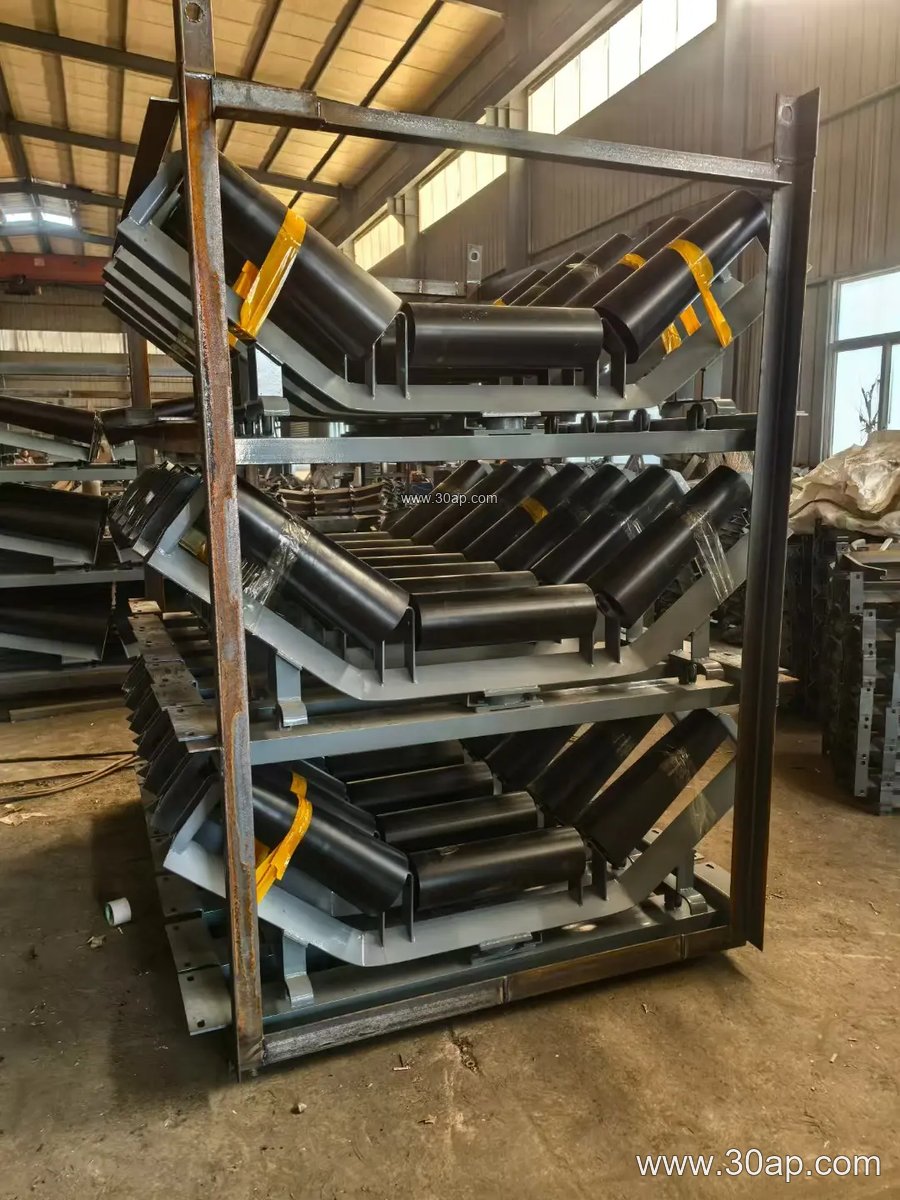
Trough angles are usually 20, 30, 35, or 45 degrees. Adjustable brackets let maintenance staff move between these angles when belt loading or material characteristics change. Forward-tilted brackets, often around 1.5 to 2 degrees, are used to encourage belt tracking. Roller diameters commonly run from Ø89 to Ø194, and the bracket must match the shaft and mounting dimensions of the roller it carries.
Matching Bracket to Belt Width and Roller Size
Belt width and roller diameter are linked through the bracket design, but they are not a fixed one-to-one pairing. A B800 belt might run with Ø108 rollers at 35 degrees in one plant and a different combination in another, depending on load, speed, and frame design. Mounting hole spacing and crossbeam length change with belt width and trough angle, so these dimensions are set by the conveyor designer rather than by a single standard.
Typical reference combinations include B650 with 30 degrees and Ø89, B1000 with 35 degrees and Ø108, and B1200 with 45 degrees and Ø133. Wider belts such as B1400, B1600, or B1800 usually call for heavier brackets and larger rollers. These are common examples, not mandatory matches.
| Belt Width | Common Trough Angle | Typical Roller Diameter |
|---|---|---|
| B500 | 20–30 degrees | Ø89 |
| B650 | 30 degrees | Ø89–Ø108 |
| B800 | 30–35 degrees | Ø108 |
| B1000 | 35 degrees | Ø108–Ø133 |
| B1200 | 35–45 degrees | Ø133 |
| B1400 | 35–45 degrees | Ø133–Ø159 |
| B1600 | 35–45 degrees | Ø159 |
| B1800 | 35–45 degrees | Ø159–Ø194 |
The table is a starting reference only. Final selection depends on belt tension, material weight, and the conveyor frame.
Where Idler Brackets Are Used
In a sand and gravel line, troughing brackets support the belt through the crushing and screening section, while impact brackets absorb shock at the transfer chute. In a cement plant, return brackets and V-return brackets keep the belt clean on the return run. Power plant coal handling and port ship loading conveyors also rely on well-aligned brackets to reduce belt edge wear.
Bracket choice should suit the belt in use. A heavy-duty mining conveyor belt or an abrasion resistant conveyor belt carrying sharp rock may need sturdier brackets and closer roller spacing. A heat resistant conveyor belt in a sinter or clinker area may require brackets that tolerate thermal movement. For long overland runs, a steel cord conveyor belt or an EP conveyor belt with high tension may call for reinforced brackets and careful alignment.
Buyer Checklist
- Confirm belt width, trough angle, and roller shaft diameter before ordering.
- Check mounting hole spacing against the existing conveyor frame.
- Choose fixed or adjustable brackets based on whether the trough angle may change.
- Match bracket material and finish to the environment, such as dusty or wet conditions.
- For replacement, compare the old bracket dimensions rather than assuming a standard size.
An idler bracket is a small part of the conveyor, but it controls roller position and belt support. Getting the bracket geometry right helps the belt, rollers, and pulleys work together and reduces downtime in demanding bulk handling operations.