What a High-Strength Conveyor Idler Does on the Line
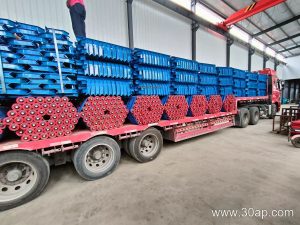
A High-Strength Conveyor Idler is the load-bearing rotating element that supports the belt between the head and tail of a conveyor. In a quarry, a cement plant, or a power plant coal yard, the belt may carry dense rock, clinker, or wet coal, so the idler must resist bending, abrasion, and bearing contamination at the same time. The same product is often called a heavy-duty conveyor idler, and both names describe the same item: a reinforced roller assembly built for high belt tension and heavy material loads.
It is not a drive pulley, tail pulley, or bend pulley. Those are pulleys that transmit power or change belt direction. The idler simply carries the belt and the material on it, and it should be specified as part of the troughing or return idler set rather than confused with the pulleys at either end of the conveyor.
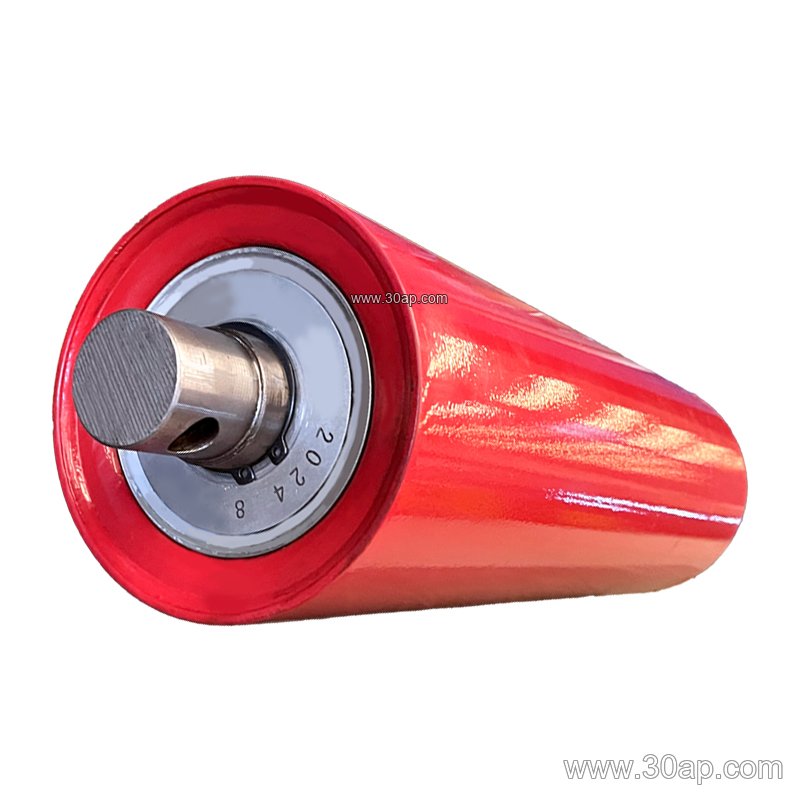
How the Roller Is Built
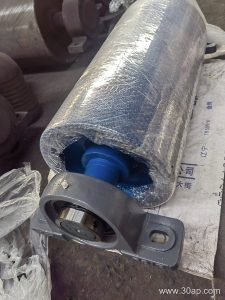
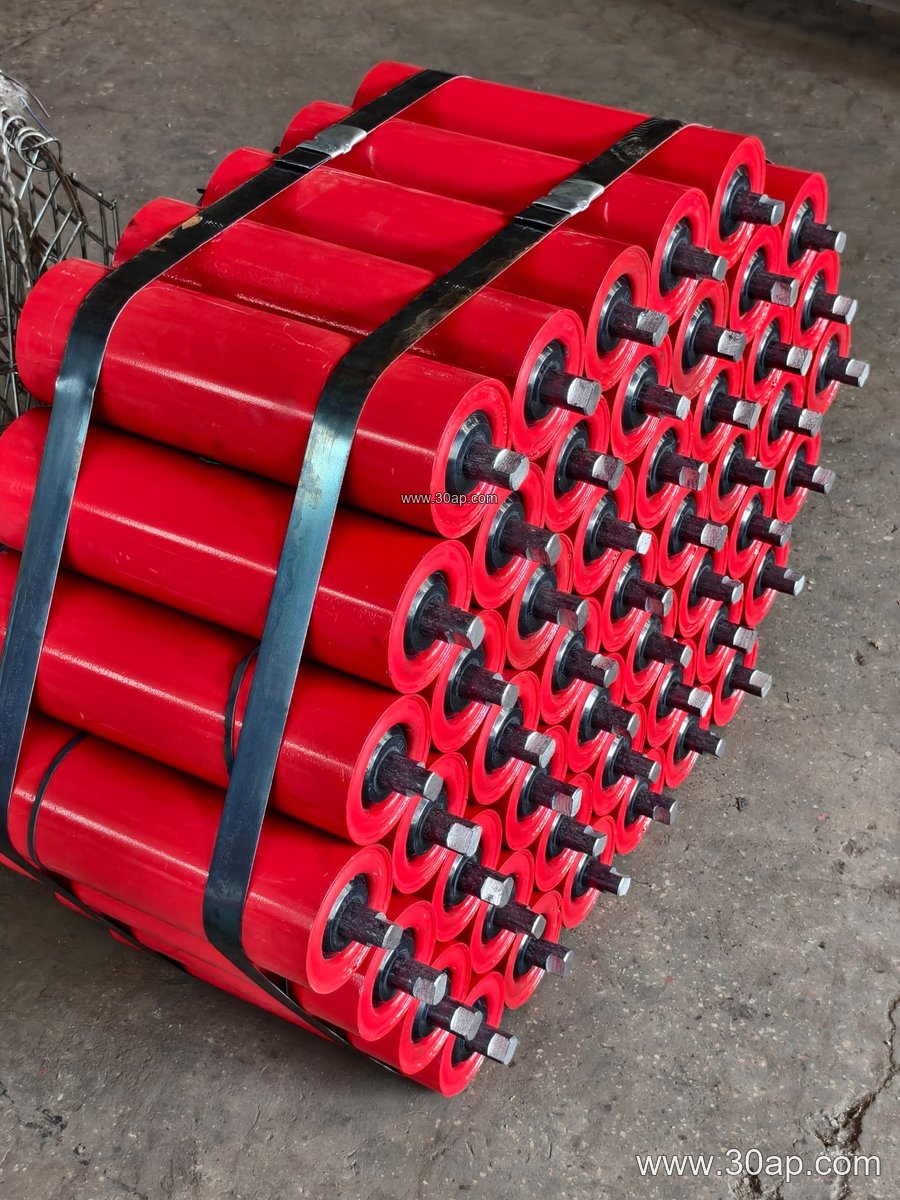
The typical construction combines a thick-walled steel tube shell, welded end caps, a through shaft, and sealed bearings. The shell may be plain steel, nylon-coated, or fitted with rubber rings where impact is heavy. Bearing selection usually follows the load and speed rather than the belt width alone; common sizes include 6204, 6205, 6305, 6306, 6308, and 6310. A well-made heavy-duty conveyor idler uses labyrinth or multi-stage seals to keep dust and water out, because a seized bearing can cut through a belt quickly.
Roller diameter is chosen from the belt width, load, and speed. Common diameters include Ø63, Ø76, Ø89, Ø102, Ø108, Ø127, Ø133, Ø159, Ø178, Ø194, and Ø219 mm. A larger diameter generally lowers rotation speed and running resistance, but frame height and clearance must be checked. Roller length varies with belt width, trough angle, and idler arrangement; for a three-roll troughing set, common roll lengths are roughly 200 mm at B500, 250 mm at B650, 315 mm at B800, 380 mm at B1000, 465 mm at B1200, 530 mm at B1400, 600 mm at B1600, 670 mm at B1800, and 750 mm at B2000. These are reference examples, not fixed pairings, and the side rolls may differ from the center roll.
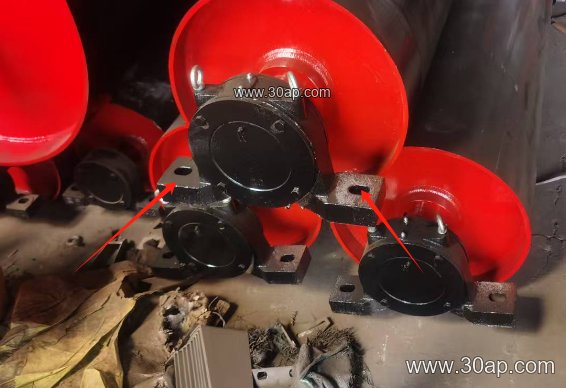
Where It Fits in the Conveyor
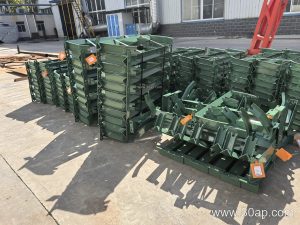
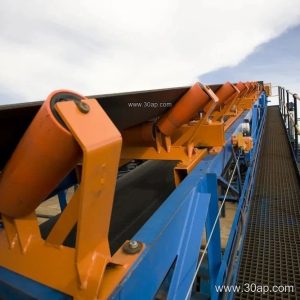
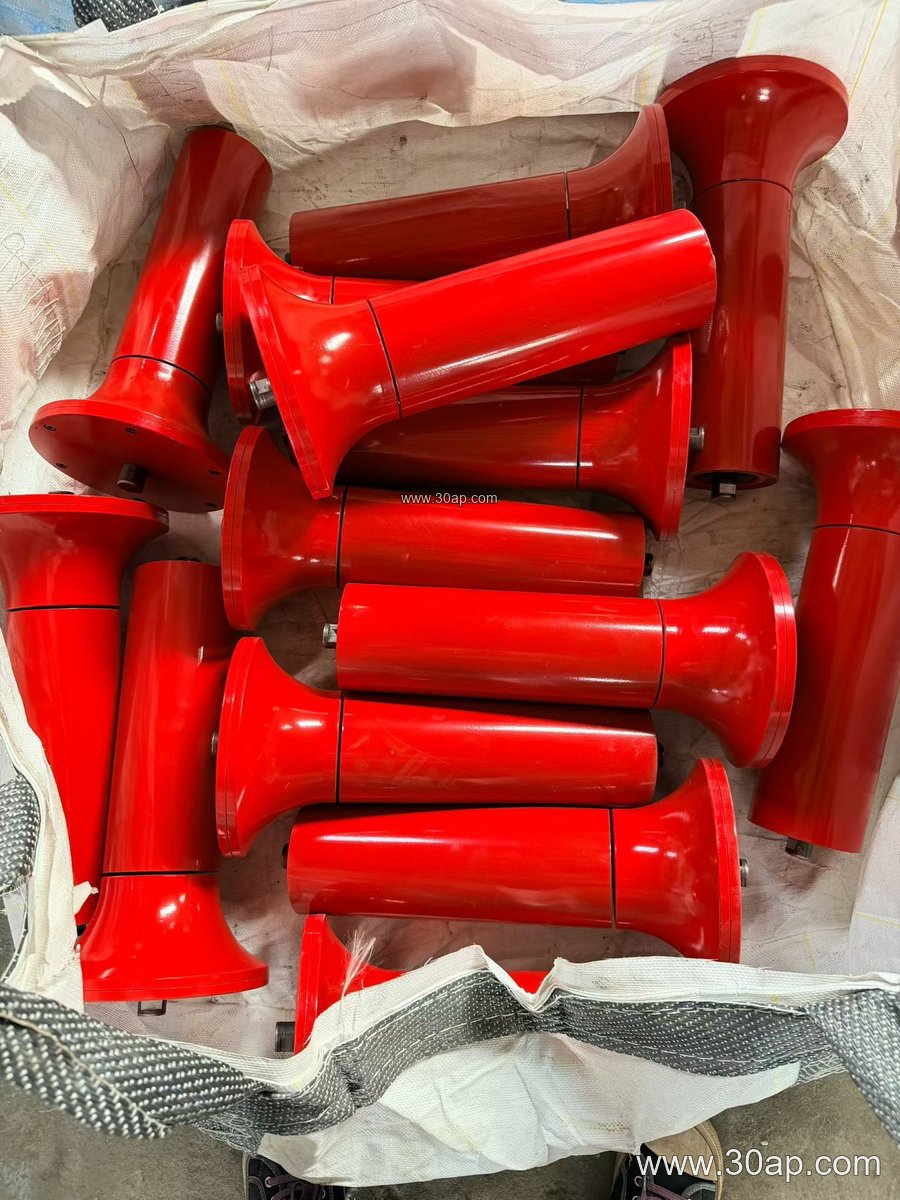
Troughing idlers on the carrying side are usually arranged as single-roll, two-roll, or three-roll sets with trough angles of 20, 30, 35, or 45 degrees. A 35-degree three-roll set is common on aggregate and ore lines because it keeps bulk material centered. Transition idlers ease the belt from the flat pulley to the troughed profile, while return idlers support the empty strand underneath. V-type return idlers help train the belt, and impact idlers with rubber rings are placed under loading points where rock drops onto the belt.
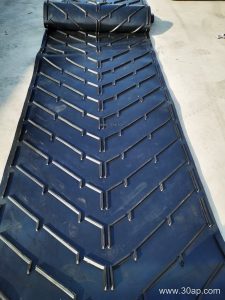
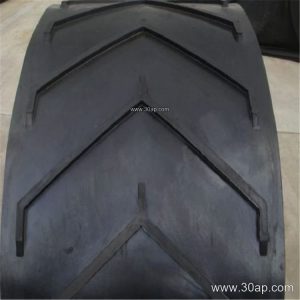
In a limestone mine or a crushing and screening circuit, a High-Strength Conveyor Idler often works with an abrasion resistant conveyor belt or a heavy-duty mining conveyor belt. In a coal preparation plant, flame retardant conveyor belt and anti-static conveyor belt grades may be required alongside the idlers. The idler itself should match the duty: a high-tension Steel Cord Conveyor Belt line needs rollers that run true and hold alignment, while a shorter aggregate conveyor may use a Multi-Ply Fabric Core Conveyor Belt with standard troughing sets.
Buyer Checklist Before Ordering
- Confirm belt width, trough angle, and whether the set is single, two-roll, or three-roll.
- State the actual load, belt speed, and operating environment, since dust, moisture, and temperature affect bearing life.
- Match roller diameter to frame height and check shaft and bearing housing dimensions with the conveyor bracket.
- Ask how the seal is designed and whether the shell is plain steel, nylon, or rubber-ringed.
- Check that replacement idlers will align with existing conveyor bracket spacing so the belt does not drift.
Maintenance is mostly about rotation. Idlers that stop turning create flat spots, belt wear, and extra motor load. Periodic inspection of bearing temperature, seal condition, and roller freedom is more useful than waiting for a failure. Spare rollers should be stored dry and installed with the frame squared so the belt tracks correctly.
For anyone sourcing conveyor components, the practical rule is to treat the High-Strength Conveyor Idler as a system part: belt grade, pulley alignment, bracket condition, and idler quality all affect uptime. A roller that suits a 1200mm wide conveyor belt may be wrong for a 650mm line, and a size that works at one trough angle may not fit another frame. Specify by duty and dimensions, not by habit.