What Idler Procurement Covers
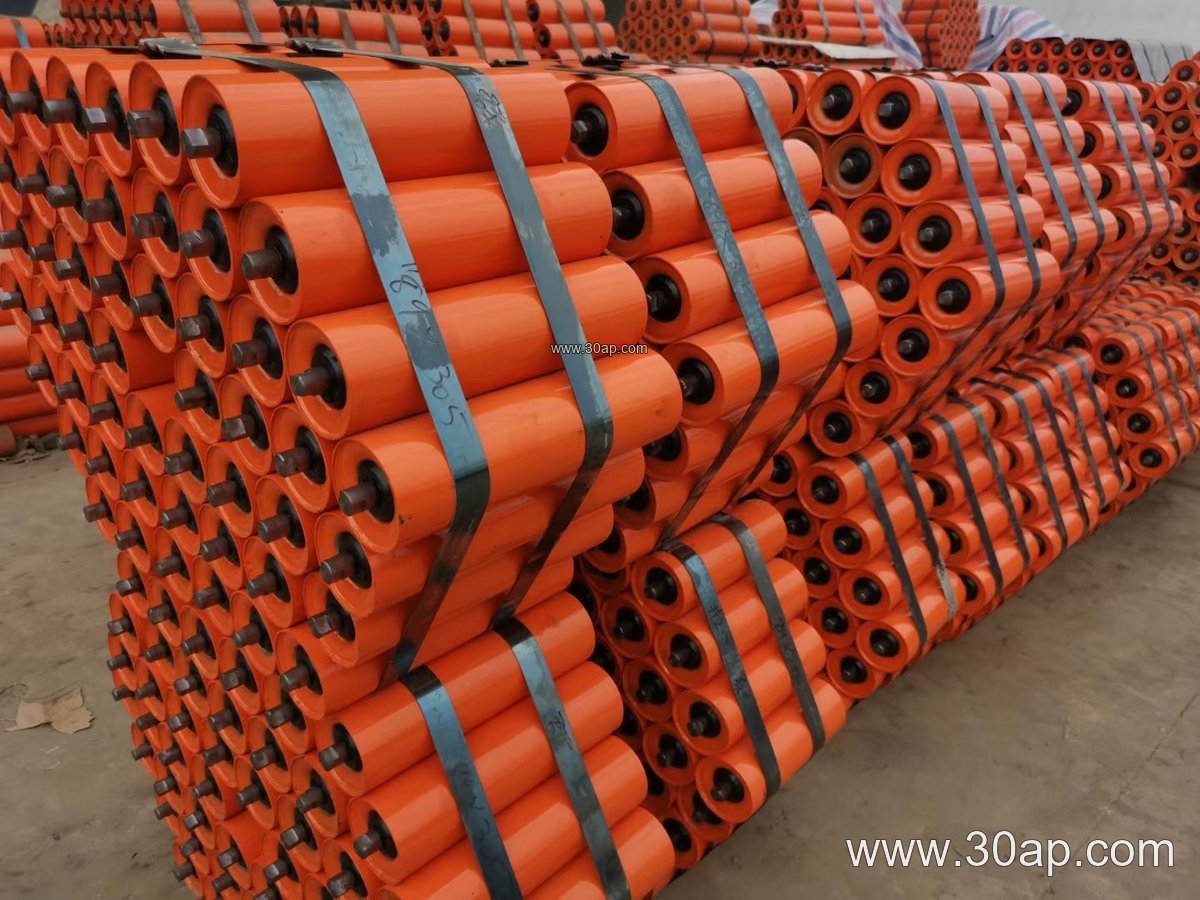
Idler procurement is the process of specifying and purchasing the roller assemblies that support and guide a conveyor belt along its carrying and return runs. The idler roller is a deceptively simple component, but it is one of the highest-count items on any bulk handling line, so getting the specification right has a direct effect on belt life, energy draw and maintenance labour. A typical purchase package includes carrying idlers, return idlers, impact or buffer idlers where material is loaded, and self-aligning idlers on longer runs. Belt cleaners, conveyor pulleys, conveyor brackets and the belt itself are usually sourced alongside, but they are separate line items with their own specifications.
Buyers working in a limestone quarry, a coal preparation plant, a cement kiln line or a power station coal yard all face the same core question: which roller diameter, length, shell material and bearing arrangement suits this conveyor and this duty? The answer comes from the conveyor design, not from a catalogue default.
How an Idler Roller Is Built
Most idlers share a common architecture: a steel tube shell, pressed or machined end caps, a shaft, and bearings seated in a sealed housing. The quality differences that matter at procurement stage are rarely visible from the outside. They sit in the bearing clearance, the seal design, the concentricity of the shell, and the wall thickness of the tube.
- Shell – plain steel tube is the standard; nylon, ceramic or rubber-covered shells are used where build-up, abrasion or noise is a problem.
- Bearing – common sizes include 6204, 6205, 6305, 6306, 6308 and 6310. The bearing is selected from load and speed calculations, so a given roller diameter can carry more than one bearing size.
- Seal – labyrinth or multi-stage lip seals protect the bearing from dust and water; this is often the deciding factor in wet or dusty service.
- Shaft and end caps – fixed to the conveyor bracket or frame, and must match the bracket spacing on the existing structure.
Matching Roller Diameter, Belt Width and Trough Angle
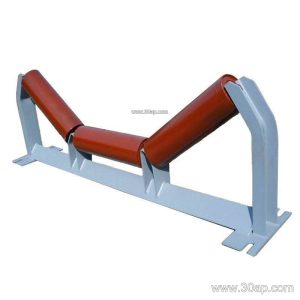
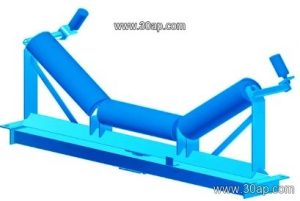
Roller diameter and belt width are linked by the conveyor design rather than by a fixed rule. Common roller diameters run from about Ø63 mm on small units up to Ø219 mm on heavy-duty installations, while belt widths range from B400 through B2400. A three-roll troughing set at 35 degrees on a B1000 belt will typically use a centre roll around 380 mm long, but side rolls and centre rolls can differ, and the final length is set by the trough angle and the frame geometry.
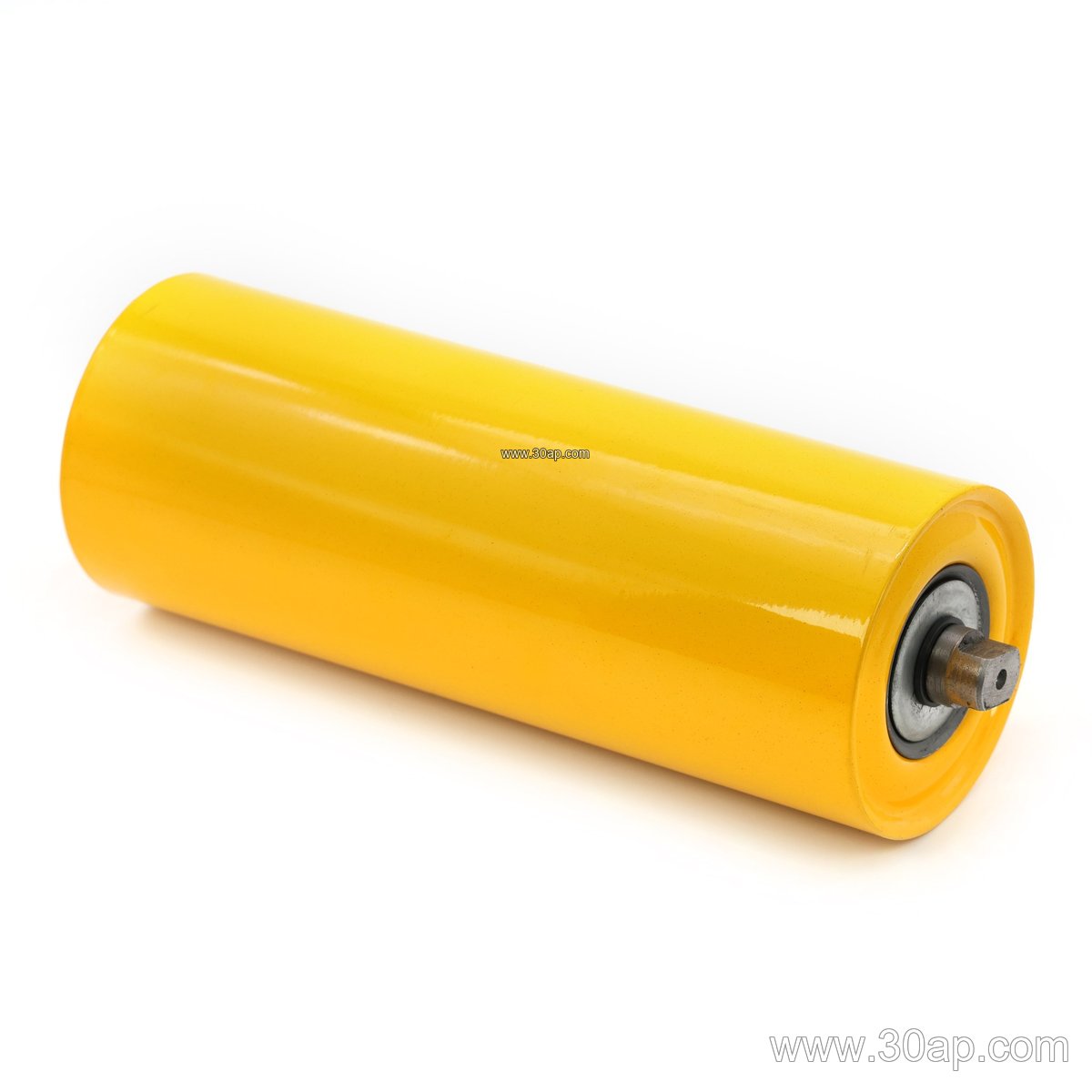
Trough angles of 20, 30, 35 and 45 degrees are all in normal use. A steeper trough contains the load better on a fast, high-tonnage line; a shallower trough suits wider, flatter material. Forward tilt of about 1.5 to 2 degrees is sometimes applied to training idlers to help keep the belt centred.
Reference values for early-stage enquiries
The table below shows typical combinations only. Treat them as a starting point for discussion with the conveyor designer, not as a supply commitment.
| Belt width | Typical three-roll centre roll length | Common roller diameters |
|---|---|---|
| B500 | approx. 200 mm | Ø63, Ø76, Ø89 |
| B650 | approx. 250 mm | Ø76, Ø89, Ø102 |
| B800 | approx. 315 mm | Ø89, Ø102, Ø108 |
| B1000 | approx. 380 mm | Ø102, Ø108, Ø127 |
| B1200 | approx. 465 mm | Ø108, Ø127, Ø133 |
| B1400 | approx. 530 mm | Ø127, Ø133, Ø159 |
| B1600 | approx. 600 mm | Ø133, Ø159, Ø178 |
| B1800 | approx. 670 mm | Ø159, Ø178, Ø194 |
| B2000 | approx. 750 mm | Ø178, Ø194, Ø219 |
Where Idlers Sit in the Plant
In a quarry or aggregate line, carrying idlers run under the crusher discharge and along the stockpile conveyors, while impact or rubber-ring buffer idlers absorb the drop at transfer points. In a coal yard feeding a power station, self-aligning and return idlers keep a long, slightly misaligned belt tracking through the transfer towers. In a cement plant, sealed idlers cope with fine, abrasive dust that would destroy an open bearing within weeks. The belt itself may be an abrasion resistant conveyor belt, a heat resistant conveyor belt or a flame retardant conveyor belt, and that choice affects how much the idlers must tolerate in terms of heat, stickiness or static.
Whatever the site, idler procurement should record the duty, the environment and the existing frame dimensions before any quotation is requested. Useful reference material on matching belts and rollers is available at www.beltconveyorsystem.com for teams planning a replacement or upgrade.
What a Buyer Should Check Before Ordering
A purchase order for idlers is only as good as the data behind it. Confirm the following with the maintenance or engineering team:
- Roller diameter, shell length and shaft end detail, measured from the unit being replaced.
- Troughing configuration – single roll, two-roll or three-roll set – and the trough angle.
- Bearing size and seal type required for the dust and moisture conditions.
- Shell material: plain steel, nylon, ceramic or rubber ring.
- Quantity per conveyor, including spares for the highest-wear positions.
- Bracket and frame interface dimensions so the new idler drops into place.
It also helps to standardise. Reducing the number of roller diameters and bearing sizes held in store simplifies stocking and speeds up breakdown response. Comparing a troughing idler with an impact idler at the same position is a useful exercise, but they are not interchangeable: each performs a different job and should be specified on its own terms. Buyers who take the time to build an accurate idler specification will find that procurement, installation and long-term reliability all become more predictable.