What a Rubber Disc Idler Does at the Loading Point
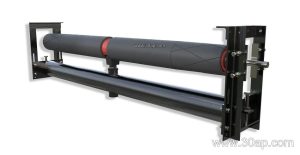
A rubber disc idler is a carrying idler built with a series of flexible rubber discs or rings mounted along a steel shaft, usually assembled as a three-roll troughing set at the transfer point of a conveyor. Its job is not to replace every standard steel-roll idler on the line. It sits where the belt receives falling material, and the resilient disc surface absorbs part of the impact energy that would otherwise hammer the belt cover and the roller shell.
In a quarry, limestone mine, or crushing and screening circuit, the drop height from a chute or crusher discharge can be considerable. A heavy-duty mining conveyor belt carrying coarse rock needs a landing zone that gives slightly under load. The rubber disc idler provides that cushion while still supporting the belt at the required trough angle.
How the Idler Is Built
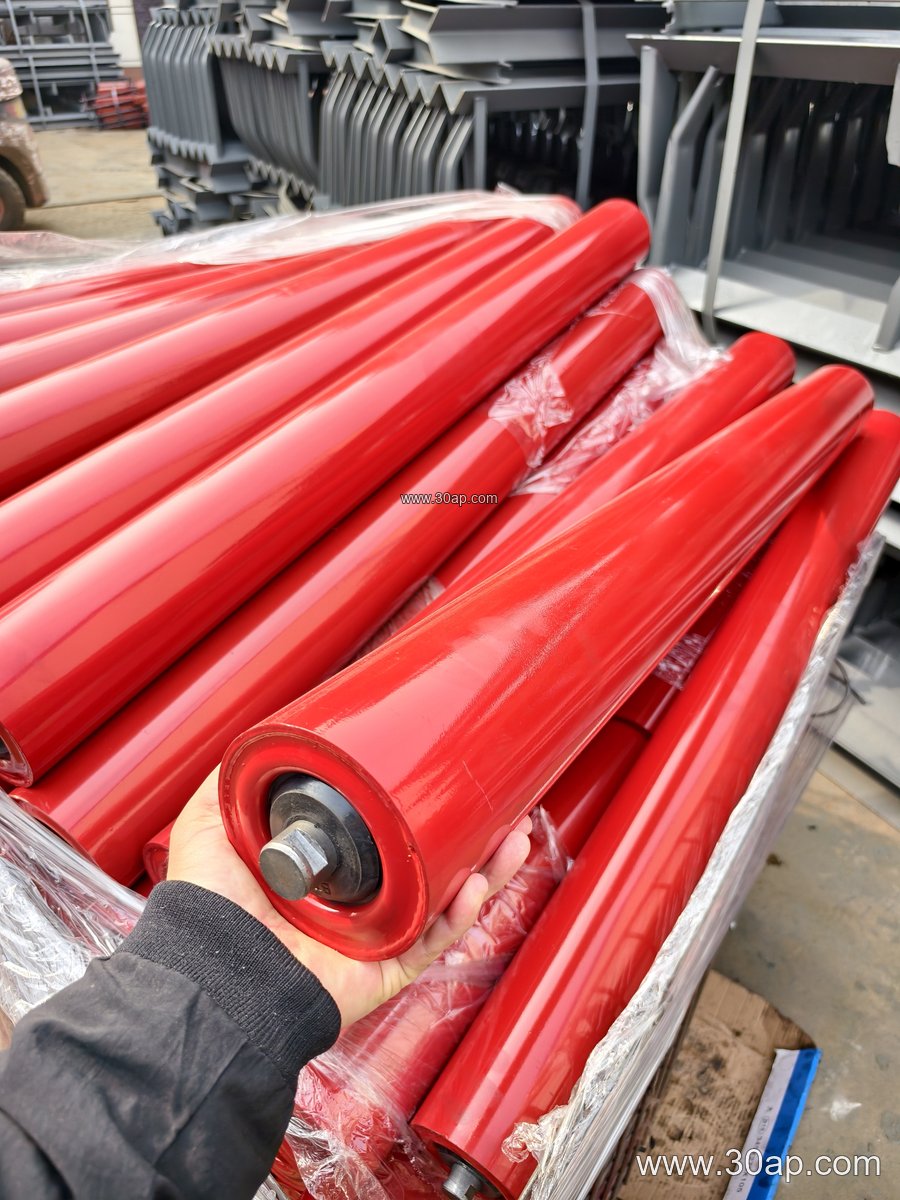
The core is a steel shaft fitted with bearings, commonly 6205, 6305, 6306 or 6308 depending on the roll diameter and load, housed in a sealed bearing housing at each end. Around the shaft sit stacked rubber discs, separated by steel spacers, clamped together by end plates. The discs are normally made from abrasion resistant rubber compounds, because the same surface that absorbs impact also wears against a moving belt.
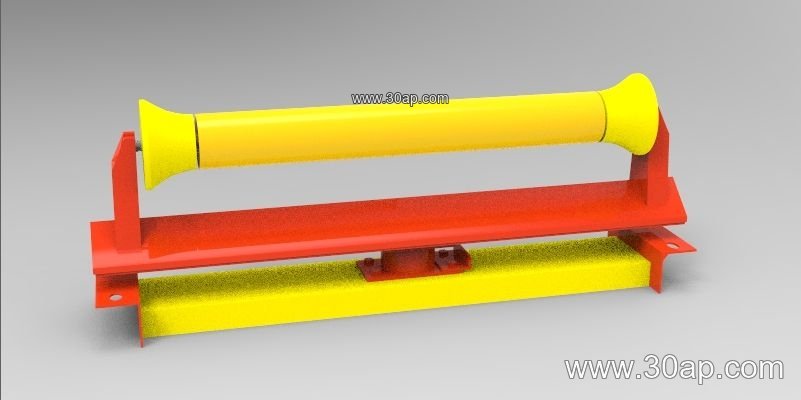
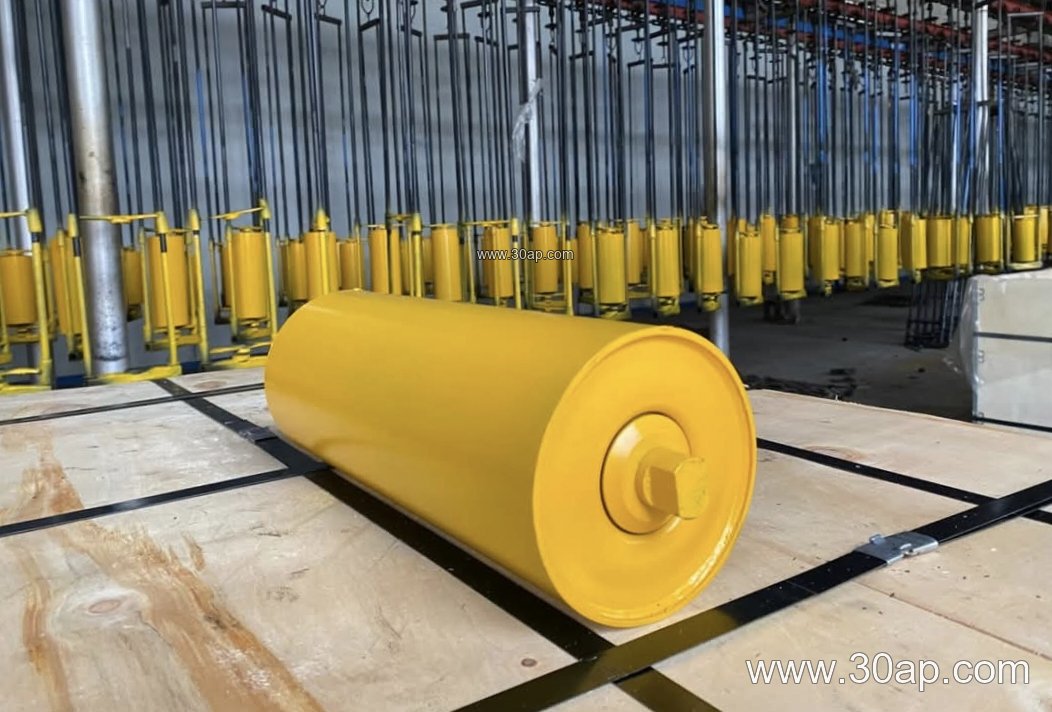
Typical roll diameters for this style are Ø89, Ø108, Ø127, Ø133 and Ø159 mm, with larger sizes used on wide, high-capacity lines. Trough angles are usually 20, 30, 35 or 45 degrees. Roll length follows belt width, trough angle and the idler set configuration; for a three-roll troughing set, a B800 belt commonly uses rolls around 315 mm long and a B1200 belt around 465 mm, but side rolls and centre rolls may differ and final dimensions should be confirmed by design.
Common Reference Dimensions
The table below is a general reference only, not a fixed matching rule between belt width and roll size.
- Belt width B500: three-roll troughing roll length approx. 200 mm
- Belt width B650: approx. 250 mm
- Belt width B800: approx. 315 mm
- Belt width B1000: approx. 380 mm
- Belt width B1200: approx. 465 mm
- Belt width B1400: approx. 530 mm
- Belt width B1600: approx. 600 mm
- Belt width B1800: approx. 670 mm
- Belt width B2000: approx. 750 mm
Bearing selection is made from load and speed calculations, not from belt width alone. A rubber disc idler on a B1000 conveyor might use a 6306 bearing in one design and a different bearing in another.
Where It Fits on the Conveyor
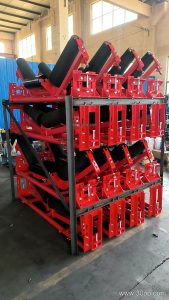
The usual position is directly under the loading chute, often as a group of three to five idlers forming an impact bed. Some plants combine rubber disc idlers with a skirted conveyor belt arrangement so material stays centred as it settles. In a coal handling system at a power plant, the same idler type is often found below the crusher outlet, where lump size changes abruptly.
Rubber disc idlers are also used on the return side in some designs, though a plain flat return idler or V-return idler is more common there. They should not be confused with a bend pulley or tail pulley; those are conveyor pulleys that change belt direction, while the idler only supports the belt. Likewise, a rubber disc idler is a specific impact-absorbing roll, not a general substitute for a troughing idler, a training idler, or a spiral idler.
Selection and Maintenance Notes for Buyers
When specifying, give the belt width, the trough angle, the material lump size, the drop height, and the belt speed. State the belt type as well, since an abrasion resistant conveyor belt, a flame retardant conveyor belt for underground coal mining, or a heat resistant conveyor belt for a cement plant kiln area each place different demands on the support rolls.
Check that the rubber discs are firmly clamped and that the bearing seals suit dusty conditions. In a sand and gravel plant or a copper ore handling line, fine dust is the main enemy of bearings, so sealed housings and periodic inspection matter more than the nominal load rating. Replace worn discs before the belt cover is damaged, and keep spare disc sets for the impact zone.
For matching frame and support details, the conveyor bracket and the idler roller mounting centres should be confirmed with the conveyor designer. A rubber disc idler is a small component, but at the loading point it protects the belt, the structure, and the downstream equipment.