What a Heavy-Duty Conveyor Bracket Does on a Working Conveyor
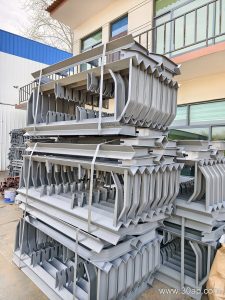
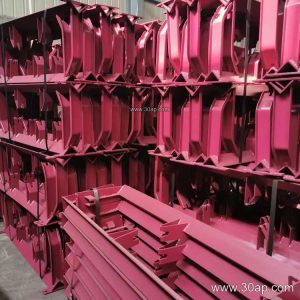
A heavy-duty conveyor bracket is the structural support that holds idler rollers in the correct position along a conveyor frame. It carries the weight of the belt, the material load, and the dynamic forces of start-up and impact, then transfers those forces into the stringers or frame. In a quarry, a coal handling plant, or a cement kiln feed line, this bracket is often the difference between a steady line and constant roller misalignment. The same component is also called a heavy-duty conveyor frame bracket or heavy-duty idler support bracket, and those names describe the same product.
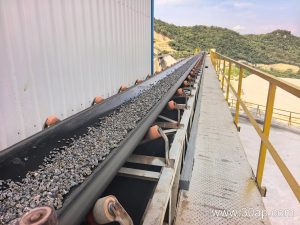
Because the bracket sets the trough shape and roller spacing, it directly affects belt tracking and belt life. A well-built support keeps a heavy-duty conveyor belt running centered, reduces edge wear, and protects the conveyor pulley from unnecessary sideload.
Construction and Mounting Positions
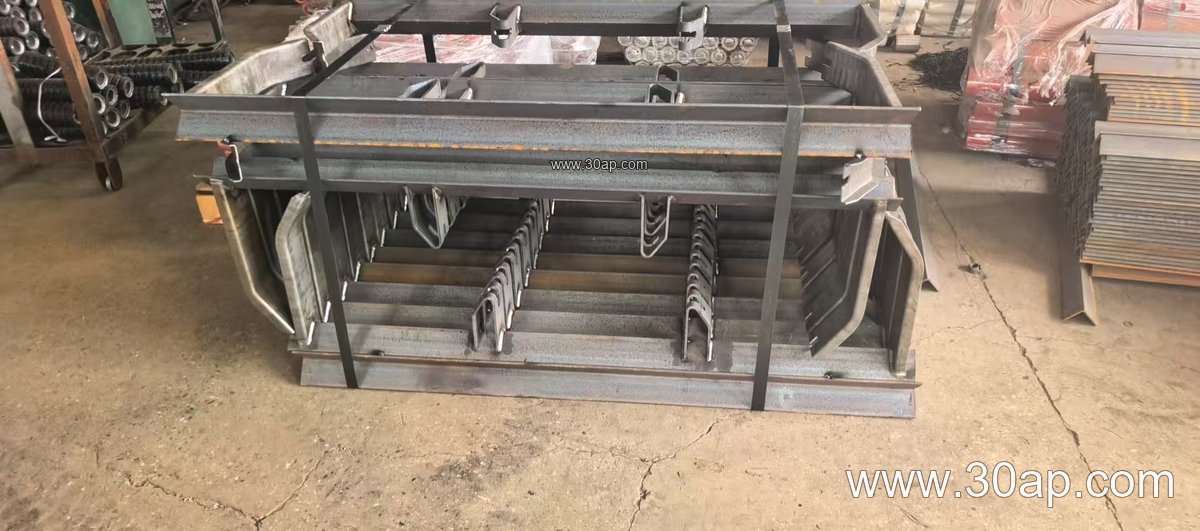
Most units are fabricated from angle steel, channel steel, or folded steel plate, then drilled or slotted for mounting. Welds should be continuous at load points, and surfaces that contact the idler roller should be flat so the roller sits without rocking. Common forms include trough brackets, transition brackets, return brackets, V-return brackets, impact brackets, self-aligning brackets, and adjustable brackets.
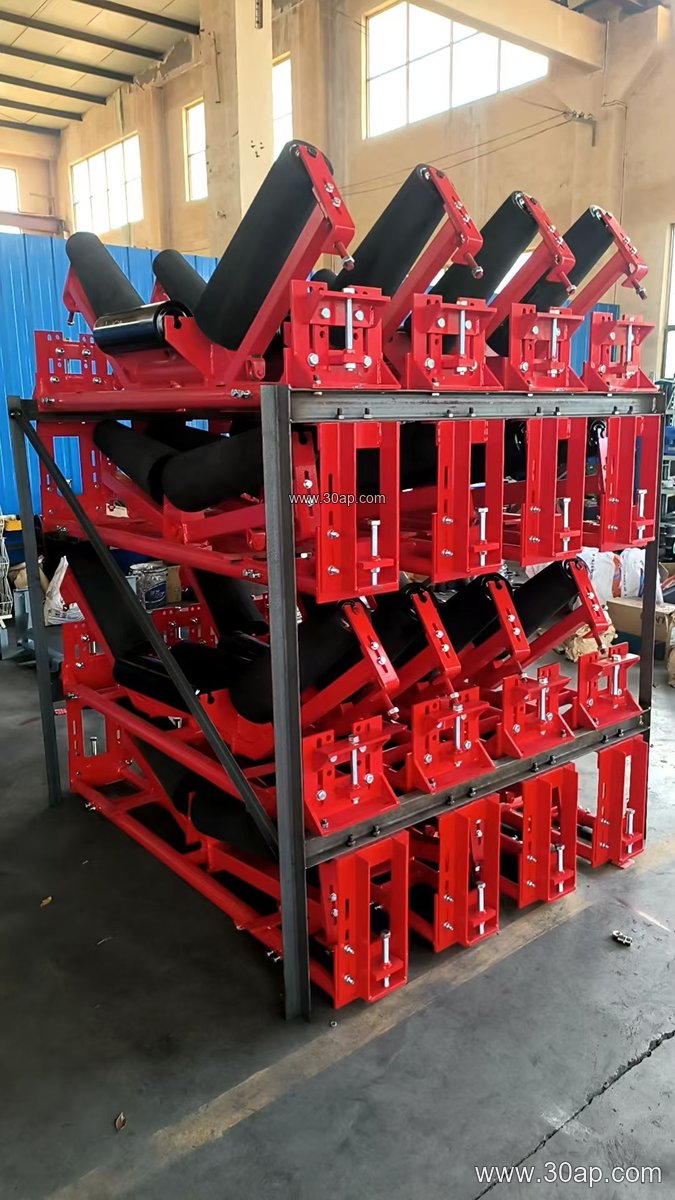
Position matters as much as build quality. Trough brackets sit on the carrying side and set the trough angle. Return brackets support the belt on its way back. Transition brackets guide the belt from the flat pulley area into the trough, which is where a poorly shaped support can cause belt edge stress. Adjustable brackets allow the trough angle to be changed on site, which is useful during commissioning or when material characteristics change.
Matching Bracket, Belt, and Roller
The bracket is part of a system. A 1000mm wide conveyor belt with a 35 degree trough usually pairs with rollers around Ø108 or Ø133, while a wider 1400mm or 1600mm line may use Ø159 rollers and heavier channel sections. These are common combinations, not fixed rules; the final match depends on load, speed, and frame design.
| Reference Item | Typical Range | Notes |
|---|---|---|
| Belt width (B) | B500, B650, B800, B1000, B1200, B1400, B1600, B1800, B2000, B2200 | Bracket span and hole spacing change with width |
| Trough angle | 20, 30, 35, 45 degrees | Adjustable brackets can move between these angles |
| Roller diameter | Ø89, Ø108, Ø133, Ø159, Ø194 | Chosen by load and belt speed, not width alone |
| Forward tilt | About 1.5 to 2 degrees | Used on leading idler sets for tracking |
For abrasive duties such as an iron ore or copper ore line, an abrasion resistant conveyor belt paired with a rigid bracket reduces vibration. In coal mining and underground coal mining, a flame retardant conveyor belt is common, and the bracket should be sized for the belt’s weight plus any skirted conveyor belt or corrugated sidewall conveyor belt accessories. Where a pipe conveyor belt or an endless conveyor belt is used, the bracket layout follows the specific frame design rather than a standard trough pattern.
Where These Supports Are Used
Two demanding settings show the range well. In a crushed stone quarry, impact brackets under the crusher discharge absorb falling rock, while self-aligning brackets keep the belt centered on the head section. In a power plant coal yard, trough brackets on long inclined runs must resist vibration and coal dust buildup, and return brackets protect the belt on the lower strand. Similar logic applies in a sinter plant or a fertilizer granulation line, where dust and moisture attack ordinary painted steel.
Surface protection therefore matters. Hot-dip galvanizing or a heavy paint system extends service life outdoors, and drainage gaps prevent material from packing around the roller seats.
Buyer Checklist
- Confirm belt width, trough angle, and roller diameter as a set, not one item at a time.
- Ask for the mounting hole pattern and beam length, since these follow the frame design.
- Check steel thickness and weld quality at the roller seats.
- Decide between fixed and adjustable brackets before ordering.
- Match the finish to the environment, especially in washdown or coastal sites.
- Keep spare brackets for impact and transition positions, which wear fastest.
For related components, buyers often review the conveyor belt, idler roller, and conveyor pulley together with the bracket drawing. A bracket that fits the frame but not the roller will always cost more in downtime than it saves at purchase.