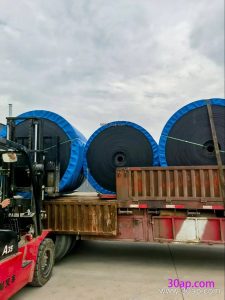
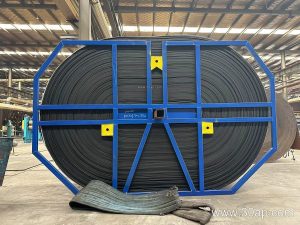
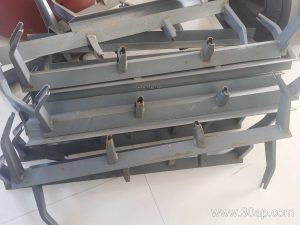
What a Conveyor Frame Does
A conveyor frame is the steel backbone that holds every rotating and load-bearing component of a belt conveyor in alignment. It carries the idler roller sets, supports the conveyor pulley at drive and tail stations, and keeps the conveyor belt tracking correctly from loading point to discharge. Without a rigid, square frame, even a premium EP Conveyor Belt or Steel Cord Conveyor Belt will misalign, edge-damage, and fail early. In a quarry or a cement plant, the frame is often the first structure to be surveyed and the last to be replaced, which is why its design deserves the same attention as the belt itself.
How the Frame Is Built
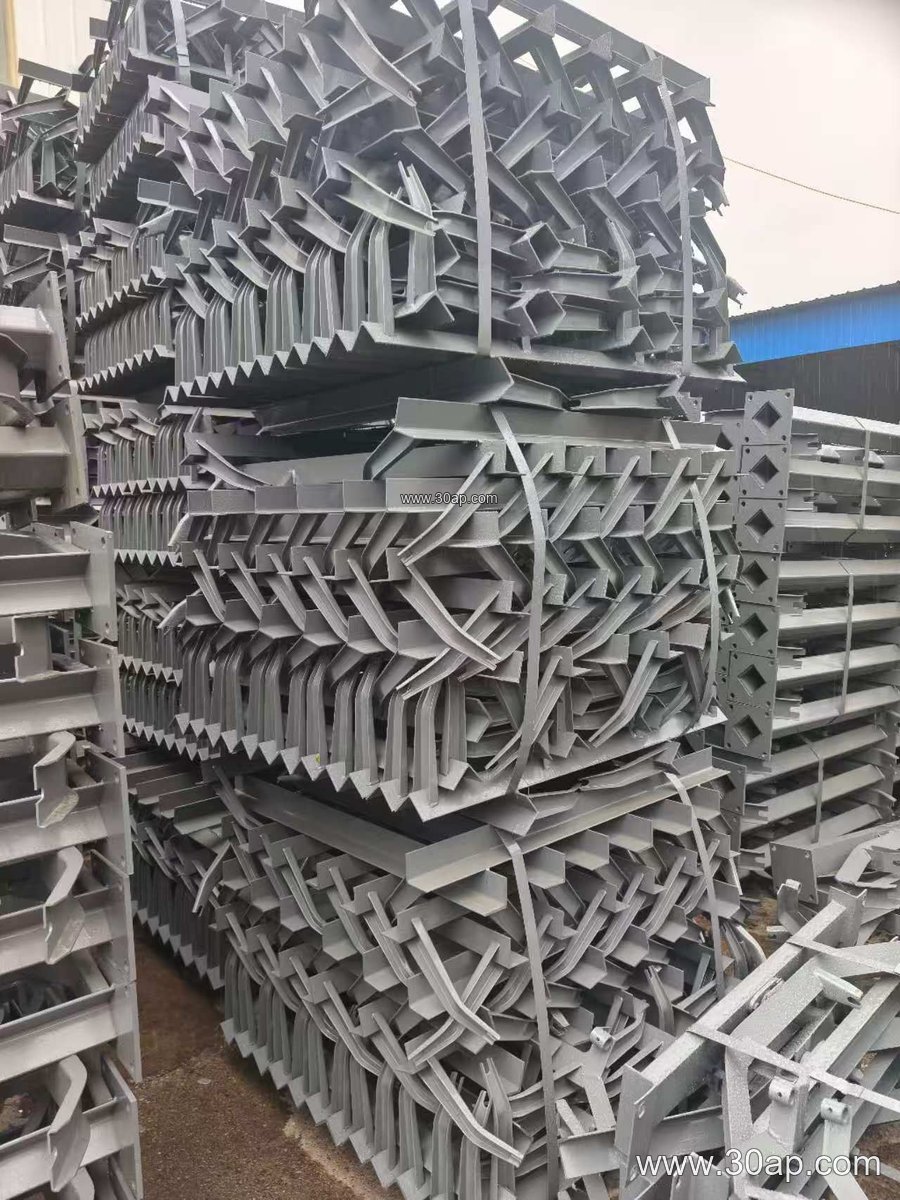
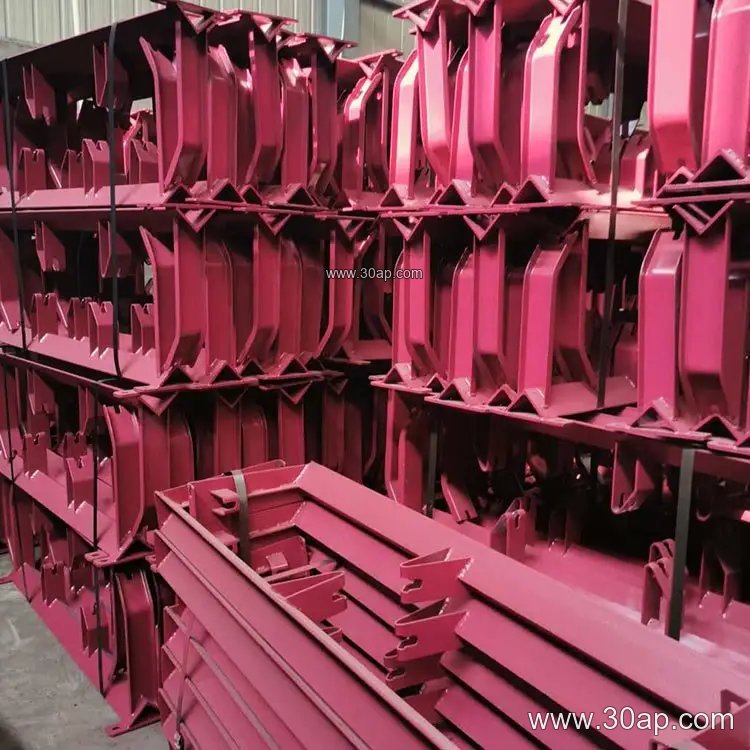
Most frames are fabricated from angle steel, channel steel, or folded steel plate. The main longitudinal beams are drilled or punched to accept conveyor bracket assemblies at fixed intervals. Cross members tie the two sides together, and diagonal bracing is added on wider or heavier-duty sections. The frame is usually modular, with 3 m to 6 m sections bolted end to end, so it can be transported to a port terminal or an underground coal mining site and assembled on site. Surface treatment ranges from shop primer to hot-dip galvanizing, depending on the environment.
Main Structural Parts
- Longitudinal stringers that carry the troughing and return idler stations
- Cross beams and bracing that resist torsion and belt pull
- Conveyor bracket sets welded or bolted to the stringers
- Support legs or trestles that transfer load to the ground or steel structure
- Mounting pads for the drive pulley, tail pulley, and take-up unit
Frame Types and Where They Are Used
The most common arrangement is the troughing frame, which supports three-roll idler sets at a trough angle of 20, 30, 35, or 45 degrees. A transition frame is placed near the head and tail pulleys to gradually change belt shape and reduce edge stress. Return frames carry the belt on the return strand, often with V-return or flat return idlers. Impact frames with缓冲 (buffer) idler brackets are installed under the loading chute in a crusher discharge or a run-of-mine transfer point. Self-aligning frames, sometimes with a slight forward tilt of about 1.5 to 2 degrees, help correct belt wander on long overland routes.
Matching Frame to Belt and Idler
Frame width must suit the belt width and the idler roll diameter. Typical belt widths in bulk handling include B500, B650, B800, B1000, B1200, B1400, B1600, B1800, B2000, B2200. Roll diameters commonly run from Ø89 to Ø194. The table below gives indicative combinations; actual hole spacing and beam length are determined by design, not by a fixed rule.
| Belt Width | Typical Trough Angle | Common Idler Diameter | Frame Application |
|---|---|---|---|
| B650 | 30° | Ø89 | Aggregate conveyor, sand line |
| B800 | 35° | Ø108 | Cement plant clinker transport |
| B1000 | 35°–45° | Ø133 | Coal mining, power plant coal yard |
| B1200 | 45° | Ø133–Ø159 | Iron ore, heavy-duty mining |
| B1400–B1600 | 35°–45° | Ø159–Ø194 | Port ship loading, large stockyard |
A fixed frame is welded to one trough angle. An adjustable frame allows the same bracket to be set at 20, 30, 35, or 45 degrees, which is useful during commissioning or when a plant changes its material. Neither type is a substitute for correct idler selection, and the frame should never be used to compensate for a wrongly sized conveyor pulley.
Installation and Maintenance Notes
Alignment starts with the structure. Stringers should be straight and level across the width; a twisted frame will cause the belt to run off even with perfect idlers. Bolt torque should be checked after the first week of operation, especially on mobile or vibratory installations such as a crusher conveyor. Inspect for corrosion at the leg base and at welded bracket joints, particularly in fertilizer plants and other corrosive atmospheres. Keep the frame clear of spilled material, because buildup under the return strand can lift the belt and damage the idler roller. When replacing a section, match the original hole pattern or use slotted brackets to avoid re-drilling.
Buyer Checklist
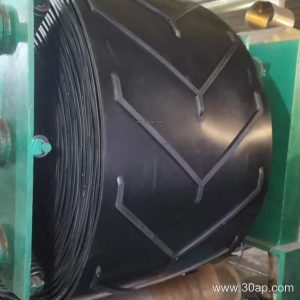
Before ordering, confirm the belt width, the trough angle, the idler diameter, the pulley positions, and the environmental conditions. Ask for the frame drawing with hole spacing and cross-member positions. Specify whether the frame is fixed or adjustable, and whether it will carry a Chevron Conveyor Belt or a Corrugated Sidewall Conveyor Belt, since these may need different clearance. For underground coal mining, confirm that the frame design suits the mine’s ventilation and clearance requirements. A well-specified conveyor frame is a long-term investment that protects the belt, the idlers, and the pulleys alike.