What a Conveyor Support Leg Does
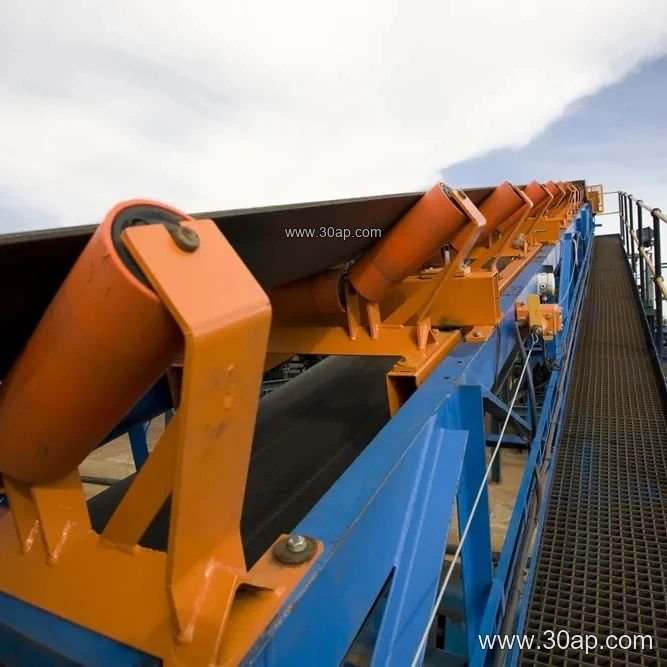
A conveyor support leg is the vertical member that carries the weight of a belt conveyor structure down to the floor, foundation, or steel platform. In a typical frame, the leg works together with the stringer or longitudinal beam, the cross beam that holds the idler roller stations, and the conveyor bracket that ties these parts together. The leg does not move the belt; it holds everything else steady so the conveyor pulley, gearbox, and belt tracking can do their jobs. In a quarry, a cement plant, or a power plant coal yard, a poorly braced leg shows up quickly as vibration, misalignment, and uneven belt wear.
Engineers often call the same component a conveyor support stand, conveyor frame leg, or belt conveyor leg. These names describe the same structural part, and the choice of name usually depends on the workshop or drawing convention rather than on a difference in function.
How the Leg Is Built
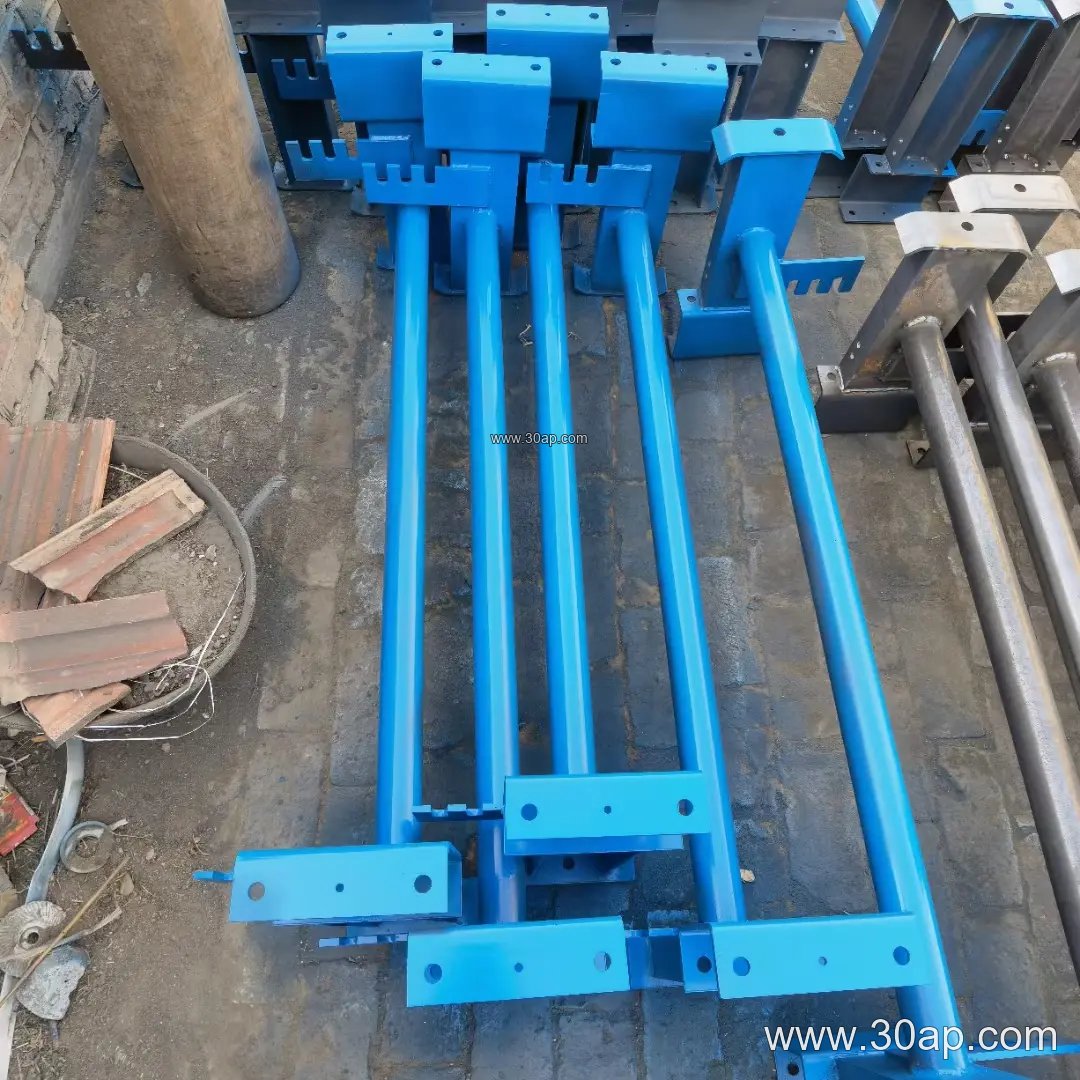
Most legs are fabricated from angle steel, channel steel, or folded steel plate. A light-duty leg may be a single angle section with a foot plate; a heavy-duty leg is often a channel or box section with gussets at the top connection. The top of the leg usually carries a mounting plate or slotted holes so the cross beam can be bolted at the correct height. The bottom ends in a base plate with anchor holes, sometimes with a jacking screw for fine height adjustment.
Key build details a buyer should check include:
- Section size and steel thickness, matched to the loaded belt width and material density.
- Bolted or welded connection to the cross beam, and whether slotted holes allow later alignment.
- Base plate dimensions and anchor hole pattern.
- Surface treatment such as hot-dip galvanizing or primer plus topcoat for wet or dusty sites.
- Bracing arrangement, including diagonal or longitudinal ties between leg pairs.
Where Support Legs Are Used
Support legs appear wherever a conveyor needs a raised, stable frame. In a limestone quarry or sand and gravel line, legs carry the inclined sections that feed a crusher. In a coal washing plant or a power plant coal handling system, they support long horizontal runs above the ground or above a walkway. In a cement plant, they hold the clinker and raw meal conveyors that run between silos and transfer towers.
The leg must suit the belt and load above it. A 650mm or 800mm wide belt carrying aggregate needs a lighter frame than a 1400mm or 1600mm belt moving iron ore, and a steel cord conveyor belt on a long overland run transfers more dynamic load into each leg. Where the belt carries hot sinter or cement clinker, heat resistant conveyor belt grades protect the belt, while the leg design must still allow for thermal expansion of the frame.
Matching the Leg to the Idler Station
The leg height and cross beam position are usually set by the trough angle and the idler roller diameter. Common combinations include B800 with a 35 degree trough and Ø108 idlers, or B1200 with a 45 degree trough and Ø133 idlers. A wider belt such as B1800 or B2000 typically uses larger rollers and a heavier leg section. These are reference examples, not fixed rules, because the final choice depends on load, span, and site conditions.
Transition and impact zones need extra attention. A buffer idler bracket at a transfer point adds load, and the legs on either side should be sized for it. On a decline or incline, the leg height changes along the run, so adjustable conveyor support legs with slotted or telescopic sections simplify installation.
Buyer Checklist
Before ordering, confirm the belt width, trough angle, idler diameter, conveyor length, and the spacing between leg frames. Ask for a drawing that shows the cross beam height, base plate, and anchor holes. State the environment, since a wet port terminal, a dusty coal yard, and a food grade plant each call for different finishes. Also confirm how the legs connect to the rest of the frame, and whether the supplier provides bracing and anchor bolts.
For related components, match the leg to the idler roller series, the conveyor pulley at the drive and tail, and the conveyor bracket style already used on the line. A consistent frame system keeps spare parts simple and shortens maintenance downtime.