What a Ceramic Lagged Pulley Does on a Conveyor
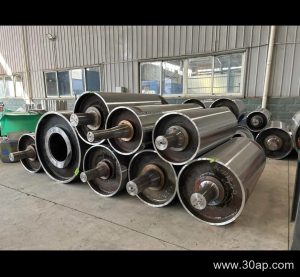
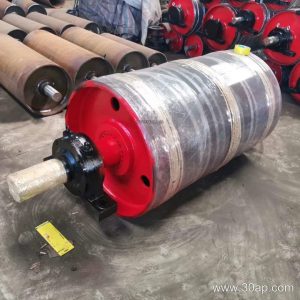
A wear-resistant ceramic lagged pulley is a conveyor pulley whose shell is covered with ceramic tiles set in a rubber or polymer backing. The ceramic studs grip the belt, while the backing absorbs shock and keeps the tiles in place. In practice, this is a ceramic rubber lagged pulley built for one job: keeping drive grip on belts that carry sharp, hard, fast-moving material. In a quarry crushing circuit or a sand and aggregate line, fine grit works its way between belt and shell, and plain rubber lagging can polish and slip within months. Ceramic lagging resists that polishing action and keeps the friction coefficient steadier over a longer service window.
It is worth being precise about terms. A ceramic lagged pulley is a surface option applied to a pulley, not a pulley position. Drive pulleys, tail pulleys and bend pulleys all do different work, and ceramic lagging belongs mainly where slip and abrasion are real concerns. A bend pulley guiding a return strand may run perfectly well with plain rubber or a bare machined face. The positions are not interchangeable, and neither are their lagging choices.
How the Ceramic Surface Is Built
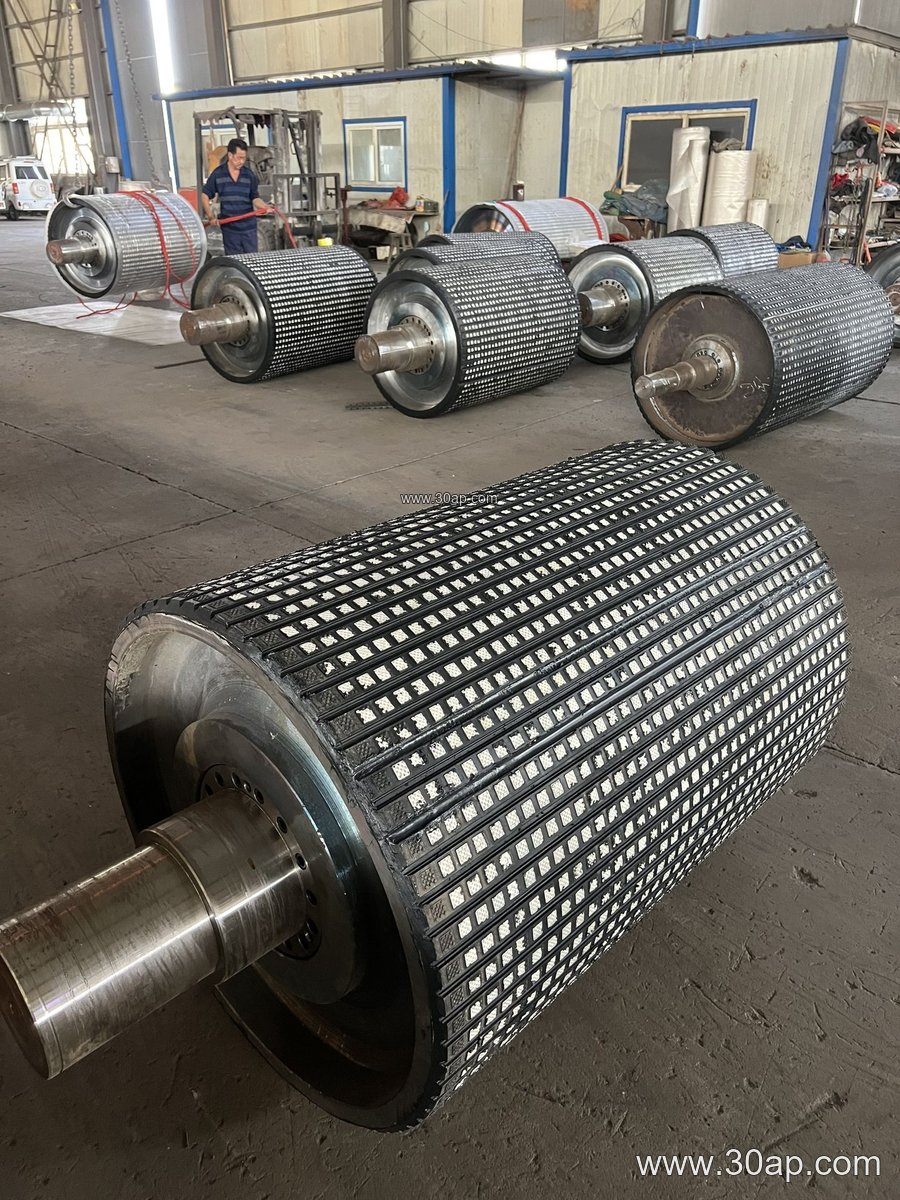
The shell is usually a welded steel drum, machined true and then covered. Ceramic tiles, often small squares or rectangles with raised domes, are bonded into an uncured rubber sheet. The sheet is then applied to the shell and vulcanized so the rubber cures into a tough matrix that holds each tile. Tile height typically stands a few millimetres proud of the rubber, which lets the belt seat on the rubber valleys while the ceramic tips bite. This combination gives both friction and drainage, so water, slurry and fines are pushed aside instead of being trapped under a smooth cover.
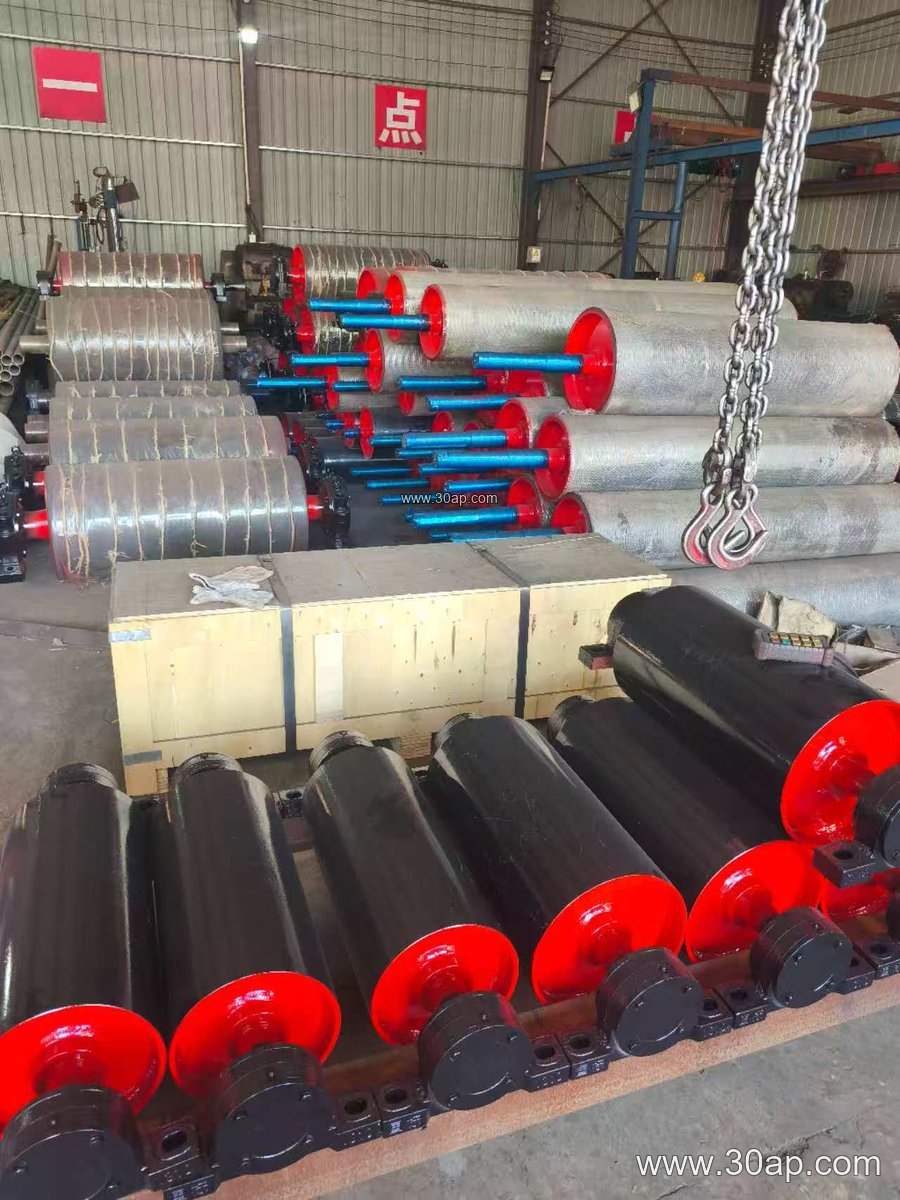
Common lagging thicknesses are 8, 10, 12, 15 and 20 mm, with the thicker builds reserved for high-torque drives and heavy shock loads. A ceramic cover adds mass to the pulley, so the shaft, bearings and bearing housings must be sized for that extra rotating weight, not just for the belt pull.
Where It Fits in the Plant
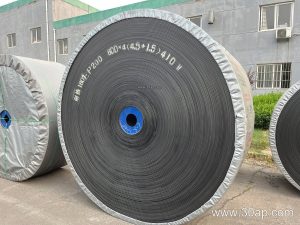
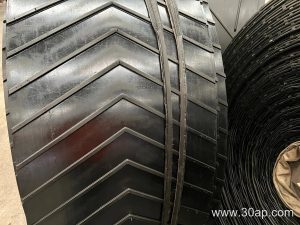
Ceramic lagging earns its place in limestone mines, iron ore plants and cement works where clinker dust and crushed rock are constant companions. It also appears in power plant coal handling and in copper ore conveying, especially on the head drive of a long incline. Paired with an abrasion resistant conveyor belt or a heavy-duty mining conveyor belt, the ceramic face helps the drive transmit torque without over-tensioning the belt, which can extend belt life.
It is less suitable for small pulleys with tight wrap angles, where the tile edges can fatigue, and for very light duty lines where the cost is hard to justify. In those places a standard rubber lagged pulley or a plain steel face may be the better engineering answer.
Sizes, Shafts and Matching the Belt
Pulley dimensions follow the conveyor design, not a fixed table. Face width is normally a little wider than the belt so the belt does not run off the edge. Typical face widths sit around 100 to 150 mm above belt width, for example a B800 belt with a roughly 950 mm face, or a B1200 belt with about 1400 mm face. Diameter is selected from belt tension, wrap angle and shaft strength. Common combinations include B800 × Ø500, B1200 × Ø1000 and B1400 × Ø800, but a given belt width can support several diameters.
Shaft diameter is set by torque and load, not by belt width alone. Typical shaft sizes run from Ø50 up to Ø200, and the final choice should come from the pulley maker’s calculation. When specifying, confirm the conveyor pulley position, the belt width, the required lagging thickness and the shaft size together.
| Parameter | Typical range |
|---|---|
| Belt width | B400 to B2400 |
| Pulley diameter | Ø200 to Ø1800 |
| Lagging thickness | 8, 10, 12, 15, 20 mm |
| Shaft diameter | Ø50 to Ø200 |
| Surface | Ceramic lagging, plain or grooved options available |
Buyer Checklist Before Ordering
- State the pulley position clearly: drive, tail, bend, tension or snub. Each has different demands.
- Give belt width, belt type and belt tension so the maker can size the shell and shaft.
- Confirm lagging thickness and tile pattern for the material being carried.
- Check that the conveyor bracket and bearing housings suit the larger pulley mass.
- Ask how tiles are bonded and whether the lagging is vulcanized or cold-bonded.
- Plan inspection: worn or missing tiles should be replaced before the rubber backing is exposed.
For an abrasive duty line, the ceramic lagged pulley is often the difference between a drive that holds and one that keeps chasing belt slip. Match it to the belt, the load and the pulley position, and it will do its job quietly for a long time. Learn more about conveyor pulley options at www.example.com/conveyor-pulley and match them with the right conveyor belt for your site.