What a Tail Drive Pulley Does
A tail drive pulley is the powered drum mounted at the tail end of a belt conveyor. Unlike a conventional head drive, it pulls the belt from the return side, which can suit layouts where the head is crowded or where a discharge point leaves little room for a drive station. In a quarry or a crushing and screening line, this arrangement is often chosen when the take-up and drive need to sit together at the rear of the machine.
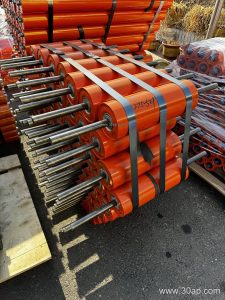
The same component is also described as a tail-end drive drum or rear drive pulley. It should not be confused with a bend pulley or a snub pulley, which only change belt direction, nor with an idler roller, which supports the belt without transmitting torque. Those parts play different roles, and mixing the terms leads to ordering mistakes.
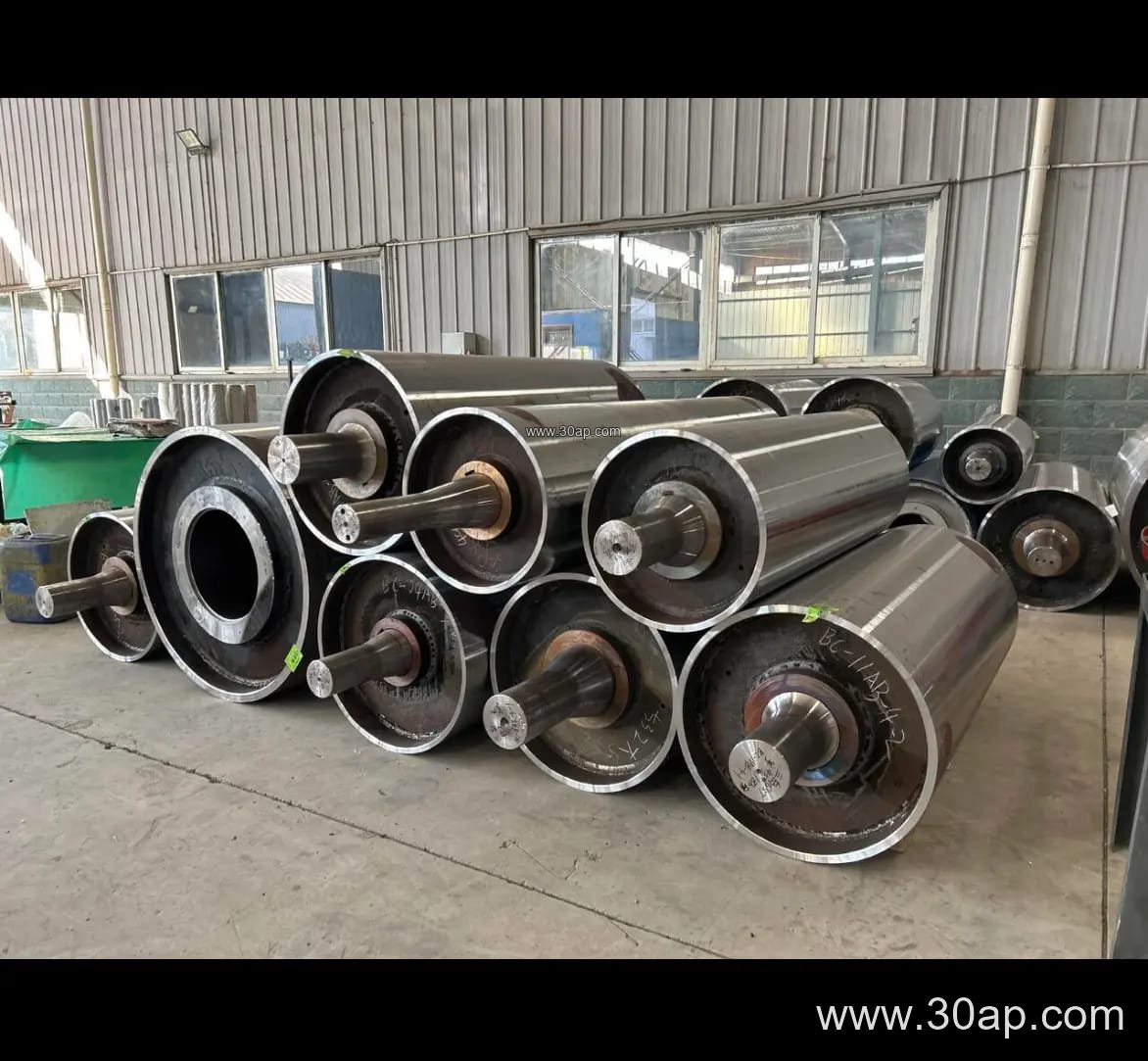
Construction and Surface Options
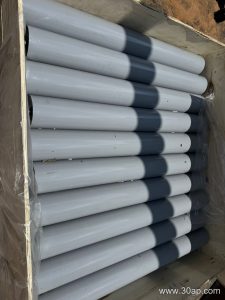
The drum body is usually a welded steel shell with machined end discs and a shaft sized by torque and radial load. Common diameters range from Ø315 to Ø1250, while face widths typically run wider than the belt, for example about 1400 mm for a B1200 conveyor. Shaft diameter is determined by drive torque, bearing life and load, not by belt width alone.
Lagging is the detail that most affects grip. Plain finish suits light duty and clean conditions. Rubber lagging in 8, 10, 12, 15 or 20 mm is common, and diamond or herringbone patterns help shed water and fines. Ceramic lagging is chosen where slip is a real risk. A tail drive pulley used on an underground coal mining conveyor may also need flame retardant lagging to match the belt.
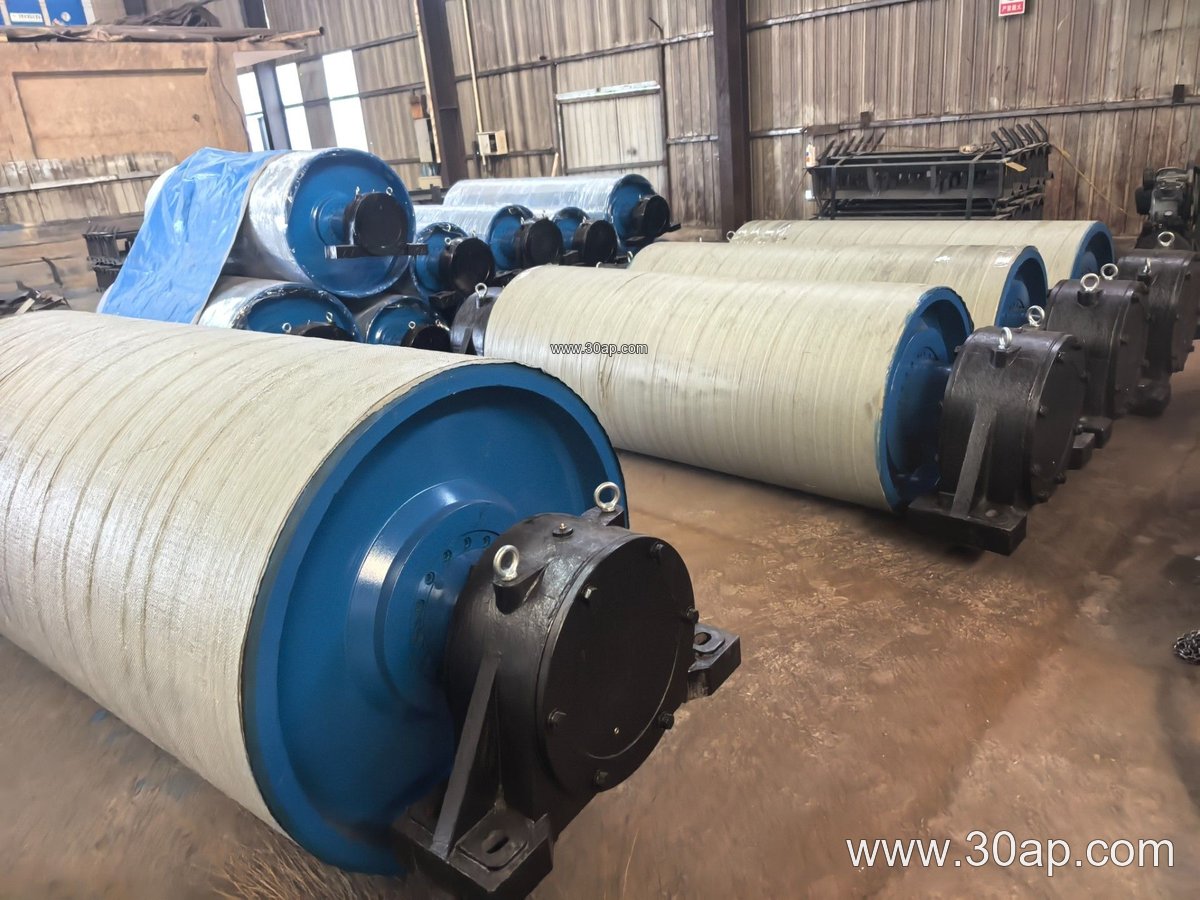
Where It Fits in the Plant
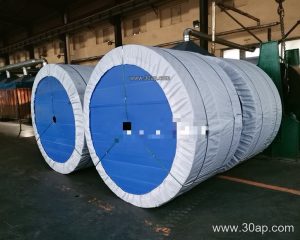
Tail drives appear in cement plants handling clinker, in power plant coal handling, and in tunnel spoil removal where space at the head is tight. In a sand and gravel pit, a rear-mounted drive can simplify the transition between a crusher discharge and the main belt. The pulley works alongside the conveyor belt, conveyor idler rollers and conveyor brackets, so alignment across the whole frame matters as much as the drum itself.
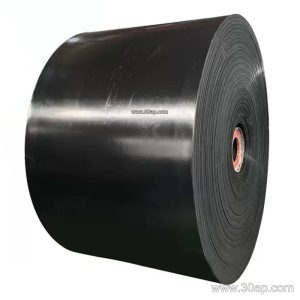
Belt choice and drum choice interact. An abrasion resistant conveyor belt carrying sharp rock needs good traction without excessive lagging wear, while a heat resistant conveyor belt on clinker duty calls for a lagging compound that tolerates warm surfaces. On long overland runs, a steel cord conveyor belt may be paired with a large-diameter drum to keep bending stress low.
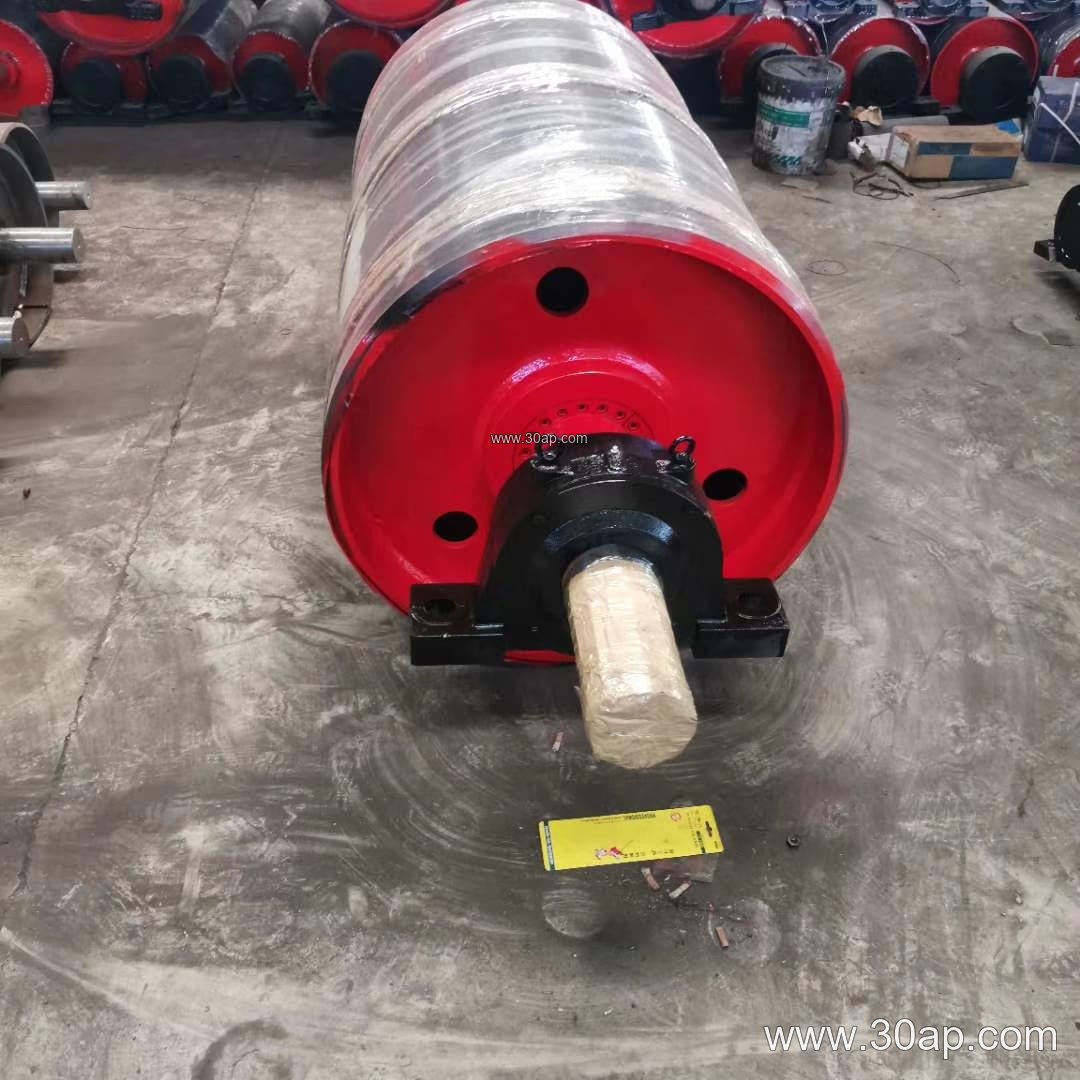
Typical Reference Dimensions
The values below are common reference points, not fixed matches. Final sizing follows conveyor design.
- Belt width B650 with drum face around 750 mm, diameter often Ø400 to Ø500
- Belt width B800 with face around 950 mm, diameter often Ø500 to Ø630
- Belt width B1000 with face around 1150 mm, diameter often Ø630 to Ø800
- Belt width B1200 with face around 1400 mm, diameter often Ø800 to Ø1000
- Belt width B1400 with face around 1600 mm, diameter often Ø1000 to Ø1250
Combinations such as B800 × Ø500 or B1200 × Ø1000 are frequently seen, but a given belt width can accept several drum diameters depending on tension and space.
Buyer Checklist
- Confirm whether the drive is truly at the tail, since a head pulley and a tail drive pulley are not interchangeable.
- State belt type and duty, for example EP conveyor belt, NN conveyor belt or multi-ply fabric core, so lagging and diameter can be matched.
- Provide belt speed, motor power and wrap angle so shaft and bearing loads can be calculated.
- Specify lagging pattern and thickness rather than leaving it to default.
- Check that the pulley face width, frame and conveyor bracket dimensions align with the existing structure.
For harsh duty such as iron ore or copper ore handling, buyers often request a heavy-duty mining conveyor belt and a robustly lagged drum. In food or grain silos, a food grade conveyor belt and a clean, non-marking finish may matter more than abrasion resistance. Matching the tail drive pulley to the belt and the environment is the surest way to avoid slip, premature lagging wear and unnecessary downtime.