What the Main Drive Pulley Does
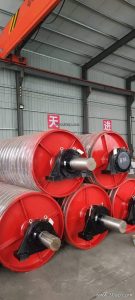
The main drive pulley is the powered pulley at the head of a belt conveyor. It grips the inside of the belt and, driven through a gearbox or an integrated motor, pulls the loaded strand forward. Everything upstream — the belt, the idlers, the load — is moved by the torque this one drum transmits. In a quarry, a coal preparation plant or a cement clinker line, the drive pulley is the component that decides how much of the installed motor power actually reaches the belt.
Because it sits at the discharge end, the same drum often works as the head pulley and the unloading pulley. The material leaves the belt as it passes over the drum, so the shell diameter, the lagging and the belt wrap angle all influence both traction and discharge trajectory.
Construction and Surface Options
A typical unit is built from a welded steel shell, two end discs, a shaft and bearing housings. The shell is machined and then covered with lagging to raise friction and protect the drum face. Common surface forms include plain finish, hot-vulcanised rubber, cold-bonded rubber, diamond groove, herringbone groove and ceramic lagging, usually applied at 8, 10, 12, 15 or 20 mm thickness. Grooved and ceramic surfaces are chosen where the belt runs wet or carries fine, abrasive material.
The shaft diameter is not a simple function of belt width. It is sized from the torque, the belt tension and the bearing span, with common values running from Ø50 up to Ø200 and beyond on large units. The pulley face width is normally a little wider than the belt, for example about 500 mm for B400, about 950 mm for B800 and about 1400 mm for B1200.
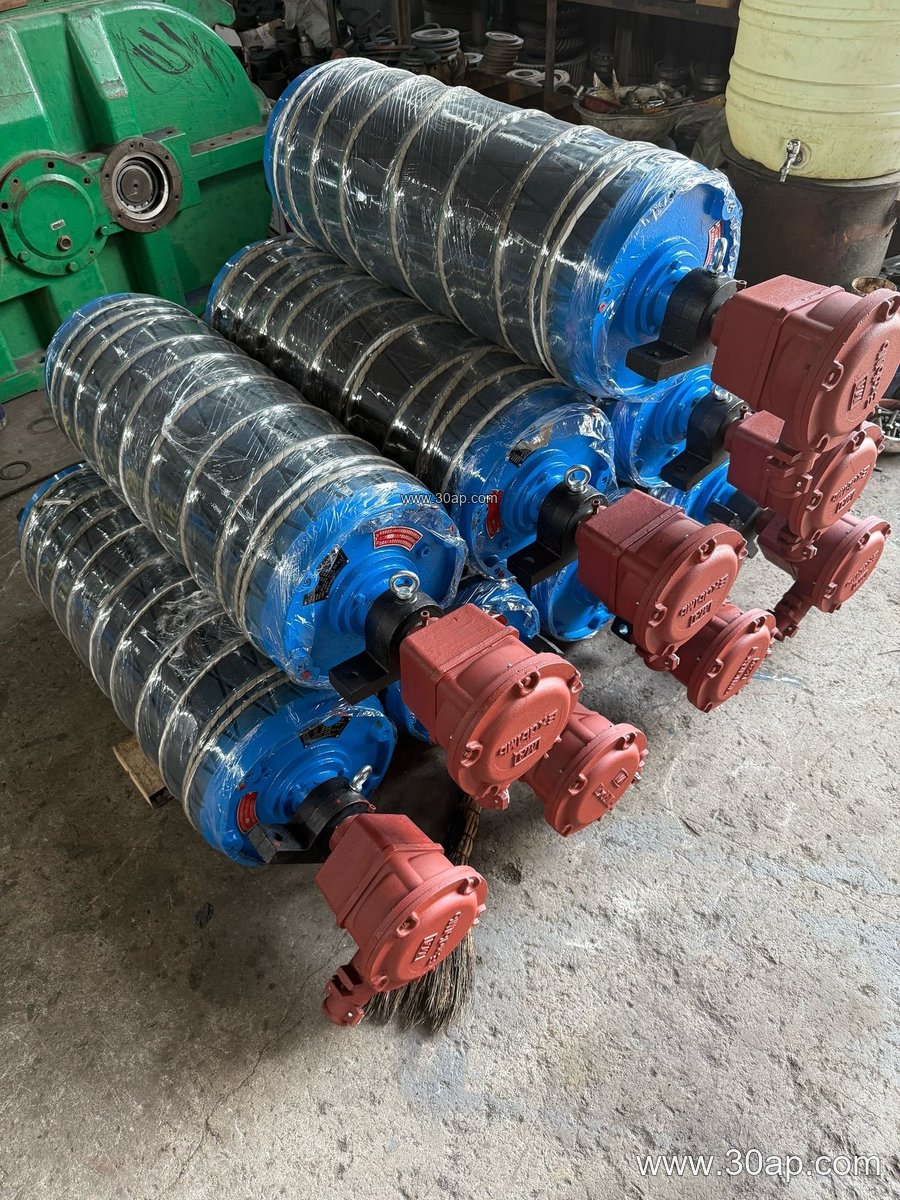
Reference dimensions for orientation
| Belt width | Typical pulley face | Possible diameter range |
|---|---|---|
| B500 | ~600 mm | Ø250 – Ø500 |
| B800 | ~950 mm | Ø400 – Ø800 |
| B1000 | ~1150 mm | Ø500 – Ø1000 |
| B1200 | ~1400 mm | Ø630 – Ø1250 |
| B1400 | ~1600 mm | Ø800 – Ø1400 |
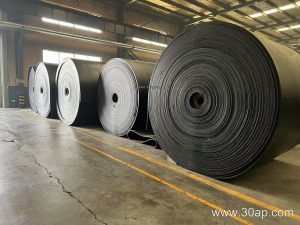
These are orientation values, not fixed pairings. A B1200 × Ø1000 drive pulley and a B800 × Ø500 unit can both be correct for different duty levels. The diameter must also be checked against the belt construction, since a steel cord conveyor belt generally needs a larger minimum pulley diameter than a fabric core conveyor belt of the same width.
Where It Fits in the Conveyor
The drive drum is only one member of the pulley family. A tail pulley turns the return strand, a bend pulley redirects the belt around a curve, and a take-up pulley maintains tension. These are separate roles and are not interchangeable with the drive pulley. In a long overland line at a port or power plant, the drive may be at the head with a snub pulley increasing wrap angle; in an underground mining conveyor, an electric drum can be built into the head station to save space.
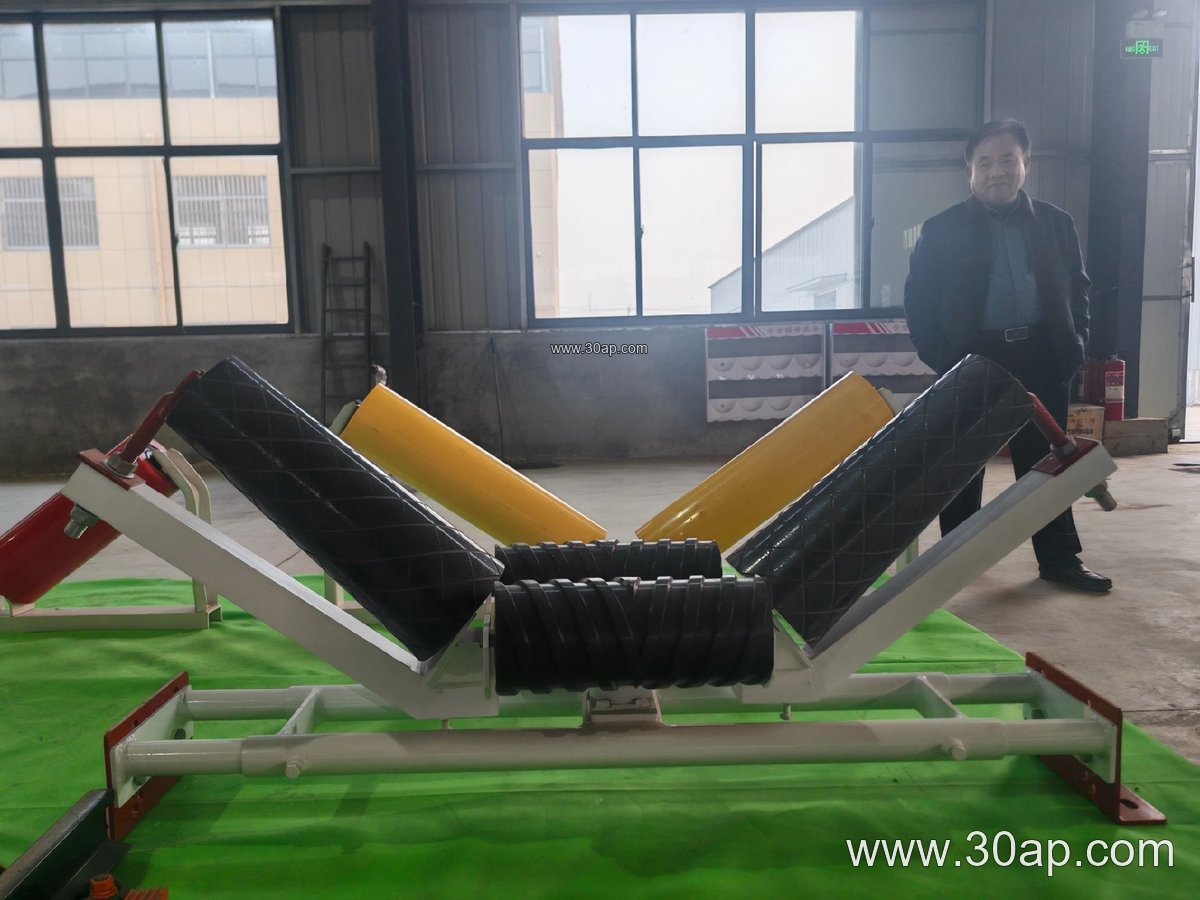
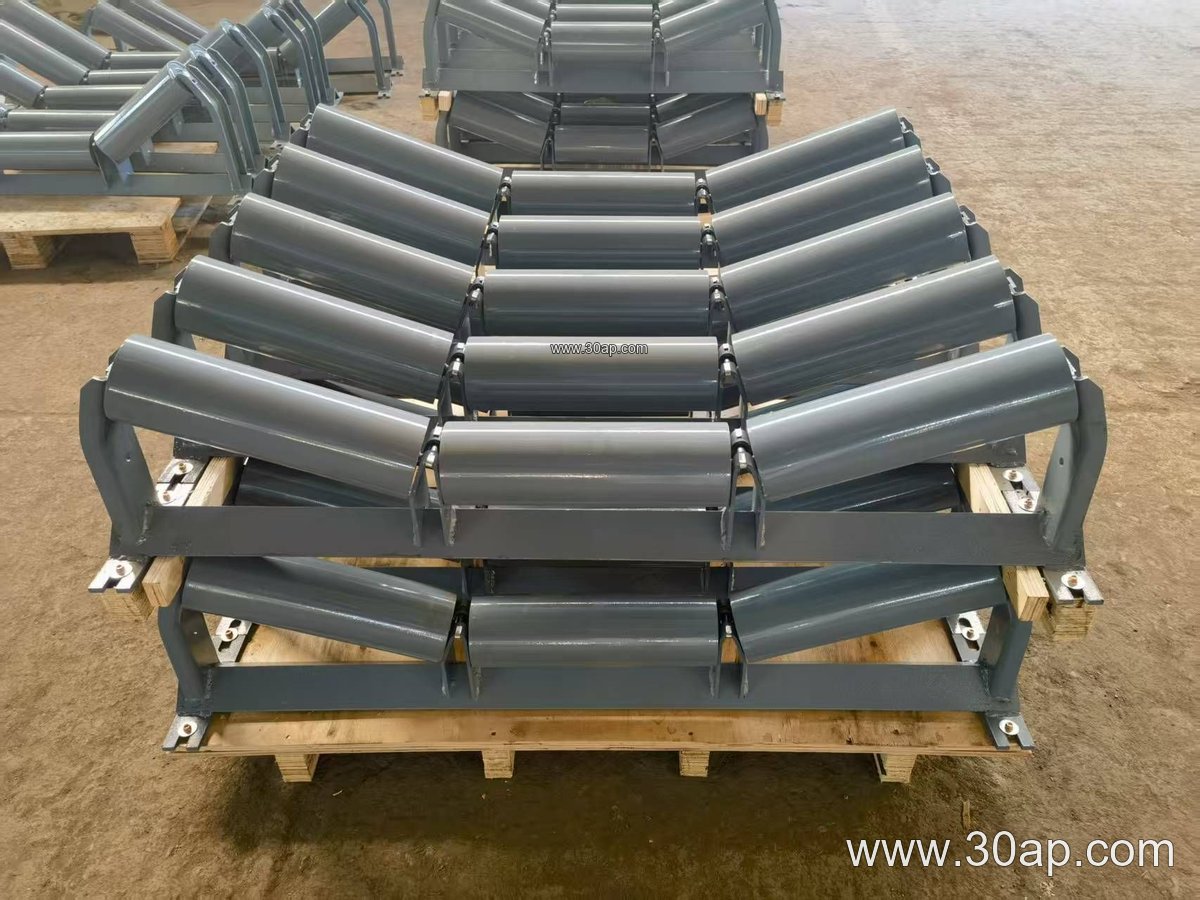
Correct pairing with the belt matters. A heavy-duty mining conveyor belt carrying iron ore or copper ore demands a robust, well-lagged drum, while a pipe conveyor belt or a corrugated sidewall belt needs a pulley geometry matched to its profile. Tracker rollers and idler roller sets upstream should be aligned so the belt enters the drive pulley centrally; otherwise edge wear on the lagging starts early.
Selection Points for Buyers
- Confirm the duty: peak belt tension, starting torque and any frequent starts under load.
- Match lagging to conditions — plain or rubber for dry bulk, ceramic or grooved for wet and abrasive service.
- Check the shaft and bearing assembly against the actual load, not against belt width alone.
- Ask for the balancing grade and run-out tolerances, since vibration shortens bearing life.
- Verify that the pulley face, the conveyor bracket spacing and the belt width are consistent.
Installation quality is as important as the drawing. Misalignment between the drive pulley and the following idler roller causes belt wander, and a poorly tensioned belt will slip on even a well-lagged drum. During maintenance, inspect lagging wear, check bolt torque and confirm that the belt tracking has not drifted.
For matching belts and conveyor components, see the selection notes at www.beltconveyorparts.com/main-drive-pulley, where drive pulley data is grouped with conveyor belt and idler roller references.