What a V-Type Idler Bracket Does on a Conveyor
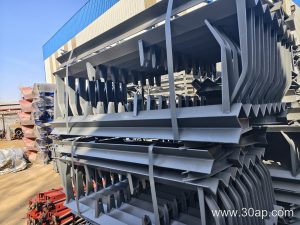
A V-type idler bracket is a return-side support component that holds two idler rollers in a V formation. The V shape cradles the conveyor belt, helping it track centrally while scraping off loose material that would otherwise stick to the return strand. In a quarry or a coal handling plant, this bracket is often the first line of defense against belt misalignment and buildup. It is not a drive pulley or a tail pulley; those are separate components with different roles. The V-type idler bracket belongs to the return-side support family, along with the flat return bracket and the transitional return bracket.
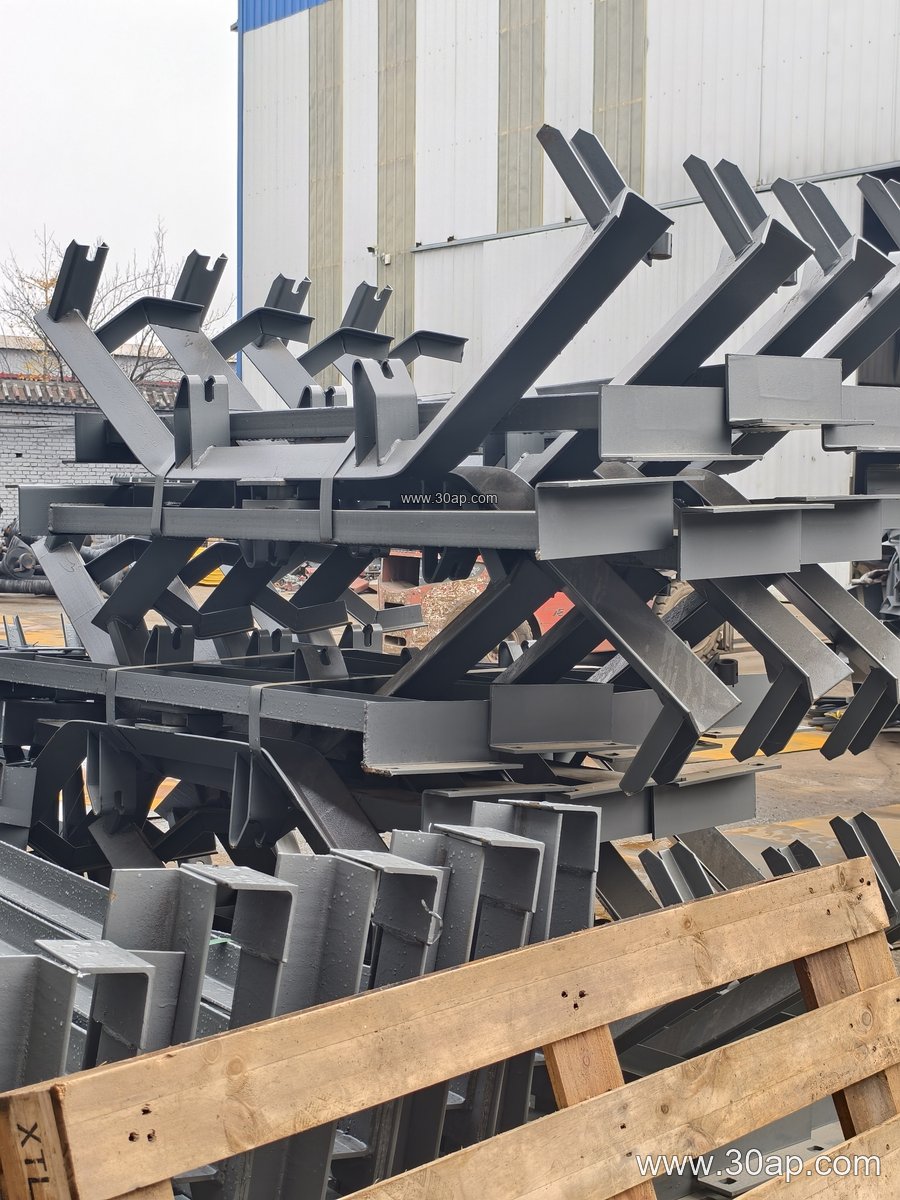
Construction and Mounting Position
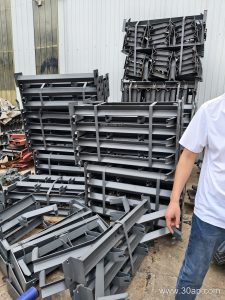
Most V-type idler brackets are fabricated from angle steel, channel steel, or folded steel plate. The two arms are set at a fixed angle, typically between 10 and 20 degrees from horizontal, to form the V. The bracket mounts to the conveyor frame stringers on the return run, usually after the bend pulley and before the tail pulley. Mounting hole spacing and crossbeam length vary with belt width and frame design, so these dimensions are confirmed per project rather than taken as universal. The bracket does not carry the full weight of the belt and material; that is the job of the carrying idlers on the top run. Its main tasks are belt support, centering, and keeping the return side clean.
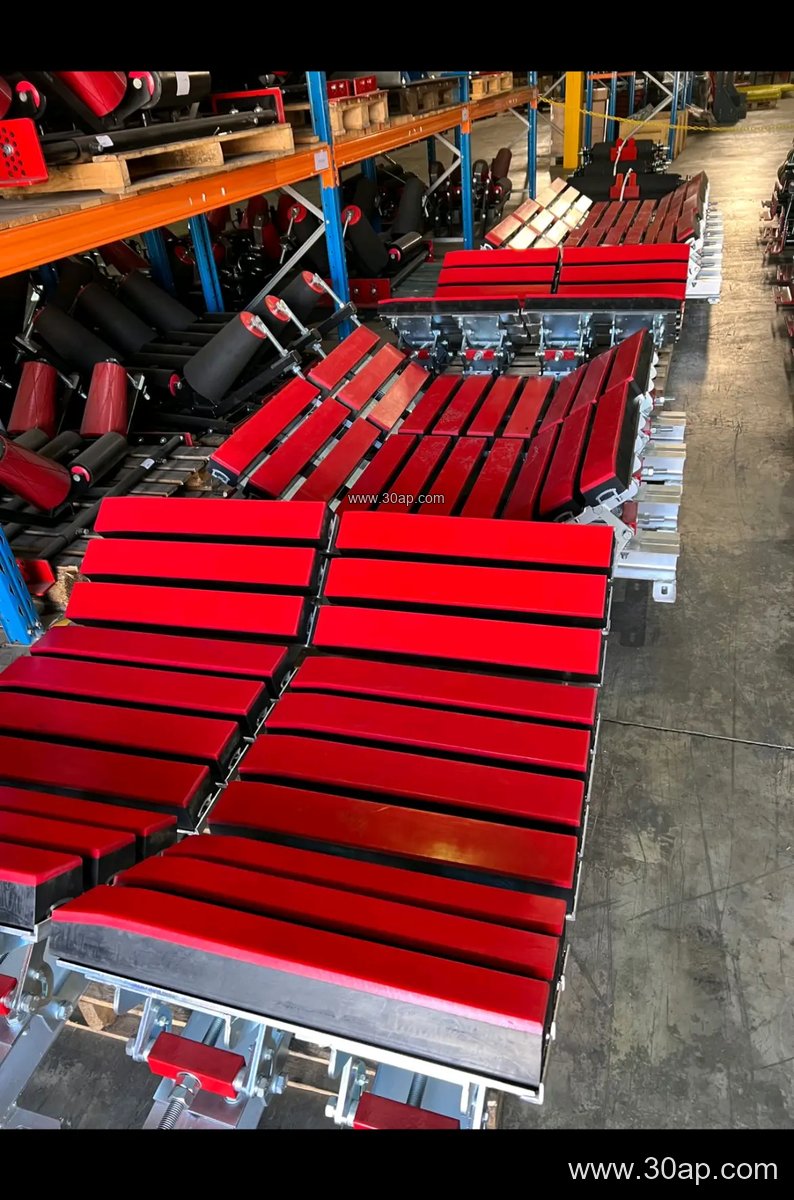
Where It Fits in Bulk Material Handling
V-type idler brackets appear in many bulk handling circuits. In a limestone mine, they help keep the return belt aligned after the crusher discharge. In a cement plant, they support the return strand on clinker and raw meal conveyors. At a power plant coal yard, they work alongside the conveyor pulley and idler roller set to reduce spillage. The bracket is also common in sand and gravel lines, where fines tend to cling to the belt. It is not a substitute for a bend pulley or a tail pulley; those pulleys change belt direction, while the V bracket only supports and guides. A self-aligning idler bracket is another return-side option, but it uses a different pivot design and is selected for different tracking needs.
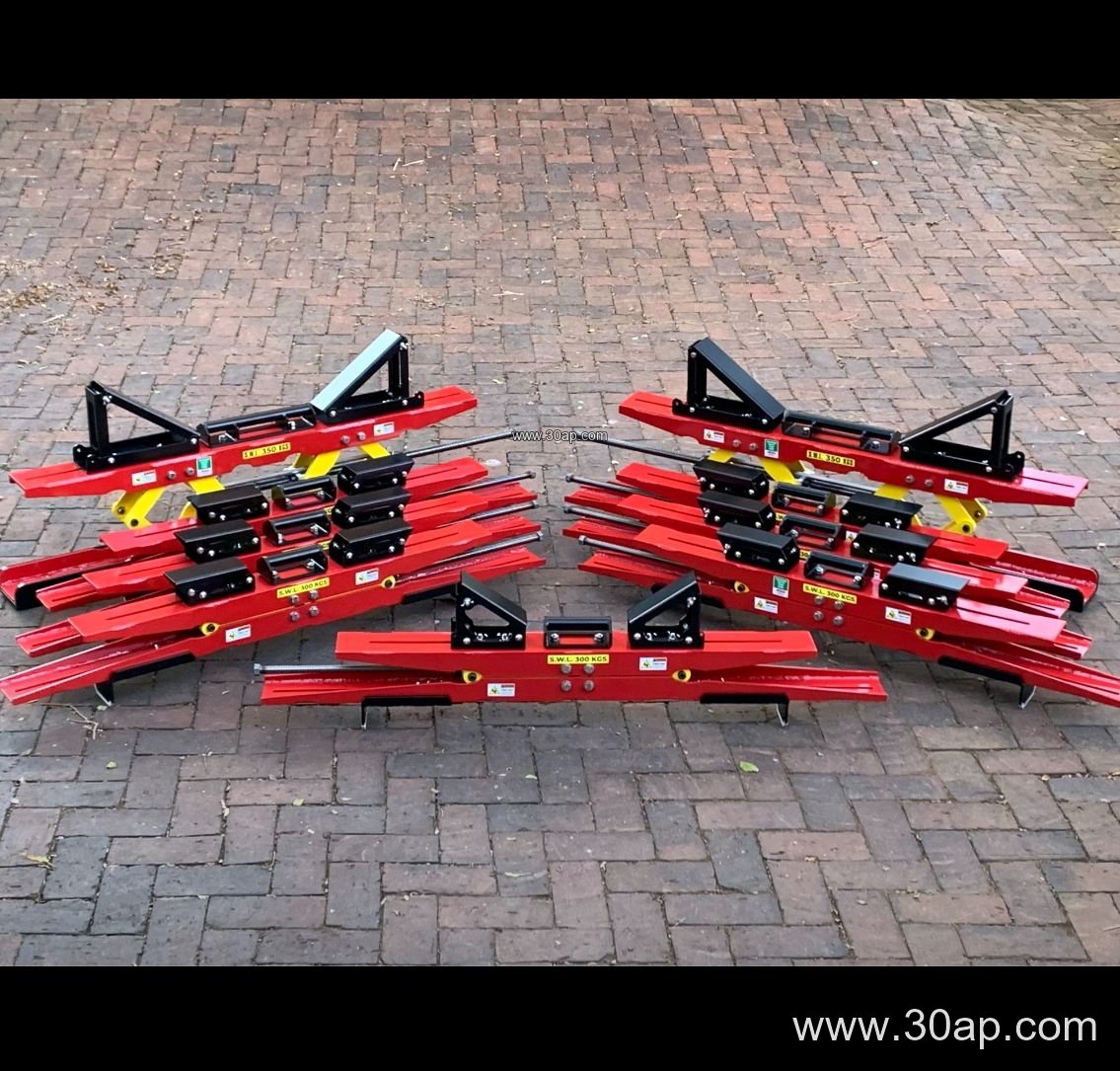
Matching Belt Width, Roll Diameter, and Frame
Selection starts with the conveyor belt width and the return idler roller diameter. Common belt widths include B500, B650, B800, B1000, B1200, B1400, B1600, B1800, B2000, and B2200. Return roller diameters often fall in the range of Ø89, Ø108, Ø133, Ø159, and Ø194. These are reference values, not fixed pairings. A B800 belt does not automatically require a single roller diameter; the design load, belt speed, and frame height all influence the choice. The bracket angle is usually fixed, but adjustable versions allow the V angle to be set on site. Installation hole spacing changes with belt width and bracket type, so the mounting pattern should be checked against the actual frame drawing.
Buyer Checklist
- Confirm the return belt width and the idler roller diameter before ordering.
- Check whether the frame uses a fixed V bracket or an adjustable V bracket.
- Verify mounting hole spacing and crossbeam length against the conveyor frame.
- Match the bracket material and finish to the site environment, such as dusty or wet conditions.
- Remember that the V-type idler bracket supports the return strand; it does not replace the bend pulley or tail pulley.
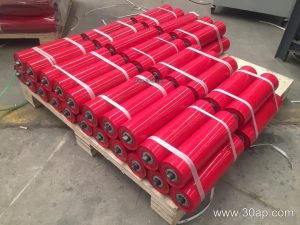
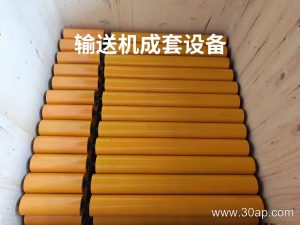
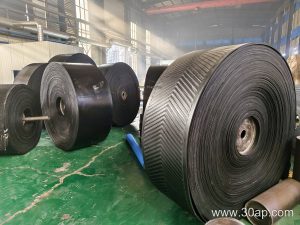
For a complete return-side assembly, the bracket works together with the conveyor belt, idler roller, and conveyor pulley. In abrasive service, such as an iron ore or copper ore line, an abrasion resistant conveyor belt and heavy-duty return rollers reduce wear on the V bracket. In coal mining, a flame retardant conveyor belt is often specified alongside fire resistant conveyor belt grades, and the bracket should be selected to suit the same duty. A pipe conveyor belt or a corrugated sidewall conveyor belt uses different support arrangements, so the V bracket is not a universal fit for every belt type. Buyers should treat the bracket as one part of a matched support system and confirm dimensions with the conveyor designer.