What a Take-Up Pulley Does on a Conveyor
A take-up pulley, also called a tension pulley, is the drum that keeps slack out of the belt loop. It sits in the take-up section of the conveyor, usually near the tail or along a return run, and moves on slides, a trolley frame, or a counterweight arrangement. As the belt stretches with service, the take-up pulley shifts to hold tension steady. That tension matters on a quarry conveyor belt or a coal mining conveyor belt: too little and the belt slips on the drive drum and wanders off center; too much and bearings, splices, and the pulley shaft suffer.
The take-up pulley is not a drive pulley and not a tail pulley. Those do different jobs. Comparing them helps buyers avoid ordering the wrong item, because a tension drum is sized around travel, load, and belt path rather than around motor torque.
Construction and Surface Options
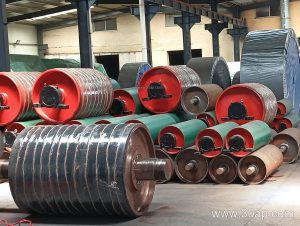
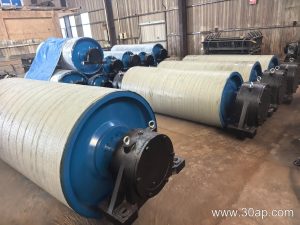
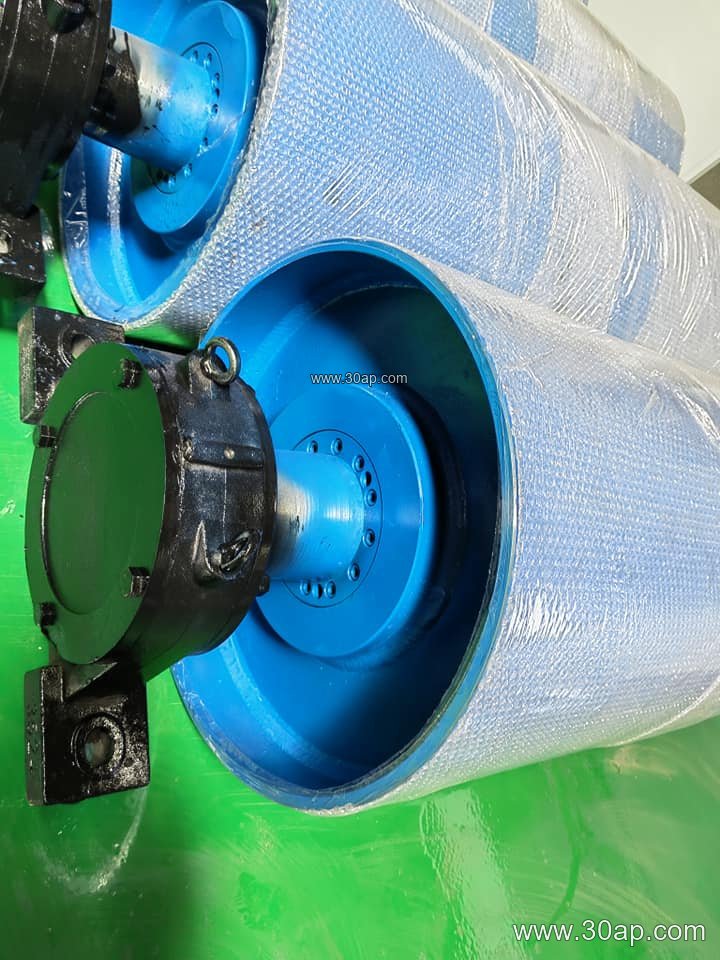
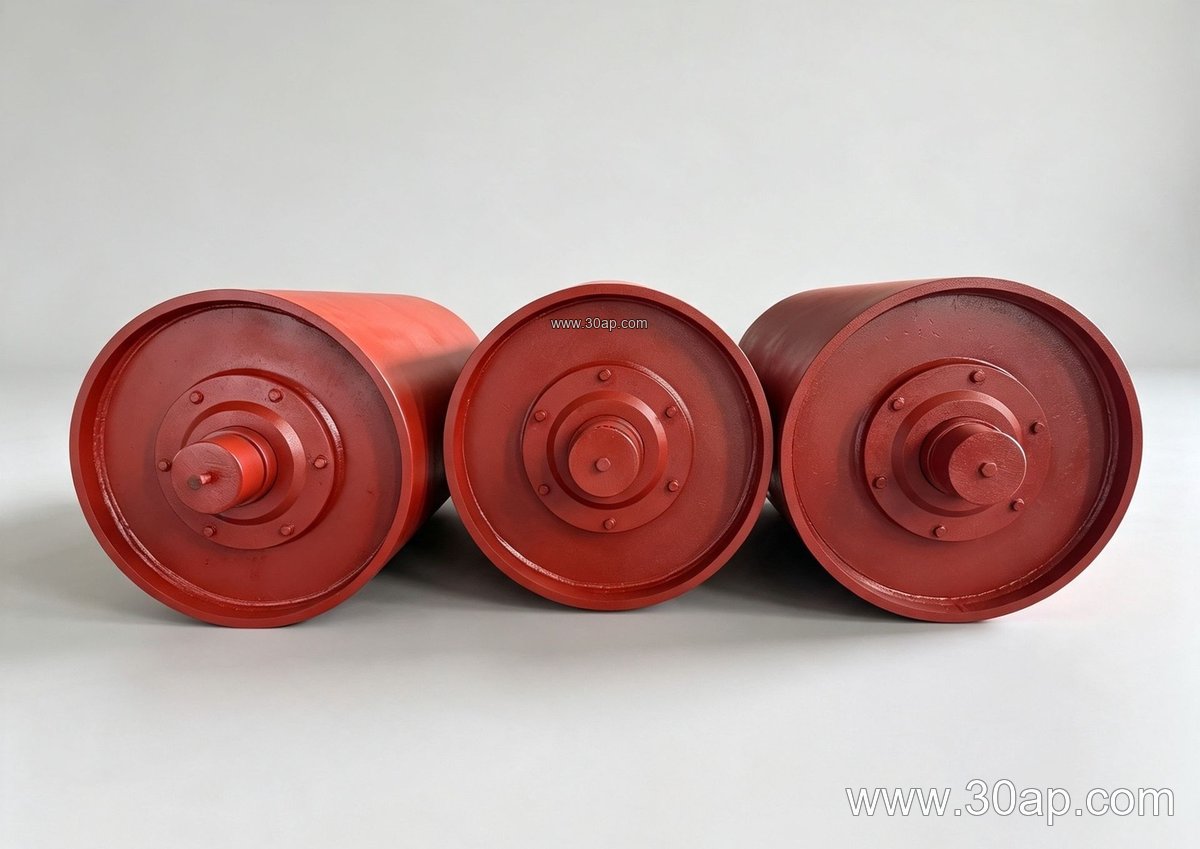
The drum is normally a steel shell with welded end discs, a hub, and a through shaft. Shell thickness, shaft diameter, and bearing size are set by the calculated tension and the take-up travel, not by belt width alone. Common shaft diameters include Ø80, Ø100, Ø120, and Ø140, but the correct value comes from the load case. Common drum diameters run from Ø315 up to Ø800 or more, with larger drums used where the belt is thick or stiff.
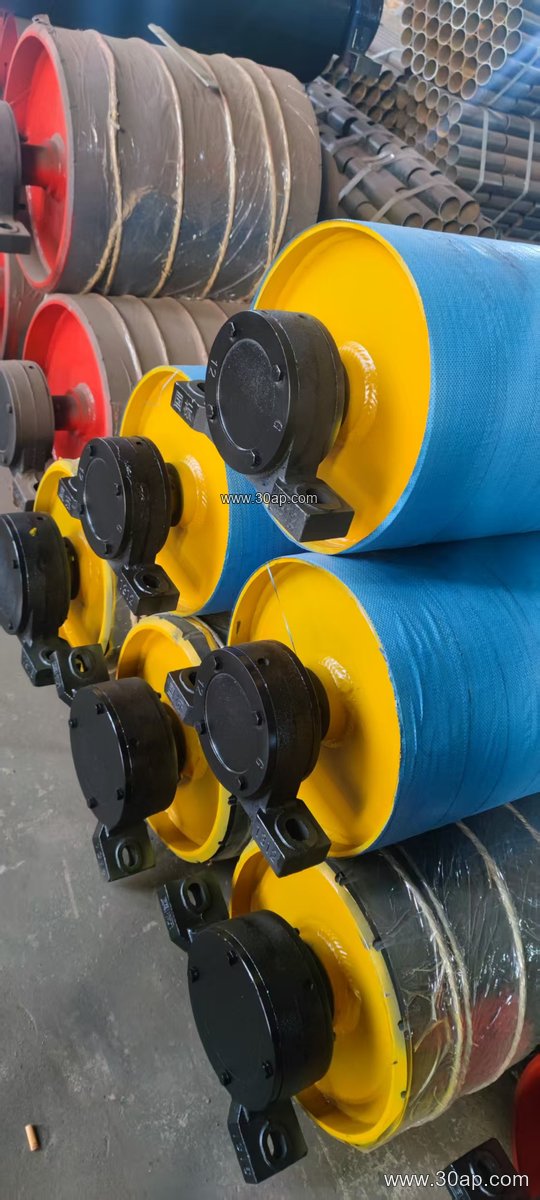
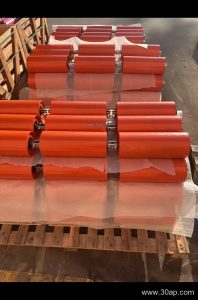
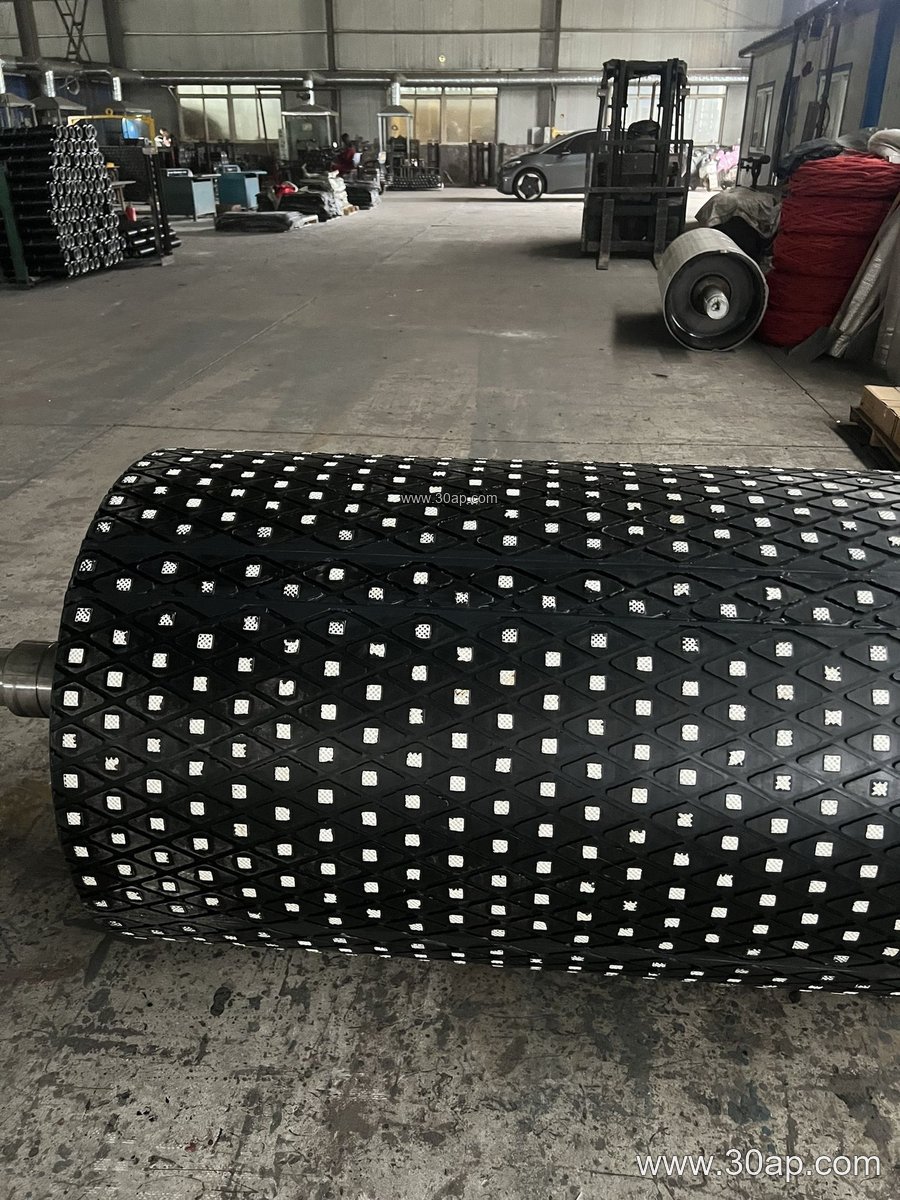
Surface finish depends on where the drum contacts the belt. A plain face suits many return-side tension positions. Rubber lagging, either cold-bonded or hot-vulcanized, improves grip and protects the shell. Diamond lagging and ceramic lagging are chosen when the belt carries moisture or fines. Lagging thickness is often 8, 10, 12, or 15 mm. Where the tension pulley also acts as a bend point, check that the belt can flex around the chosen diameter; a heavy-duty mining conveyor belt with a thick fabric core or steel cord needs a larger drum than a thin two-ply belt.
Typical Reference Combinations
These are common design pairings, not fixed rules. A given belt width can work with more than one drum diameter.
- B800 belt with Ø500 drum, shell face about 950 mm
- B1000 belt with Ø630 drum, shell face about 1150 mm
- B1200 belt with Ø800 drum, shell face about 1400 mm
- B1400 belt with Ø1000 drum, shell face about 1600 mm
Face width is usually a little wider than the belt so the belt does not run off the shell edge. The shaft diameter, bearing block, and take-up frame are matched to the tension force and the travel distance.
Where It Fits in the Plant
In a sand and gravel line, the take-up pulley often sits at the tail of a long field conveyor, pulling the belt back as the load changes. In a coal handling system feeding a power plant, a counterweighted tension pulley keeps a flame retardant conveyor belt tracking through start-stop cycles. Similar arrangements appear in cement plants, iron ore terminals, and crushing and screening circuits. The drum works alongside the conveyor bracket, idler roller, and conveyor pulley set, but its job is tension control rather than power transmission.
Some plants use a screw take-up for short conveyors and a gravity take-up for long ones. The pulley itself may be the same style; the frame and travel differ. In dusty service, sealed bearings and a protected slide path reduce maintenance.
Buyer Checklist
- Confirm belt width, belt type, and belt thickness, since these affect drum diameter and face width.
- State the tension range and take-up travel so the shaft and bearings can be sized.
- Choose lagging by conditions: plain for dry return runs, rubber or ceramic where slip and wear are concerns.
- Check that the take-up frame, conveyor bracket, and bearing housings match the pulley shaft.
- Ask for the drum drawing and material certificate before approval.
- Plan inspection of lagging wear and bearing condition during scheduled shutdowns.
A correctly specified take-up pulley is a small part of the conveyor but a large part of its reliability. Matching it to the belt, the load, and the take-up system keeps the line running in quarries, mines, and bulk terminals alike. See more conveyor component guidance at www.example.com/take-up-pulley.