What a Return Idler Bracket Does
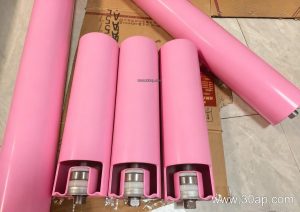
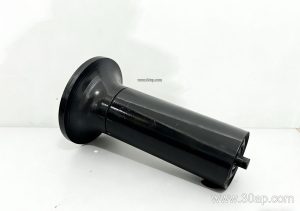
A return idler bracket is the structural component that holds the return idler roller in place beneath the conveyor belt. It supports the empty side of the belt on its way back to the tail pulley, keeping the belt aligned and preventing sag. In a typical conveyor frame, these brackets are bolted or welded to the longitudinal beams and carry the weight of the return roll plus the belt tension. The bracket must be sturdy enough to withstand continuous vibration and occasional impact from material spillage, especially in quarry conveyor belts and aggregate conveyor belts where dust and grit are constant companions.
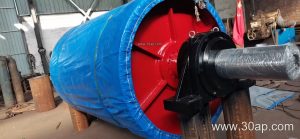
While the drive pulley and tail pulley handle power transmission and belt tensioning, the return idler bracket quietly does the support job. It is not interchangeable with a bend pulley bracket or a troughing bracket; each has its own geometry and load pattern. A well-designed return bracket keeps the idler roller spinning freely and reduces wear on the conveyor belt.
Construction and Common Forms
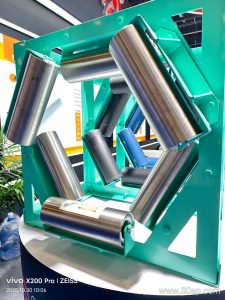
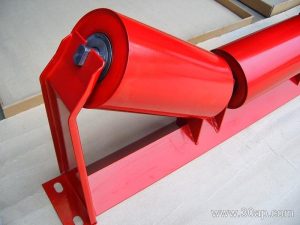
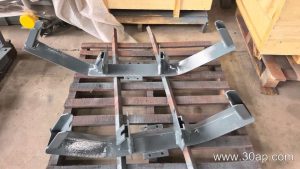
Most return idler brackets are fabricated from angle steel, channel steel, or folded steel plate. The material thickness and profile are chosen according to the belt width and the load expected from the return belt. Common configurations include a simple flat bracket for a single return roller and a V-shaped bracket that supports two rollers at an angle to help center the belt. Adjustable versions allow the bracket height or angle to be fine-tuned during installation, which is handy when the conveyor frame is not perfectly level.
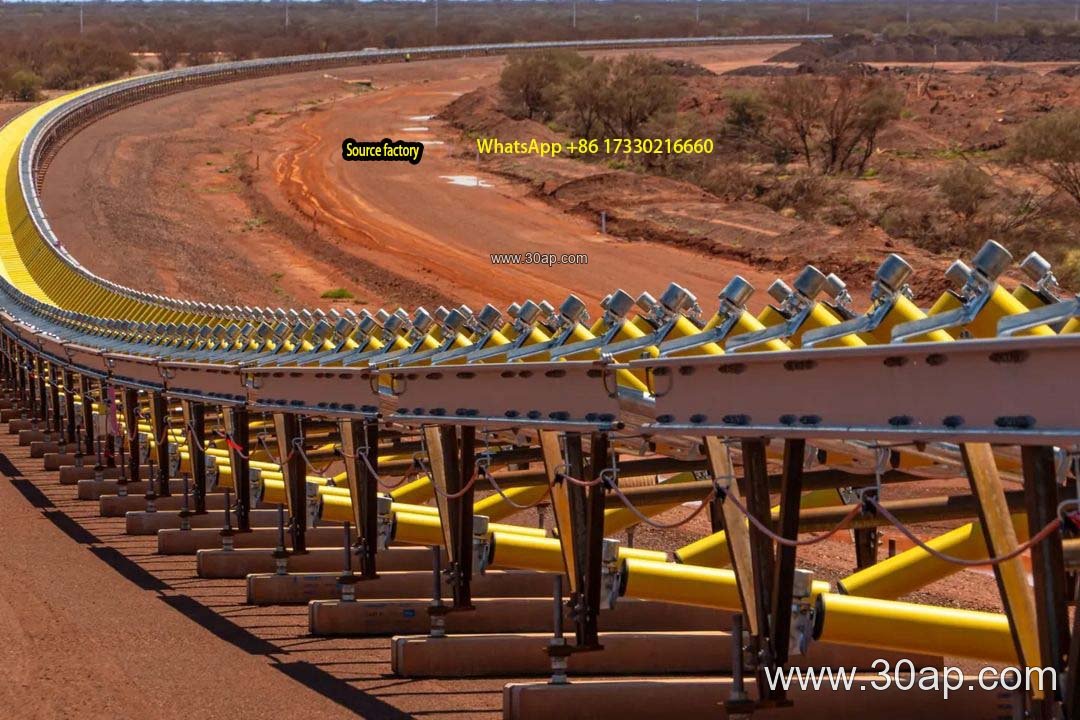
Mounting holes are usually slotted to accommodate minor misalignment. The bracket surface may be painted or galvanized for corrosion resistance, particularly in power plant coal handling or port environments where humidity and salt air are present.
Where It Fits in the Conveyor System
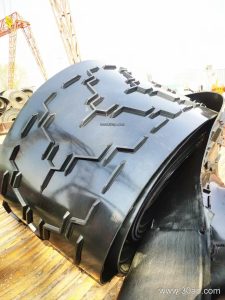
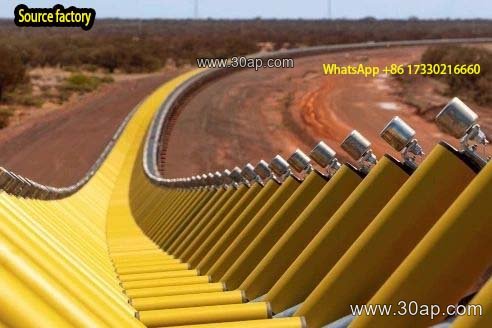
Return idler brackets are found on the return strand of belt conveyors in many industries. In a limestone quarry, they support the belt after the discharge point, often paired with a rubber conveyor belt that carries heavy rock. In a cement plant, they keep the return belt steady under the kiln feed area. In coal mining, both underground mining conveyor belts and surface coal mining conveyor belts rely on these brackets to maintain belt tracking and reduce spillage. The bracket also appears in steel plants, fertilizer plants, and grain silos. When the belt is a pipe conveyor belt or a corrugated sidewall conveyor belt, the return bracket design may need to accommodate special idler shapes, but the basic support function remains the same.
Matching Brackets to Belt and Idler Sizes
Although there is no universal rule that one belt width must use one idler diameter, practical combinations are common. The table below lists typical reference values for return idler brackets, based on common conveyor design practice. These are not mandatory specifications; actual selection depends on the conveyor’s load, speed, and environment.
| Belt Width (B) | Common Return Idler Diameter | Typical Bracket Material | Typical Application |
|---|---|---|---|
| B500 | Ø89 | Angle steel | Light-duty aggregate conveyor |
| B650 | Ø89 or Ø108 | Angle steel or channel steel | Sand and gravel line |
| B800 | Ø108 | Channel steel | Quarry conveyor belt |
| B1000 | Ø108 or Ø133 | Channel steel or folded plate | Cement plant, power plant |
| B1200 | Ø133 | Folded steel plate | Coal mining conveyor belt |
| B1400 | Ø133 or Ø159 | Folded steel plate | Iron ore, steel plant |
| B1600 | Ø159 | Heavy channel steel | Port conveyor belt |
| B1800 | Ø159 or Ø194 | Heavy channel steel | Large bulk material handling |
Note that the mounting hole spacing and crossbeam length change with belt width and bracket style. These dimensions are determined by the conveyor frame design rather than fixed by the bracket alone. For instance, a B1200 conveyor with a 35-degree troughing angle on the carrying side might use a flat return bracket with a Ø133 idler, while a B650 conveyor with a 30-degree trough might use a V-return bracket with Ø89 idlers.
Selection Tips for Buyers
- Confirm the belt width and the return idler diameter you plan to use. The bracket’s roller seat must match the idler shaft size.
- Decide between fixed and adjustable brackets. Adjustable brackets are useful where field alignment may be needed, such as in retrofit projects.
- Check the material and finish against the environment. For corrosive areas, consider galvanized or painted brackets.
- Consider the belt type. A heavy-duty mining conveyor belt or a steel cord conveyor belt may require a more robust bracket than a lightweight EP conveyor belt.
- Verify the mounting hole pattern with your conveyor frame supplier. Do not assume that a bracket for one belt width will fit another without checking.
Return idler brackets may seem like small parts, but they influence belt tracking, idler life, and overall conveyor uptime. Whether you are maintaining a coal mining conveyor belt system or building a new aggregate conveyor line, choosing the right bracket helps keep the return strand running smoothly.