What a Cement Plant Conveyor Belt Has to Handle
A cement plant moves more material than almost any other industrial site of its size. Limestone arrives from the quarry, gets crushed, blended, preheated, burned into clinker, cooled, ground with gypsum, and finally bagged or loaded for bulk dispatch. Each of those steps puts a different demand on the belt that carries the load. A cement plant conveyor belt therefore has to be chosen stage by stage rather than bought as one generic item for the whole line.
The same plant may need an abrasion resistant belt on the clinker path, a heat resistant conveyor belt after the cooler, and a flame retardant conveyor belt in areas where coal or alternative fuel is handled. Getting that mix right is the core of belt specification in cement production.
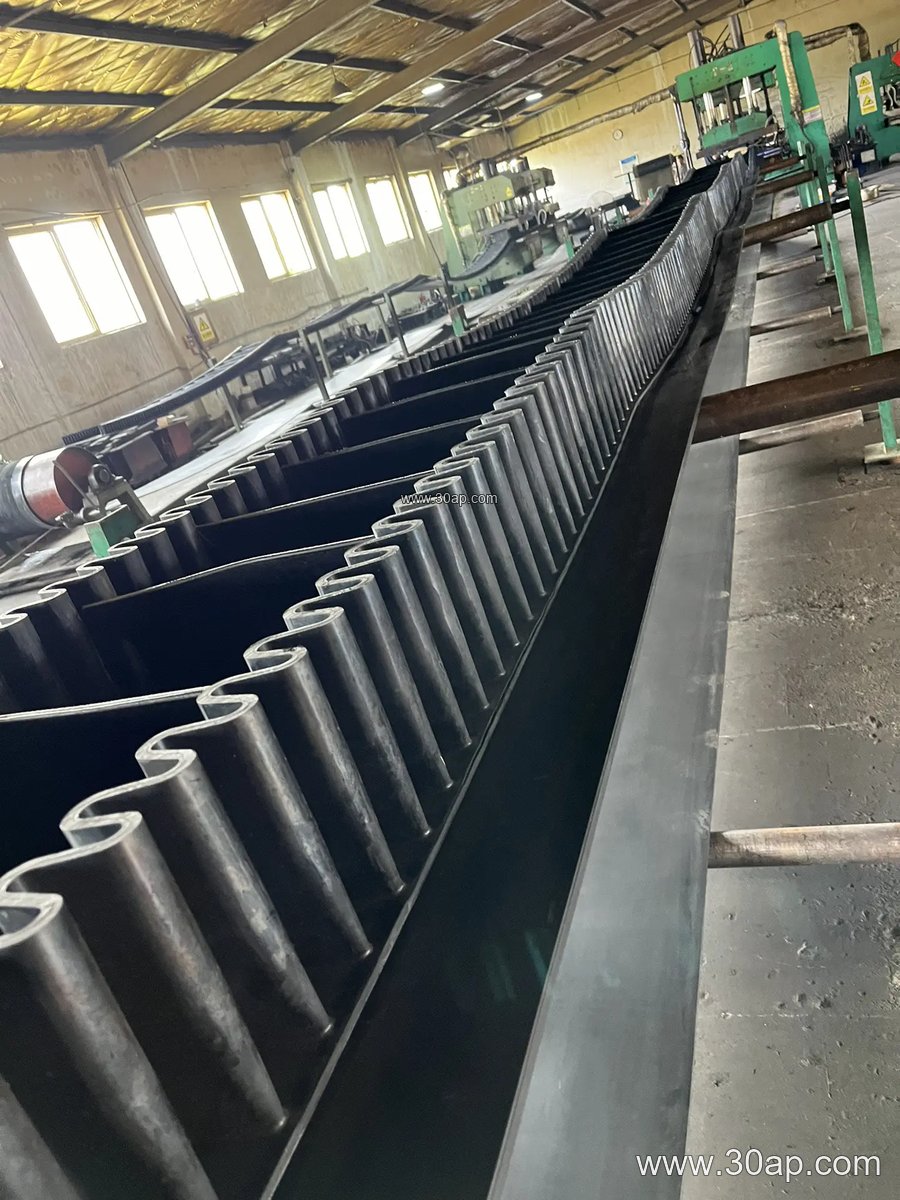
How the Belt Is Built
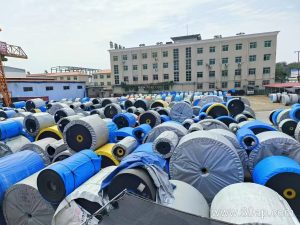
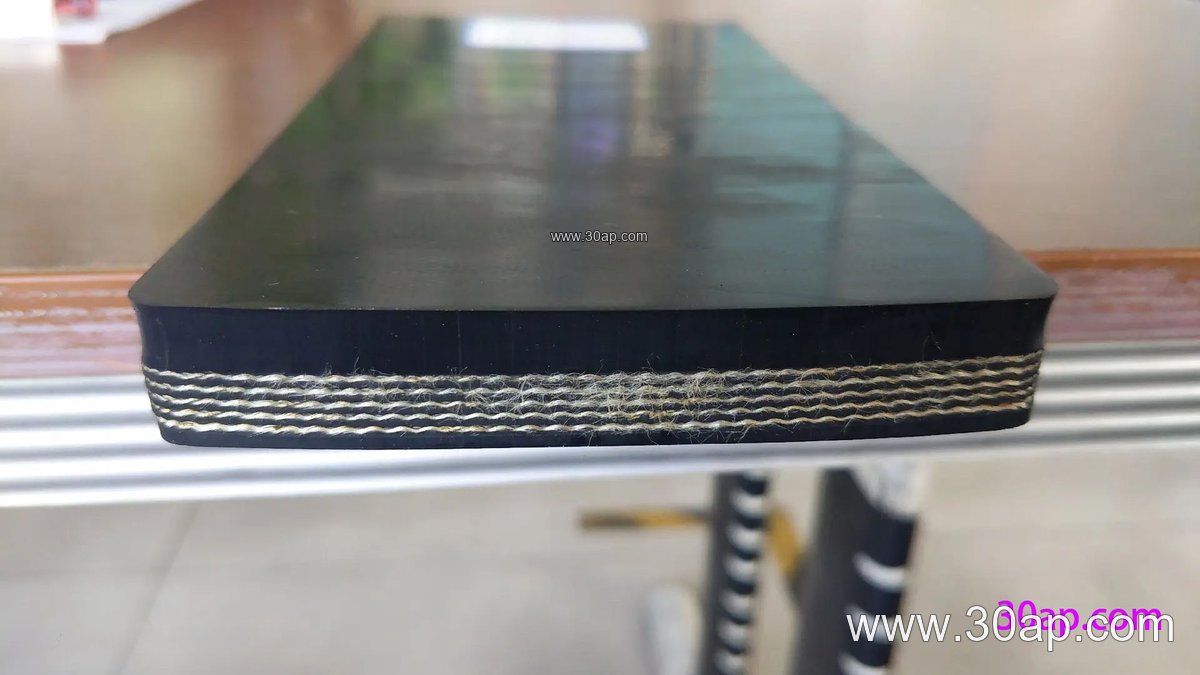
A fabric core conveyor belt is made of tension-bearing plies bonded between top and bottom rubber covers. In cement work the most common carcass is EP (polyester-nylon), written as EP conveyor belt, with NN conveyor belt as another widely used option. Heavier main lines, especially long overland runs from the quarry, often use a steel cord conveyor belt because it carries high tension with low stretch.
Covers are the working surface. Common cover thicknesses are 3+1.5 mm, 4+2 mm, 5+2 mm, 6+2 mm and 8+3 mm, where the first figure is the top cover and the second the bottom. Carcass plies usually run from 2 to 6 layers depending on the required strength. A multi-ply fabric core conveyor belt is typical for medium-duty transfer points, while a thick conveyor belt with an 8+3 mm cover suits clinker and other sharp, hot, abrasive material.
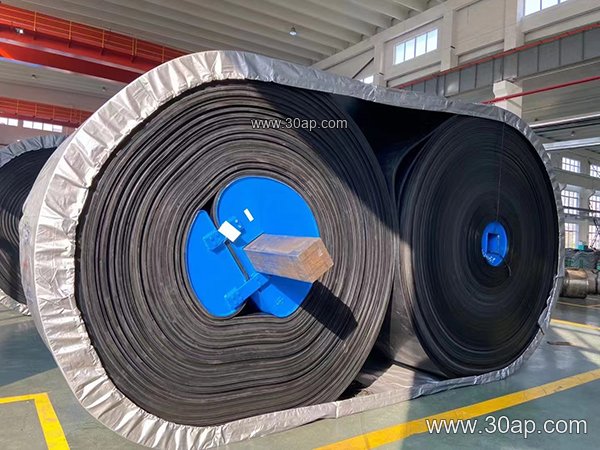
Common Belt Widths on Cement Lines
Belt width follows the tonnage and the lump size, not a fixed rule. The table below lists widely used widths as reference only; the final value comes from the conveyor design.
- B500, B650, B800 – small transfer, additive and dust lines
- B1000, B1200 – general clinker and raw meal transport
- B1400, B1600 – main quarry and kiln feed lines
- B1800, B2000 – high capacity primary crushing discharge
Matching the Belt to Each Cement Process Stage
Quarry and Crushing
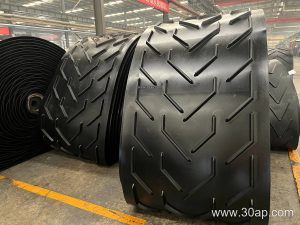
Run-of-mine limestone is heavy, sharp and often wet. A high abrasion resistant conveyor belt with a robust EP or steel cord carcass is usual here. Impact at the crusher discharge calls for impact resistant construction and, on steep inclines, a chevron conveyor belt to stop material rolling back.
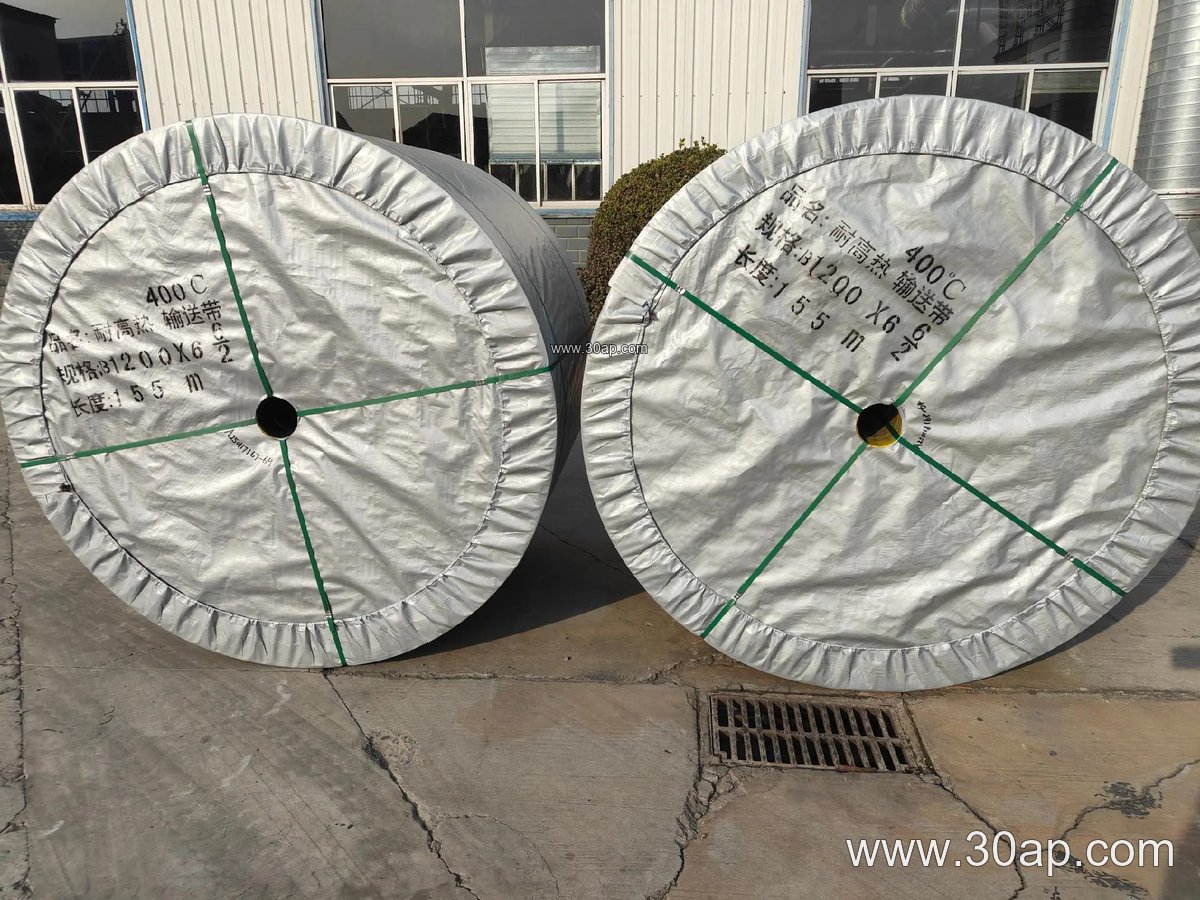
Raw Mill and Kiln Feed
Raw meal is fine and abrasive but relatively cool. An EP conveyor belt with moderate cover thickness works well, and enclosed systems may use a pipe conveyor belt to keep dust contained across roads and buildings.
Clinker and Cement Grinding
Clinker leaves the cooler hot and very abrasive. A heat resistant conveyor belt with a suitable cover grade is standard, and heat resistant grades are also used where cement temperature stays elevated after grinding. Where material is dropped from height, a skirted conveyor belt or a corrugated sidewall conveyor belt keeps the load on the belt and reduces spillage.
Coal and Alternative Fuel Handling
Coal, petcoke and solid alternative fuels need fire resistant and anti-static properties. A flame retardant conveyor belt such as PVG or PVC mining conveyor belt types is often specified in these areas, and explosion-risk zones require the full anti-static specification.
Supporting Components Matter Too
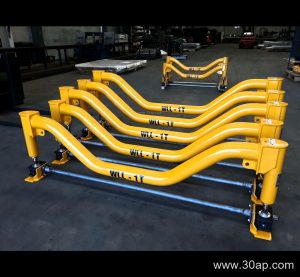
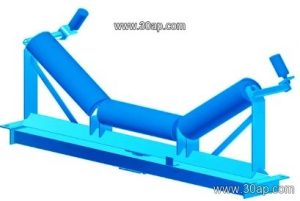
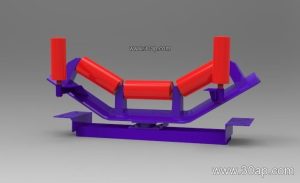
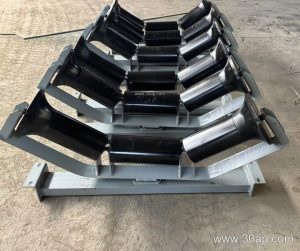
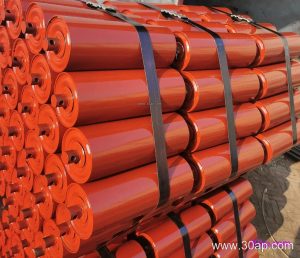
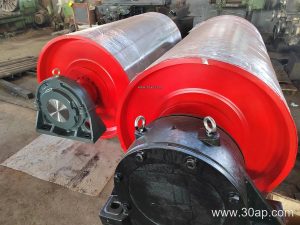
Belt life is not decided by the belt alone. Idler roller alignment, conveyor pulley condition and conveyor bracket rigidity all affect tracking and edge wear. A worn conveyor pulley or a seized idler roller can damage even a well-specified belt within weeks, so maintenance planning should cover the whole conveyor, not just the belt surface.
What Buyers Should Confirm Before Ordering
- Material type, lump size, temperature and moisture at the loading point
- Required tensile strength grade, for example EP400, EP630, EP1000 or a steel cord class such as ST1600, ST2000
- Belt width and cover thickness suited to the conveyor design, not copied from another line
- Special properties: heat, oil, abrasion, flame retardancy, cold or chemical resistance
- Whether an endless conveyor belt is preferred for reduced splice risk on critical lines
- Roller and pulley condition, since these influence belt tracking and service life
For a quarry conveyor belt feeding a cement works, or a short bagging line belt, the principle is the same: describe the duty honestly, then match carcass, cover and special properties to it. Buyers comparing offers should check cover thickness, ply count and test data rather than price alone. Further technical notes on belt, idler roller and conveyor pulley selection are available from the supplier, and a site visit before final specification usually prevents costly rework.