What a Five-Roll Idler Bracket Does
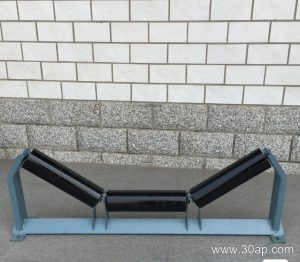
A five-roll idler bracket is a support frame that carries five idler rollers under the loaded run of a conveyor belt. Instead of the usual three-roll trough set, it spreads the belt load across more contact points, which helps on wide belts and in high-tonnage material handling. You will see this bracket in primary crushing circuits, stockyard feed lines, and transfer points where the belt is wide and the lumps are heavy. It is a structural part, not a rotating part, but it directly affects how the conveyor belt tracks and how long the idler roller bearings last.
Construction and Mounting
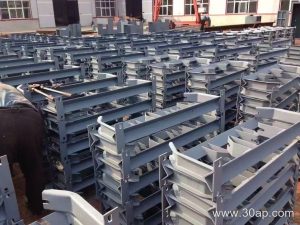
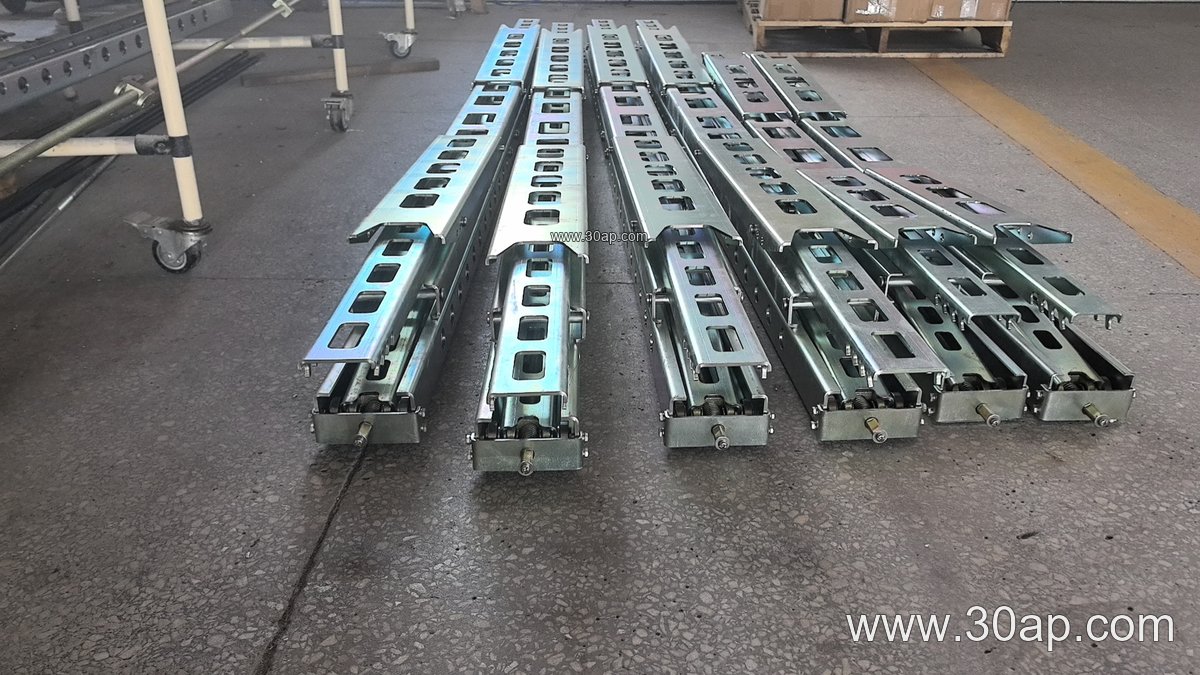
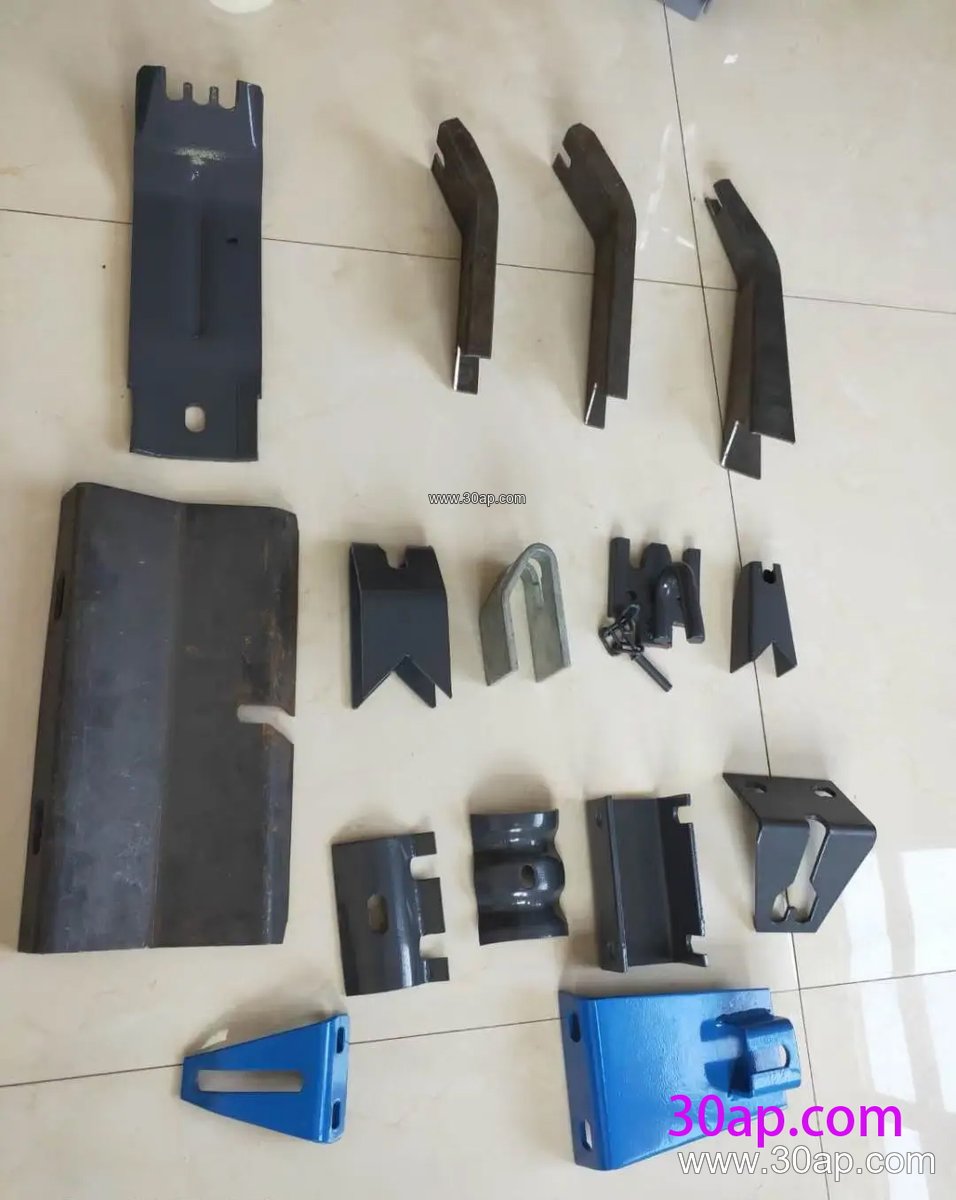
Most five-roll idler brackets are fabricated from angle steel, channel steel, or folded steel plate. The frame is welded or bolted into a rigid assembly with five idler stations: two outer rolls set at the trough angle, two intermediate rolls, and a center roll that supports the middle of the belt. The bracket bolts to the conveyor stringer or cross beam, and the mounting hole spacing and beam length follow the belt width and trough angle rather than a single fixed number. A common arrangement for a B1200 belt uses a 35 degree trough angle with Ø133 idlers, while a B1800 line may run 45 degrees with Ø159 rolls. These are typical references, not universal rules. The bracket should be checked against the actual idler shaft and frame drawing before ordering.
Where It Fits in the Conveyor
This bracket is normally an upper carrying bracket, placed on the load side of the conveyor. It is not a return bracket and it is not a transition bracket, though transition zones sometimes use a similar multi-roll layout to ease the belt from flat to troughed. In a coal mining conveyor or a quarry conveyor, the five-roll bracket is often chosen where a standard three-roll set would leave the belt sagging between rolls or where impact from large rock is severe. Paired with a heavy-duty mining conveyor belt and impact-resistant idler rollers, it helps keep the belt profile stable through the load zone.
Selection Points for Buyers
Buyers should confirm four things: belt width, trough angle, idler diameter, and the mounting interface. Belt widths commonly range from B500 up to B2200, and trough angles of 20, 30, 35, and 45 degrees are all used. Idler diameters such as Ø89, Ø108, Ø133, Ø159, and Ø194 appear across different duty levels. A smaller diameter is not automatically wrong for a wide belt, and a large diameter does not guarantee better performance; the bracket geometry and the belt stiffness matter together. For abrasive ore or cement clinker, an abrasion resistant conveyor belt reduces wear on the belt cover, while the bracket keeps the five rolls aligned. In cold climates, a cold resistant conveyor belt may be used, but the bracket material and coating should also suit the ambient temperature.
Maintenance and Compatibility
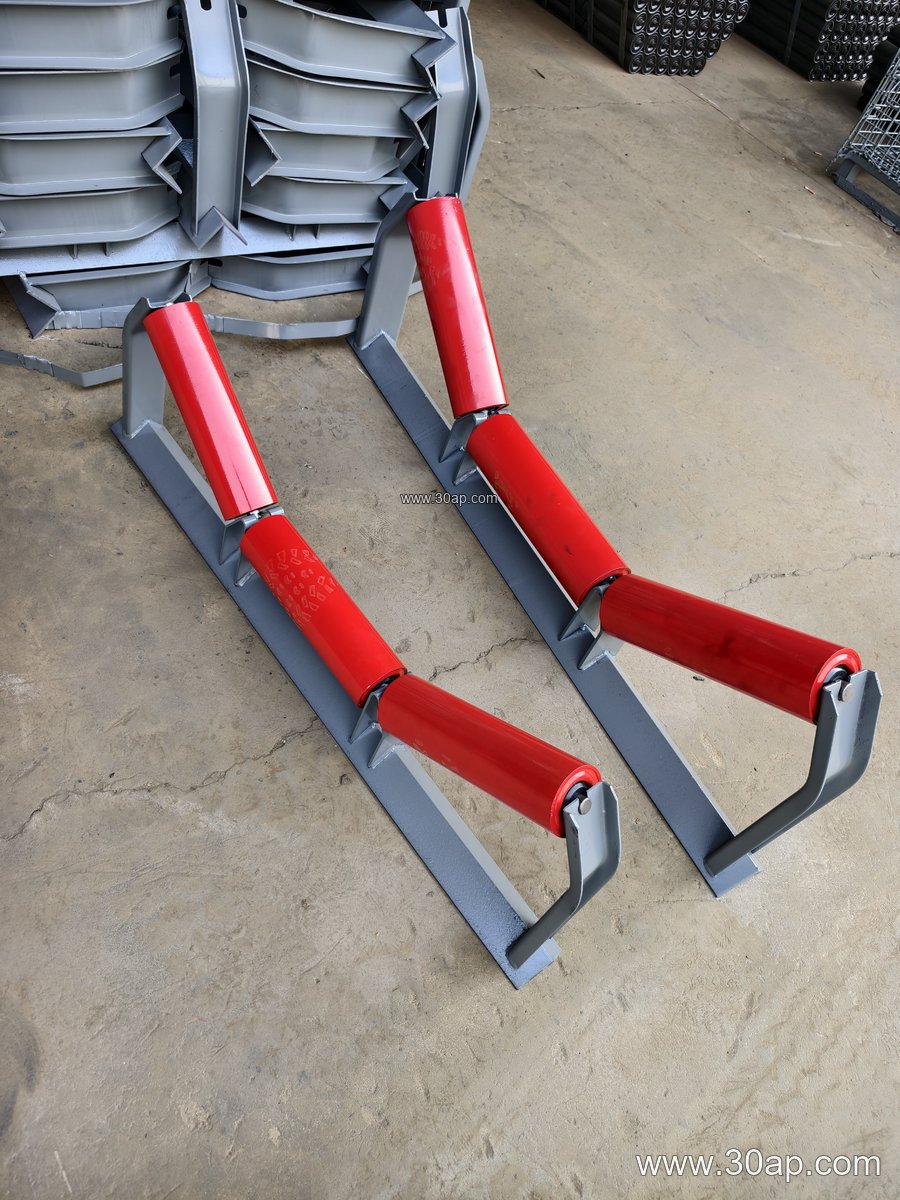
Inspect the bracket for loose bolts, bent arms, and worn idler seats. A bent five-roll bracket can cause the belt to run off-center, which then loads the conveyor pulley and the belt edges. Keep the rolls turning freely; a seized idler roller will wear a flat spot into the belt. When replacing idlers, match the roll length and shaft end to the bracket, and do not mix bracket types on the same stringer without checking alignment. For fire-sensitive locations such as underground coal mining, a flame retardant conveyor belt is common, and the bracket should be kept clear of accumulated coal dust. For long overland lines using steel cord conveyor belt, the five-roll bracket is less common than on wide fabric belt lines, but it can appear at high-load transfer points.
Practical Notes
Five-roll idler brackets are a niche but useful component. They are not a substitute for a bend pulley or a drive pulley, and they do not replace the conveyor pulley in the drive system. They work as part of the idler set, together with the conveyor belt and the conveyor bracket structure. Order by drawing where possible, state the belt width and trough angle clearly, and ask for the mounting dimensions. That simple step avoids most field fit problems.