What a Ceramic Pulley Is
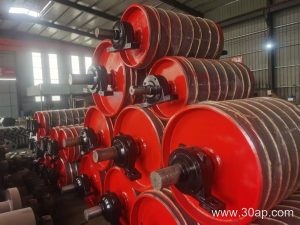
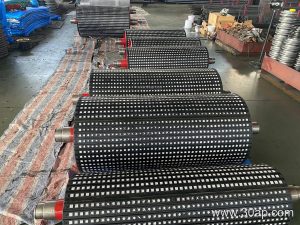
A ceramic pulley is a conveyor pulley whose shell is fitted with ceramic lagging tiles, usually bonded to a rubber backing layer. It is the same product many plants call a ceramic lagged pulley or ceramic lagging drum. The ceramic surface raises friction between the shell and the conveyor belt, while the hard tiles resist the abrasive wear that quickly polishes plain steel or soft rubber in dusty, wet or gritty service.
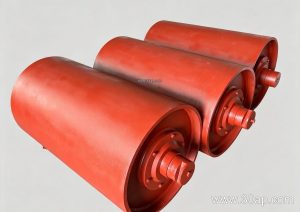
The pulley itself is still a drum: a cylindrical shell, end discs, a shaft, bearing housings and a lagging layer. The ceramic elements are small tiles set in a pattern, often with raised studs or ribs, leaving channels that let water and fines escape as the belt wraps the drum. That drainage matters in washdown areas and in open-air installations where rain or slurry reaches the drive.
How the Ceramic Surface Is Built
Most ceramic lagging is supplied as pre-formed sheets or tiles with a rubber base. The backing is bonded to the shell, and the tiles sit proud of the rubber so they bite into the belt cover without cutting it. Bonding quality decides service life: a poorly attached tile can lift, and a missing tile becomes a starting point for belt slip and shell corrosion.
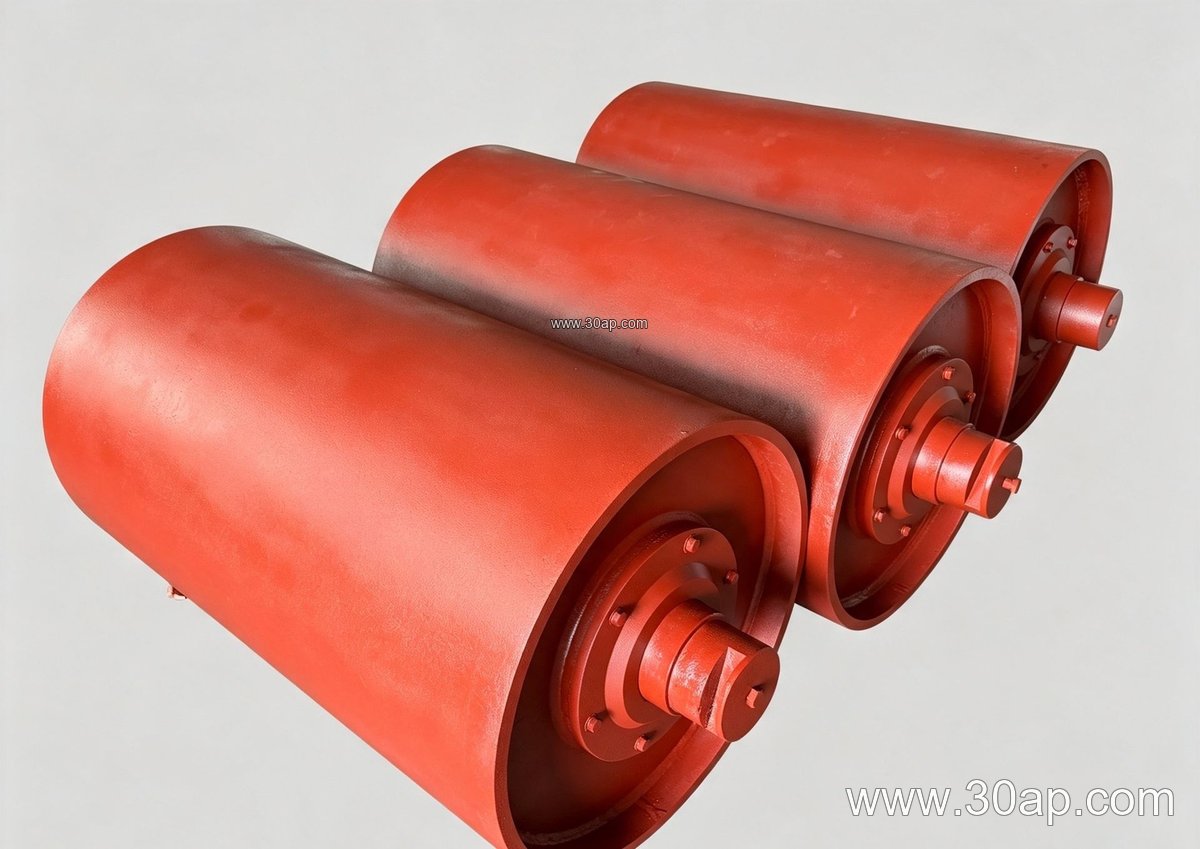
Common lagging thicknesses are 8, 10, 12, 15 and 20 mm, with the ceramic layer adding grip rather than bulk. Shell diameters are usually selected from a standard range such as Ø320, Ø400, Ø500, Ø630, Ø800 or Ø1000, and shaft sizes from about Ø80 to Ø200 depending on torque and bearing load. These are reference values only; final dimensions follow the conveyor design, belt tension and drive duty.
Where It Fits on the Conveyor
Ceramic lagging is most often specified for drive pulleys and tail pulleys in abrasive service. A drive pulley needs friction to transmit power without slip, and a tail pulley runs in the dirtiest part of the return strand. Bend pulleys and take-up pulleys may also use ceramic lagging when the belt is wet or the wrap angle is small, but each position has its own load pattern, so the choice should follow the duty rather than habit.
Typical sites include limestone quarries, iron ore and copper ore plants, coal washing plants, cement clinker lines, power plant coal handling, port bulk terminals and crushing and screening circuits. In these places the belt may be an abrasion resistant conveyor belt, a heavy-duty mining conveyor belt or a steel cord conveyor belt carrying high tension. A ceramic pulley helps keep that belt tracking and driving even when the surface is damp or coated with fine dust.
Matching the Pulley to the Belt
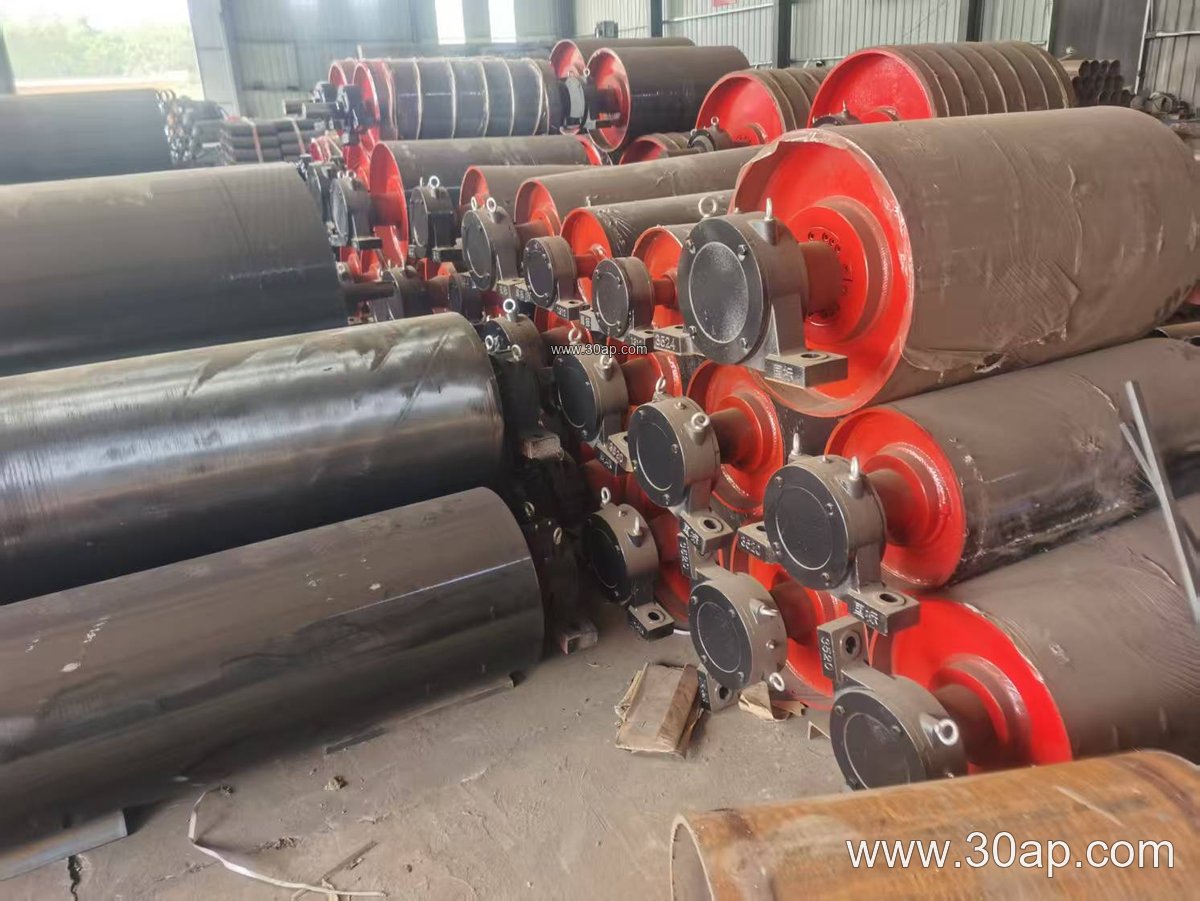
Belt width and pulley face width are related but not identical. The face is usually wider than the belt so the belt stays supported during slight misalignment. Reference combinations often seen include B800 with a face around 950 mm and a Ø500 shell, B1000 with a face near 1150 mm and a Ø630 or Ø800 shell, and B1200 with a face near 1400 mm and a Ø1000 shell. These are examples, not fixed rules; a wide belt can run on more than one shell diameter, and shaft size is set by torque, not by belt width alone.
| Belt width (reference) | Typical face width | Example shell diameter |
|---|---|---|
| B650 | about 750 mm | Ø400 |
| B800 | about 950 mm | Ø500 |
| B1000 | about 1150 mm | Ø630 |
| B1200 | about 1400 mm | Ø800 to Ø1000 |
| B1400 | about 1600 mm | Ø1000 |
A ceramic surface is not the only option. Plain or diamond rubber lagging suits cleaner, lighter duty, while ceramic is chosen where slip and abrasion are persistent. The belt cover also matters: a chevron conveyor belt or corrugated sidewall conveyor belt has a profile that may not sit well against raised tiles, so the pulley and belt should be reviewed together.
Buyer Checklist
- Confirm the pulley position: drive, tail or bend, and the wrap angle.
- State belt width, belt type and maximum tension so the shell and shaft can be sized.
- Ask how the tiles are bonded and whether the lagging is replaceable.
- Check face width, diameter and shaft diameter against the conveyor bracket and bearing housing.
- Consider environment: wet, dusty, oily or high temperature service changes the lagging choice.
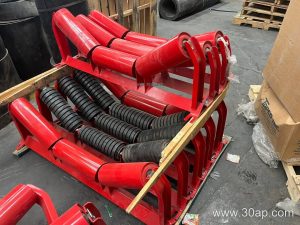
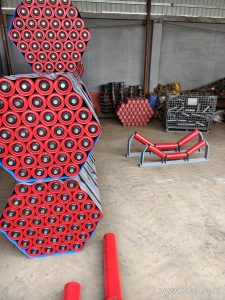
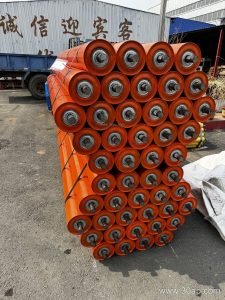
For a full conveyor package, the pulley works alongside the idler roller, the conveyor bracket and the belt itself. Buyers sourcing through a conveyor components supplier often combine a ceramic pulley with an EP conveyor belt or a flame retardant conveyor belt for underground coal mining, and with conveyor rollers sized to the same duty. The pulley is a small part of the capital cost but a large part of uptime, so the specification deserves the same attention as the belt.