What an Ore Conveyor Pulley Does
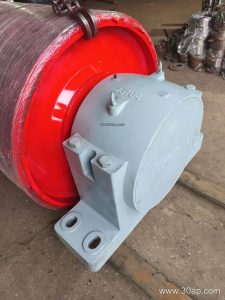
In a bulk handling line, the ore conveyor pulley is the rotating component that drives or redirects the conveyor belt. It transfers torque from the drive system to the belt and maintains proper belt tension along the route. Unlike a simple idler roller, which supports the belt from below, a pulley is a larger, load-bearing drum that must handle high tension and abrasive conditions. The term ore conveyor pulley is often used interchangeably with conveyor drum pulley, especially in mining and quarry operations where the material is heavy and abrasive.
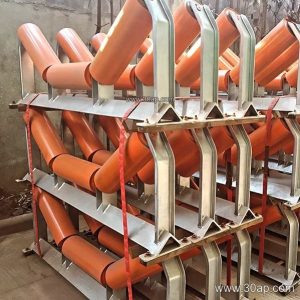
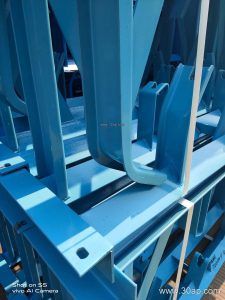
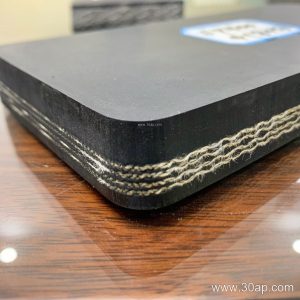
This component is critical in systems carrying iron ore, copper ore, coal, limestone, and other bulk materials. It works together with the conveyor belt, idler rollers, and conveyor brackets to keep the line running smoothly. For example, a heavy-duty mining conveyor belt may operate alongside a large ore conveyor pulley to transport thousands of tons per day.
Construction and Key Features
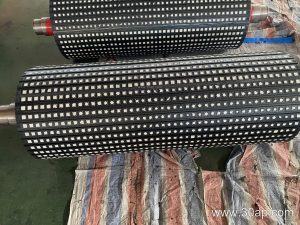
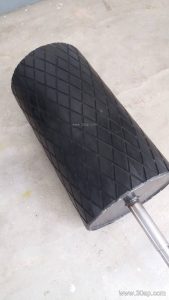
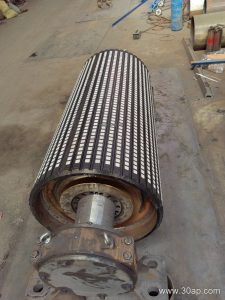
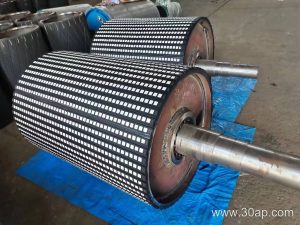
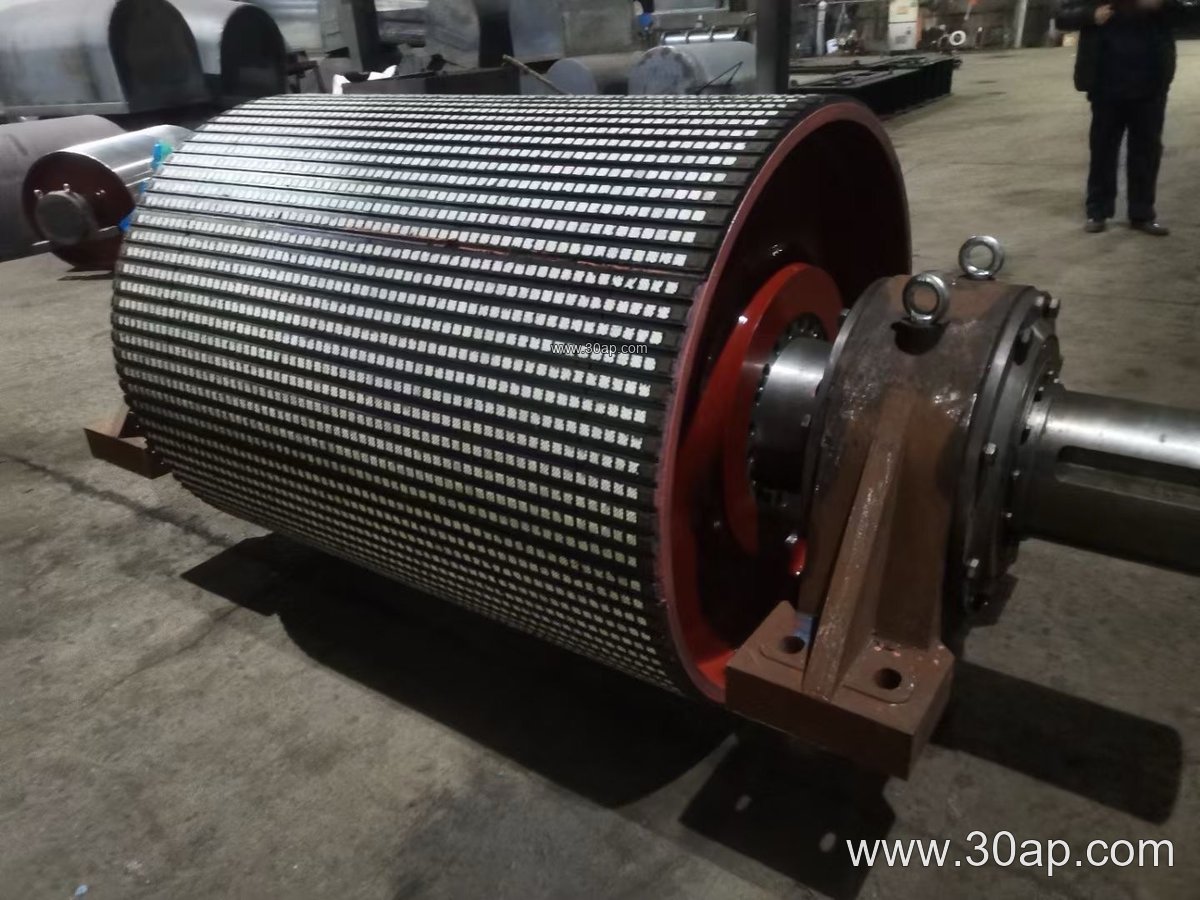
An ore conveyor pulley is typically built with a sturdy steel shell, welded end discs, and a shaft that transmits torque. The shell surface may be plain or covered with rubber, ceramic, or other materials to improve grip and reduce wear. Common surface forms include smooth, cast rubber, cold-bonded rubber, hot-vulcanized rubber, diamond grooved, herringbone grooved, and ceramic lagging. Lagging thickness often ranges from 8 mm to 20 mm, depending on the application and belt tension requirements.
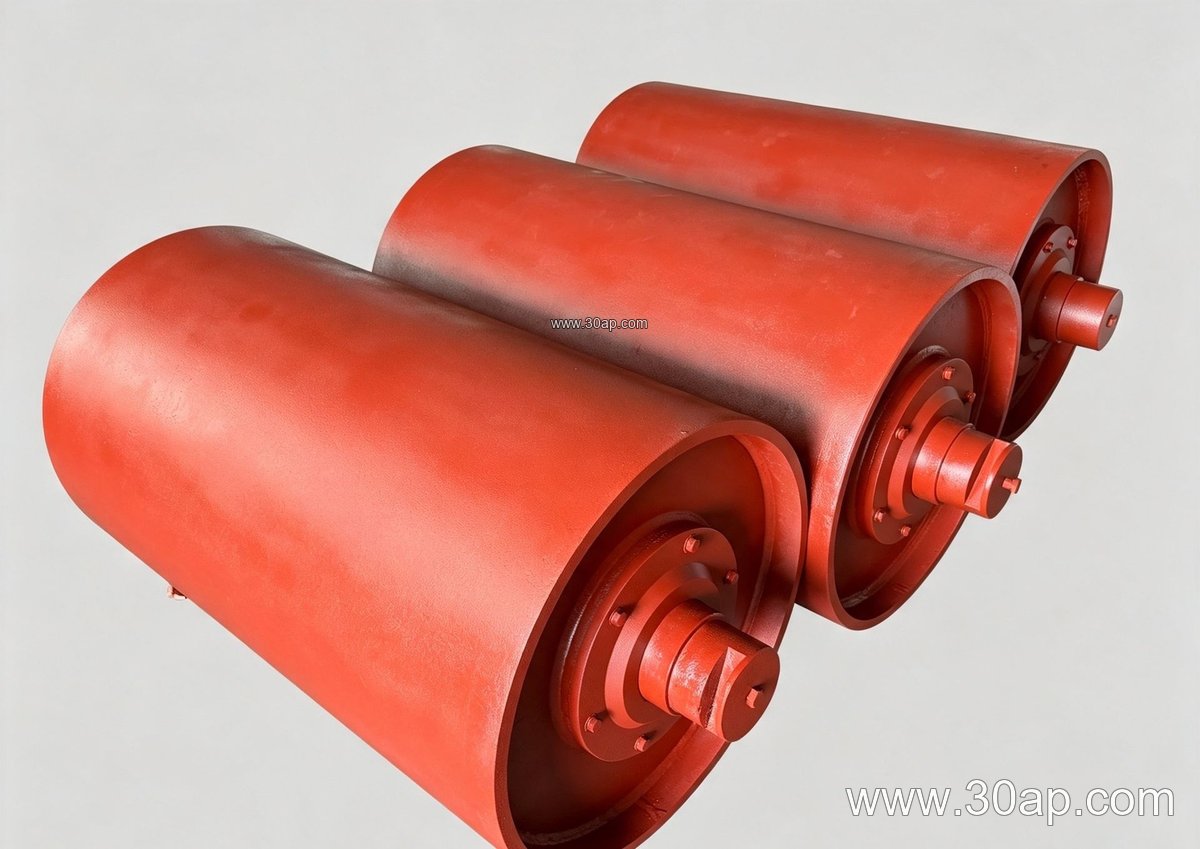
The pulley diameter and face width are selected based on belt width, load, and speed. For instance, a B1200 belt might use a pulley with a face width around 1400 mm, while a B800 belt could use a face width near 950 mm. Diameters commonly range from Ø200 mm to Ø1800 mm, but these are reference values and should be confirmed by design calculations. Shaft diameters are determined by torque and load, not simply by belt width.
Where Ore Conveyor Pulleys Are Used
These pulleys are found in quarry conveyor lines, iron ore mines, copper concentrators, coal washing plants, and cement plants. In a quarry, an ore conveyor pulley may drive a conveyor belt that carries crushed stone from the crusher to the screening area. In a coal mining operation, flame retardant conveyor belt and anti-static properties are often required, and the pulley must be selected to match the belt’s tension and speed. Similarly, in a copper ore handling system, abrasion resistant conveyor belt may be paired with a pulley that has wear-resistant lagging.
Other industries include power plant coal handling, port bulk terminals, and steel plant sinter lines. Each application places different demands on the pulley, so the selection process should consider the specific environment and material characteristics.
Types and Their Roles
While drive, tail, and bend pulleys are not interchangeable, it helps to understand their distinct functions. A drive pulley, also called a head pulley, transmits power to the belt. A tail pulley is located at the opposite end and helps maintain belt tension. A bend pulley changes the belt direction without driving. Other types include take-up pulleys, snub pulleys, and wing pulleys. Each subtype has a specific role in the conveyor system, and choosing the right one is essential for reliable operation.
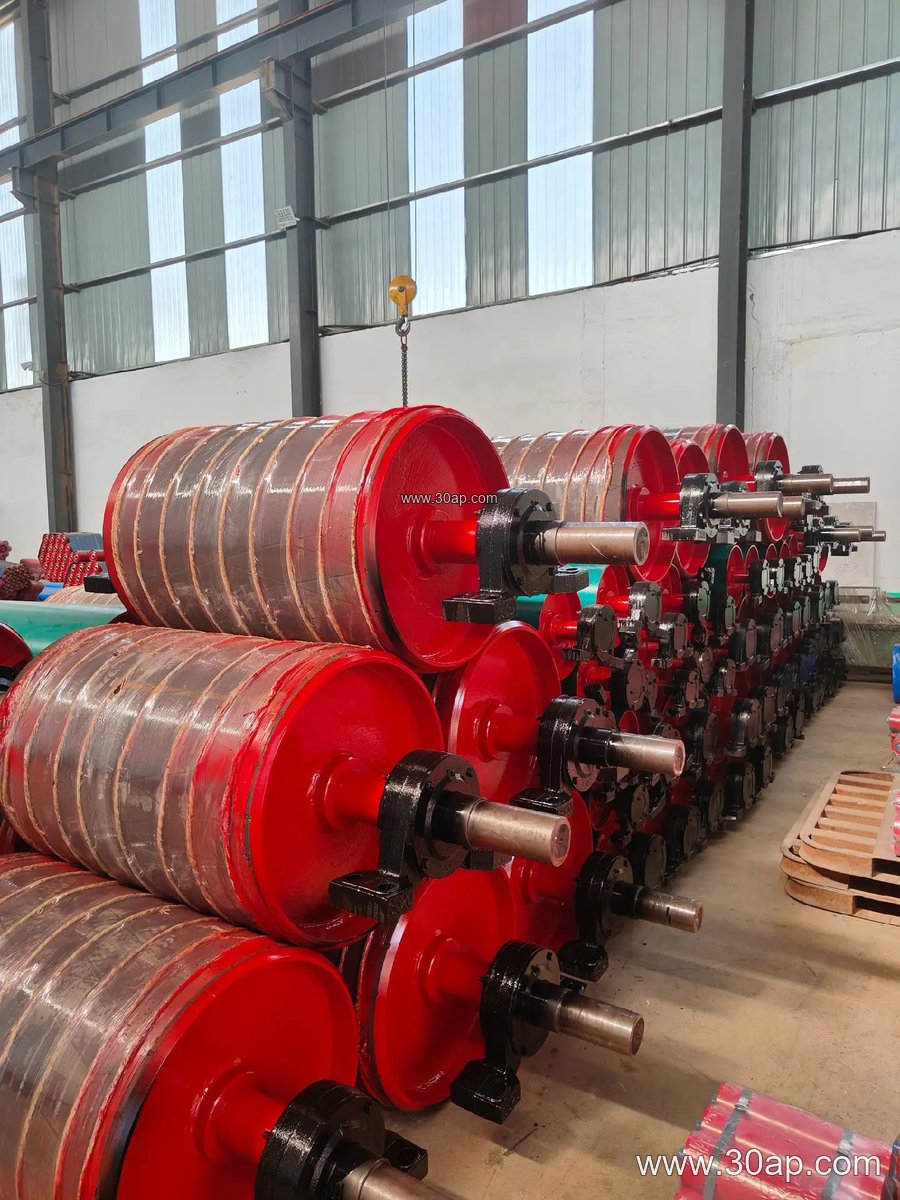
For example, a wing pulley is often used in applications where material buildup is a concern, as its open design allows debris to fall away. However, this article focuses on the general ore conveyor pulley used in bulk handling.
Buyer’s Checklist for Ore Conveyor Pulleys
When specifying an ore conveyor pulley, buyers should consider belt width, pulley diameter, shaft size, lagging type and thickness, and bearing selection. The belt width influences the pulley face width, which is usually wider than the belt to accommodate misalignment. Common belt widths include B400, B500, B650, B800, B1000, B1200, B1400, B1600, B1800, B2000, B2200, and B2400. Pulley diameters typically range from Ø200 to Ø1800, but these are not fixed pairings; engineering calculations determine the final dimensions.
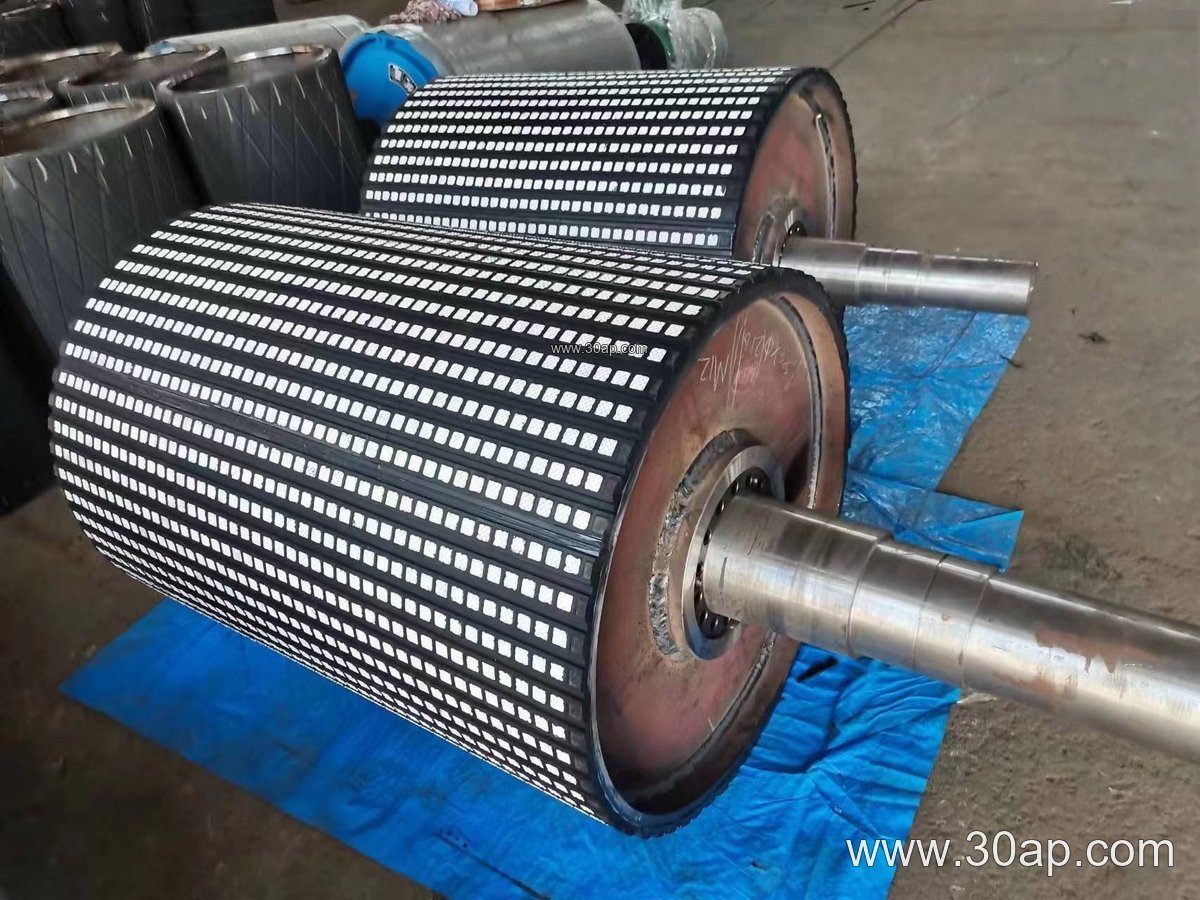
Lagging selection depends on the material and environment. Rubber lagging improves grip and reduces slip, while ceramic lagging offers high wear resistance for abrasive ores. Diamond or herringbone grooved lagging can help with water drainage and material shedding. For coal mining, flame retardant and anti-static properties may be required for the entire system, including the conveyor belt and pulley lagging.
It is also important to match the pulley to the conveyor belt type. For instance, a steel cord conveyor belt may require a larger diameter pulley to reduce bending stress, while an EP conveyor belt may have different requirements. The pulley shaft should be sized based on torque and radial loads, not simply belt width. Bearings and locking assemblies must be selected accordingly.
Maintenance considerations include checking lagging wear, bearing condition, and shaft alignment. Regular inspection helps prevent unplanned downtime. Lubrication schedules should follow the manufacturer’s recommendations.
Final Thoughts
Selecting the right ore conveyor pulley involves balancing belt width, pulley diameter, lagging, and shaft design. By understanding the application and working with experienced suppliers, buyers can ensure reliable performance in demanding bulk handling environments. Whether in a quarry, coal mine, or cement plant, the ore conveyor pulley plays a vital role in keeping materials moving efficiently.