What a Terminal Conveyor Idler Does
A terminal conveyor idler is the roller set positioned at the very end of a belt run, right where the conveyor belt hands material over to the next stage or receives it from a chute. In everyday plant language, this is often called a head-end idler or tail-end carrying idler, depending on which terminal it serves. It is not a conveyor pulley. The drive pulley, tail pulley and bend pulley all turn with the belt and transmit or redirect tension, while a terminal conveyor idler simply supports the belt and keeps the trough shape stable at the point where loads are heaviest or most uneven.
Because these positions sit close to transfer chutes, crushers and screens, the terminal idler usually takes more impact and more fines build-up than idlers in the middle of the run. Getting this detail right matters in a quarry, a coal washing plant, a cement kiln feed line or a power station coal yard.
Construction and Typical Forms
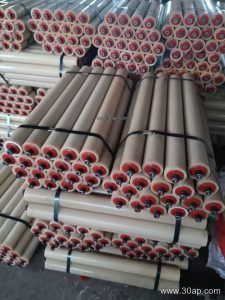
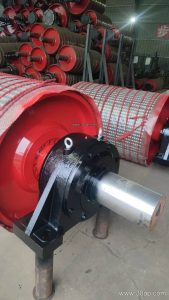
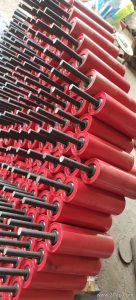
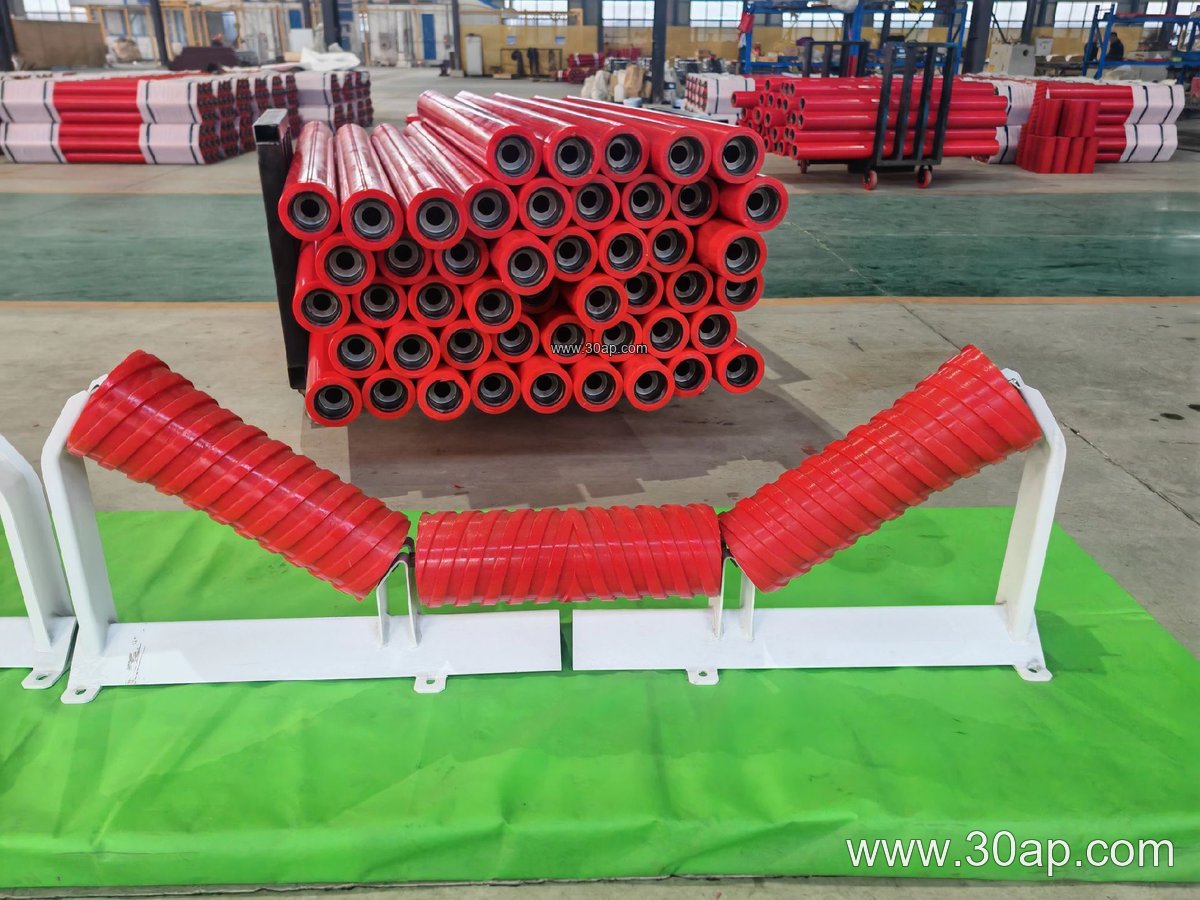
A terminal conveyor idler is built around a steel tube shell, a through shaft, bearing housings and a sealing arrangement. The shell may be plain steel, nylon-coated, ceramic-faced or fitted with rubber rings when impact absorption is needed. Bearings commonly used in this class of idler include 6204, 6205, 6305, 6306, 6308 and 6310, matched to the shaft and load rather than to belt width alone.
At the terminal, the idler set is usually a three-roll troughing arrangement with a 20, 30, 35 or 45 degree trough angle. Two-roll and single-roll sets also appear where the belt is flat or where space is tight. Roll diameters such as Ø89, Ø102, Ø108, Ø127, Ø133, Ø159 and Ø178 are common in this duty, with larger diameters chosen for wider belts and heavier material.
| Reference item | Typical range |
|---|---|
| Belt width | B500 to B2400 |
| Roll diameter | Ø63 to Ø219 |
| Trough angle | 20° to 45° |
| Roll surface | steel, nylon, ceramic, rubber ring |
| Bearing | 6204 to 6310 |
Roll length follows belt width, trough angle and set configuration. As a common example, a three-roll troughing set might use roughly 315 mm rolls at B800, 380 mm at B1000 and 465 mm at B1200, but centre and side rolls can differ and the final figure is set by design.
Where the Terminal Idler Earns Its Place
In a limestone quarry feeding a primary crusher, the head-end idler sits under the discharge zone and must survive sharp rock and constant fines. In a coal washing plant or a power plant coal handling system, flame retardant and anti-static belt grades are often specified, and the terminal idler should be sealed against dust and moisture. The same logic applies on an iron ore or copper ore line, where a heavy-duty mining conveyor belt carries dense, abrasive material and the idler shell wears quickly if the surface is not suited to the duty.
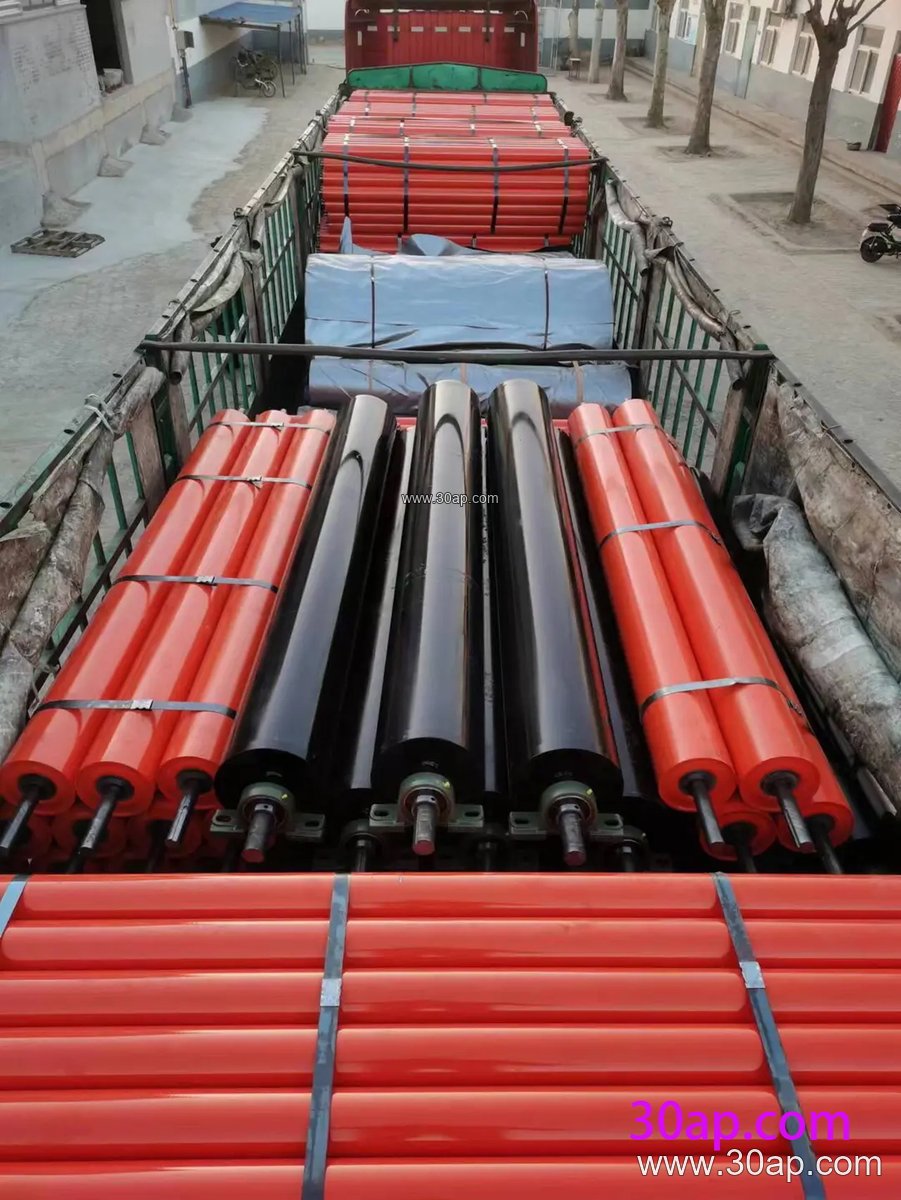
At the tail end, a terminal conveyor idler is often a buffer or impact idler with rubber rings, placed where material lands from the chute. This is where an impact resistant conveyor belt and a cushioned idler work together to reduce shock loading. On a long overland run using steel cord conveyor belt or an EP conveyor belt, the terminal support also helps hold belt line and trough shape as tension changes.
Choosing the Right Unit
Buyers should look at four things: the belt width and speed, the material lump size and abrasiveness, the sealing and bearing class, and the mounting arrangement on the conveyor bracket. A terminal idler that fits a B650 line will not suit a B1800 wide belt run, and shaft diameter should be confirmed from the load calculation rather than assumed from belt width. Ask for the roll diameter, shell thickness, bearing number and sealing type in writing, and check that the idler frame matches the existing bracket spacing.
Where the belt carries hot clinker or sinter, a heat resistant conveyor belt paired with a suitable idler surface is sensible. Where oil or chemicals are present, an oil resistant or chemical resistant belt grade may be needed, and the idler seal should resist the same environment.
Maintenance Notes
Inspect terminal idlers more often than mid-line units. Check for seized rolls, worn shells, loose brackets and material packed around the bearing housing. Replace a terminal conveyor idler as a set when one roll fails, because uneven roll diameters at the transfer point can steer the belt and cause edge damage. Keeping the chute lined and the skirt rubber in good order reduces the load that reaches the idler in the first place.
For related components such as the idler roller, conveyor pulley, conveyor bracket and conveyor belt, match the terminal idler to the actual duty rather than to a catalogue default.