What the EP1500 Conveyor Belt Is
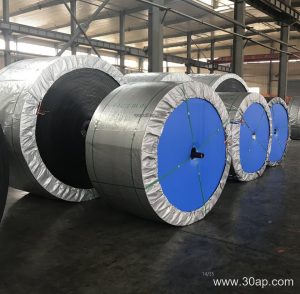
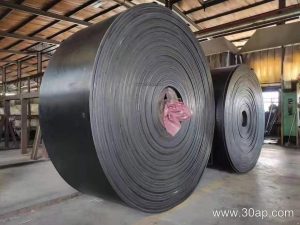
An EP1500 conveyor belt is a multi-ply fabric core belt built around polyester warp and nylon weft fabric. The designation EP1500 refers to the nominal tensile strength class of the carcass, commonly stated in newtons per millimetre of belt width. In practical terms, this is a high-strength fabric belt for conveyor lines that move large tonnages over long distances but do not require the very high tension capacity of a steel cord belt. Buyers searching for an EP1500 rubber conveyor belt are usually specifying the carcass strength first, then the cover grade, width and ply count to suit the duty.
The EP carcass gives low elongation in service, good troughability and resistance to fatigue under repeated flexing at pulleys. Compared with an NN conveyor belt in the same strength class, the polyester warp in an EP belt usually offers better dimensional stability and less stretch, which matters on long inclined runs where take-up travel is limited.
How the Belt Is Built
A typical EP1500 conveyor belt is assembled from several layers of EP fabric, bonded with rubber skim compound and protected by top and bottom covers. Carcass plies commonly range from two to six, depending on the manufacturer and the required strength distribution. The covers carry the abrasion, impact and environmental duty, while the carcass carries the tension.
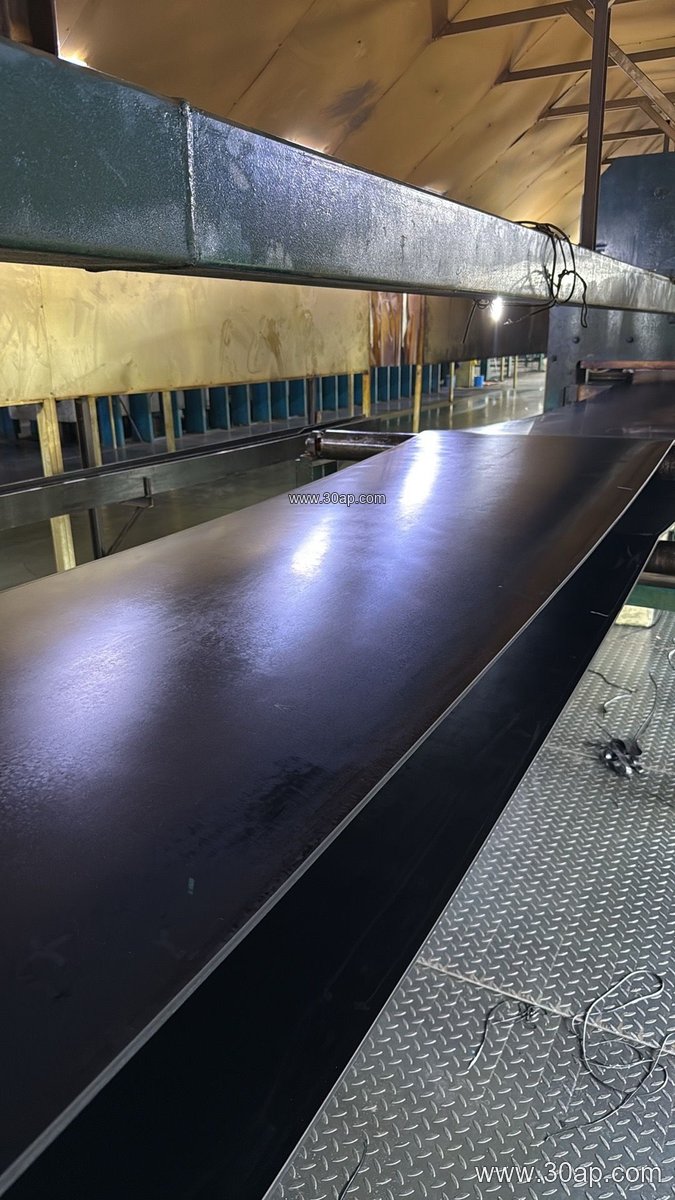
- Carcass: multi-ply EP fabric, polyester warp and nylon weft, with rubber skim between plies.
- Top cover: selected for abrasion, heat, oil, flame resistance or cold conditions as required.
- Bottom cover: usually a thinner abrasion-resistant layer running on the idler roller side.
- Edges: cut or moulded, with edge protection chosen to suit the application.
Cover thickness is normally written as top plus bottom, for example 6+2 mm or 8+3 mm for heavy-duty mining conveyor belt service. These figures are common references, not fixed rules, and the final construction should follow the conveyor design.
Typical Duty and Industries
The strength class suits main haulage and high-capacity trunk conveyors. You will see this belt in iron ore and copper ore handling, quarry conveyor belt lines feeding crushers, cement plant raw material and clinker transport, power plant coal conveyor systems, and port or ship loading conveyors. In sand and aggregate plants it is often used on the primary crusher conveyor belt and on long transfer conveyors where a fabric core is preferred over steel cord.
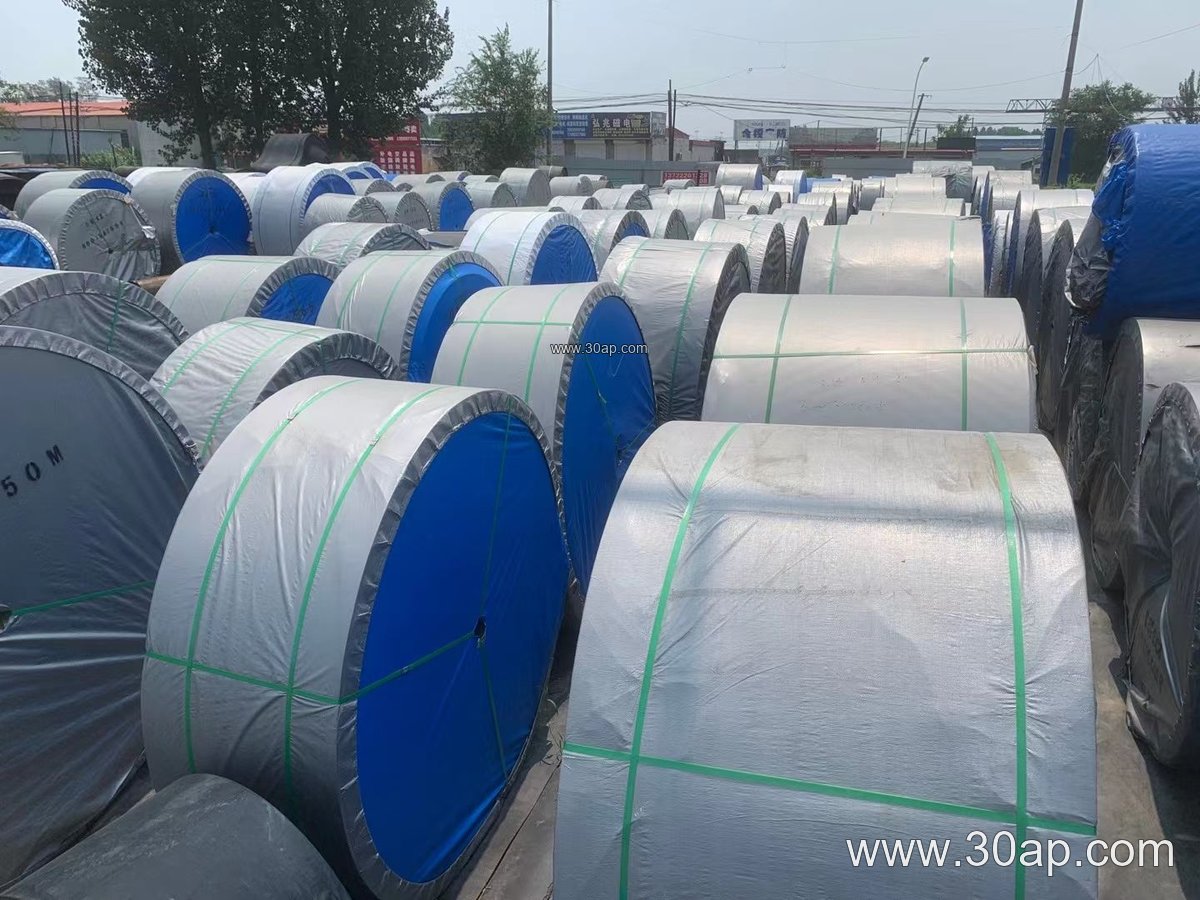
For underground coal mining conveyor belt service, flame retardant and anti-static properties are usually specified, often with PVG or PVC cover constructions. Above ground, a high abrasion resistant conveyor belt cover is a common choice for sharp rock and ore. Where material is hot, a heat resistant conveyor belt cover may be needed; where oil or fuel is present, an oil resistant conveyor belt grade should be considered.
Widths, Strength Classes and Related Specifications
Belt width is selected from the lump size, capacity and troughing arrangement, and the same strength class can be supplied in several widths. The table below shows common reference values for orientation only.
| Parameter | Common Reference Range |
|---|---|
| Strength class | EP200, EP315, EP400, EP500, EP630, EP800, EP1000, EP1250, EP1500, EP1600, EP2000 |
| Belt width | B500, B650, B800, B1000, B1200, B1400, B1600, B1800, B2000 |
| Cover thickness | 3+1.5, 4+2, 5+2, 6+2, 8+3 mm |
| Carcass plies | Usually 2 to 6 layers |
Note that belt width and pulley diameter are separate design decisions. A 1200mm or 1400mm wide belt can run on different pulley sizes depending on tension, ply count and the conveyor profile; there is no one-to-one pairing. Shaft diameter is calculated from the pulley load and bearing selection, not from belt width alone.
Selection Points for Buyers
Start with the actual operating tension rather than the nominal class. Confirm the maximum belt tension, the take-up arrangement, the pulley diameters and the transition distances, because a stiff multi-ply carcass needs adequate pulley size to flex without ply separation. Check the material: lump size and drop height call for impact resistant conveyor belt covers or impact idler roller support at transfer points. Confirm environmental conditions for flame retardant, cold resistant or acid and chemical resistant conveyor belt grades.
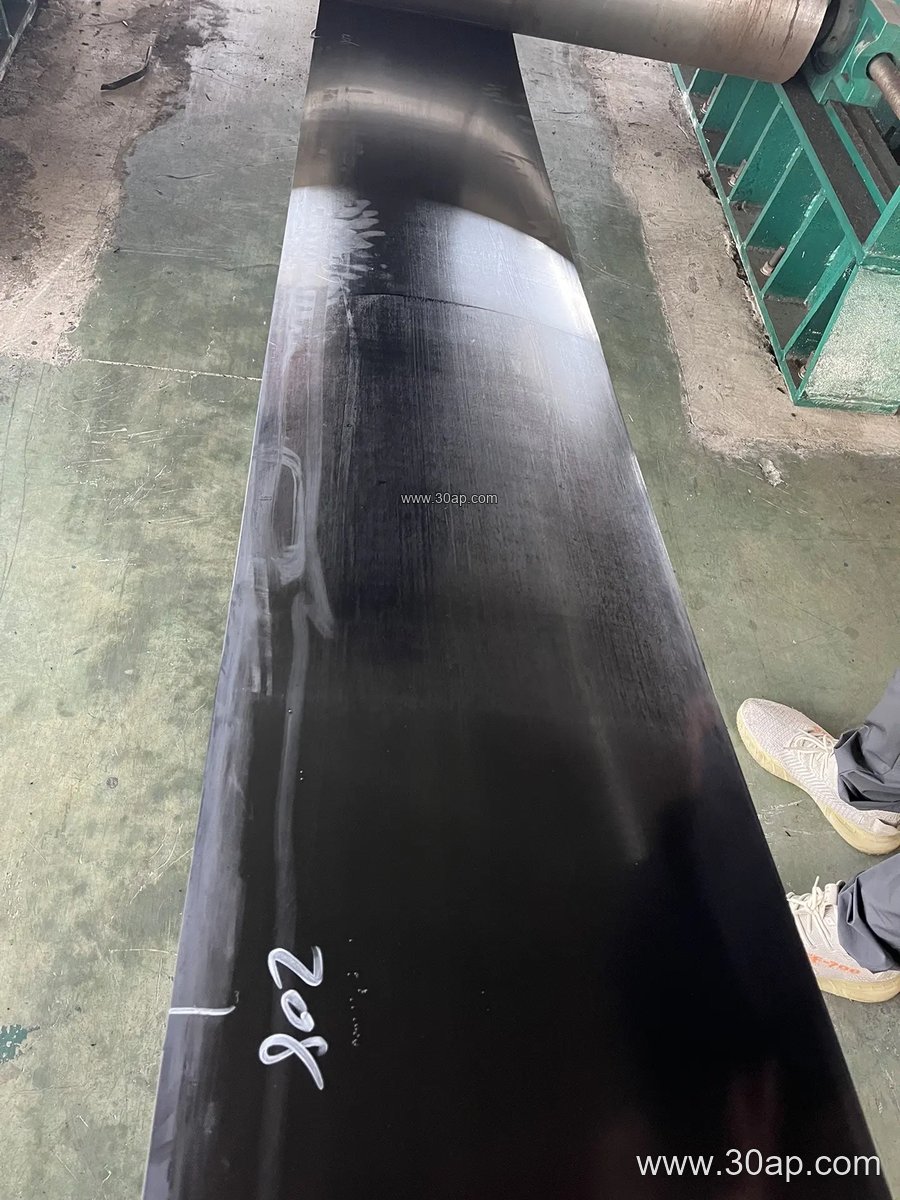
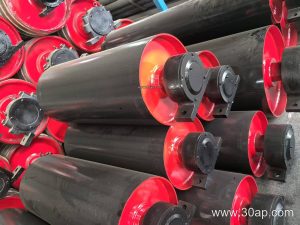
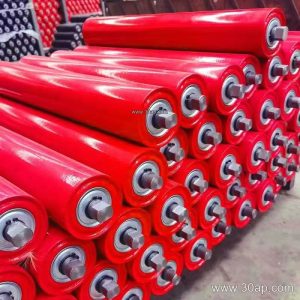
Also review the conveyor pulley and conveyor bracket condition before fitting a new belt. Worn lagging, misaligned frames or seized idler roller assemblies will shorten belt life regardless of carcass quality. For steep inclines, a chevron conveyor belt or corrugated sidewall conveyor belt may be a better fit than a plain EP belt, but that is a different product choice, not a substitute for the EP1500 specification itself.
Finally, ask for the manufacturer’s data sheet with ply construction, cover grade, elongation and splice recommendations. Fabric core conveyor belt splicing, whether vulcanised or mechanical, must match the carcass, and the splice is often the weakest point on a high-tension line.
Maintenance Notes
Keep the belt tracking straight, maintain adequate counterweight or screw take-up travel, and inspect edges for rips after heavy impacts. Clean the return side and check that the conveyor pulley lagging is not polished or damaged. Regular inspection of idler roller rotation and bracket alignment prevents edge damage and reduces the risk of a lengthwise tear in a heavily loaded EP conveyor belt.