What a Heavy-Duty Mining Conveyor Belt Is Built For
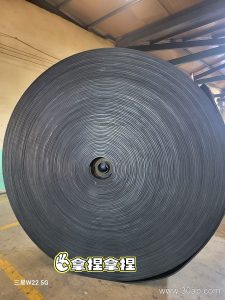
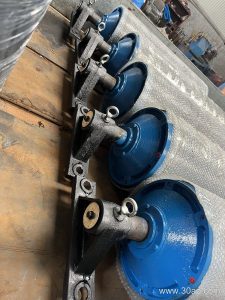
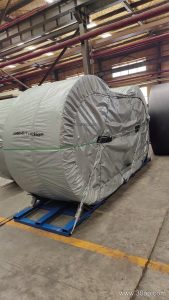
A heavy-duty mining conveyor belt is the load-bearing element in a bulk handling line where rock, ore, coal, aggregate, or cement clinker moves continuously between crushing, screening, stockpiling, and shiploading points. Unlike a general-purpose belt, this class is designed around high tensile demand, thick abrasion-resistant covers, and reliable splice performance under constant impact. In a quarry conveyor belt or iron ore conveyor belt duty, the belt often works alongside conveyor pulleys, idler rollers, and a sturdy conveyor bracket frame, so the belt’s own construction must suit the whole conveyor rather than stand alone.
The same product is often called a heavy-duty conveyor belt for mining service, and both names describe one article: a reinforced rubber belt built for severe duty. It is not a drive pulley, tail pulley, or bend pulley, and it should never be specified as a substitute for those components.
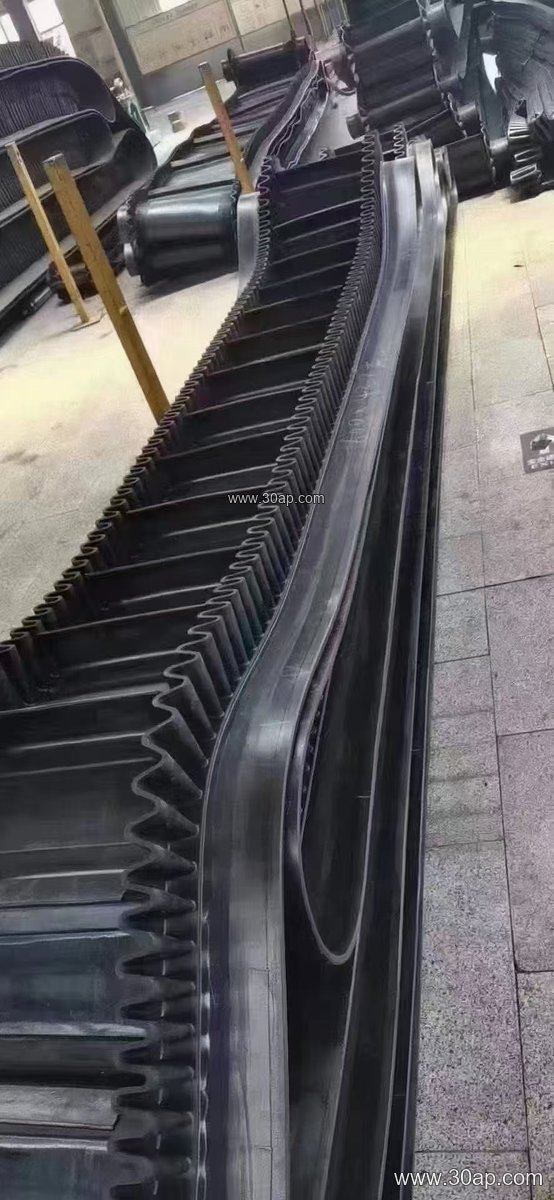
Construction and Reinforcement Options
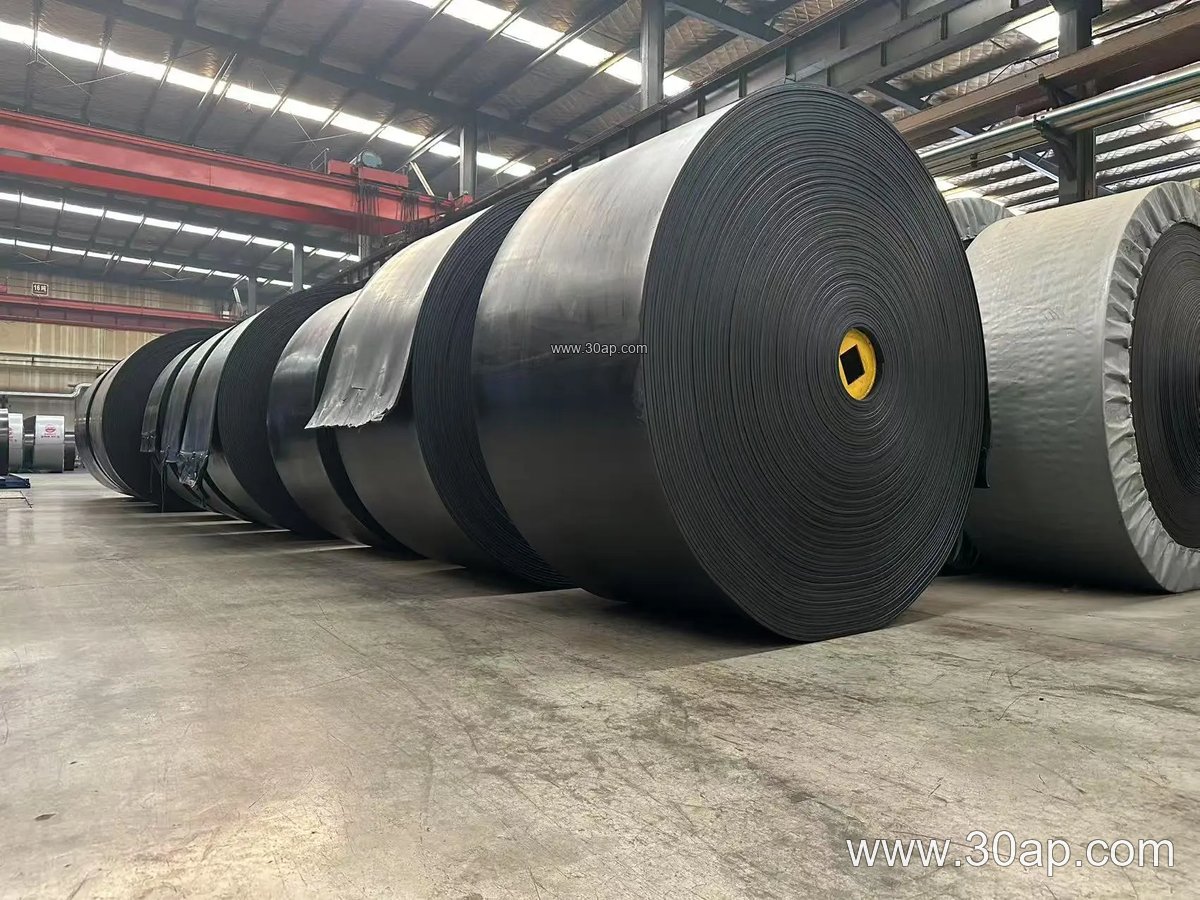
Most heavy-duty mining conveyor belts use a fabric core or a steel cord core. Fabric constructions include EP conveyor belt (polyester warp, nylon weft) and NN conveyor belt (nylon warp and weft). Multi-ply fabric core conveyor belt designs commonly use two to six plies, depending on the duty. Steel cord conveyor belt construction is chosen when long center distances and high tension demand a single strong tensile member.
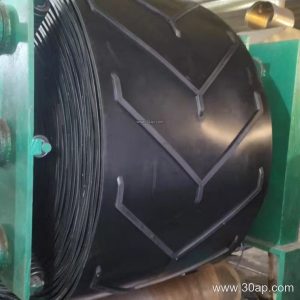
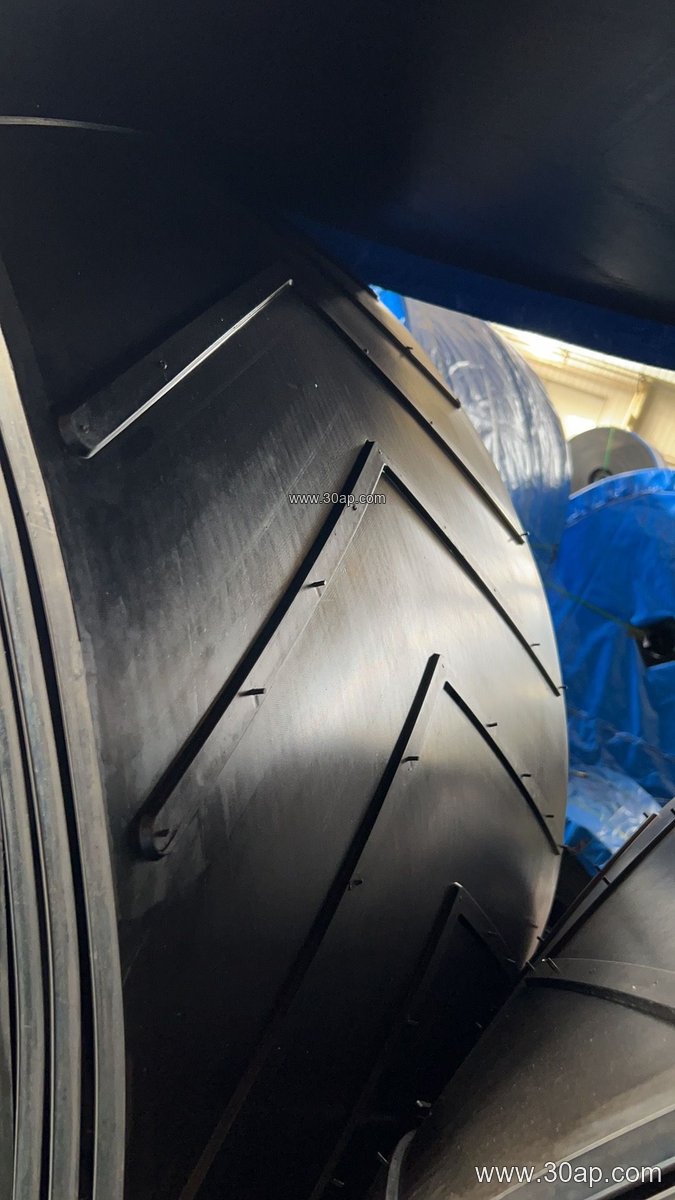
Cover compounds are selected for the environment. Abrasion resistant conveyor belt grades handle sharp rock and sinter; heat resistant conveyor belt grades serve cement plant and steel plant transfer points; flame retardant conveyor belt and fire resistant conveyor belt grades are common in coal mining conveyor belt and underground coal mining conveyor belt service, where anti-static conveyor belt behavior is also important. Oil resistant conveyor belt, cold resistant conveyor belt, and acid resistant conveyor belt grades cover other plant conditions. Chevron conveyor belt, skirted conveyor belt, and corrugated sidewall conveyor belt profiles help retain material on steep inclines.
| Reference item | Typical range |
|---|---|
| Fabric core grades | EP200, EP315, EP400, EP500, EP630, EP800, EP1000, EP1250, EP1600, EP2000 |
| Belt width | B500, B650, B800, B1000, B1200, B1400, B1600, B1800, B2000 |
| Cover thickness | 3+1.5, 4+2, 5+2, 6+2, 8+3 mm |
| Fabric plies | 2 to 6 layers, by design |
These values are reference data, not universal specifications. Actual cover thickness, ply count, and grade are confirmed against the conveyor design, the material lump size, and the loading conditions.
Where It Works
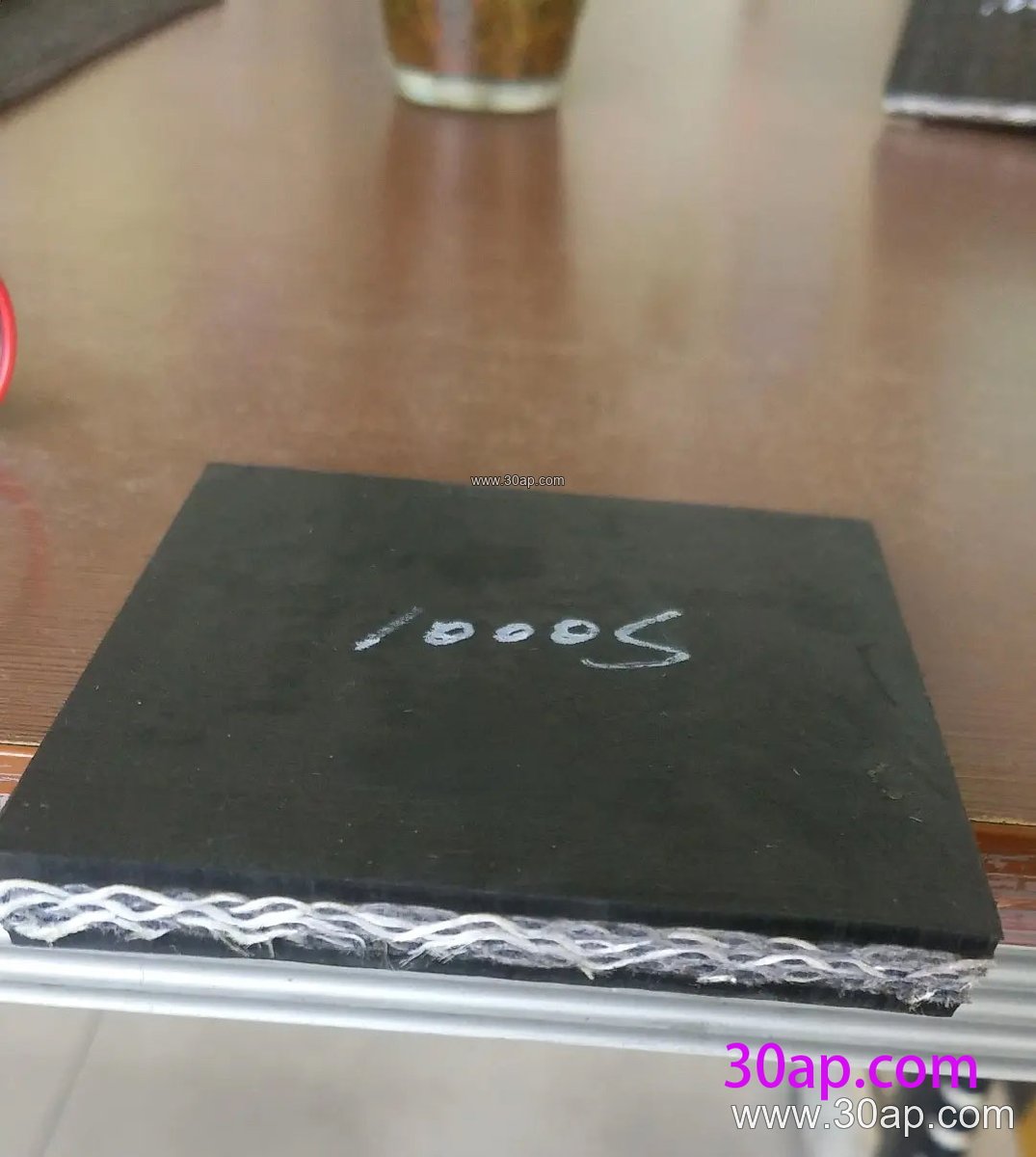
Heavy-duty mining conveyor belts appear across many industries. In a coal preparation plant or underground mining conveyor belt line, flame retardant and anti-static properties matter. At a cement plant conveyor belt or power plant conveyor belt, heat resistance and abrasion resistance often decide cover grade. In a sand making plant conveyor belt, stone crushing conveyor belt, or aggregate conveyor belt circuit, impact resistance at the feed point is critical. Port conveyor belt and ship loading conveyor belt systems demand high strength and stable tracking over long runs, while recycling conveyor belt duty favors cut and tear resistance.
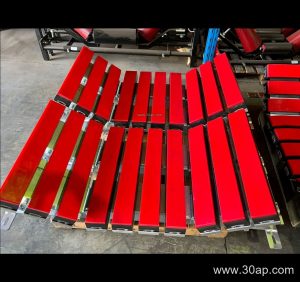
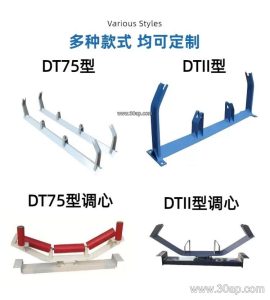
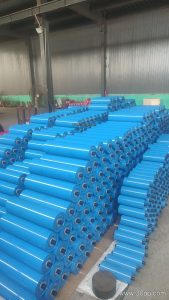
Whatever the plant, the belt works as a system with conveyor pulleys, idler rollers, and conveyor brackets. A well-aligned frame and free-turning rollers extend belt life more than any single cover upgrade.
Buyer Checklist
- Confirm the required tensile grade and belt width against the actual conveyor design, not a catalog default.
- Match the cover compound to the dominant risk: abrasion, heat, oil, flame, cold, or impact.
- Check whether a pipe conveyor belt, chevron profile, or corrugated sidewall is needed for the route.
- Review splice method and edge condition with the belt supplier before ordering.
- Plan roller and pulley inspection so the belt is not asked to compensate for worn components.
For more on related components, see www.example.com/conveyor-belt, www.example.com/idler-roller, and www.example.com/conveyor-pulley. A heavy-duty mining conveyor belt is a long-term investment, so specify it from the duty, the material, and the conveyor geometry rather than from a single number.