What a Rubber Lagged Pulley Does
A rubber lagged pulley is a conveyor pulley whose shell is covered with a rubber layer to improve grip between the pulley and the conveyor belt. This cover, often called lagging, is bonded to the drum surface and helps reduce belt slip, protect the pulley shell from wear, and in some designs help shed material. In a conveyor drive, the rubber lagged pulley transmits motion to the belt; at a tail or bend position, it guides and supports the belt. The product is also known as a rubber-coated pulley or lagged drum pulley, and these terms refer to the same item.
The lagging is not a universal fix. It is selected for the duty, the belt, and the environment. A quarry conveyor handling abrasive rock may need a different cover from a coal mining conveyor that must meet flame retardant requirements. The pulley works together with the conveyor belt, idler roller, and conveyor bracket to keep the line running.
How the Lagging Is Built and Bonded
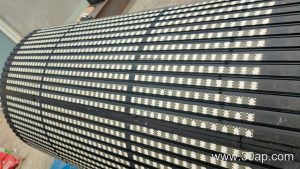
Lagging can be applied in several ways. Cold-bonded rubber is glued to the shell and is common for general service. Hot vulcanized rubber is cured onto the drum for a stronger bond in demanding drives. The surface may be plain, diamond pattern, herringbone, or ceramic embedded. Thickness commonly ranges from 8 mm to 20 mm, with 10 mm and 12 mm often used on medium-duty pulleys. The right thickness depends on belt tension, pulley diameter, and the risk of slip.
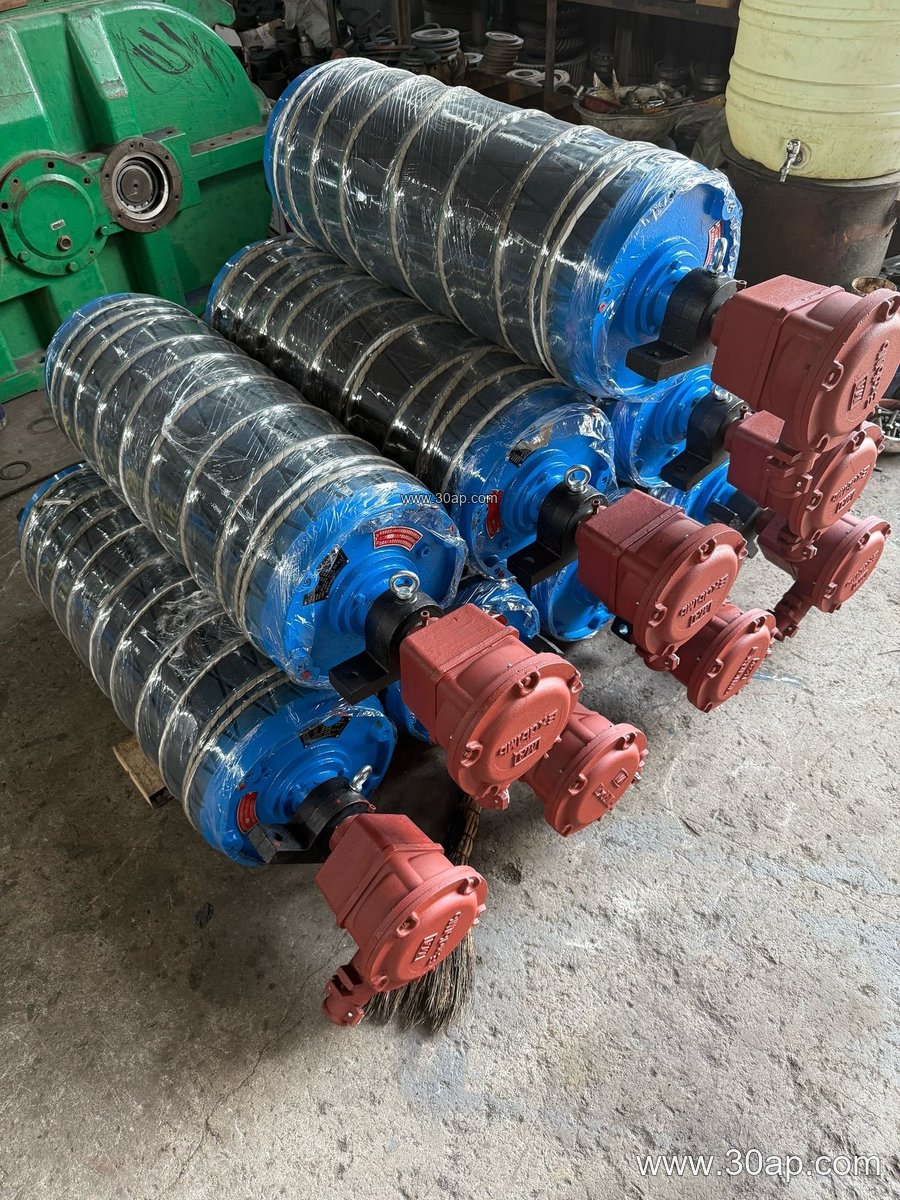
Build quality matters more than a single number. The rubber compound should suit the site: oil resistant where lubricants or oily material are present, abrasion resistant where sand and stone wear the surface, and flame retardant in underground coal mining. For a drive pulley, the lagging must hold under high torque; for a bend pulley, it mainly guides the belt and may use a thinner cover.
Where It Fits in the Conveyor
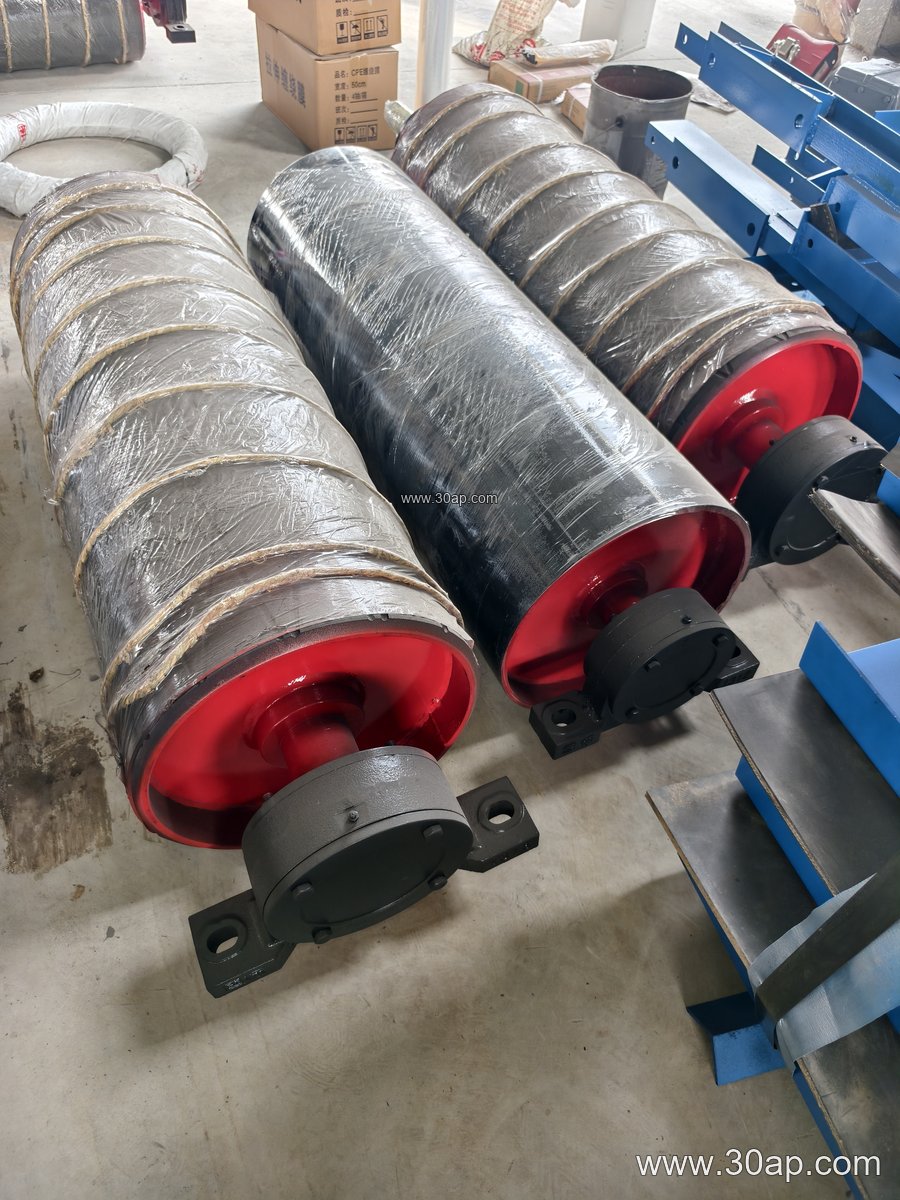
Position changes the job. A drive pulley, often at the head, needs reliable friction to pull the belt. A tail pulley at the loading end may use lagging to protect the shell from impact and fines. A bend pulley changes belt direction and may be lagged to reduce wear. A tension pulley takes up slack and keeps the belt tracking. These are not interchangeable roles, and a rubber lagged pulley should be specified for its exact duty.
In a limestone quarry, a lagged head pulley helps start a fully loaded belt. In a coal washing plant, a flame retardant lagged pulley may be required on the drive. In a cement plant, a bend pulley with abrasion resistant lagging can last longer in a dusty environment. The pulley also interacts with the conveyor belt type: a heavy-duty mining conveyor belt or steel cord conveyor belt may need a larger diameter and thicker lagging than a lighter fabric core belt.
Matching Pulley Size to Belt and Load
Pulley diameter is not set by belt width alone. It is chosen from belt tension, torque, shaft load, and the belt manufacturer’s minimum pulley diameter. Common shell diameters include Ø200, Ø250, Ø315, Ø400, Ø500, Ø630, Ø800, Ø1000, Ø1250, Ø1400, Ø1600, and Ø1800. A B800 conveyor might use a Ø500 pulley in one layout and a larger drum in another. The shaft diameter is determined by torque and load, with common sizes from Ø50 to Ø200; it should never be guessed from belt width.
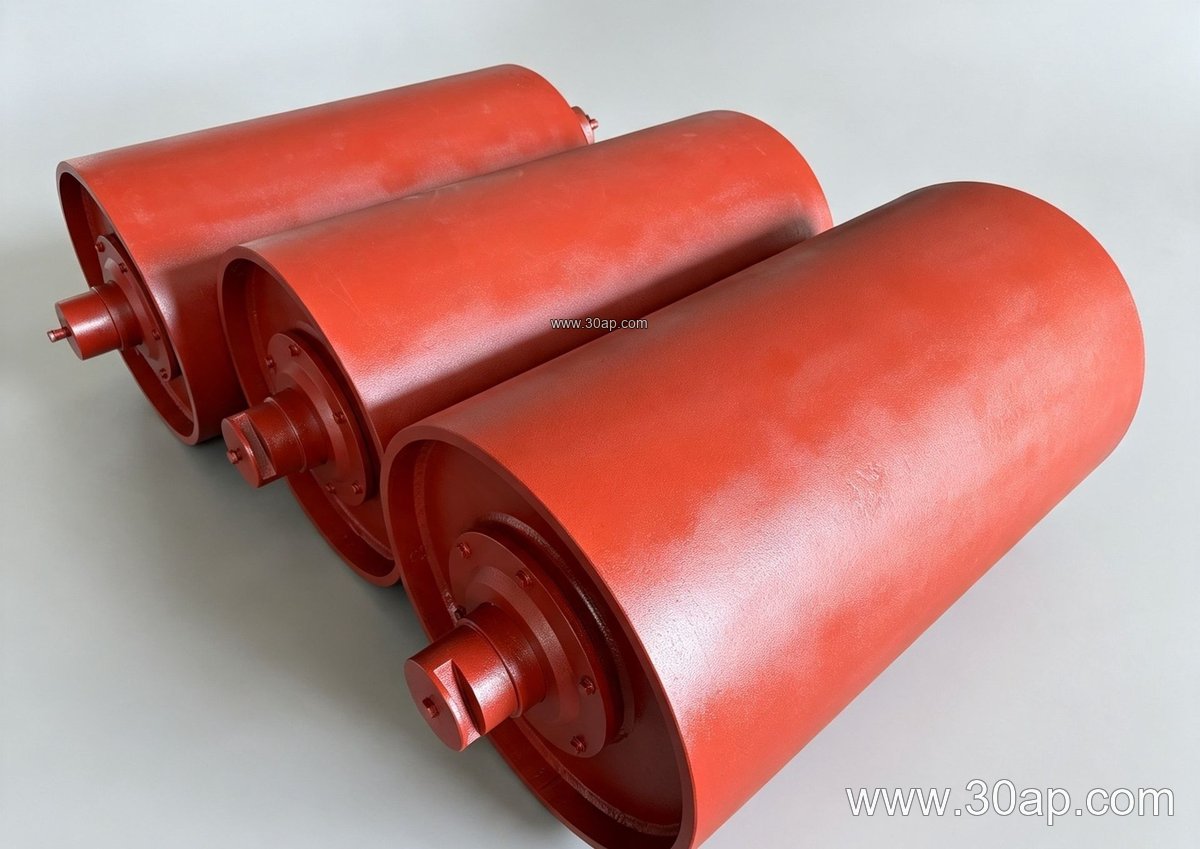
Face width is usually wider than the belt. For example, a B650 belt may run on a pulley face around 750 mm, and a B1200 belt on about 1400 mm. These are typical references, not fixed rules. The table below shows common reference combinations for planning; final sizes must be confirmed by design.
| Belt width reference | Typical pulley face width | Example diameter range | Common lagging thickness |
|---|---|---|---|
| B500 | about 600 mm | Ø250 to Ø400 | 8–10 mm |
| B650 | about 750 mm | Ø315 to Ø500 | 8–12 mm |
| B800 | about 950 mm | Ø400 to Ø630 | 10–12 mm |
| B1000 | about 1150 mm | Ø500 to Ø800 | 10–15 mm |
| B1200 | about 1400 mm | Ø630 to Ø1000 | 12–15 mm |
| B1400 | about 1600 mm | Ø800 to Ø1250 | 15–20 mm |
For high-tension lines using steel cord conveyor belt or heavy-duty mining conveyor belt, larger diameters and thicker lagging are often needed. For a fabric core conveyor belt such as EP conveyor belt or NN conveyor belt, the pulley diameter should follow the belt manufacturer’s recommendation to avoid bending stress.
Buyer Checklist Before Ordering
- Confirm the pulley position: drive, tail, bend, or tension. Do not substitute one for another.
- State the conveyor belt type and tension so the supplier can check minimum pulley diameter.
- Choose lagging surface and thickness for the material: abrasive, oily, hot, or flame risk.
- Provide belt width and required face width, plus shaft diameter based on torque and load.
- Ask for the bonding method and rubber compound data, not just the color.
- Check that the pulley fits the conveyor bracket and aligns with the idler roller line.
A rubber lagged pulley is a small part of the conveyor but a critical one. Correct lagging and sizing reduce slip, belt wear, and downtime. Whether the site is a copper ore line, a power plant coal yard, or a sand and gravel plant, the pulley should be matched to the belt and the job rather than chosen from a single size chart.