What the Conveyor Carrying Bracket Does on a Running Line
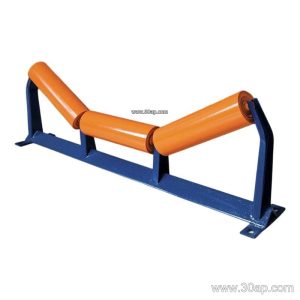
A conveyor carrying bracket is the steel frame that holds the troughing idlers in place along the load-bearing side of a belt conveyor. It sits between the stringer or main frame and the idler roller, fixing the roller at the angle and spacing the belt needs so material stays centered during transport. In a quarry, a coal washing plant, or a cement clinker line, these brackets are the quiet workhorses that keep the belt profile stable from the loading point to the discharge.
The same part is often called a carrying idler bracket or troughing bracket, and the naming depends on the plant and the supplier. It is not a pulley and not a roller; it is the mounting structure that connects them to the conveyor frame. Understanding that distinction helps when ordering spares, because a conveyor bracket with the wrong hole pattern will not accept the idlers already on site.
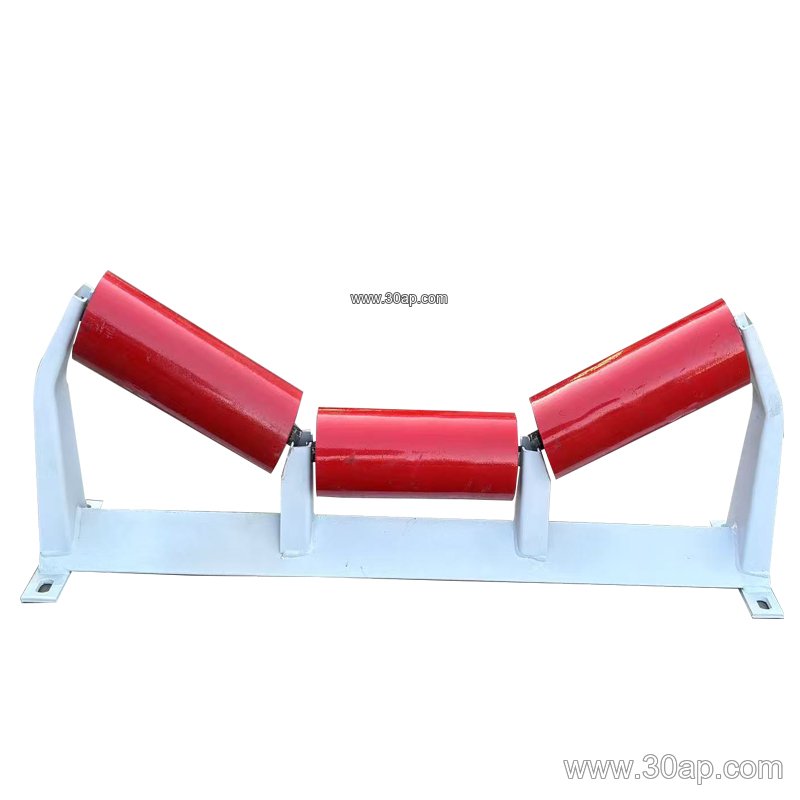
Construction and Mounting Details
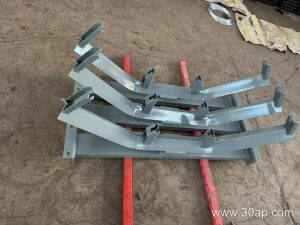
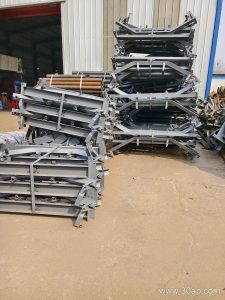
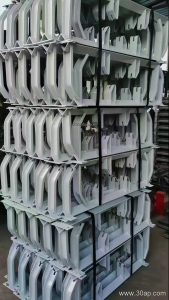
Most carrying brackets are fabricated from angle steel, channel steel, or folded steel plate, with welded gussets at the corners. The bracket usually carries three idler positions: one center roll and two side rolls set at the trough angle. The center roll seat is often slotted or bolted so the roll can be adjusted slightly, while the side seats are fixed at the design angle.
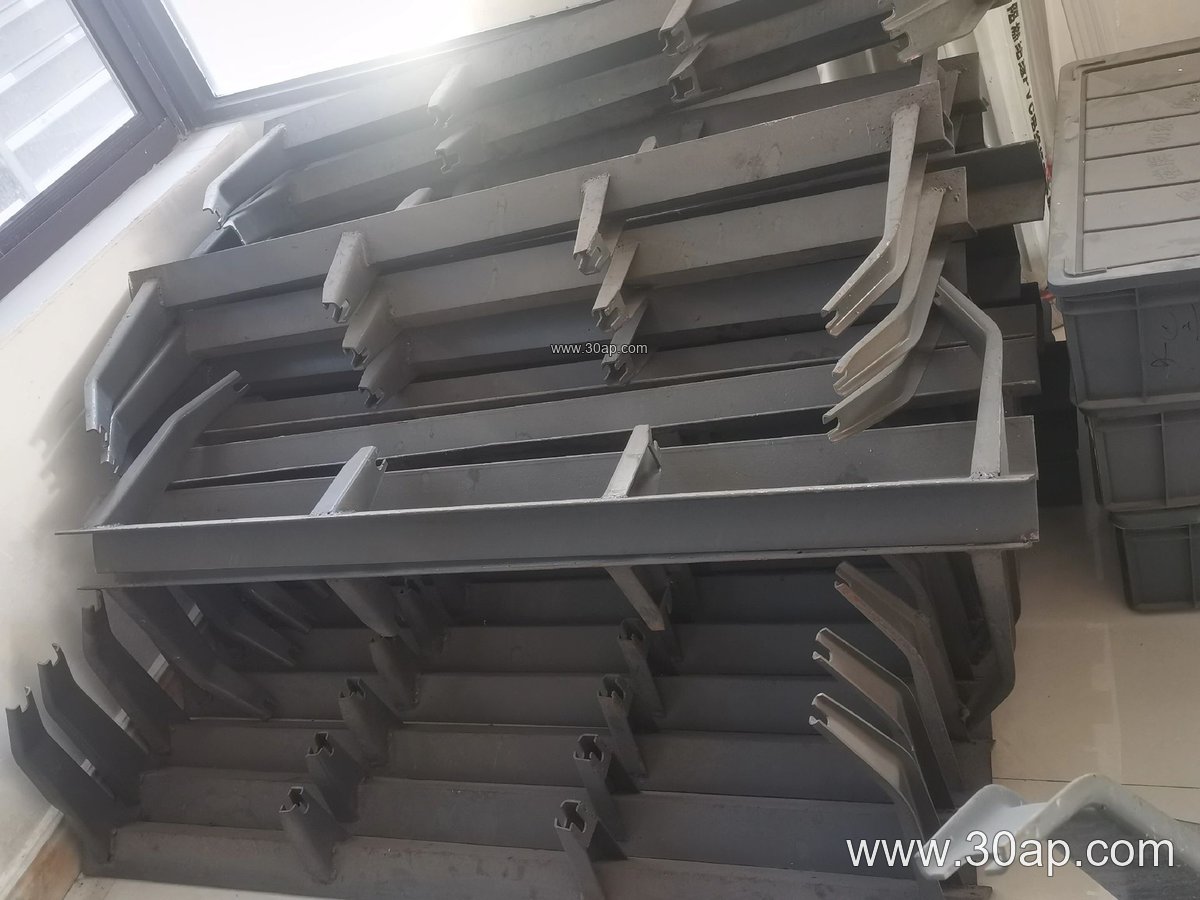
- Troughing angle: commonly 20, 30, 35, or 45 degrees, with adjustable versions covering a range
- Belt width compatibility: B500 through B2200, with B800, B1000, and B1200 being frequent in aggregate and coal service
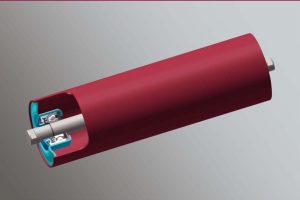
- Idler diameter: Ø89, Ø108, Ø133, Ø159, and Ø194 are common references
- Mounting: bolt-on to the main frame, or welded where the plant standard allows
Installation hole spacing and crossbeam length follow the belt width and trough angle, so they are determined per design rather than treated as universal figures. A B800 bracket at 35 degrees with Ø108 idlers is a typical combination, but it is not the only valid one; a B1200 line at 45 degrees with Ø133 rolls is equally normal in heavy material handling.
Matching the Bracket to Belt and Idler Choices
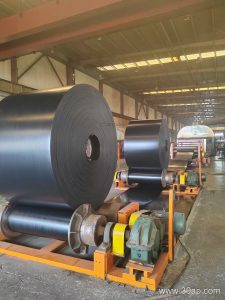
The bracket must suit the belt it supports. A wide, heavy belt such as a 1200mm or 1500mm wide conveyor belt used on a mining conveyor belt or an ore conveyor belt transfers more load into each idler station, so the bracket steel and the roller diameter should be reviewed together. Thick, abrasion resistant conveyor belt grades used for iron ore or rock handling also benefit from a stiffer frame and a slightly closer idler pitch.
Angle selection matters as much as strength. A 20-degree trough suits fine material that must not spill, while 35 or 45 degrees gives a deeper trough for lumpy feed from a crusher conveyor belt or a quarry conveyor belt. Transition brackets at the tail and head ends ease the belt from flat to troughed, reducing edge stress on a steel cord conveyor belt or a multi-ply fabric core conveyor belt that does not bend as freely as a thin rubber conveyor belt.
Where These Brackets Are Used
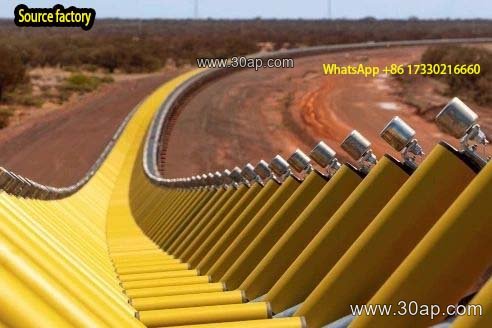
Carrying brackets appear wherever bulk material rides on a belt. In a power plant coal yard, they support the loaded strand on a flame retardant conveyor belt feeding the bunkers. In a sand and gravel line, they hold troughing rolls under an abrasion resistant conveyor belt moving washed stone. In a fertilizer or grain silo operation, a lighter bracket with Ø89 idlers is often enough, while a steel plant sinter line may need a heavier frame under a heat resistant conveyor belt.
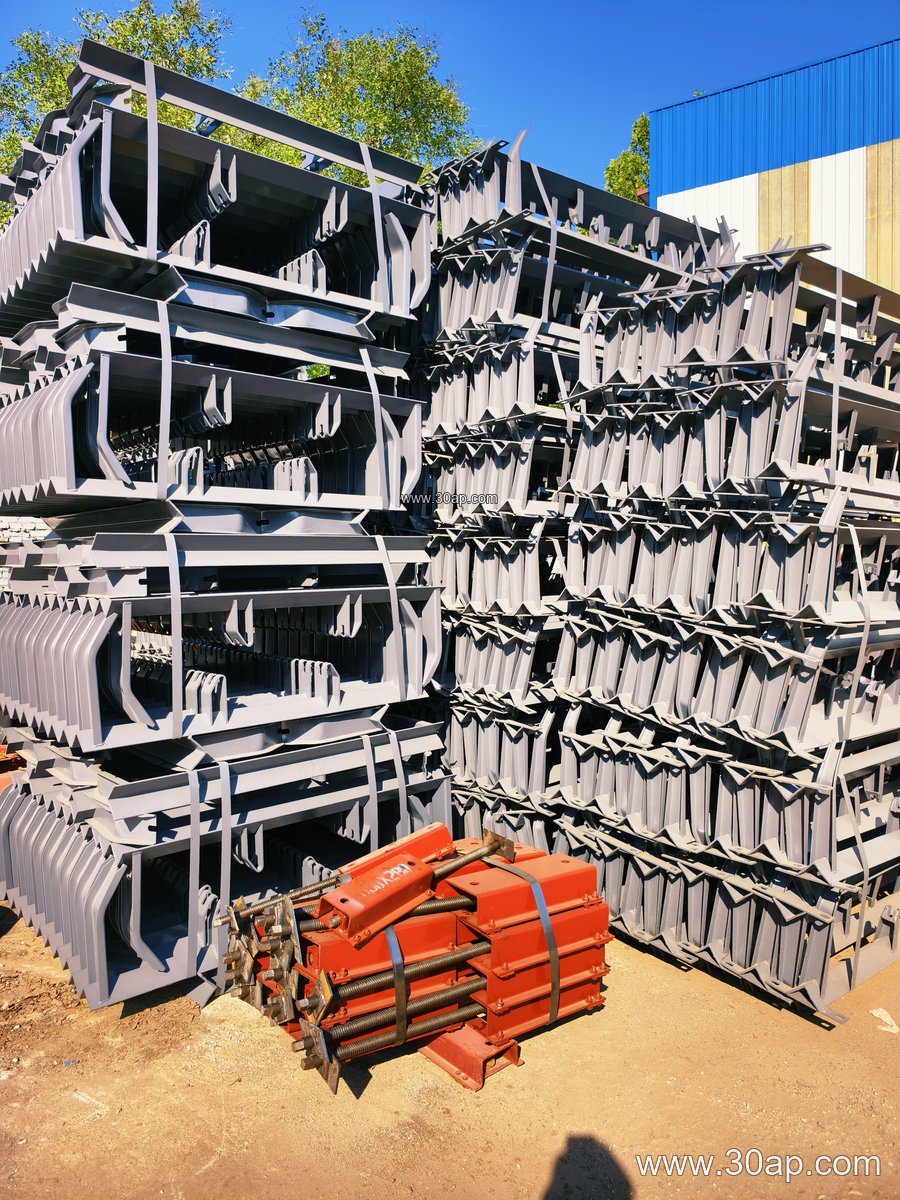
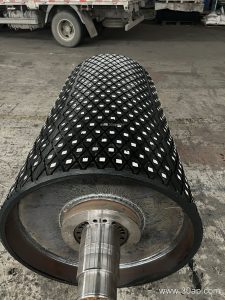
Return-side support is handled differently, so a carrying bracket should not be swapped for a return bracket or a V-return bracket. Those are separate components with their own geometry. Similarly, a bend pulley, drive pulley, and tail pulley are not interchangeable with any bracket; each has a distinct role in the conveyor drive and path.
Buyer Checklist Before Ordering
Confirm the belt width, the trough angle, and the idler diameter first. Then check the frame hole pattern and the crossbeam length against the existing conveyor, since these vary with design. Ask whether the bracket is fixed or adjustable, and whether the application needs a self-aligning or training version to correct belt drift. For impact zones under a loading chute, an impact bracket with cushioning idlers is often specified instead of a standard carrying bracket.
Finally, match the surface treatment to the environment: a wash-down area, an underground coal mining conveyor belt installation, and an outdoor port conveyor belt all place different demands on coating and corrosion protection. A bracket that fits the belt, the idler, and the frame will keep the line running with fewer stoppages, whether the plant handles ore, clinker, or grain.