What a Lower Self-Aligning Idler Does
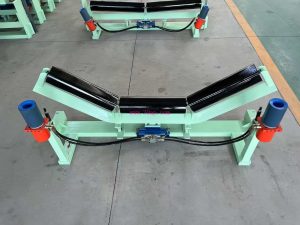
A lower self-aligning idler is a return-side tracking roller that keeps the conveyor belt centered as it travels back under the carrying run. It is mounted on the lower frame, where the belt is empty, and it steers the belt by tilting slightly when the belt drifts to one side. In a quarry, a coal washing plant, or a power plant coal yard, a belt that wanders off-center can rub the frame, spill material, and wear the edges quickly. This return-side self-aligning roller addresses that problem before it becomes a maintenance issue.
Although the name is specific, the product is often called a self-aligning return idler, a training idler for the return strand, or a self-tracking lower roller. These all refer to the same item; they are not the same as a drive pulley, a tail pulley, or a bend pulley, which are conveyor pulleys with entirely different duties.
Construction and Working Principle
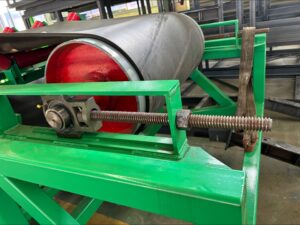
The assembly usually consists of two angled rollers mounted on a pivoting frame, with a vertical pivot shaft that lets the whole group swing horizontally. When the belt touches a roller or pushes against a side guide, the frame rotates a few degrees. That small angle creates a steering force that nudges the belt back toward the center line. Friction-type and conical designs achieve the same correction through different roller profiles.
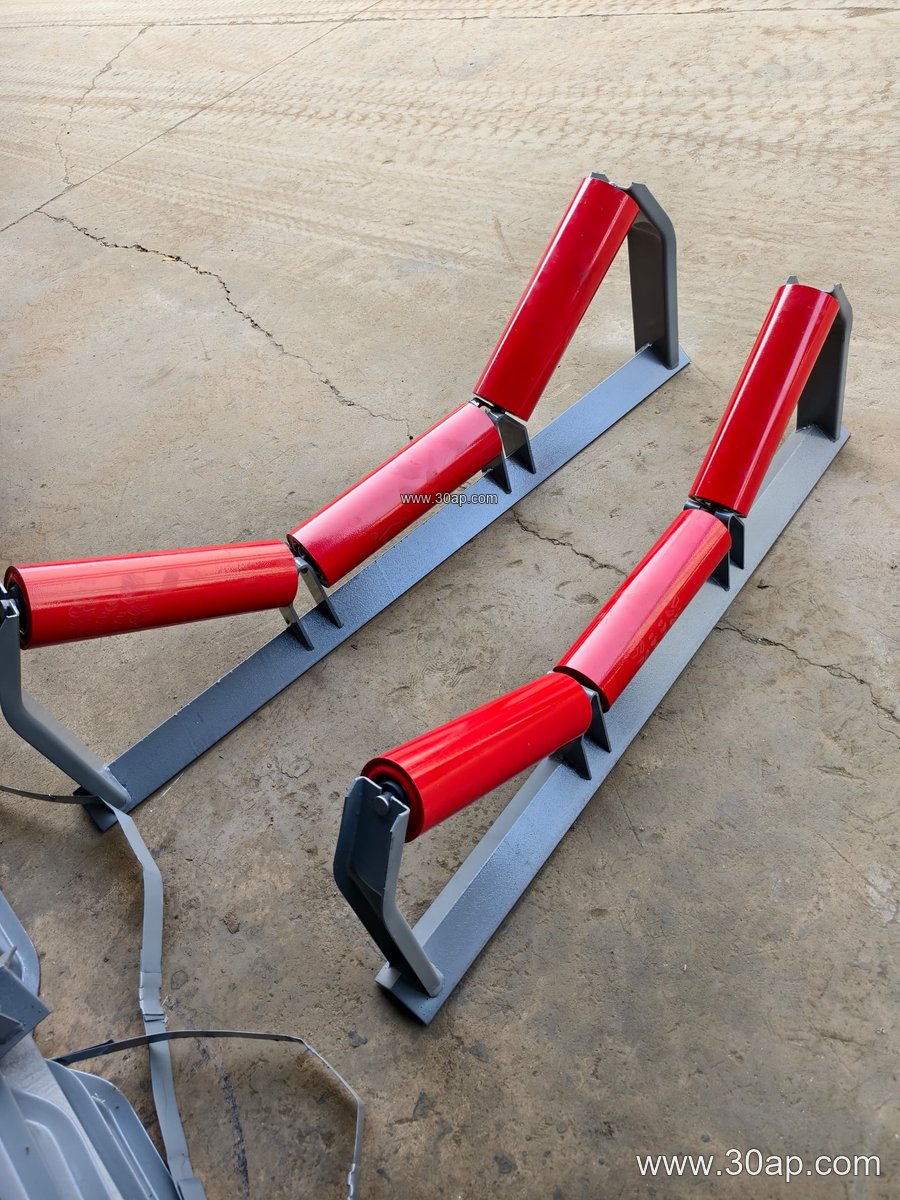
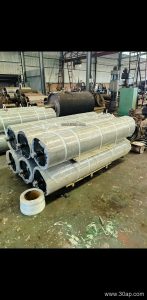
- Roller shell: steel tube is common; nylon, ceramic, or rubber rings may be fitted where buildup or wear is a concern.
- Bearing: sizes such as 6204, 6205, 6305, 6306, 6308, and 6310 are typical, matched to load and roller diameter rather than to belt width alone.
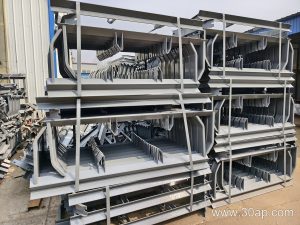
- Frame: welded steel with a pivot, often bolted to a conveyor bracket on the return frame.
- Roller diameter: common values include Ø89, Ø102, Ø108, Ø127, Ø133, and Ø159 mm; the choice follows belt width, load, and the existing idler set.
Common Parameter Reference
| Item | Typical range |
|---|---|
| Belt width | B500 to B2000 mm; wider belts are handled by heavier frames |
| Roller diameter | Ø63 to Ø219 mm depending on duty |
| Trough angle of related sets | 20°, 30°, 35°, 45° |
| Bearing | 6204, 6205, 6305, 6306, 6308, 6310 |
| Roller length | Set by belt width and frame design, not fixed |
These values are reference data. A buyer should confirm the actual roller diameter, shaft size, and mounting height with the conveyor design.
Where It Fits on the Conveyor
The lower self-aligning idler sits on the return run, usually a short distance after the tail pulley or before the bend pulley, where belt misalignment is most visible. In a limestone mine or a sand and aggregate line, it is often paired with a V-type return idler for support and with a troughing set on the carrying side. It works together with the conveyor belt, the idler roller group, and the conveyor bracket, but it does not replace the head drive pulley or the tail pulley.
On long overland lines carrying iron ore or copper ore, several units may be spaced along the return strand. In a cement plant or a crushing and screening circuit, one or two well-placed units are often enough to correct a persistent drift caused by off-center loading or a slightly skewed frame.
Selection Points for Buyers
Start with belt width and the existing return idler diameter so the new unit sits at the same height. Check the shaft and bearing housing dimensions, the pivot design, and whether the frame suits the available conveyor bracket. For dusty or wet service, sealed bearings and smooth roller surfaces reduce sticking. In a coal mining conveyor or underground mining conveyor, flame retardant and anti-static properties of nearby belting matter, and the idler should be chosen to match the environment.
Material also guides the choice. An abrasion resistant conveyor belt carrying sharp rock may throw fines onto the return rollers, so a self-cleaning profile helps. Where heat is present, as in a steel plant or sinter line, keep the idler clear of hot material and check bearing grease compatibility. For belts such as EP conveyor belt or steel cord conveyor belt constructions, tracking performance depends on square splices and even loading as much as on the idler itself.
Installation and Maintenance
Mount the unit square to the belt center line. A misaligned base will fight the self-aligning action. Allow the frame to swing freely and keep the pivot clear of packed material. Inspect rollers for flat spots, check that both rollers turn, and re-grease sealed bearings only if the design provides a fitting. Replace worn rollers before the shell cuts the belt edge.
If tracking problems persist after fitting a lower self-aligning idler, look at loading position, belt splice squareness, and pulley alignment. The idler corrects drift; it does not fix a badly loaded belt or a crooked frame. A short walk along the return run during operation will show whether the unit is responding or simply being pushed to its limit.