What a Self-Aligning Idler Bracket Does
A self-aligning idler bracket is the hinged or pivoted support that holds a training idler assembly on a conveyor. When the belt drifts sideways, the bracket lets the idler frame swing slightly around a vertical pivot, and the resulting change in roller angle steers the belt back toward the center line. It is a small component with a large effect on belt life, because edge damage, spillage and premature cover wear usually begin with mistracking.
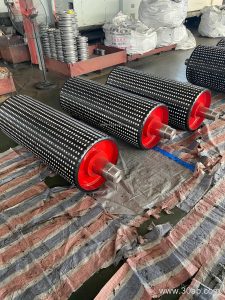
The same part is also described as a self-tracking idler bracket or self-centering idler support, depending on the supplier. It should not be confused with a drive pulley, tail pulley or bend pulley, which transmit power and change belt direction rather than correct alignment.
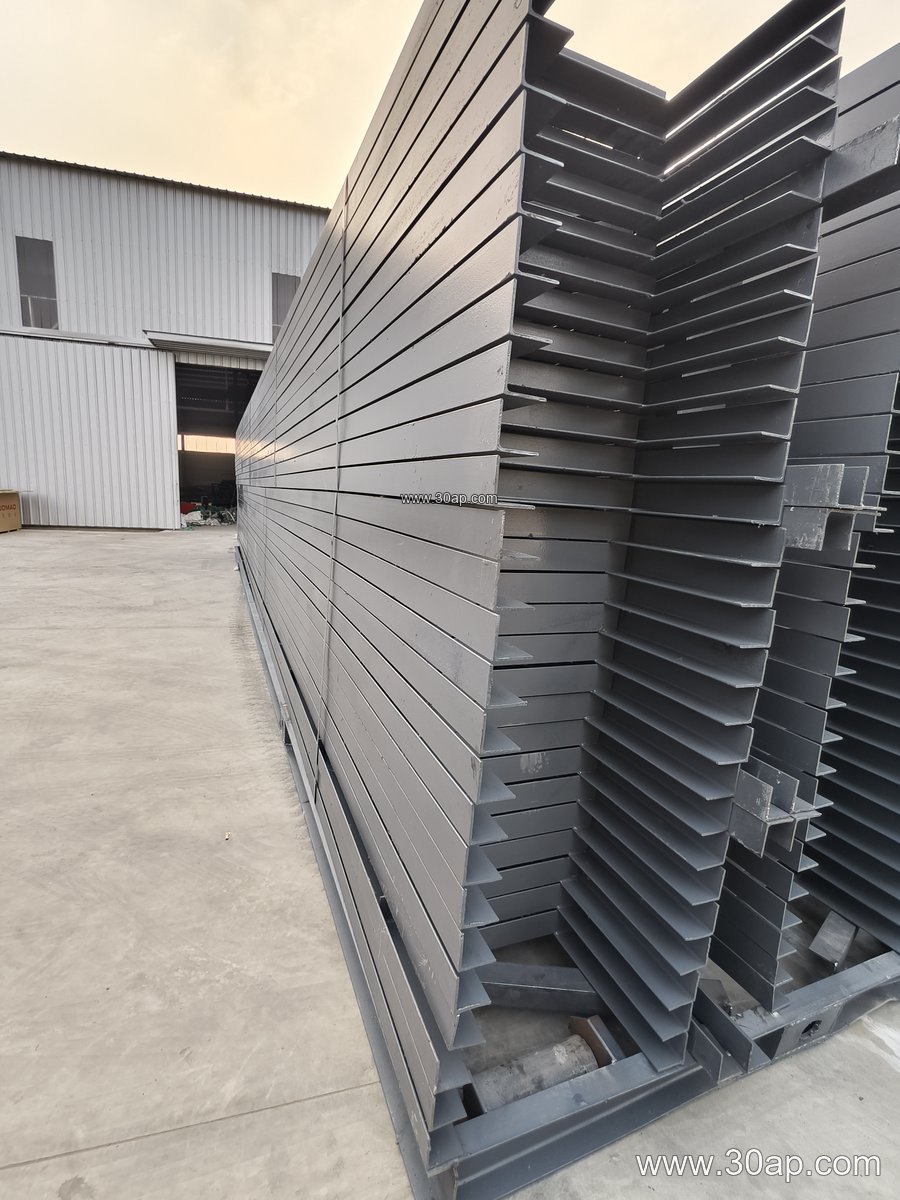
Construction and Mounting Position
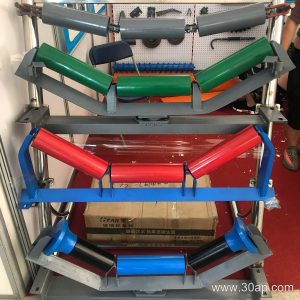
Most designs combine a fixed base, a pivot shaft or bearing seat, and a carrying frame. The frame is commonly fabricated from angle steel, channel steel or folded steel plate, with mounting holes matched to the conveyor stringer spacing. A vertical pivot allows a few degrees of rotation; a return spring or friction damper may be added to prevent hunting on short conveyors.
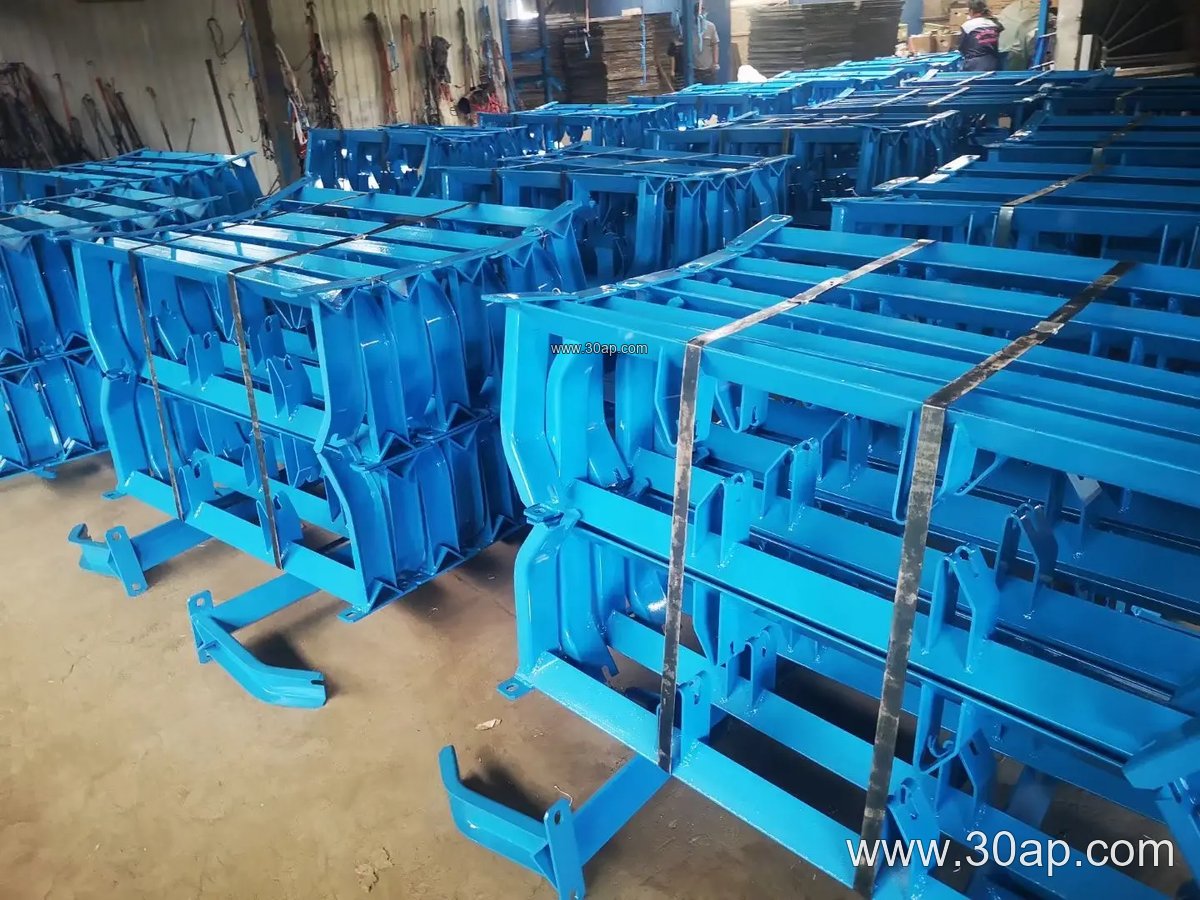
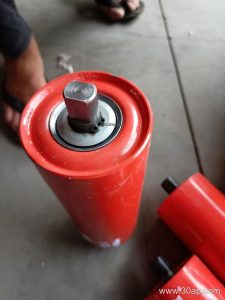
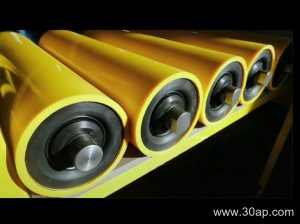
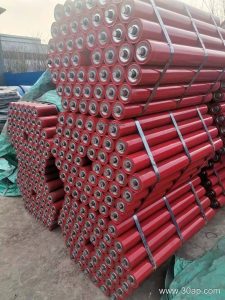
Self-aligning brackets are normally installed in the carrying run at intervals along the conveyor, and a V-type self-aligning version is used on the return run. On a quarry conveyor belt or a cement plant transfer line, two or three training stations are often enough for a long straight section, while curves and loading points may need closer spacing. The bracket works together with the idler roller and the conveyor bracket system around it, so the pivot must sit square to the belt center line during installation.
Where It Fits in Bulk Handling
These brackets appear wherever a belt is long, heavily loaded or exposed to uneven feed. Typical locations include limestone mines, iron ore plants, coal washing plants, power plant coal handling, port ship loading lines, steel plant sintering, aggregate crushing and screening circuits, and tunnel spoil removal. In each case the goal is the same: keep the belt centered so that a heavy-duty mining conveyor belt, an abrasion resistant conveyor belt or a heat resistant conveyor belt runs without rubbing the structure.
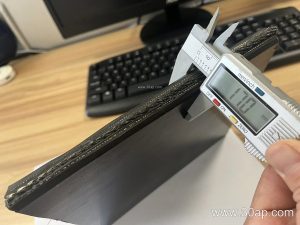
Alignment hardware is especially important on belts that are difficult to re-splice, such as an endless conveyor belt or a steel cord conveyor belt, because edge damage on these belts is costly to repair. It also helps on chevron conveyor belt and corrugated sidewall conveyor belt installations, where cleats and sidewalls can catch on misaligned frames.
Matching the Bracket to Belt Width, Trough Angle and Roller Diameter
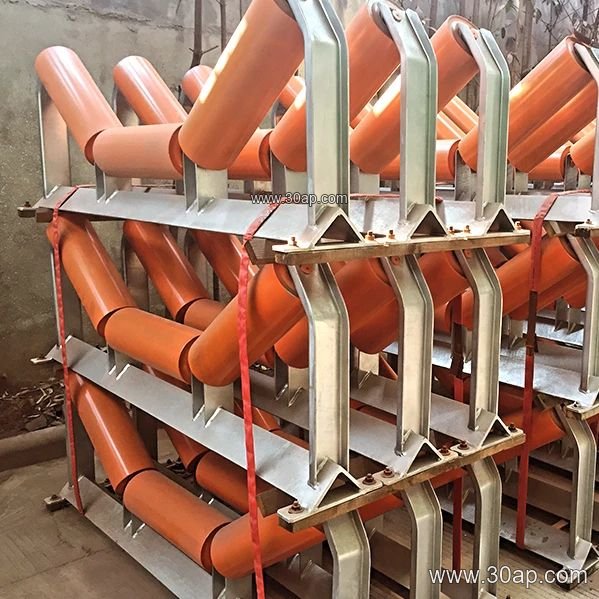
Selection starts with belt width, trough angle and roller diameter. Common belt widths range from B500 to B2200, trough angles are usually 20, 30, 35 or 45 degrees, and roller diameters are commonly Ø89, Ø108, Ø133, Ø159 or Ø194. Adjustable brackets allow the trough angle to be set within this range on site. A leading edge angle of about 1.5 to 2 degrees is common on forward-tilted training idlers.
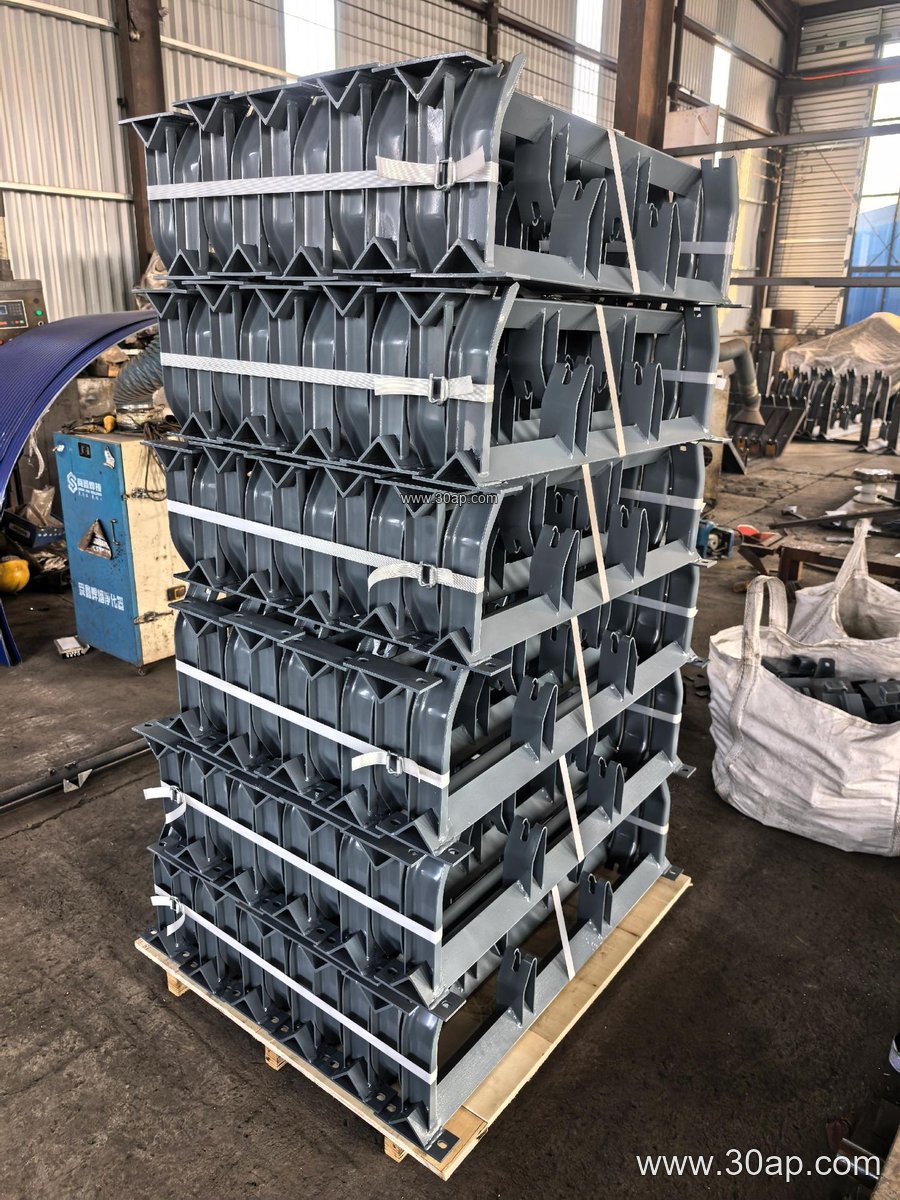
Mounting hole spacing and crossbeam length follow the belt width and trough angle, so they are determined by design rather than fixed. The table below shows common reference combinations, not mandatory matches.
| Belt width | Trough angle | Roller diameter | Typical bracket role |
|---|---|---|---|
| B650 | 30 degrees | Ø89 | Carrying training station |
| B800 | 35 degrees | Ø108 | Carrying or transition support |
| B1000 | 35 degrees | Ø108 / Ø133 | Carrying training station |
| B1200 | 45 degrees | Ø133 | Heavy carrying run |
| B1400 | 35 degrees | Ø159 | Main line training station |
| B1600 | 45 degrees | Ø159 / Ø194 | High tonnage carrying run |
| B1800 | 35 degrees | Ø194 | Mining and port duty |
| B2000 | 45 degrees | Ø194 | Wide belt training station |
A B800, 35 degree, Ø108 arrangement and a B1200, 45 degree, Ø133 arrangement are both normal, but neither is a rule. Wider belts do not automatically require a single trough angle, and belt width alone does not fix shaft diameter.
Buyer Checklist
- Confirm belt width, trough angle and roller diameter before ordering, and check whether an adjustable bracket is needed.
- Check pivot quality and bearing protection; dust and fines are the main causes of a stiff training frame.
- Match mounting hole spacing to the existing stringers, or plan adapter plates.
- Ask how the bracket behaves on reversing belts, where self-aligning action must be symmetrical.
- Keep spare pivot pins and frame parts, since a seized bracket can wear a belt edge quickly.
For buyers sourcing through a bulk handling supplier, it helps to specify the full conveyor context: belt type such as EP conveyor belt, NN conveyor belt or multi-ply fabric core conveyor belt, belt width, trough angle, roller diameter and the position of the training station. That information lets the supplier deliver a self-aligning idler bracket that actually corrects tracking instead of merely holding rollers in place.