What a 600mm Conveyor Belt Is
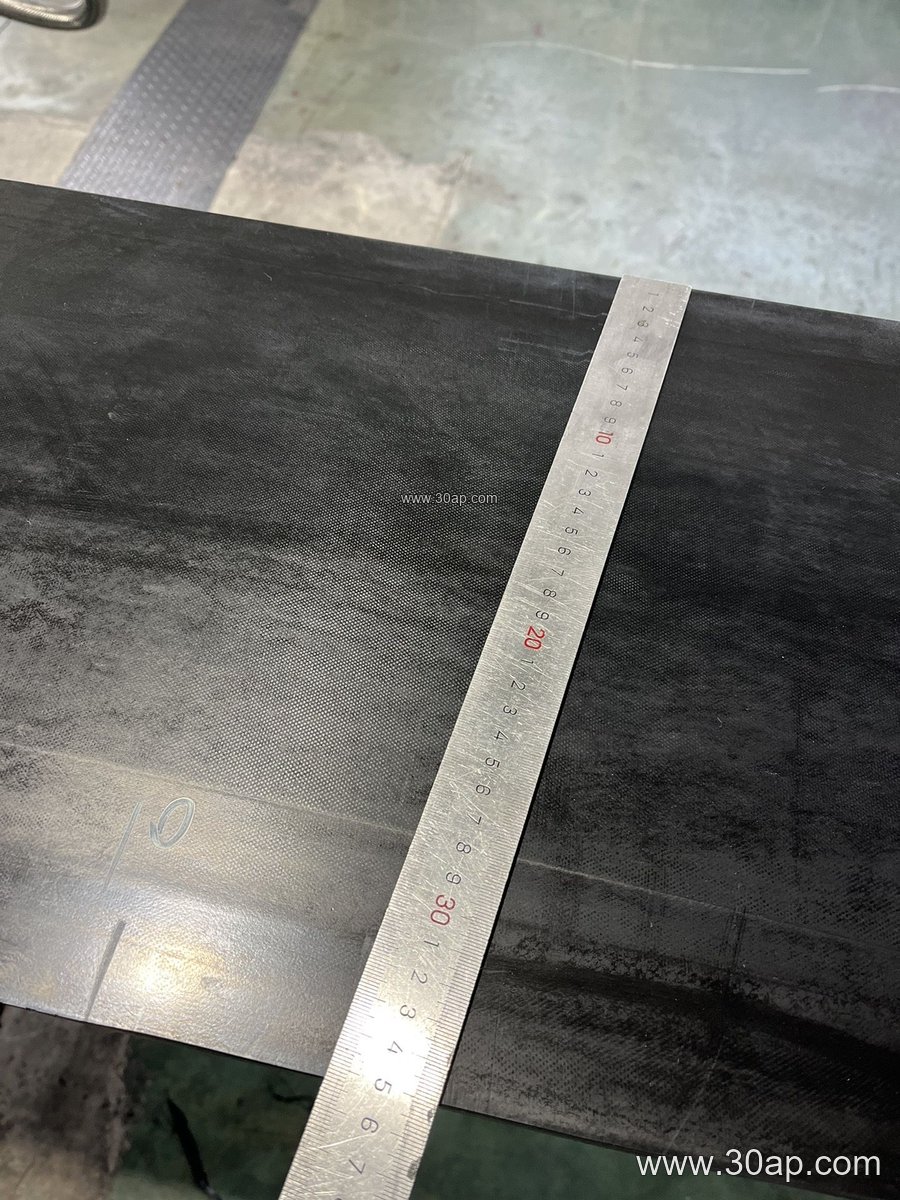
A 600mm conveyor belt is a belt with a nominal width of 600 millimetres, widely written as B600. It sits in the light-to-medium range of belt widths, above 500mm and below 650mm and 800mm. In practice it is one of the most common sizes on secondary and tertiary conveying lines, transfer points, screening decks and batching plants where tonnage per hour is moderate and the structure must stay compact.
Buyers often describe the same item as a 600mm wide conveyor belt or a B600 belt. These are equivalent names for one product. The width alone does not define the belt, because carcass, cover grade and surface form are chosen separately for each duty.
How the Belt Is Built
The belt is a composite: a tension-carrying carcass, top and bottom rubber covers, and optional surface features. The carcass may be multi-ply fabric, such as an EP Conveyor Belt with polyester warp and nylon weft, an NN Conveyor Belt with nylon warp and weft, or a Steel Cord Conveyor Belt for very high tension runs. A Fabric Core Conveyor Belt in 2 to 4 plies is the usual choice at this width; a Multi-Ply Fabric Core Conveyor Belt of 5 or 6 plies is possible but less common.
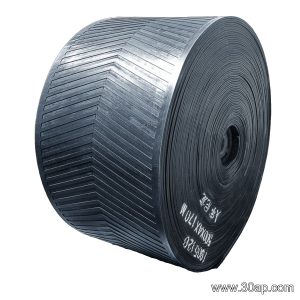
Covers are specified as a top and bottom pair. Typical combinations include 3+1.5 mm, 4+2 mm, 5+2 mm, 6+2 mm and 8+3 mm, with thicker covers for abrasive rock and thinner covers for clean, light material. Surface forms include plain, chevron or herringbone, corrugated sidewall with cleats, and skirted edges for containment. A Chevron Conveyor Belt or Corrugated Sidewall Conveyor Belt can be useful on inclines, but on flat long runs a plain belt is usually simpler and cheaper to maintain.
Common Specifications at This Width
The table below shows reference values; actual supply is confirmed by design and by the manufacturer. Strength grades, cover thickness and ply counts are independent choices and should not be treated as fixed pairings.
- Nominal width: 600 mm, also written B600
- Fabric strength grades: EP200, EP315, EP400, EP500, EP630, EP800, EP1000
- Nylon grades: NN100, NN200, NN300, NN400
- Steel cord grades: ST1000, ST1250, ST1600, ST2000
- Carcass plies: usually 2 to 6
- Cover thickness: 3+1.5, 4+2, 5+2, 6+2, 8+3 mm
- Special grades: abrasion resistant, heat resistant, oil resistant, flame retardant, anti-static, cold resistant, acid and alkali resistant
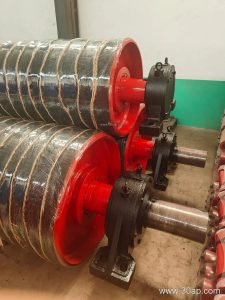
A 600mm belt is not tied to one pulley diameter. The drive pulley, tail pulley and bend pulley are separate components with their own diameters, and each is selected from belt tension, carcass flexibility and wrap angle, not from belt width alone. Shaft diameter follows the pulley design and load case; it cannot be inferred from the 600mm figure.
Where It Fits in the Plant
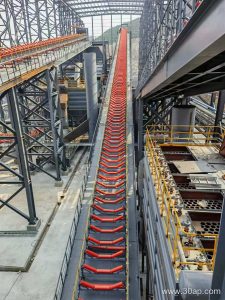
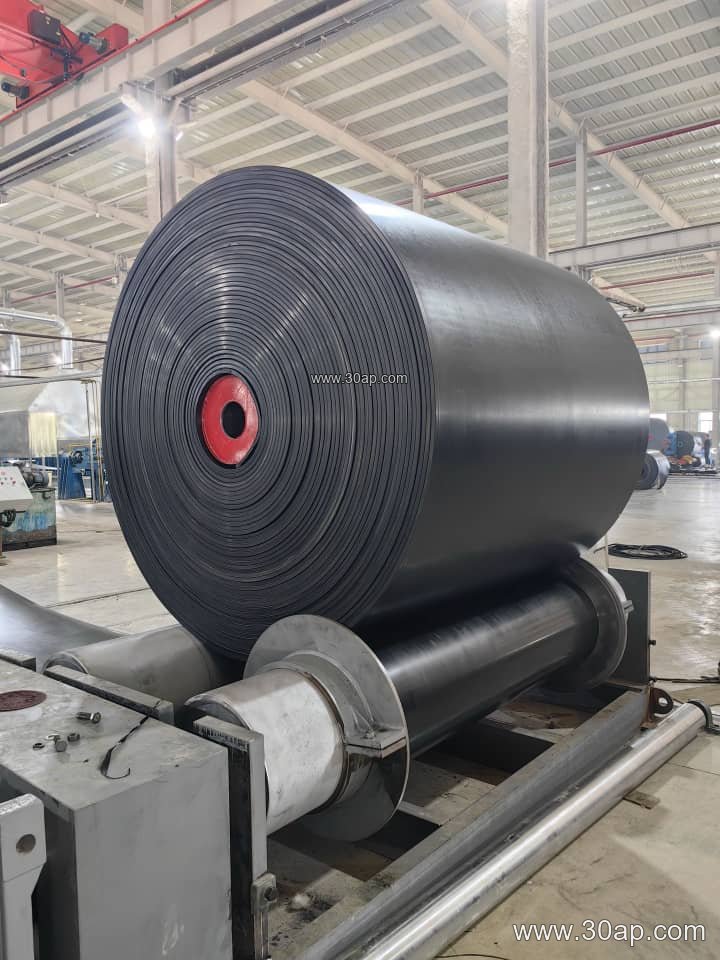
Typical duty includes quarry and aggregate lines feeding a crusher, cement plant clinker and raw meal transfer, power plant coal handling, and sand and gravel washing circuits. In mining, a 600mm belt may serve as a gathering belt on a development section or as a short transfer from a screen to a stockpile. Flame retardant and anti-static grades are commonly specified for underground coal mining conveyors, where a Fire Resistant Conveyor Belt or PVG Conveyor Belt may be required by the site’s safety rules.
Abrasive rock calls for a High Abrasion Resistant Conveyor Belt with a thicker top cover. Hot clinker or sinter may need a Heat Resistant Conveyor Belt. Fertilizer, oily scrap and some recycled material may justify an Oil Resistant Conveyor Belt. In cold climates a Cold Resistant Conveyor Belt keeps the cover from cracking at start-up.
Frame, Idlers and Pulleys Around the Belt
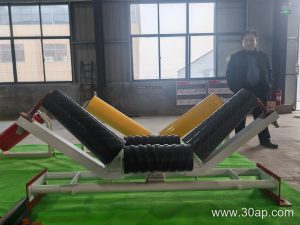
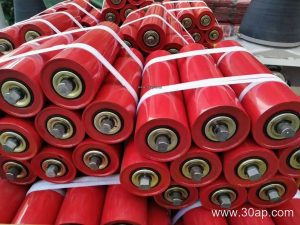
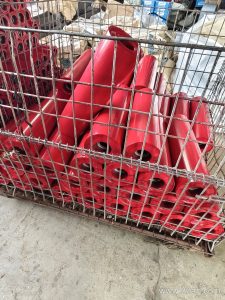
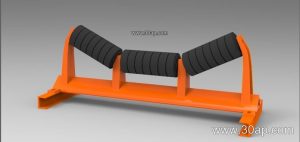
Width determines the frame and the idler set. A 600mm belt usually runs on a three-roll troughing idler roller set with 20 or 35 degree trough angles, carried by a conveyor bracket fixed to the stringer. Return idlers support the empty side. The conveyor pulley at the head end drives the belt, the tail pulley turns it, and bend pulleys route it around take-up or transfer structures. These parts are selected as a system: belt tension, material weight per metre, idler spacing and pulley diameter all interact. Replacing a drive pulley with a bend pulley, or the reverse, is never acceptable.
What a Buyer Should Check
- State the duty: material, lump size, tonnage per hour, incline angle and ambient temperature.
- Confirm the strength grade and ply count with the belt tension calculation, not by habit.
- Choose cover thickness and grade for wear and heat, and check the bottom cover for return-side abrasion.
- Specify flame retardant, anti-static or fire resistant properties only if the site requires them, and ask how they are verified.
- Check belt edge condition, splice method and whether an Endless Conveyor Belt is needed to avoid a mechanical joint.
- Match pulley diameters, idler spacing and take-up travel to the selected carcass.
- Ask for the manufacturer’s tolerance on width, thickness and length, since these vary between suppliers.
For a 600mm conveyor belt, the width is only the starting point. The useful specification combines carcass type and grade, cover compound and thickness, surface form, and the conveyor pulley and idler arrangement around it. A belt chosen this way will run straighter, last longer and cost less to maintain than one selected on width alone.