What a Fixed Conveyor Bracket Does on a Conveyor Line
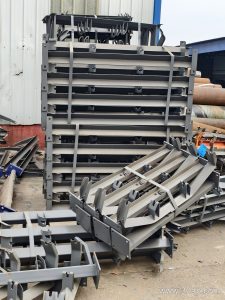
A fixed conveyor bracket is the stationary support that holds idler rollers at a set position and angle along a conveyor frame. Unlike adjustable designs, the fixed bracket is welded or bolted to the stringer with a geometry that does not change during operation, so the trough profile stays consistent from one end of the line to the other. In a quarry, a cement plant or a power plant coal yard, this consistency is what keeps a rubber conveyor belt tracking smoothly over every idler roller.
The bracket itself does not turn or carry the load directly. Its job is to transfer the weight of the belt, the material and the rollers into the conveyor structure, while holding each roller at the correct height and tilt. That makes it a small but critical part of the whole conveyor assembly, and one that is often specified together with the pulley and belt package.
How the Bracket Is Built
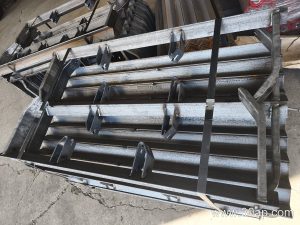
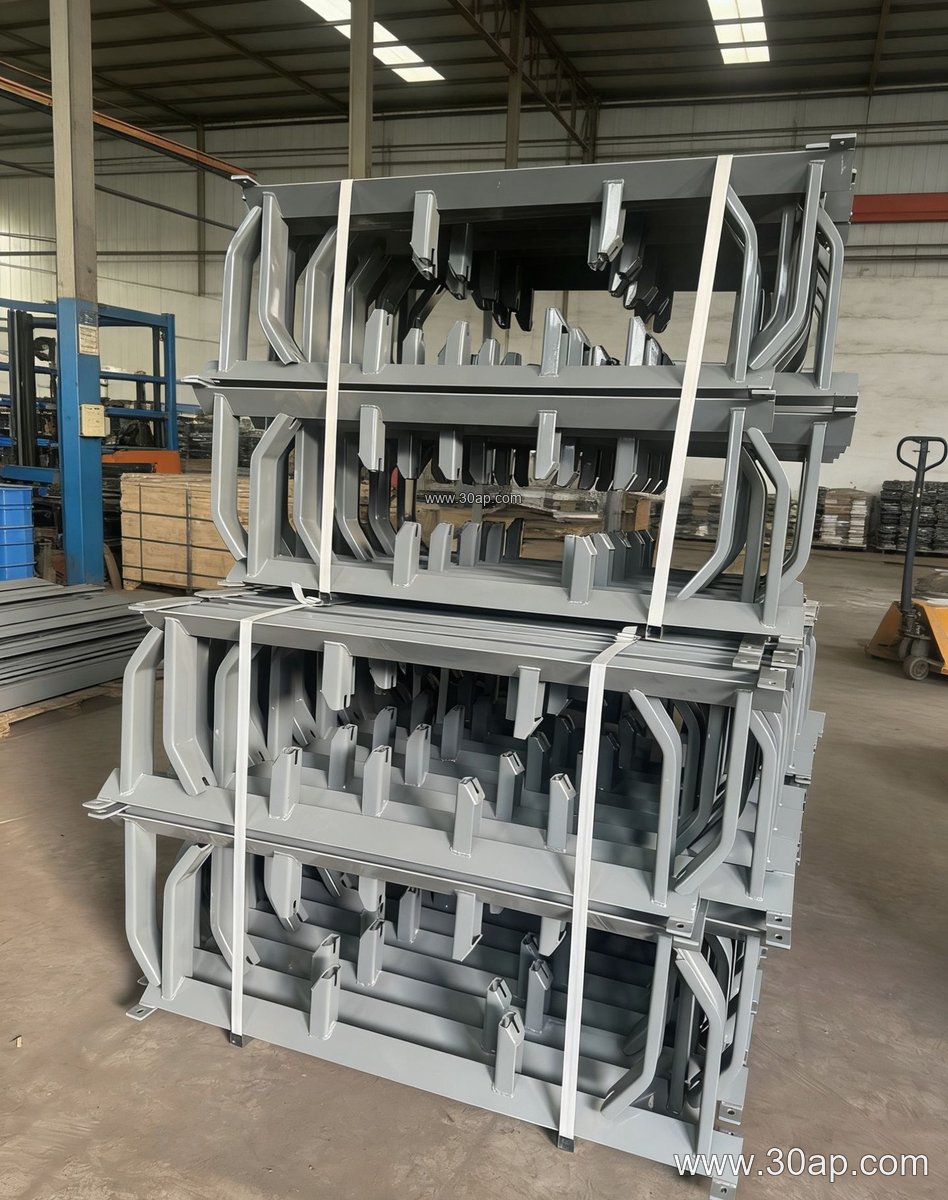
Most fixed brackets are fabricated from angle steel, channel steel or folded steel plate. The choice depends on the load and the environment. A light bracket for a B650 line in a sand and gravel plant may use folded plate, while a heavy-duty bracket under a wide belt at a crusher discharge point usually uses channel or thick angle sections.
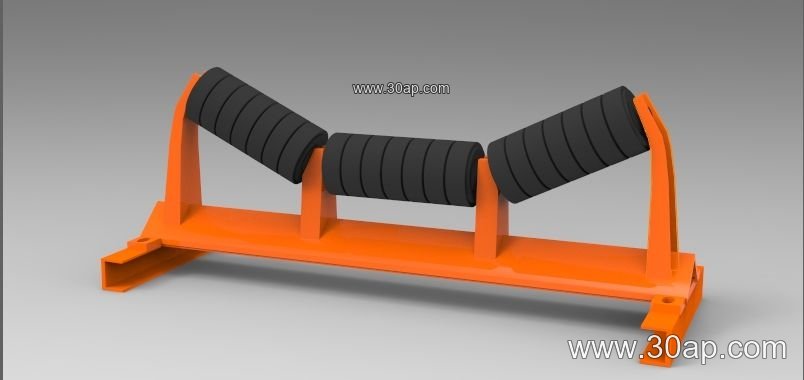
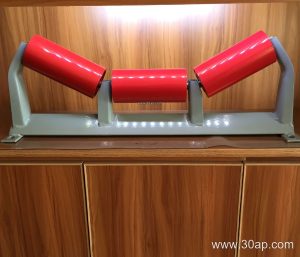
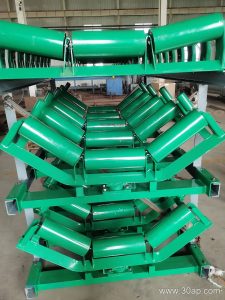
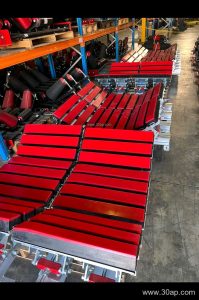
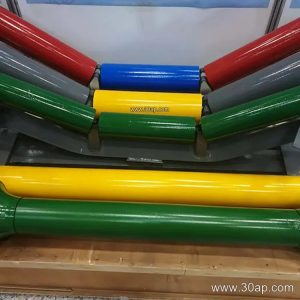
A typical troughing bracket carries three rollers and sets the trough angle. Common angles include 20, 30, 35 and 45 degrees, and the bracket is made for one of these angles rather than adjusted on site. Some fixed frames include a slight forward tilt of about 1.5 to 2 degrees on the side rollers to help training, though this is a design choice and not universal.
Mounting hole spacing and crossbeam length follow the belt width and trough angle, so a bracket for B800 is not the same as one for B1200. The roller diameter also matters, because the cradle height and slot spacing must match the shaft and bearing housing. Typical roller diameters include Ø89, Ø108, Ø133, Ø159 and Ø194.
Common Reference Combinations
The values below are examples only. Actual selection depends on belt tension, material density, load and frame design.
| Belt Width | Trough Angle | Roller Diameter | Typical Use |
|---|---|---|---|
| B500 | 20° | Ø89 | Small aggregate lines |
| B650 | 30° | Ø89 | Sand and gravel conveying |
| B800 | 35° | Ø108 | Crushing and screening circuits |
| B1000 | 35° | Ø133 | Cement and coal handling |
| B1200 | 45° | Ø133 | Ore and heavy bulk material |
| B1400 | 45° | Ø159 | Port and stockyard lines |
| B1600 | 45° | Ø159 | Large tonnage transfer |
| B1800 | 45° | Ø194 | Mine and steel plant service |
These pairings are not fixed rules. A B1200 line can run a 35 degree trough with Ø159 rollers if the design calls for it. Width, angle and roller size are matched to the conveyor layout, not to a single table.
Where Fixed Brackets Are Used
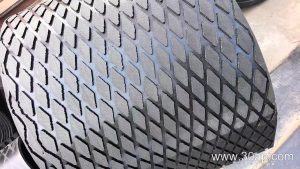
Fixed brackets appear on the carrying side of nearly every bulk handling conveyor. In a limestone mine, they hold the troughing idlers under an abrasion resistant conveyor belt that carries blasted rock. In a coal washing plant, they support flame retardant conveyor belt runs where dust and moisture are constant. In a cement plant, they sit under a heat resistant conveyor belt on clinker lines, and in a steel plant they carry sinter and coke.
On the return side, fixed return brackets and V-return brackets hold the belt in a stable flat or V profile. These are separate designs from the troughing bracket and should not be confused with it. Impact brackets near a transfer chute are another variant, often fitted with buffer rollers to absorb falling material.
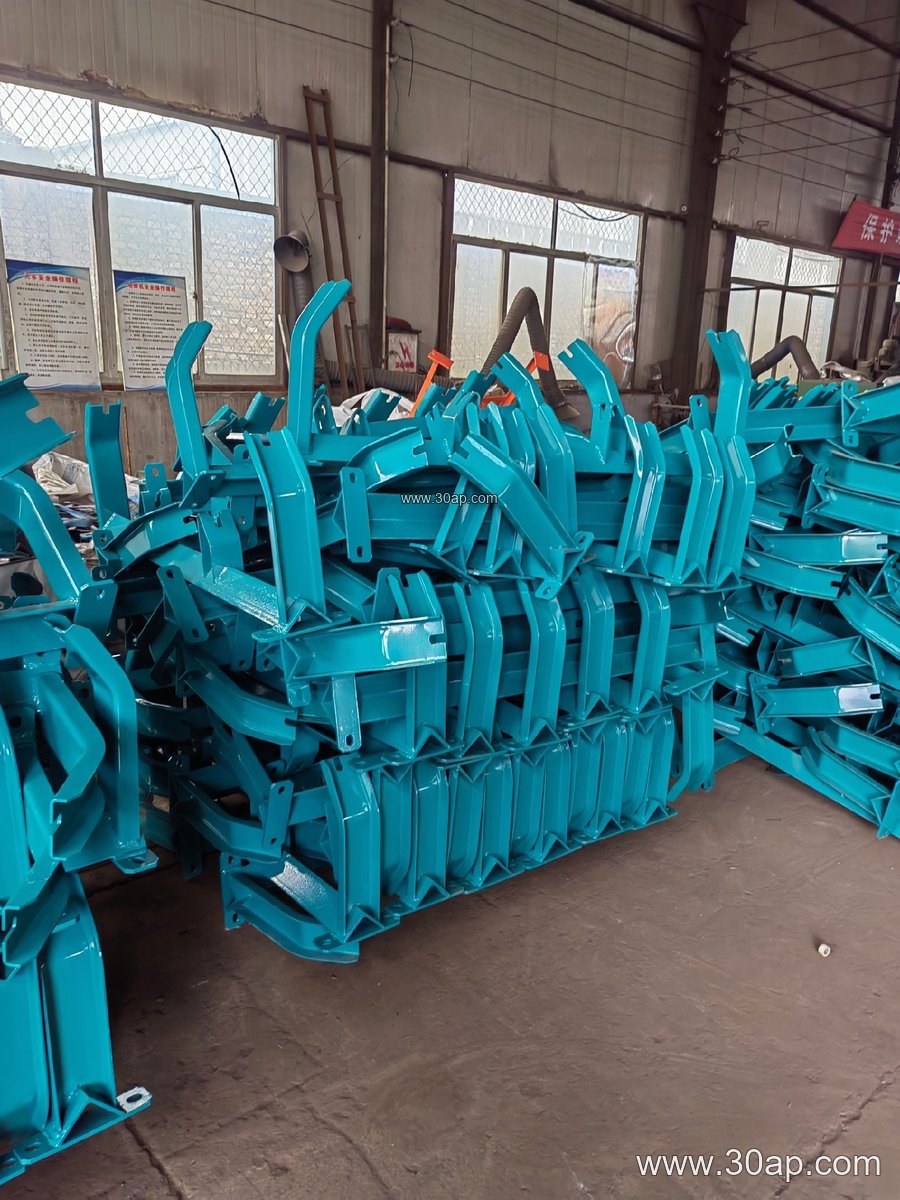
Some plants combine fixed brackets with a few self-aligning or adjustable brackets at critical points, such as after a curve or near the tail pulley. The fixed bracket remains the standard support for straight, stable sections.
What Buyers Should Check
Before ordering, confirm the belt width, the trough angle and the roller diameter, since all three affect the bracket geometry. Check the mounting hole pattern against the existing frame, because a bracket that does not match the stringer holes will need rework. Ask about the steel section and finish, especially for outdoor or wet locations where corrosion is a concern.
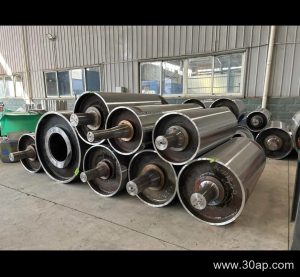
It also helps to review the whole conveyor package at once, including the conveyor pulley, the idler roller set and the conveyor bracket, so the heights and clearances line up. For lines carrying heavy ore or wet aggregate, a heavier bracket section is usually worth the small extra cost. Buyers can visit the site for reference on belt and roller options used in similar plants.