What a Conveyor Belt Pulley Does
A conveyor belt pulley is the rotating drum that turns, supports, or redirects the belt on a conveyor system. It is the component that transfers drive torque into belt motion or guides the belt around curves and tensioning zones. In a quarry, a cement plant, or a power plant coal yard, the pulley is often the part that decides how smoothly the whole line runs. A worn or badly sized drum shows up quickly as belt tracking problems, slipping, or edge damage.
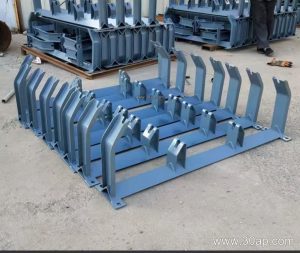
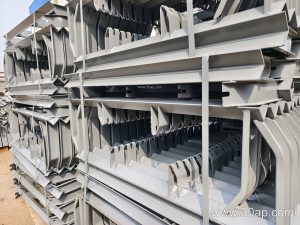
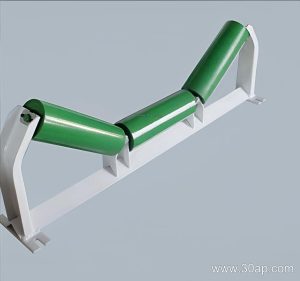
The drum works together with the conveyor belt, the idler roller sets, and the conveyor bracket that holds everything in line. When these parts are matched properly, the belt runs centered and the pulley covering lasts far longer. Our pulley range at www.hxconveyor.com covers light and heavy duty needs, and we also supply the belt and roller side of the same line through www.hxconveyor.com/conveyor-pulley.
Drive, Tail, and Bend Pulley Roles
Drive pulleys, tail pulleys, and bend pulleys are not interchangeable names. Each sits in a different place and does a different job.
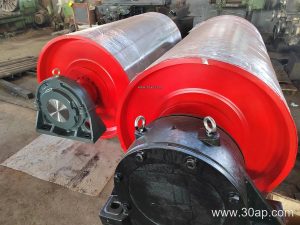
- Drive pulley (head pulley): connected to the gearbox and motor, it pulls the belt and carries the main traction load. It usually has the thickest lagging and the largest diameter in the system.
- Tail pulley: located at the loading end, it returns the belt and often includes a take-up function to keep tension steady.
- Bend pulley: changes belt direction or increases wrap angle around the drive pulley. It carries lower torque but still needs true running and good bearing support.
Other positions include the take-up pulley, snub pulley, and wing pulley. A wing pulley is sometimes chosen at the tail of a crusher discharge to shed sticky material, but it is a different design from a standard drum and should be compared only where self-cleaning matters.
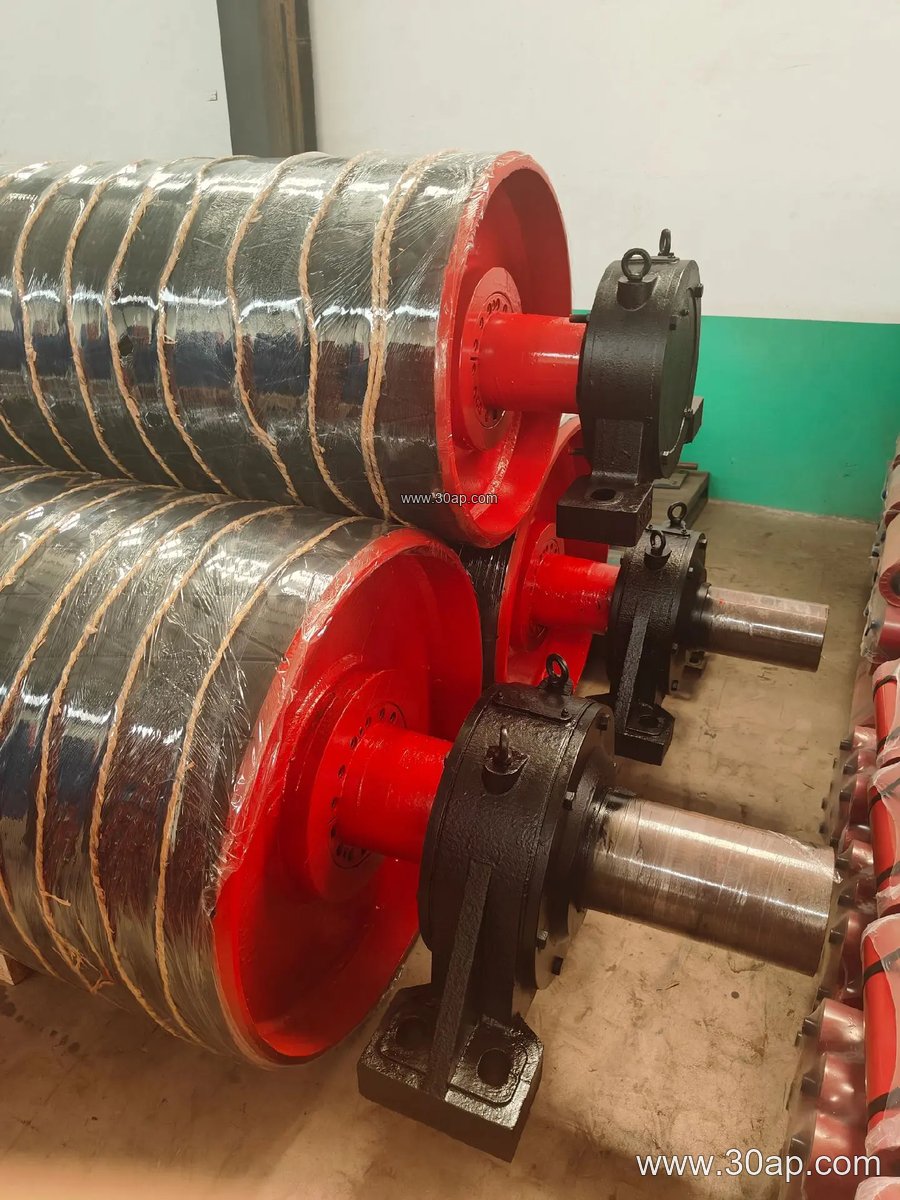
Construction and Surface Options
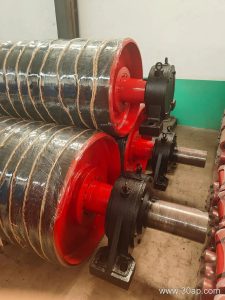
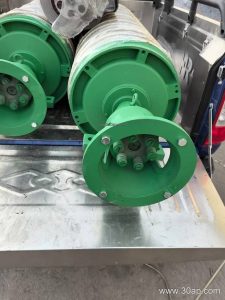
The drum body is usually a rolled steel shell welded to end discs, with a shaft pressed or keyed through the center. Bearing housings sit on both ends. The surface is where most buyers focus, because lagging controls grip and wear life.
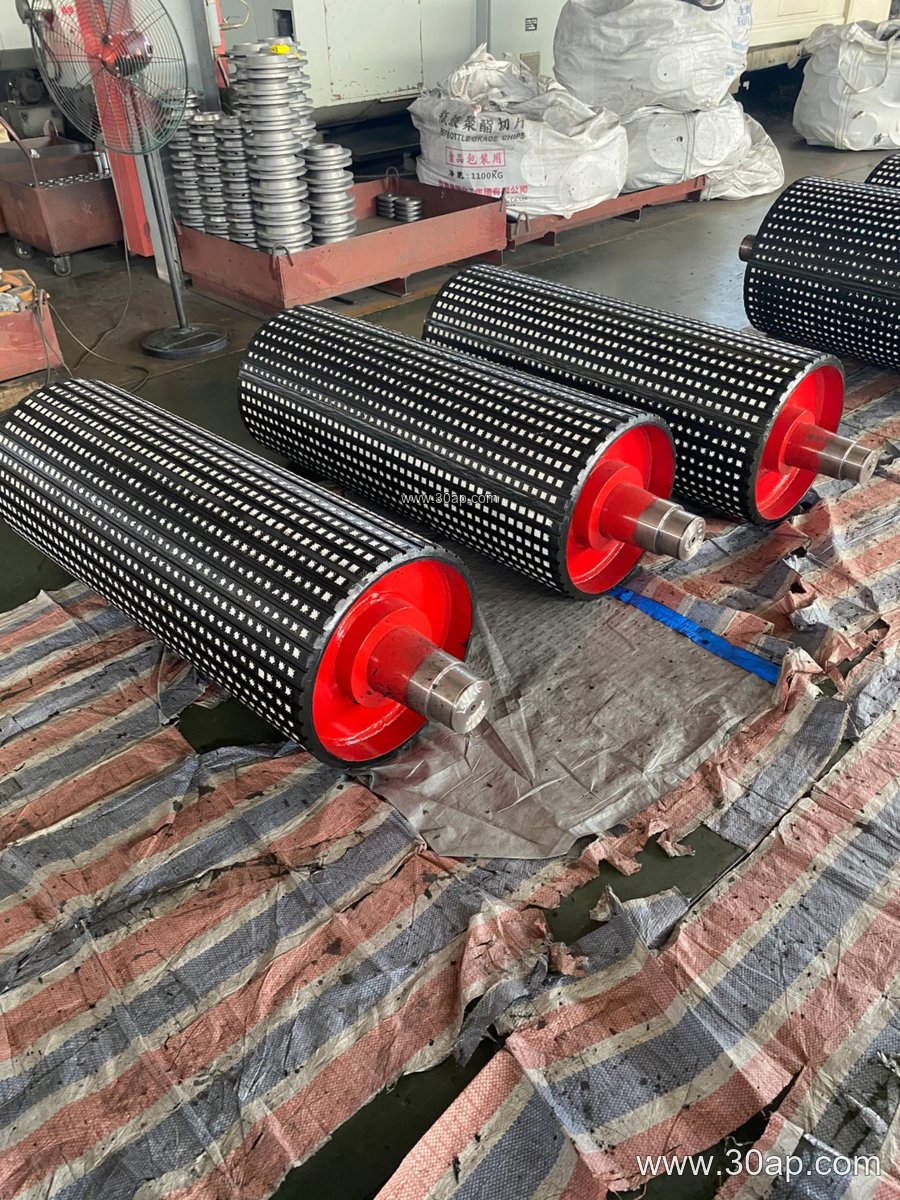
Common surface forms include plain finish, hot vulcanized rubber, cold bonded rubber, diamond grooving, herringbone grooving, and ceramic lagging. Lagging thickness is commonly 8, 10, 12, 15, or 20 mm, chosen by torque and material condition. Diamond lagging helps shed water and fines in wet sand and aggregate lines, while ceramic tiles suit high abrasion service in iron ore or copper ore handling.
Matching Pulley to Belt Width
Face width is normally a little wider than the belt. Typical reference values are shown below and should be confirmed against the actual conveyor design.
| Belt width | Typical pulley face width |
|---|---|
| B500 | about 600 mm |
| B650 | about 750 mm |
| B800 | about 950 mm |
| B1000 | about 1150 mm |
| B1200 | about 1400 mm |
| B1400 | about 1600 mm |
| B1600 | about 1800 mm |
A belt width does not lock the pulley to one diameter. A B800 drum may be Ø500 on a short conveyor or Ø630 on a longer, higher-tension run. Shaft diameter is set by torque and bearing load, not by belt width alone, so sizes such as Ø80, Ø100, or Ø120 should come from the drive calculation.
Where It Fits in the Plant
In a limestone quarry or a sand and aggregate line, the head pulley handles abrasive rock and dust, so abrasion resistant lagging pays off. In a coal washing plant or an underground coal mining conveyor, flame retardant and anti-static properties of the belt matter as much as pulley grip, and the drum must be built for dusty, damp conditions. Cement plants and power plant coal yards often run long conveyors where take-up pulleys keep tension stable through temperature swings.
The pulley also has to suit the belt it carries. A steel cord conveyor belt is stiff and needs a larger diameter to avoid high bending stress, while an EP conveyor belt or NN conveyor belt with fabric core tolerates tighter wraps. On a steep incline with a chevron conveyor belt or a corrugated sidewall conveyor belt, the tail and bend pulleys must clear the cleats and sidewalls without rubbing.
What Buyers Should Check
- Confirm position and duty: drive, tail, or bend, and the torque each one sees.
- State belt width and belt type, so face width and lagging pattern fit the belt.
- Ask for the shaft and bearing calculation, not just a diameter figure.
- Choose lagging by material: abrasive ore, wet aggregate, or oily recycled stock.
- Check balance, runout, and bearing seals for the site conditions.
Good pulley selection is a small engineering exercise, not a catalogue lookup. When the drum, belt, and idler roller set are matched to the actual load, the conveyor runs quieter and lasts longer in the toughest plants.