What Makes a Conveyor Pulley Non-Standard
A non-standard conveyor pulley is a drum-shaped component built to order when a standard catalog unit cannot match the belt width, shaft load, face length, lagging pattern, or mounting arrangement of a specific conveyor. In aggregate plants, cement kiln feed lines, and port bulk terminals, the pulley often has to fit between existing conveyor brackets and align with a particular conveyor belt path, so the manufacturer works from a drawing rather than a stock list. The same product is also called a custom conveyor pulley or made-to-order pulley drum, and both terms refer to the same engineered item.
Unlike a drive pulley, tail pulley, or bend pulley, which are defined by their position and function on the conveyor, a non-standard pulley is defined by its deviation from standard dimensions and interfaces. It can serve any of those positions, but its geometry, lagging, and shaft details are tailored to the application.
Construction and Key Dimensions
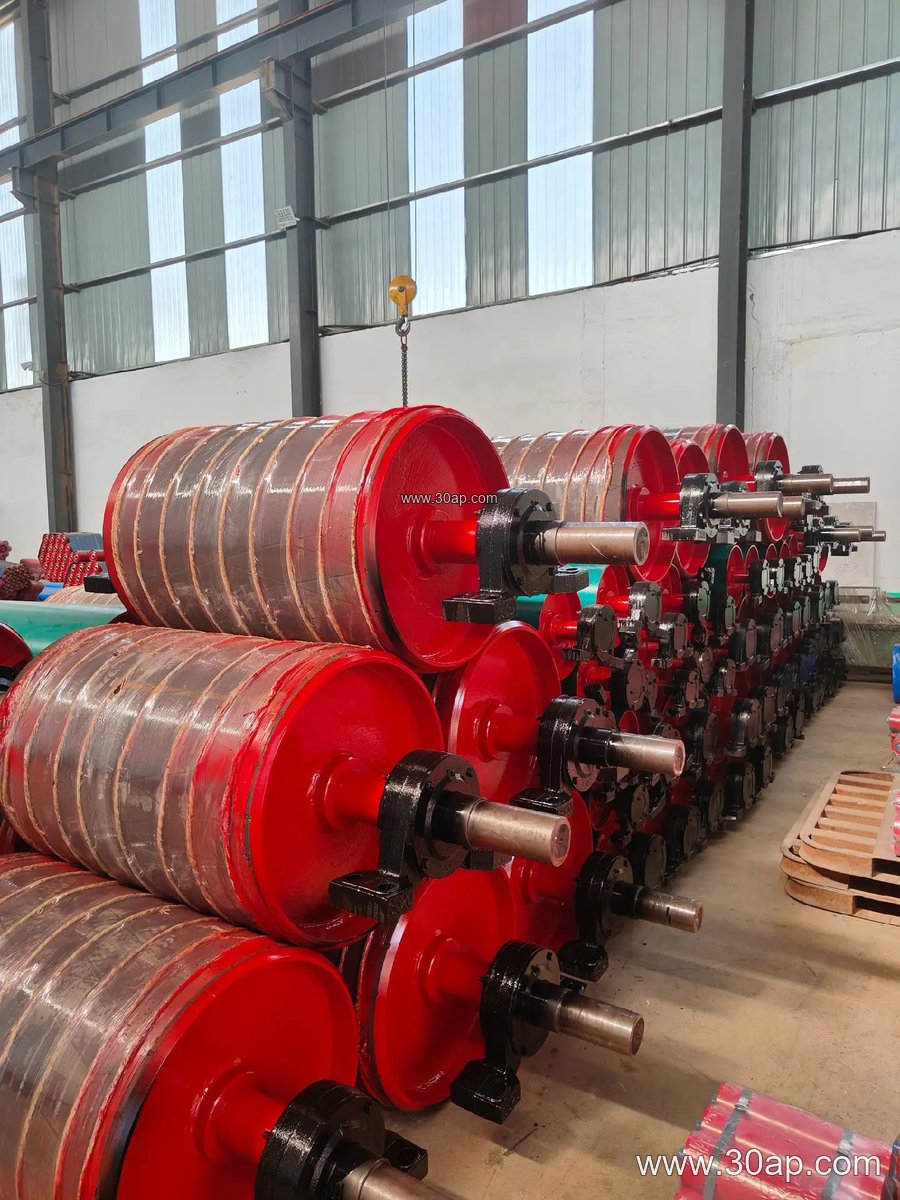
The build usually includes a rolled steel shell, welded end discs, a shaft, bearing housings, and a lagging surface. Common face widths are selected to be wider than the belt, for example a B800 belt often runs on a pulley with roughly 950 mm face, and a B1200 belt on about 1400 mm face. Diameter choices range from Ø200 up to Ø1800 depending on wrap angle and belt tension, and shaft diameter is determined by torque and radial load rather than belt width alone.
| Parameter | Common reference range |
|---|---|
| Belt width code | B400, B500, B650, B800, B1000, B1200, B1400, B1600, B1800, B2000 |
| Pulley diameter | Ø200, Ø250, Ø315, Ø400, Ø500, Ø630, Ø800, Ø1000, Ø1250, Ø1400, Ø1600, Ø1800 |
| Face width example | B650 ≈ 750 mm, B1000 ≈ 1150 mm, B1400 ≈ 1600 mm |
| Shaft diameter | Ø50, Ø60, Ø70, Ø80, Ø90, Ø100, Ø120, Ø140, Ø160, Ø180, Ø200 |
| Lagging thickness | 8, 10, 12, 15, 20 mm |
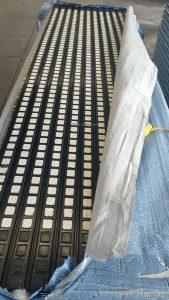
| Surface form | Plain, rubber lagging, diamond lagging, ceramic lagging, herringbone lagging |
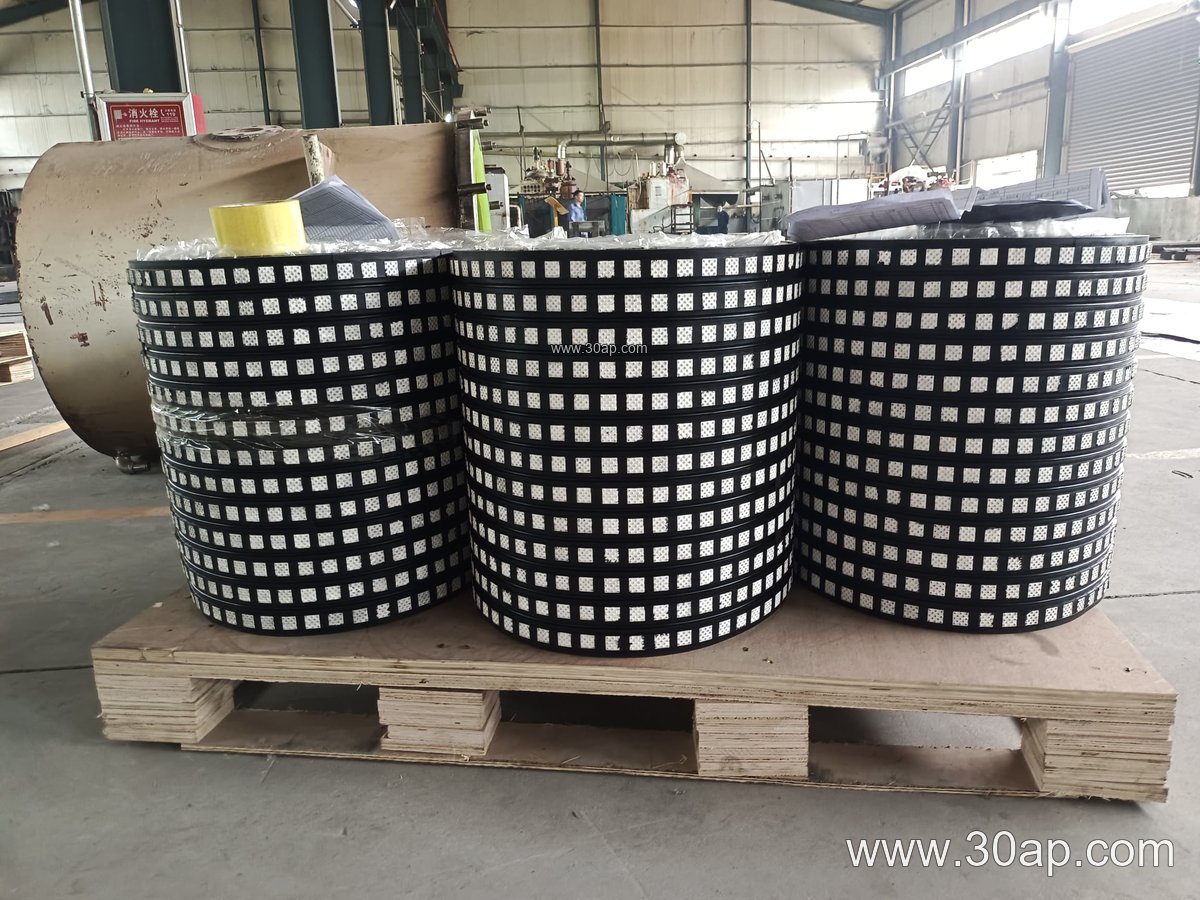
Surface selection matters in dusty or wet conditions. A quarry conveyor handling abrasive rock may use diamond rubber lagging to improve grip, while a coal mining conveyor with a flame retardant conveyor belt may specify a plain or rubber-lagged face to suit the environment. The lagging is often cold-bonded or hot-vulcanized, and the choice affects both friction and service life.
Where Non-Standard Pulleys Are Used
These pulleys appear in limestone mines, iron ore plants, and sand and gravel lines where conveyor routes are modified or where imported equipment requires a replacement drum with non-metric mounting centers. In a coal preparation plant, a non-standard bend pulley may be needed to clear a structural beam, and in a cement plant the tail position may require a wider face to accommodate belt wander. The pulley works together with the conveyor belt, idler roller, and conveyor bracket, so the drawing review should confirm shaft extension, keyway, bearing type, and bolt-hole pattern before fabrication.
Other relevant equipment includes the conveyor pulley in general, but the non-standard version is specified when standard drive, tail, or bend units cannot be fitted without structural changes.
Buyer Checklist
- Confirm belt width and required face width, and state the belt type such as EP conveyor belt or steel cord conveyor belt if known.
- Provide shaft load, torque, and speed so the shaft diameter can be calculated rather than guessed from belt width.
- Specify lagging form and thickness, for example 12 mm diamond rubber or 15 mm ceramic lagging.
- Share mounting dimensions, bearing centers, and bracket interface drawings.
- State the operating environment, including temperature, dust, water, and any fire resistant or anti-static requirement.
For a non-standard conveyor pulley, the most reliable approach is to treat the unit as an engineered part. A B1200 × Ø1000 assembly and a B800 × Ø500 assembly are both possible, but neither combination is universal. Buyers should ask for a dimensioned approval drawing and verify that the pulley will fit the existing conveyor frame before production begins.