What a Conveyor Carrying Bracket Does
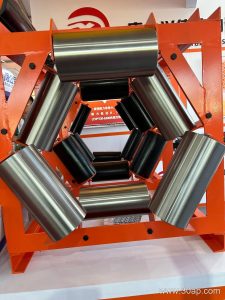
The conveyor carrying bracket is the structural link between the conveyor frame and the idler rollers that support the loaded side of the belt. Often called a troughing idler bracket or carrying idler support, it holds each idler set at the designed trough angle so the belt forms a stable, centered trough. In a quarry or a cement plant, this bracket quietly determines how well the belt tracks, how much material spills, and how long the idlers last.
Unlike a return bracket that supports the empty belt, the carrying bracket sits on the load-carrying side of the conveyor. It is not a pulley component; drive, tail and bend pulleys serve different duties at the ends and curves of the system. The bracket belongs to the idler support family, and its geometry must match the belt width and the idler roll diameter chosen for the duty.
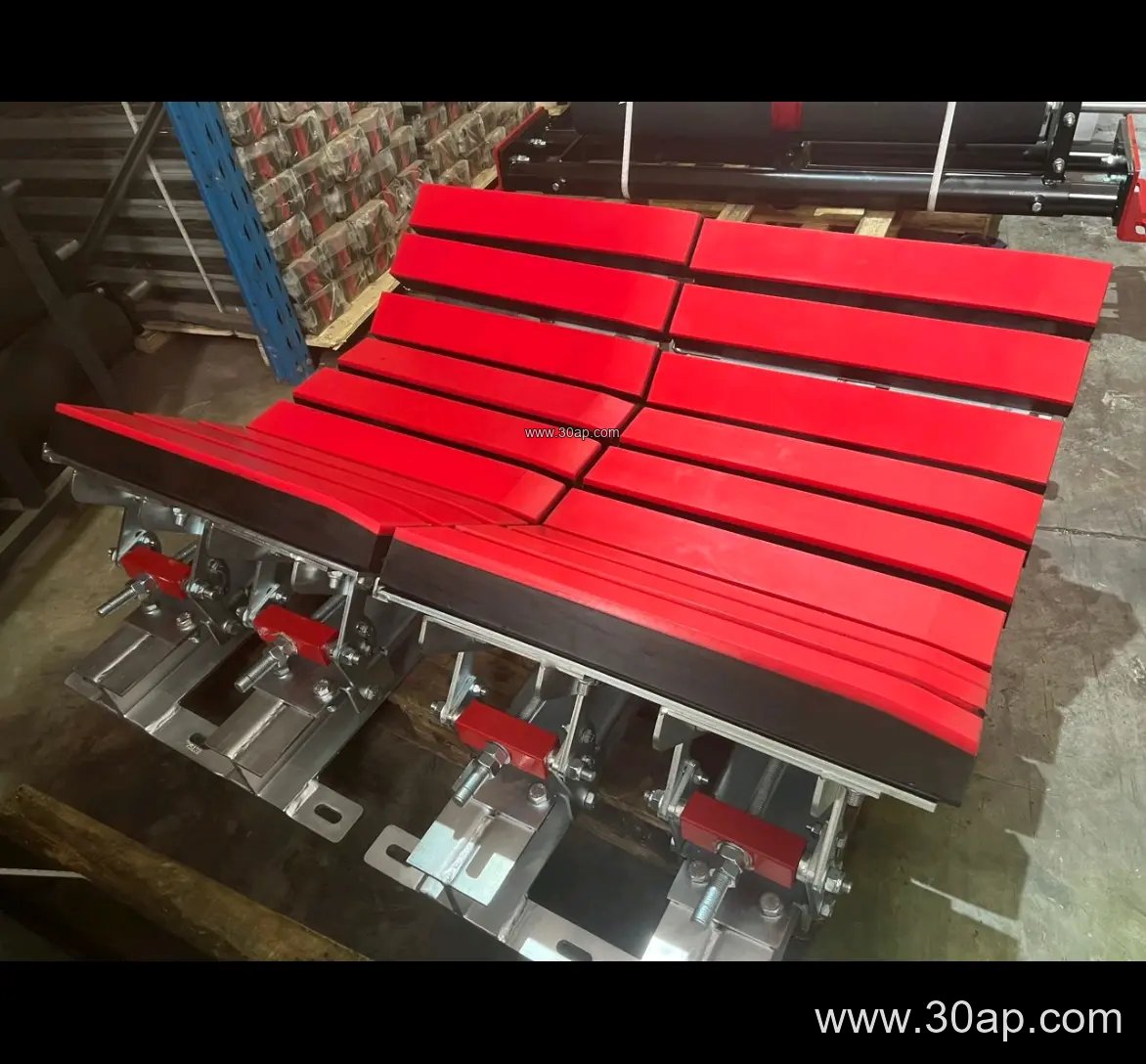
Construction and Mounting
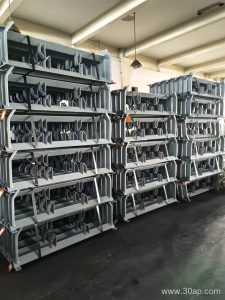
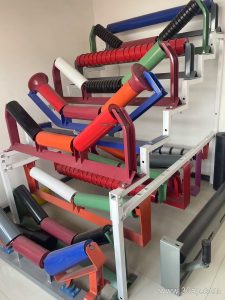
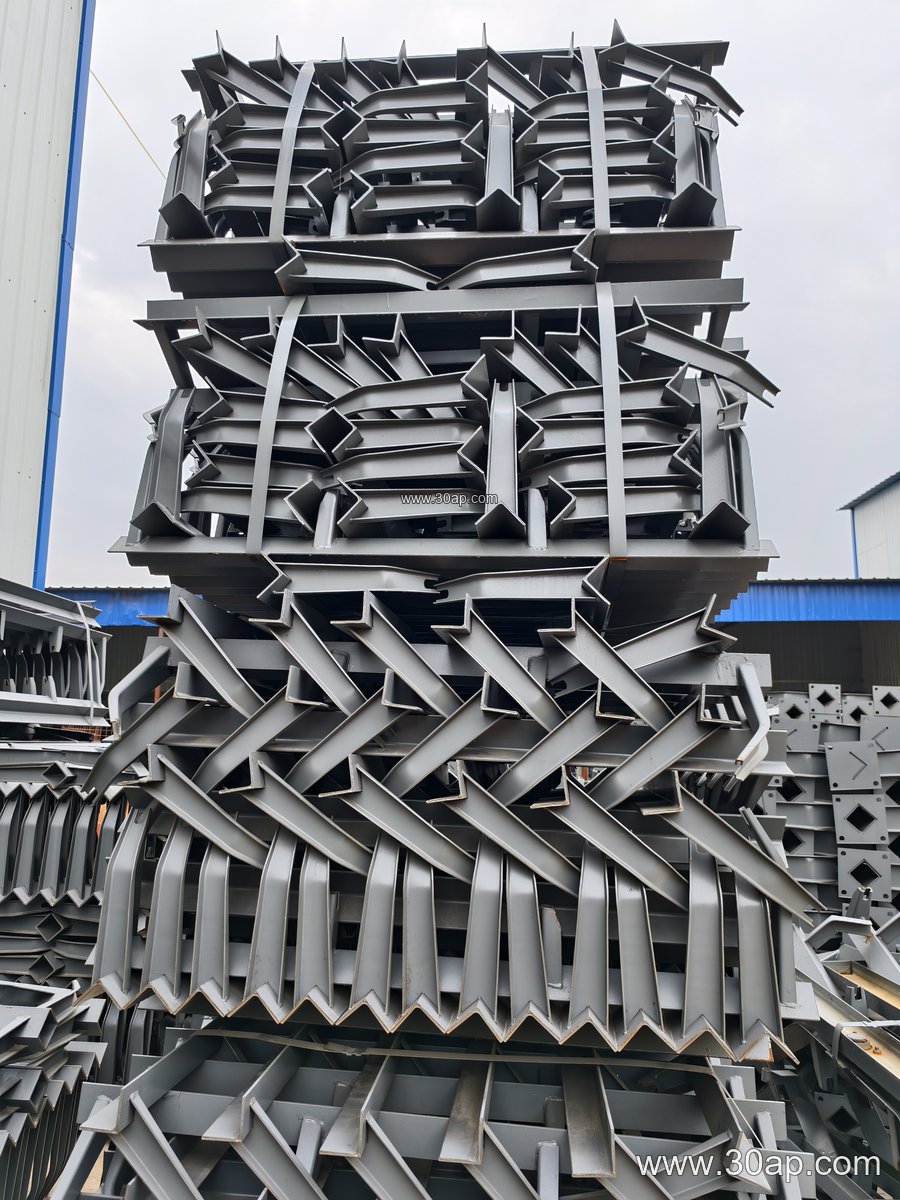
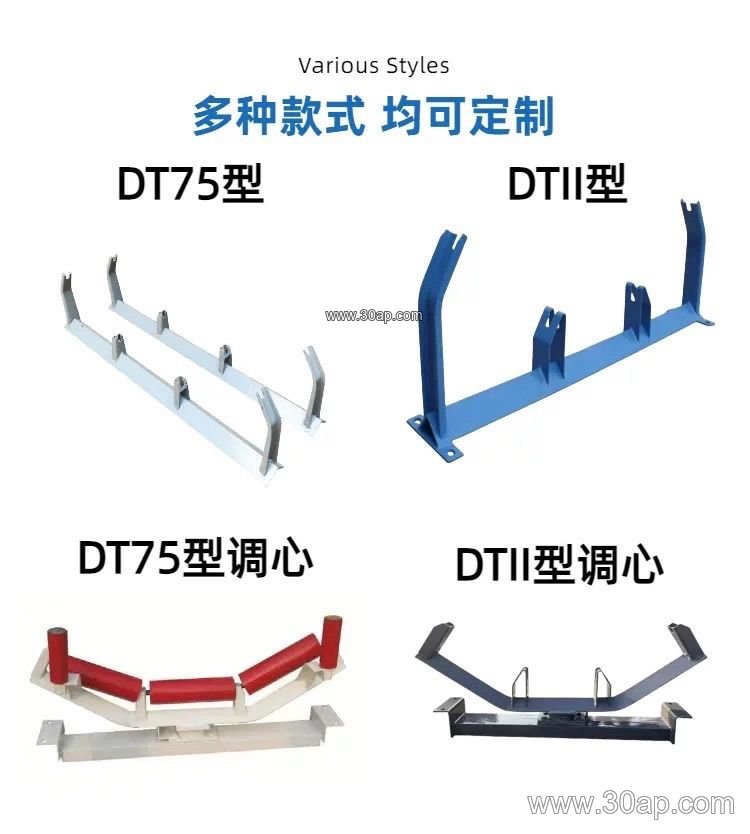
Most carrying brackets are fabricated from angle steel, channel steel, or folded steel plate. The frame includes a crossbeam and angled mounting pads or slots that position the side idlers. Common types include fixed troughing brackets, transition brackets near the loading point, self-aligning brackets, and adjustable brackets that allow the trough angle to be changed on site.
- Fixed troughing bracket — sets a single trough angle for standard running sections.
- Transition bracket — eases the belt from flat to troughed profile near a pulley or load zone.
- Self-aligning bracket — allows slight rotation to correct belt misalignment.
- Adjustable bracket — permits changes between common trough angles such as 20, 30, 35 and 45 degrees.
Installation hole spacing and crossbeam length vary with belt width and trough angle, so these dimensions are confirmed per design rather than treated as universal. Bolt grade and coating should suit the environment; a washbox in a coal preparation plant calls for different protection than a dry aggregate line.
Matching Belt Width, Trough Angle and Idler Diameter
Buyers often ask how to pair belt width with idler diameter. There is no single rule that one belt width matches one roll diameter. A B800 conveyor may use Ø89 or Ø108 idlers depending on load and speed, while a B1200 line in an iron ore yard might run Ø133 or Ø159 rolls at a 35 or 45 degree trough. The table below shows typical reference combinations; treat them as starting points for engineering review, not fixed supply promises.
| Belt Width | Common Trough Angle | Typical Idler Diameter | Typical Bracket Form |
|---|---|---|---|
| B650 | 30 degrees | Ø89 | Fixed troughing |
| B800 | 35 degrees | Ø108 | Fixed or adjustable |
| B1000 | 35 degrees | Ø108 / Ø133 | Fixed troughing |
| B1200 | 45 degrees | Ø133 | Adjustable or transition |
| B1400 | 35–45 degrees | Ø133 / Ø159 | Heavy-duty troughing |
| B1600 | 35–45 degrees | Ø159 | Heavy-duty or self-aligning |
| B1800 | 35–45 degrees | Ø159 / Ø194 | Heavy-duty troughing |
Forward-leaning brackets, often set at about 1.5 to 2 degrees, are used to encourage belt centering on high-speed lines. They are a separate detail from the trough angle itself and should be specified only where the conveyor design calls for them.
Where It Fits in the System
In a limestone mine or a sand and gravel line, carrying brackets support the belt through the crushing and screening section, where impact and abrasion are constant. In a power plant coal yard, they work with a flame retardant conveyor belt and sealed idler rollers to keep dust contained. In a fertilizer or grain silo, a smooth food grade or oil resistant belt may run over lighter brackets with careful alignment. The bracket itself does not carry the material; it keeps the idlers and belt working together.
When specifying, check the belt type as well. An EP conveyor belt, a steel cord conveyor belt, or a heavy-duty mining conveyor belt each has its own stiffness and load profile, and the bracket must suit the idler set selected for that belt. A pipe conveyor belt or a corrugated sidewall conveyor belt uses different support arrangements entirely, so the carrying bracket should be chosen for the actual belt construction.
Buyer Checklist
- Confirm belt width and the required trough angle, not just the idler size.
- State the idler diameter and whether the bracket is fixed, adjustable, self-aligning, or a transition type.
- Confirm mounting hole spacing and crossbeam length against the conveyor drawing.
- Specify material and surface protection for the site conditions.
- Ask for the bracket to be checked together with the conveyor pulley and idler roller schedule so the whole support line is consistent.
A well-chosen carrying bracket is a small part of the conveyor, but it keeps the belt centered, reduces spillage, and protects the idlers. Matching it to the belt, the trough angle, and the duty of the plant is the most reliable way to avoid premature wear.