What a Custom Conveyor Bracket Really Is
A custom conveyor bracket is the fabricated support that holds idlers, rollers, or return rolls in the exact position a belt line needs. It is not a catalog afterthought but a made-to-fit component, built around the frame width, trough angle, and roller diameter of a specific installation. In a quarry, a cement plant, or a power plant coal yard, the difference between a generic bracket and a properly matched one shows up in belt tracking, idler life, and how quickly a maintenance crew can swap a failed roller.
Because every conveyor frame is different, the bracket is usually drawn and folded to suit the structure rather than the other way around. The result is a family of supports that share a common purpose but rarely a common dimension.
How the Bracket Is Built
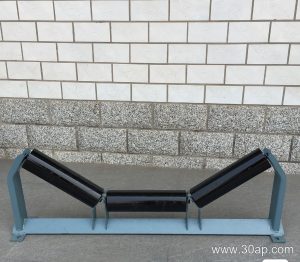
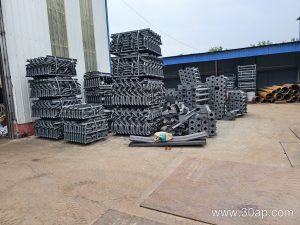
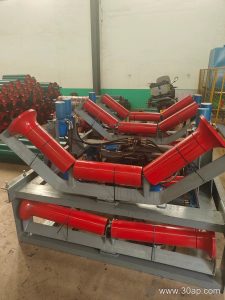
Most units are fabricated from angle steel, channel steel, or folded steel plate, then drilled or punched for the mounting holes that match the idler shaft. A troughing bracket carries three idlers at a set angle, while a return bracket holds a single flat or V-shaped roll under the belt. Transition brackets ease the belt from flat to troughed, and impact brackets add cushioning under a loading point.
Fabrication details matter more than they appear. Weld quality, hole alignment, and the squareness of the folded profile all affect how evenly the idler sits and how long the bearing lasts. A bracket that is slightly out of line will push a conveyor belt to one side, and no amount of adjustment at the tail pulley will fully correct it.
Where These Supports Earn Their Keep
In a limestone quarry, custom brackets are often specified for the transfer points where a crusher conveyor belt receives heavy, sharp rock. The bracket has to hold a buffer idler firmly while absorbing impact, so the frame is usually reinforced. In a coal preparation plant, flame retardant conveyor belt and anti-static properties dominate the belt choice, but the brackets must still be positioned to keep the belt centered through long galleries.
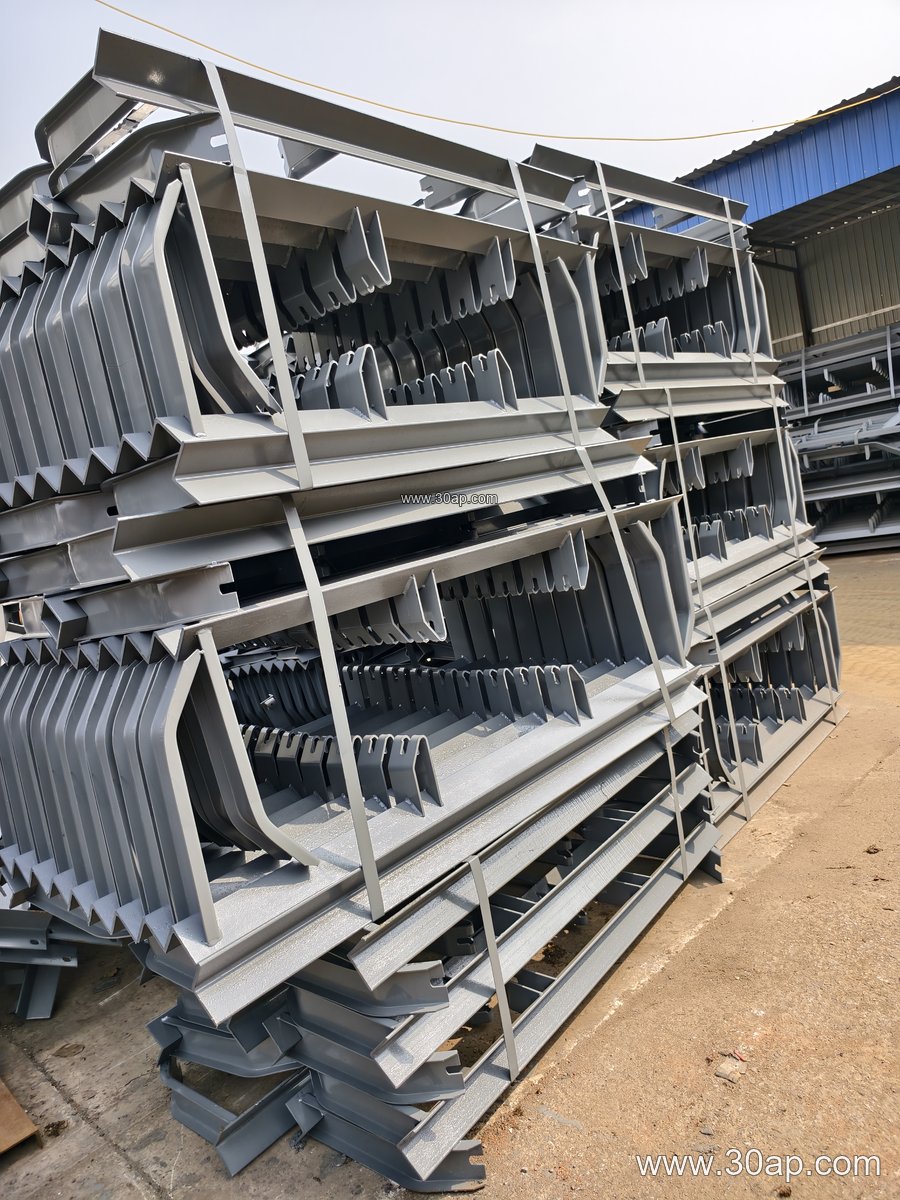
Port terminals and steel plants use similar supports on ship loading and sinter lines, while sand and gravel operations rely on them to keep aggregate conveyor belts tracking through curves and inclines. Each site imposes its own layout, which is why a made-to-measure bracket is often cheaper over its service life than a standard part forced into place.
Matching Bracket to Belt and Roller
A common mistake is to treat belt width and roller diameter as a fixed pair. They are not. A B800 line may run Ø108 or Ø133 idlers depending on load and speed, and the trough angle may be 30 or 35 degrees. The bracket must be built for the combination actually selected, and mounting hole spacing and crossbeam length follow from that design decision.
Typical reference values look like this:
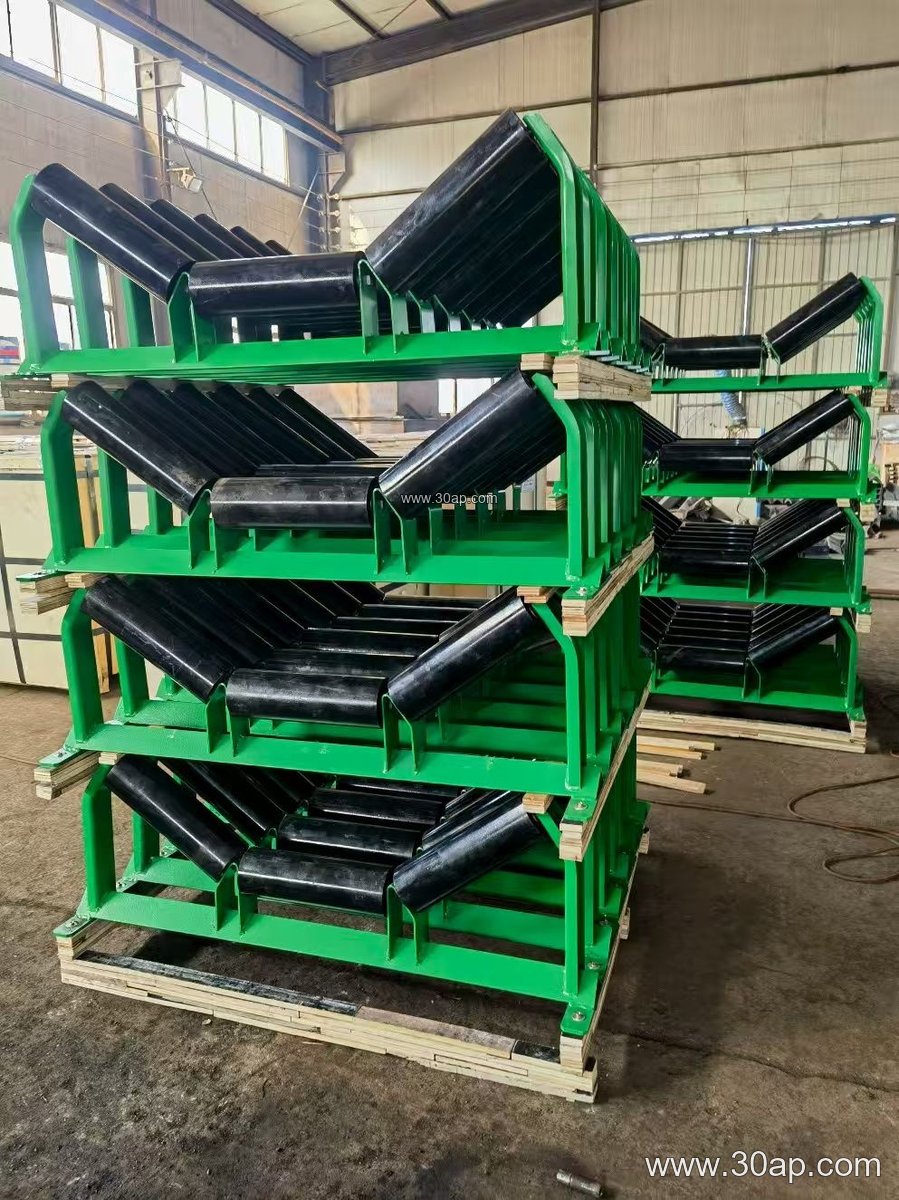
- B500, 20 degrees, Ø89
- B650, 30 degrees, Ø89
- B800, 35 degrees, Ø108
- B1000, 35 degrees, Ø133
- B1200, 45 degrees, Ø133
- B1400, 45 degrees, Ø159
- B1600, 45 degrees, Ø159
- B1800, 45 degrees, Ø194
These are common references, not universal rules. A heavy-duty mining conveyor belt on an incline may call for a tighter trough and a larger roll than the table suggests, and the bracket should be drawn accordingly.
Adjustable Versus Fixed Designs
Fixed brackets are simple, rigid, and inexpensive to fabricate. Adjustable brackets allow the trough angle to be changed within a range, which helps when a line is commissioned and the belt needs fine tuning. Forward-leaning brackets, often around 1.5 to 2 degrees, are used to encourage self-centering. Self-aligning brackets add a pivot so the idler can steer the belt back on track, a useful feature on long overland runs and in tunnels where access is limited.
The trade-off is complexity. More moving parts mean more inspection points, so adjustable designs suit lines where operating conditions may change, while fixed designs suit stable, high-tonnage installations such as iron ore or copper ore transport.
What Buyers Should Confirm Before Ordering
Provide the belt width, the idler diameter, the required trough angle, and the frame hole pattern. State whether the bracket is for carrying, return, impact, or transition duty. Mention the environment, since a hot clinker line, a cold northern stockyard, and a wash plant each stress steel differently. Ask for the fabrication drawing before production so hole centers and overall height can be checked against the existing frame.
Finally, keep spare brackets on site for the loading zones, where wear is fastest. A well-made conveyor bracket is a small part of the capital cost but a large part of keeping a conveyor belt, its idler roller set, and the drive pulley working as one system.