When a Standard Bracket Will Not Fit
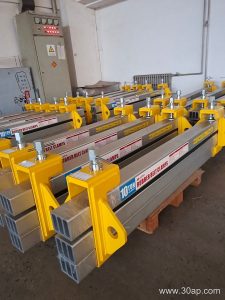
A Non-Standard Conveyor Bracket is a support component made to match a conveyor line that cannot use catalog brackets. Typical reasons include unusual stringer spacing, a retrofit into an existing steel structure, a transition zone where the belt changes trough angle, or a discharge point where the frame must clear a chute. In a quarry, a cement plant, or a power plant coal yard, the conveyor pulley and its supporting frame often sit in a space that was never designed around a standard bracket drawing. The custom bracket bridges that gap.
The product is also called a custom conveyor support bracket or a made-to-order idler support frame. It is not a drive pulley, a tail pulley, or a bend pulley, and it should not be ordered as a substitute for any of those parts. It is the steel element that holds the idler roller in position and transfers the load into the conveyor structure.
How a Custom Bracket Is Built
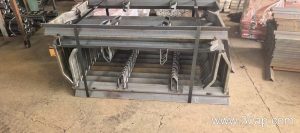
Most units are fabricated from angle steel, channel steel, or folded steel plate. The fabricator works from a measured drawing rather than a catalog number. Key dimensions are taken on site: stringer gauge, hole pitch, the height of the belt line above the walkway, and the clearance needed for the moving conveyor belt.
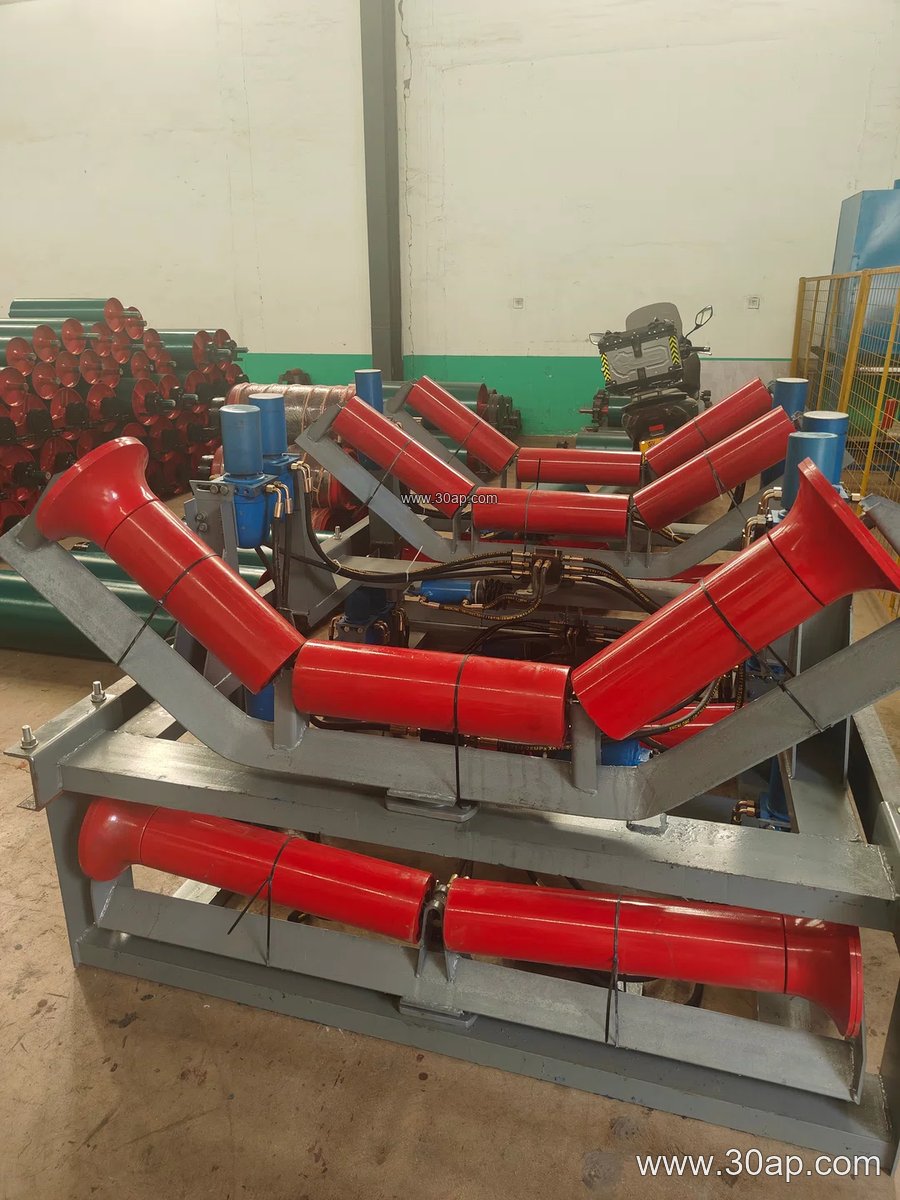
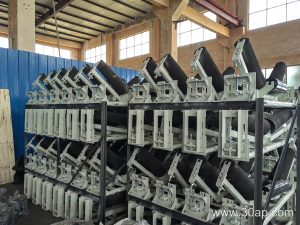
The bracket usually carries three functions at once. It sets the trough angle of the carrying idlers, it positions the return rollers under the belt, and it provides adjustment slots so the assembly can be aligned after installation. A fabricated unit may combine these roles in one welded frame, or it may be a small adapter plate that lets a standard bracket bolt onto non-standard steelwork.
- Base plate drilled to the existing hole pattern
- Angled arms or a formed channel to hold the idler shaft
- Slotted mounting holes for field alignment
- Welded gussets where the load is highest
- Hot-dip galvanized or painted finish for dusty, wet, or coastal sites
Common Configurations and Reference Dimensions
The table below shows typical reference values, not fixed supply specifications. Final dimensions depend on the conveyor design, and mounting hole pitch and crossbeam length change with belt width and trough angle.
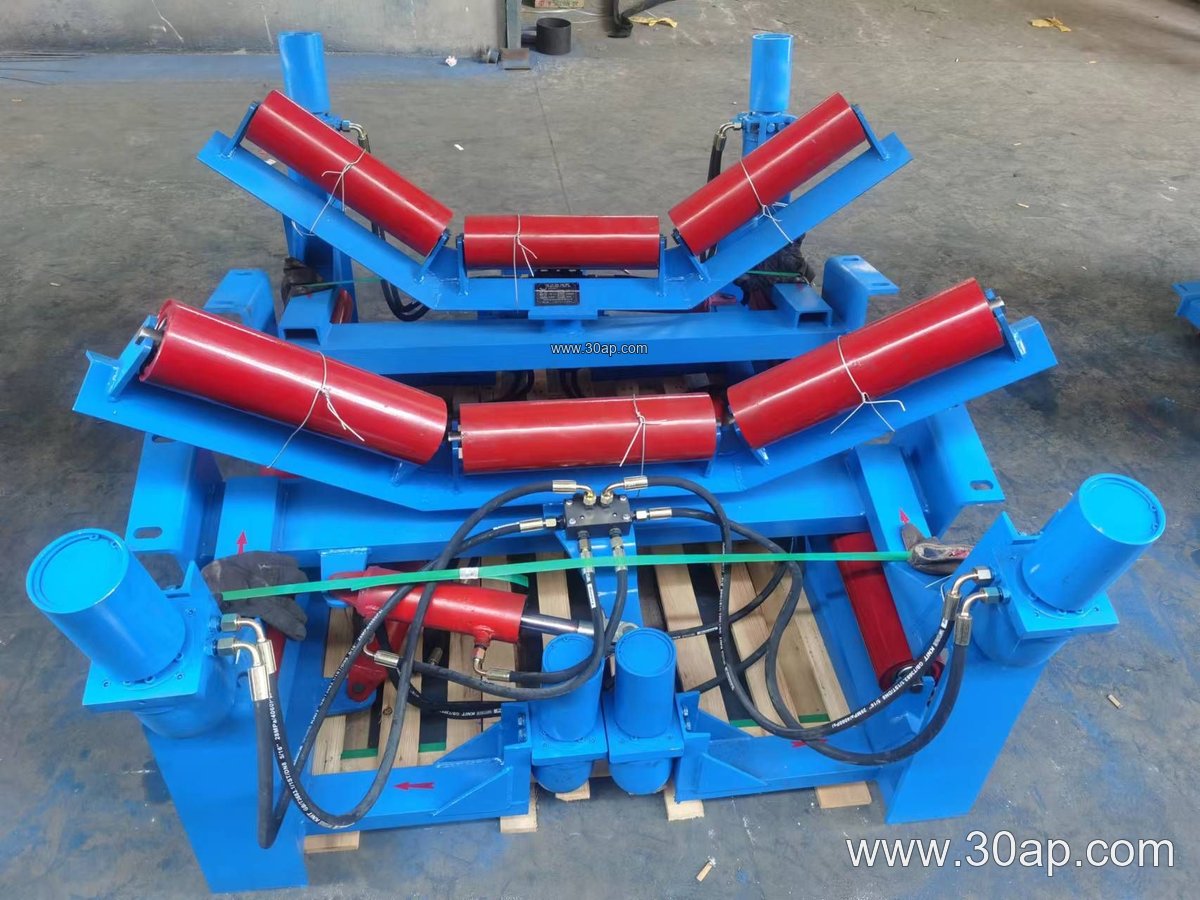
| Item | Common Reference Values | Notes |
|---|---|---|
| Bracket type | Troughing bracket, transition bracket, return bracket, flat return bracket, V-return bracket, impact bracket, self-aligning bracket, suspended bracket, adjustable bracket | Selected by position along the conveyor |
| Belt width | B500, B650, B800, B1000, B1200, B1400, B1600, B1800, B2000, B2200 | Match to the actual belt, not to a nominal line size |
| Trough angle | 20°, 30°, 35°, 45° | Adjustable brackets can move between these angles |
| Idler diameter | Ø89, Ø108, Ø133, Ø159, Ø194 | Chosen with belt speed and load, not by belt width alone |
| Material | Angle steel, channel steel, folded plate | Thickness per load calculation |
| Forward tilt | About 1.5° to 2° | Used on training brackets where belt wander is a concern |
A workable combination might be B800, 35°, Ø108 for a medium-duty line, or B1200, 45°, Ø133 in a high-tonnage transfer. Neither combination is a rule, and one belt width can accept several trough angles and roller diameters depending on the duty.
Where These Brackets Are Used
Custom brackets appear most often in retrofit and expansion work. In a limestone quarry, a new crusher discharge may need a transition bracket that gradually opens the belt from a flat profile to a 35° trough before the first full troughing station. In a cement plant, a clinker conveyor running beside an existing gallery may need offset brackets to clear a structural column. Similar work turns up in coal handling, sintering lines, and tunnel spoil conveyors.
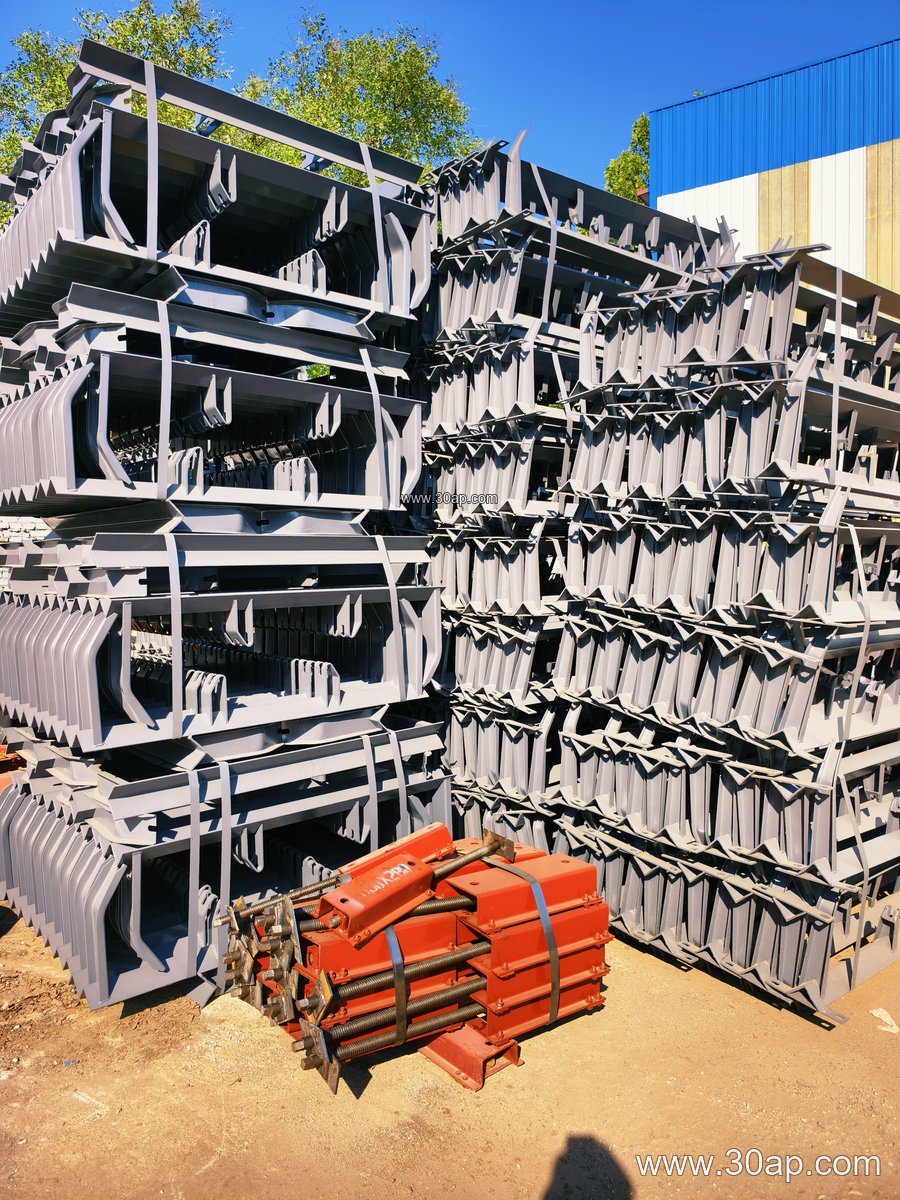
They are also used where the belt carries an unusual profile. A corrugated sidewall belt or a skirted belt needs bracket geometry that keeps the cleats and sidewalls clear of the idler ends, so the frame is often built wider or with a different arm angle than the standard part.
Matching the Bracket to the Rest of the Line
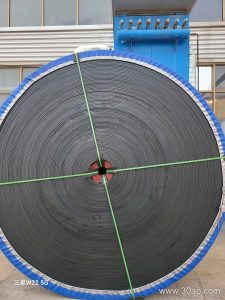
The bracket never works alone. Its trough angle must agree with the adjacent idler stations, and its height must keep the belt seated on the rollers without pinching. Where a conveyor pulley drives a steep incline, the bracket spacing near the pulley is usually tightened to control belt sag. The belt itself matters too: a heavy abrasion resistant conveyor belt or a thick steel cord conveyor belt carries more mass per metre and may call for closer support spacing and a stiffer frame.
Buyers should confirm four things before ordering. First, the measured hole pattern on the existing structure. Second, the trough angle required at that station. Third, the idler diameter and shaft end shape. Fourth, the environment, because a wash-down area, a fertilizer plant, or a coastal port may call for galvanizing rather than paint.
Buyer Checklist
- Provide a sketch with measured dimensions, not just a belt width.
- State the station type: carrying, transition, return, or impact.
- Confirm whether adjustment is needed on site.
- Ask for the material grade and finish.
- Check that the bracket clears the belt edges through the full adjustment range.
A well-made Non-Standard Conveyor Bracket solves a layout problem that no catalog part can. The cost of a careful measurement and drawing is small compared with a frame that has to be cut and re-welded on site.