What a High Wear-Resistant Ceramic Pulley Is
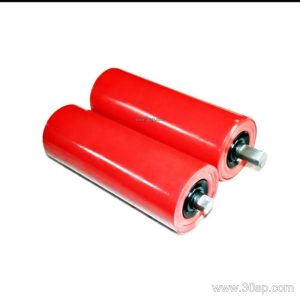
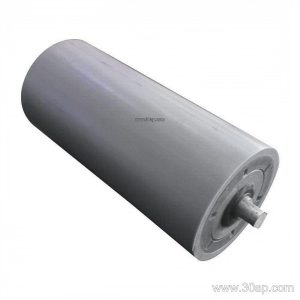
A High Wear-Resistant Ceramic Pulley is a conveyor pulley whose shell is fitted with ceramic tiles set in a rubber or adhesive matrix, giving the belt-contact surface a hard, long-wearing grip. It is the ceramic variant of a conveyor pulley, and the same product is also described as a ceramic lagged pulley or a pulley with ceramic lagging. The drive pulley is the usual host, because that is where slip and abrasive load meet, but the same ceramic surface can be applied to a bend pulley when sliding contact is the problem. A tail pulley is a different duty position with different loading, and the two should not be treated as swaps for one another.
Where it fits in the conveyor
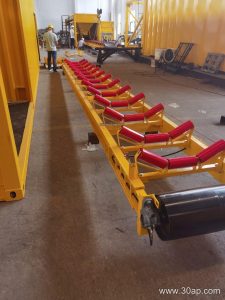
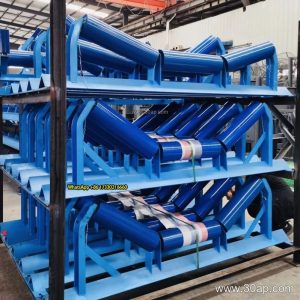
The unit works together with the conveyor belt, idler roller and conveyor bracket, so the pulley face, lagging thickness and shaft size need to be considered as part of the whole assembly rather than in isolation. In a coal mining conveyor belt line or a quarry conveyor belt line, fine grit and moisture combine to polish a plain steel face quickly; ceramic tiles keep roughness at the surface and improve traction. Plants handling ore conveyor belt loads, crusher conveyor belt discharge or aggregate conveyor belt feed often specify this surface on the drive pulley for the same reason.
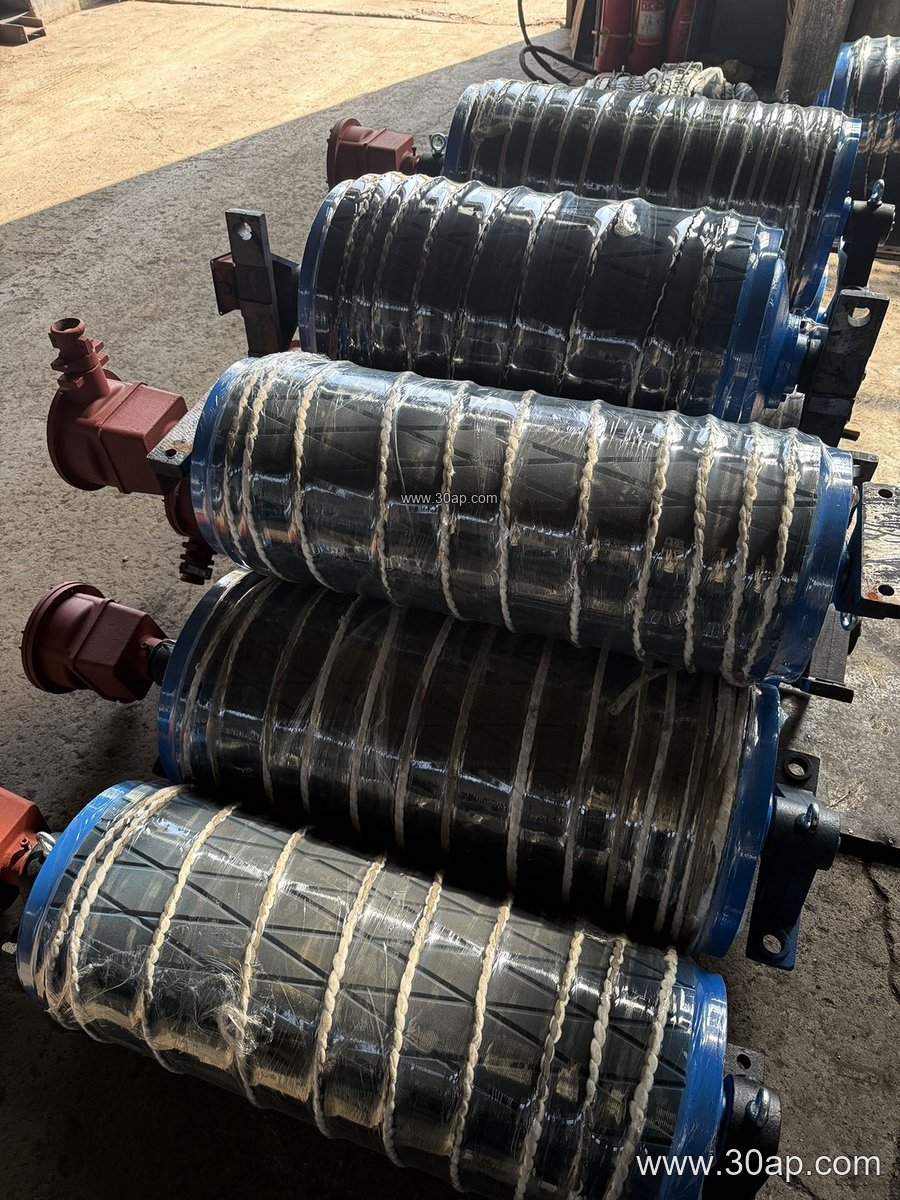
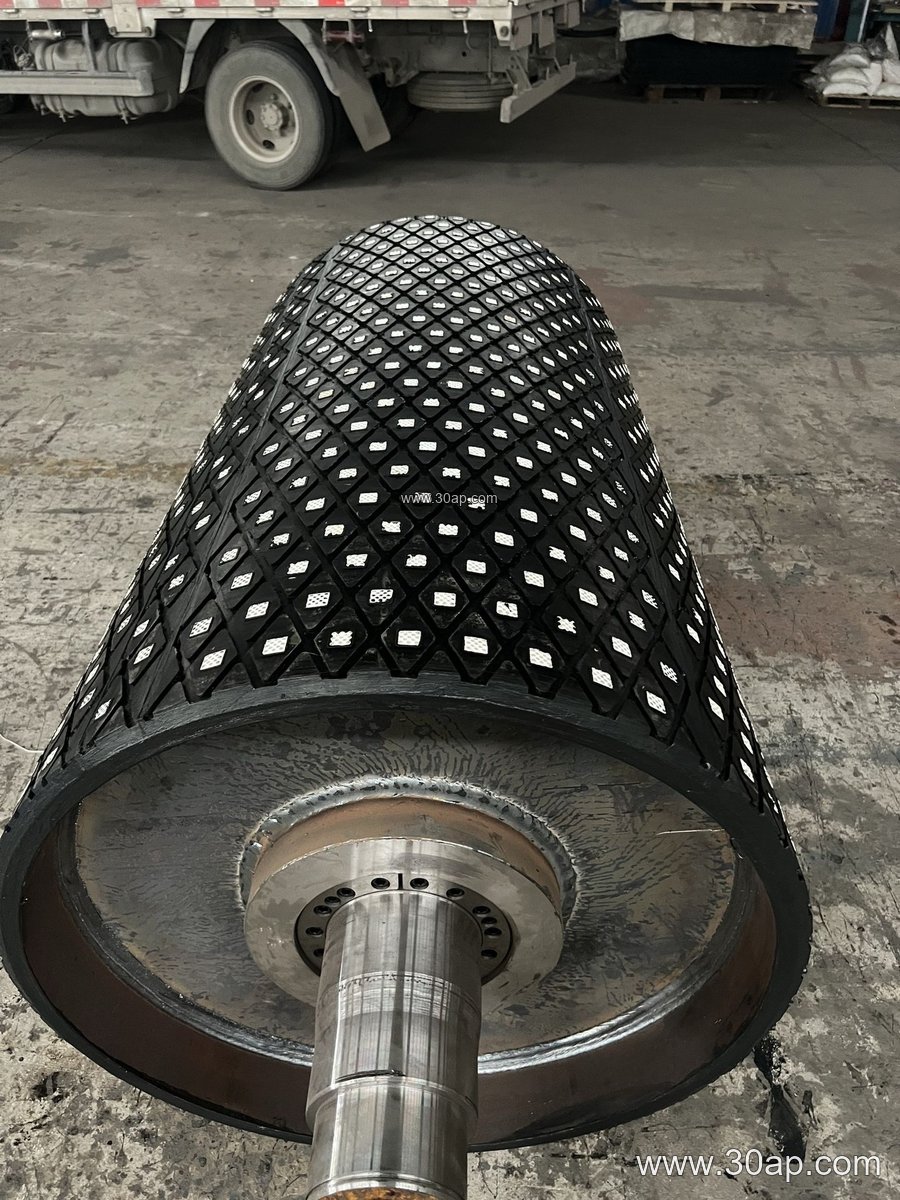
Construction and Surface Details
Tiles are typically small, square or interlocking, and are bonded to the shell or to a rubber base. The ceramic layer may be flat or formed with diamond or herringbone patterns to help shed water and fines. Bonding quality matters more than tile hardness, because a loose tile becomes a belt damage risk. Common lagging thicknesses are 8, 10, 12, 15 and 20 mm, chosen by contact pressure and belt speed rather than by habit.
Typical reference combinations include B800 × Ø500, B1200 × Ø1000 and B1400 × Ø800, but belt width does not dictate one diameter. Shaft diameter is set by torque and bearing load; sizes such as Ø80, Ø100, Ø120 and Ø140 appear in designs, yet the final value comes from the drive calculation, not from the belt width alone.
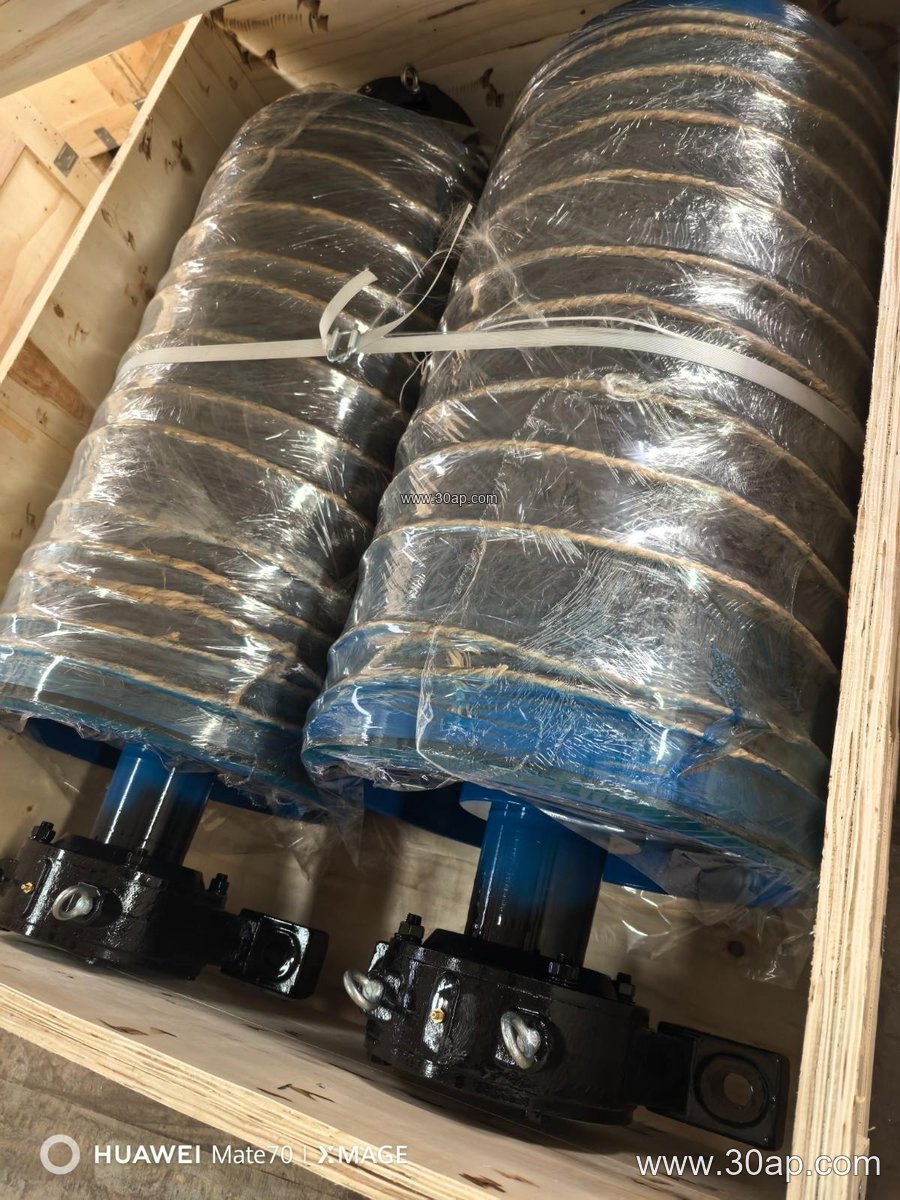
Common Reference Data
| Item | Typical range |
|---|---|
| Belt width | B400 to B2400 |
| Pulley diameter | Ø200 to Ø1800 |
| Shell face width | Usually wider than belt, e.g. B650 about 750 mm, B1000 about 1150 mm, B1800 about 2000 mm |
| Lagging thickness | 8, 10, 12, 15, 20 mm |
| Shaft diameter | Ø50 to Ø200, by design |
These are reference values, not a supply promise. A B1600 or B2000 pulley is a large item and should be confirmed against the actual conveyor layout.
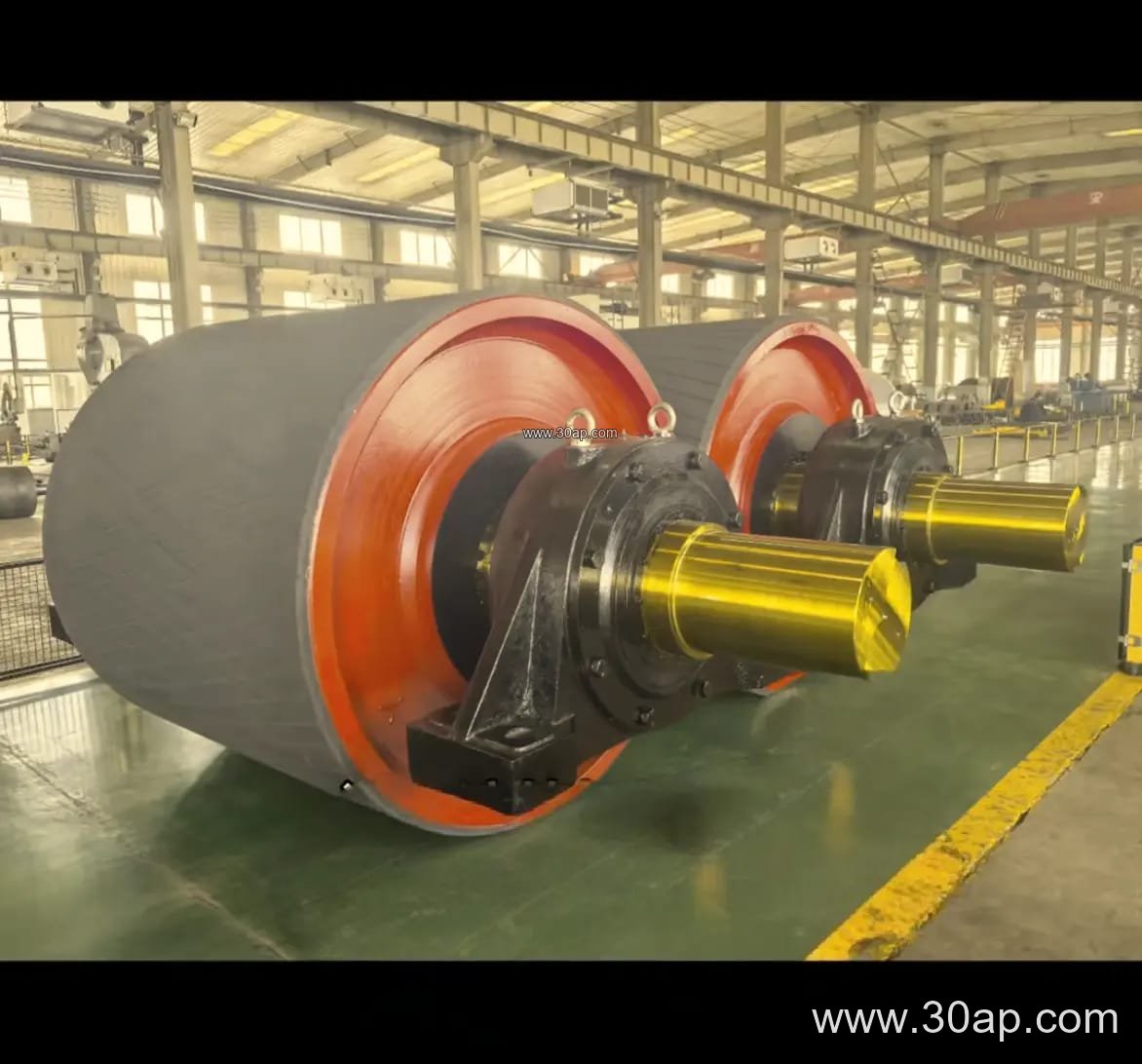
Selection Points for Buyers
- Confirm the duty position: drive, bend or tension. Each has a different slip and wrap profile.
- Match the ceramic surface to the belt. An abrasion resistant conveyor belt and a steel cord conveyor belt respond differently to a coarse tile face.
- Check the lagging pattern against carry-back and water. Diamond tiles help drainage; flat tiles suit dry, clean runs.
- Review belt tension and starting torque. Ceramic grip can raise the traction coefficient, so the take-up setting may need review.
- Ask how tiles are bonded and inspected, and keep a spare tile kit for repair.
Applications and Maintenance
You will see this pulley in coal preparation plants, limestone and iron ore yards, cement plant clinker lines, power plant coal handling, port bulk terminals, and sand and gravel plants. It also suits sinter plants and tunnel spoil systems where fines are wet and gritty. In these settings the pulley is often paired with a heavy-duty conveyor pulley design and a matching conveyor bracket.
Inspection is simple but regular: look for missing or cracked tiles, rubber undercut at tile edges, and belt tracking drift. Clean the face before judging wear, and re-torque fasteners after the first weeks of running. A ceramic face is not a substitute for correct belt training, and a bend pulley should not be asked to carry drive duty simply because it has the same lagging.
For plants that also run EP conveyor belt, NN conveyor belt or fabric core conveyor belt circuits, keep one ceramic pulley standard across similar drives so spare parts and maintenance routines stay consistent.