What a Take-Up Device Pulley Does
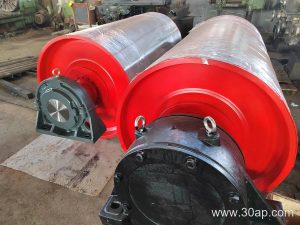
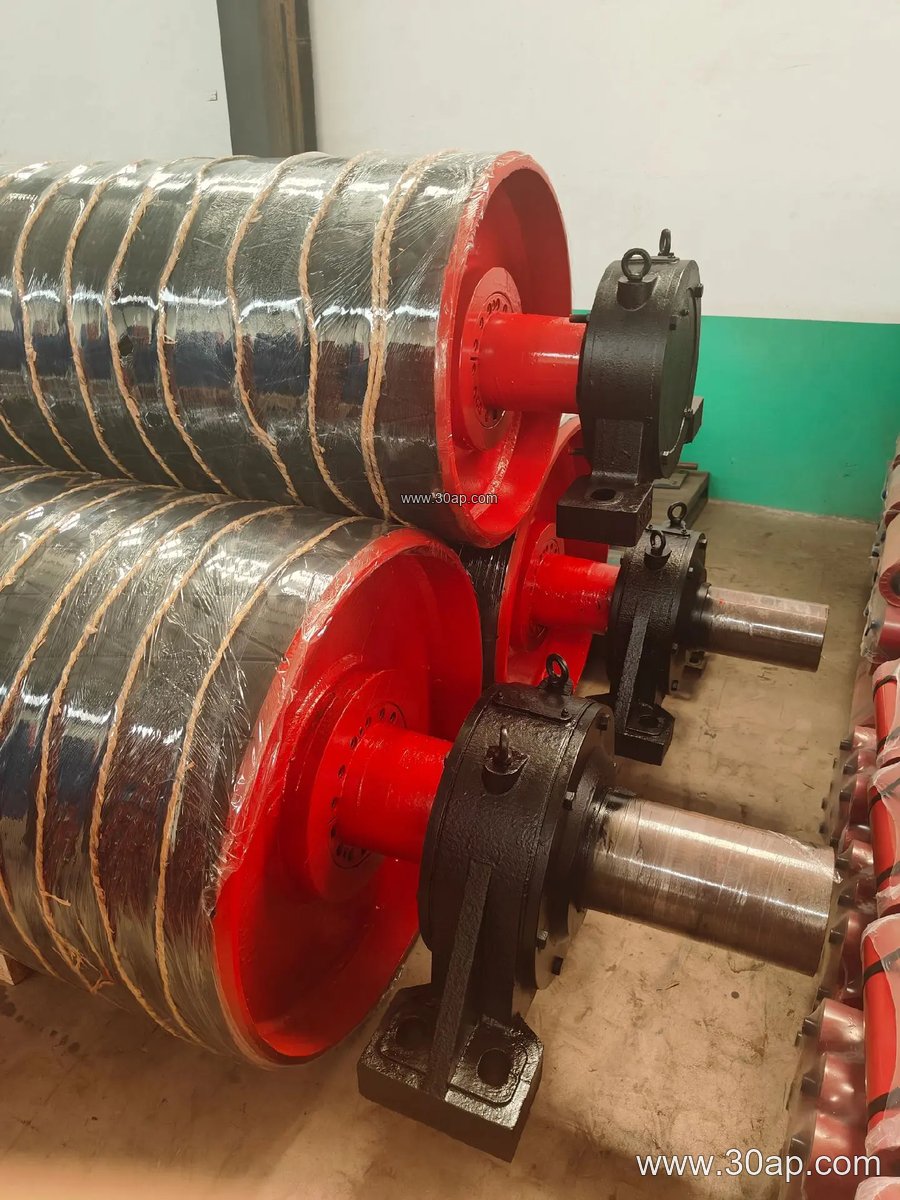
A take-up device pulley is the rotating component that guides or carries the conveyor belt inside a tensioning station. Its job is to work with the take-up mechanism, whether that is a screw, gravity weight, or hydraulic arrangement, so that the belt keeps enough tension for stable tracking and reliable torque transfer at the drive. Without a properly sized take-up pulley, a belt can sag between idlers, slip on the drive pulley, or wander off center.
The same assembly is often called a tension pulley or a take-up drum, and in some layouts it functions as a bend pulley within the take-up loop. It should not be confused with the drive pulley, which transmits power, or with the tail pulley, which forms the return end of the conveyor. Each plays a different role in the same circuit.
Construction Details That Matter
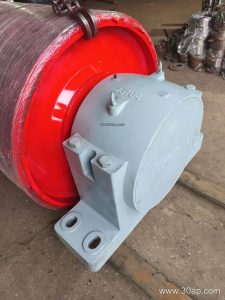
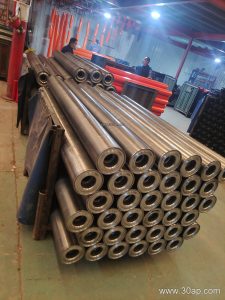
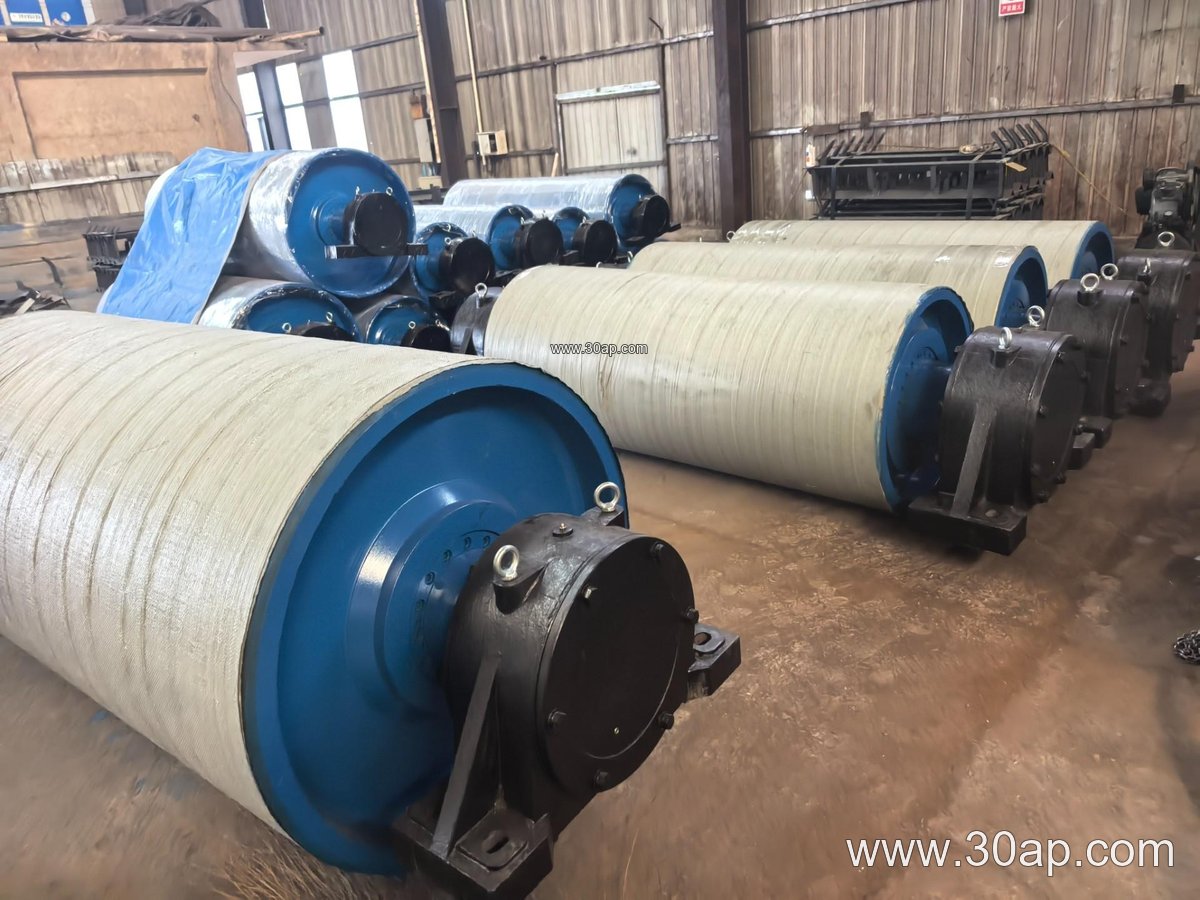
Most units are built around a steel shell with welded end discs and a through shaft supported by bearing housings. Shell thickness and shaft diameter are chosen from the belt pull and the take-up travel, not from belt width alone. Common diameters for this duty include Ø315, Ø400, Ø500, Ø630, and Ø800, while shaft sizes such as Ø80, Ø100, Ø120, and Ø140 appear in many medium and heavy layouts. A B800 × Ø500 or B1200 × Ø1000 combination is frequently seen, but the pairing is a design choice rather than a rule.
Surface treatment depends on the application. Plain finish is acceptable where slip is not a concern, while rubber lagging in 8, 10, 12, 15, or 20 mm thickness improves grip and protects the shell. Diamond or herringbone patterns help shed water and fines. In a coal preparation plant or a wet aggregate line, lagging can reduce belt slip on the tensioning drum and extend service life.
Where It Fits in the Plant
Take-up stations appear wherever belt length changes with load, temperature, or wear. In a limestone quarry, a gravity take-up tower with a take-up device pulley keeps the main haulage belt steady through seasonal temperature swings. In a power plant coal handling system, a screw take-up on the return strand allows operators to adjust tension during scheduled maintenance. Similar arrangements are used in cement plants, iron ore terminals, and crushing and screening circuits.
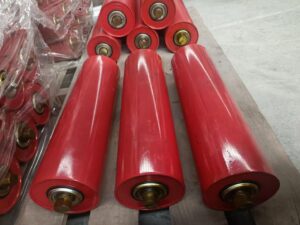
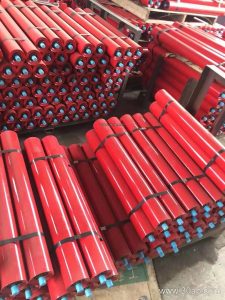
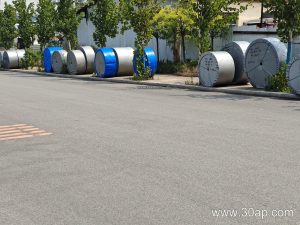
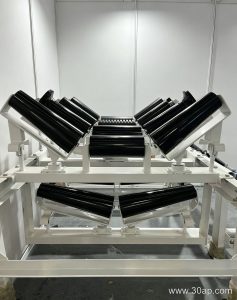
The pulley works together with the conveyor belt, conveyor idler rollers, and conveyor brackets that support the loop. In long overland systems, a heavy-duty mining conveyor belt or a steel cord conveyor belt may need a larger take-up drum and longer travel to absorb elastic stretch. Where space is tight, a compact bend pulley arrangement is often preferred.
Selection and Maintenance Notes
Buyers should confirm the belt width, the required take-up travel, the belt tension range, and the available shaft and bearing size before ordering. The following reference values show typical relationships, not fixed supply specifications:
- Belt width B650 usually pairs with a drum face around 750 mm
- Belt width B1000 usually pairs with a drum face around 1150 mm
- Belt width B1400 usually pairs with a drum face around 1600 mm
- Belt width B1800 usually pairs with a drum face around 2000 mm
During operation, check bearing temperature, lagging wear, and shaft alignment at each inspection. A take-up device pulley that runs out of alignment will quickly damage the belt edge and may cause tracking problems that look like idler faults. Keep the take-up frame clean and confirm that travel remains within the designed stroke.
For abrasive bulk material, an abrasion resistant conveyor belt combined with a lagged tension drum reduces wear on both components. In underground coal mining, a flame retardant conveyor belt and a properly grounded take-up assembly support safer operation.
Buyer Checklist
Ask for the shell diameter, face width, shaft diameter, bearing type, lagging thickness, and surface pattern in writing. Confirm whether the unit is for a gravity tower or a screw take-up, since the mounting style differs. Also verify compatibility with the conveyor pulley layout and the conveyor bracket dimensions on site. A take-up device pulley is a small part of the total conveyor cost, but it has a large effect on belt life and uptime.