What a Conveyor Parts Idler Does on the Line
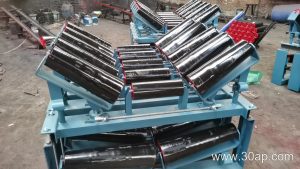
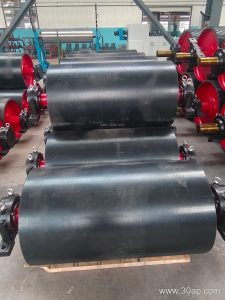
A conveyor parts idler is the rotating support that carries the conveyor belt and its load along the length of a conveyor. In a quarry or a cement plant, these idlers keep the belt tracking evenly and reduce friction between the belt and the frame. The idler roller is mounted on a shaft and held in place by a conveyor bracket, forming the basic support unit that every bulk material conveyor depends on. Unlike a conveyor pulley, which drives or redirects the belt at the ends, an idler works continuously along the carrying and return sides of the system.
Construction and Common Configurations
Most idlers share a simple build: a steel or polymer tube, bearing housings at each end, a through shaft, and a sealing arrangement to keep dust and moisture out. The roller surface can be plain steel, nylon, ceramic, or fitted with rubber rings for impact absorption. Bearing sizes such as 6204, 6205, 6305, 6306, 6308, and 6310 are common, but the correct bearing depends on load, speed, and roller diameter rather than on belt width alone.
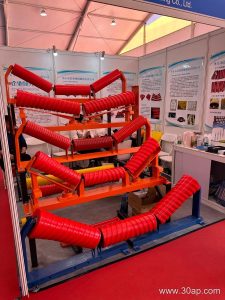
Carrying idlers are often arranged in sets. A single-roll set suits narrow belts and light loads, while two-roll and three-roll troughing sets form the familiar trough shape that keeps bulk material centered. Return idlers support the empty belt; flat return and V-return designs are both used, with the V shape helping to keep the belt centered on the return run.
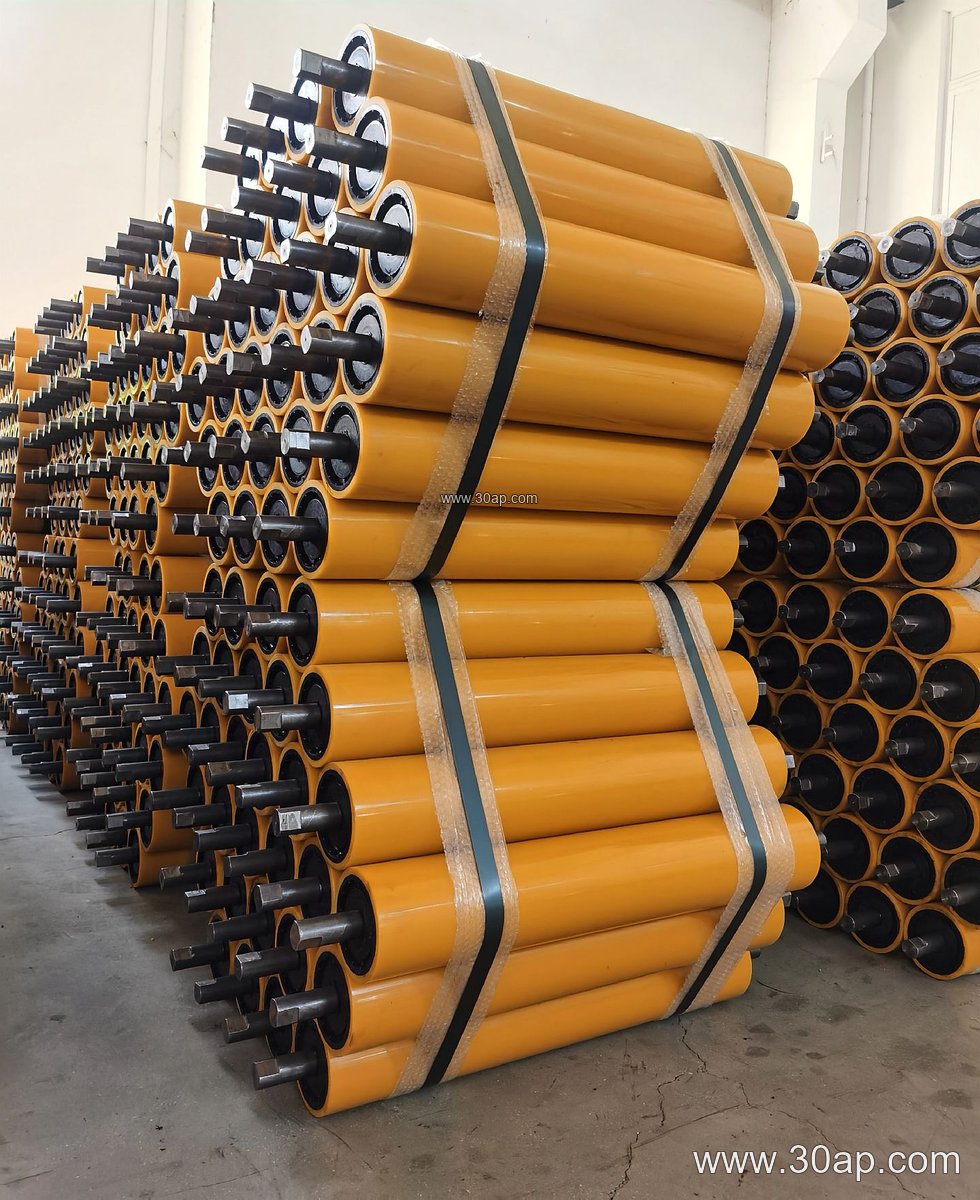
Typical Roller Diameters and Belt Widths
Roller diameter is selected with belt width, load, and speed in mind. Common diameters include Ø63, Ø76, Ø89, Ø102, Ø108, Ø127, Ø133, Ø159, Ø178, Ø194, and Ø219 mm. Belt widths run from B400 and B500 up through B2400, and the roller length changes with belt width, trough angle, and idler arrangement. For a three-roll troughing set, common roller lengths are roughly 200 mm at B500, 250 mm at B650, 315 mm at B800, 380 mm at B1000, 465 mm at B1200, 530 mm at B1400, 600 mm at B1600, 670 mm at B1800, and 750 mm at B2000. These are examples only; side rollers and center rollers can differ, and final dimensions are set by design.
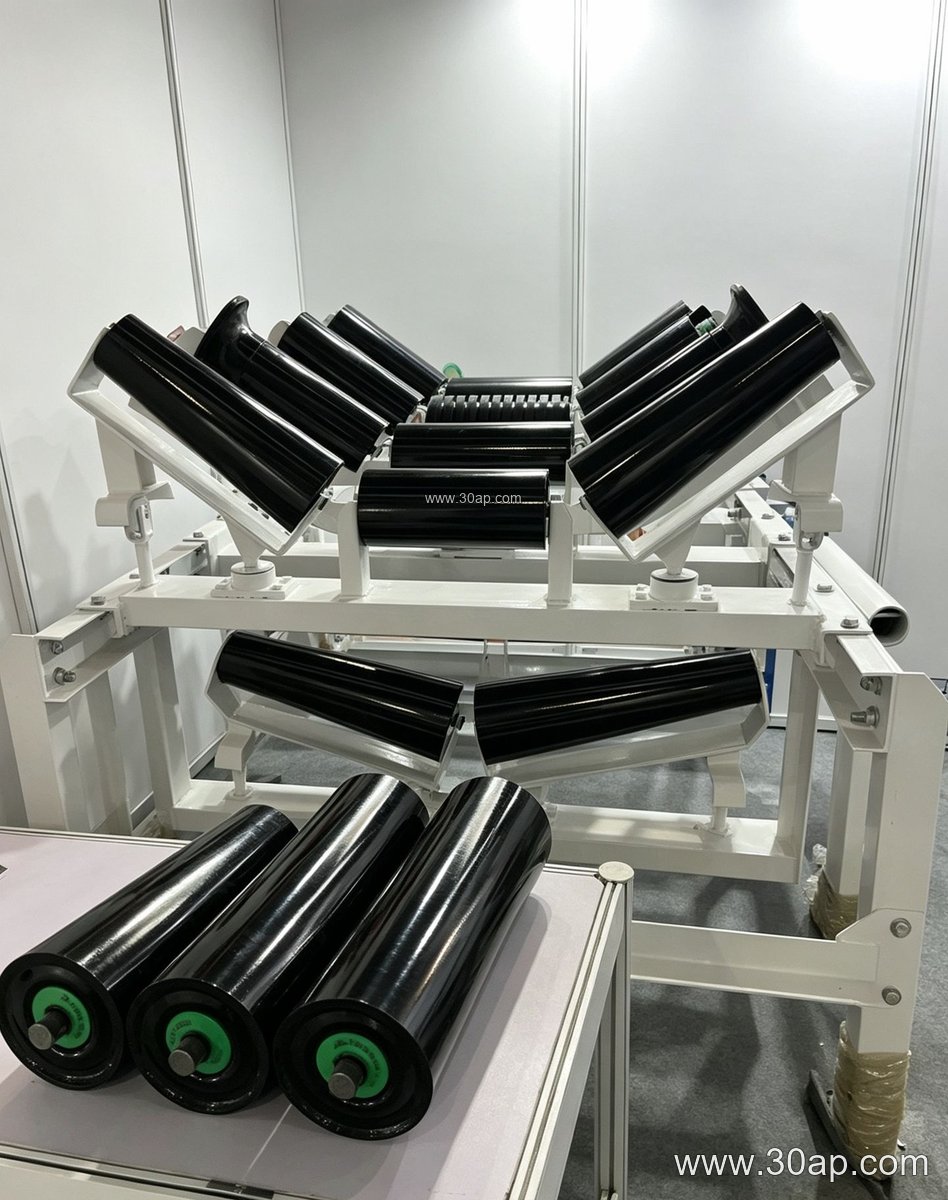
Trough Angle, Transition, and Belt Training
The trough angle affects how well the belt contains the load. Common angles are 20, 30, 35, and 45 degrees. A deeper trough helps on high-capacity lines moving abrasive rock or ore, while a shallower angle may suit lighter materials. Transition idlers are placed near pulleys to ease the belt from a flat profile into the trough without stressing the edges. Training idlers, including friction and conical self-aligning types, are used where the belt tends to wander. A small forward tilt of about 1.5 to 2 degrees is sometimes used on training idlers to encourage centering, but this is a design choice rather than a fixed rule.
Where These Idlers Are Used
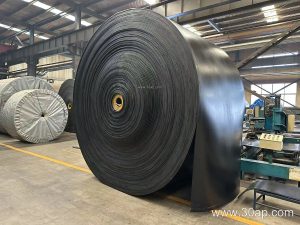
You will find conveyor parts idlers in limestone quarries, iron ore and copper ore handling, coal washing plants, aggregate crushing and screening lines, cement plants, and power station coal yards. They also appear in port ship-loading systems and steel plant sinter lines. In these settings, an abrasion resistant conveyor belt may run alongside impact idlers at the loading point, while a heat resistant conveyor belt in a cement kiln area still relies on properly sealed idlers to keep the belt moving. A heavy-duty mining conveyor belt and a steel cord conveyor belt both need idler sets matched to their load and speed.
Buyer Checklist
- Match roller diameter and bearing size to the actual load and belt speed, not to belt width alone.
- Confirm the trough angle and idler set type needed for the material and capacity.
- Specify the roller surface: plain steel, nylon, ceramic, or rubber rings for impact zones.
- Check sealing and bearing protection for dusty or wet conditions.
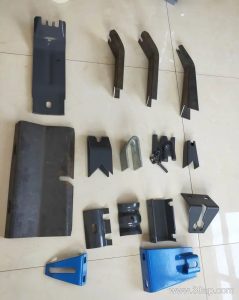
- Verify mounting dimensions against the existing conveyor bracket and frame.
- Consider transition and training idlers where belt tracking is a concern.
Whether the line carries coal, clinker, or aggregate, the idler is a wear part that deserves the same attention as the belt itself. A well-matched idler set keeps the conveyor belt running true and extends service life across the whole conveyor. For more on conveyor components, visit beltconveyorparts.com or review idler options at conveyoridler.com.