What a Head Drive Pulley Does on a Conveyor
The head drive pulley is the power-transmitting drum at the discharge end of a belt conveyor. It grips the conveyor belt through friction, pulls the loaded belt forward, and discharges material at the head station. In a quarry or a coal washing plant, this component sets the pace for the entire material flow. While a tail pulley only redirects the belt and a bend pulley changes its path, the head drive pulley is the one connected to the gearbox and motor, doing the actual pulling work.
Because the drive pulley must transmit torque without slipping, its design, lagging, and shaft connection are more heavily engineered than those of a simple redirect drum. A poorly matched head drive pulley can cause belt tracking problems, premature belt wear, or insufficient traction under load.
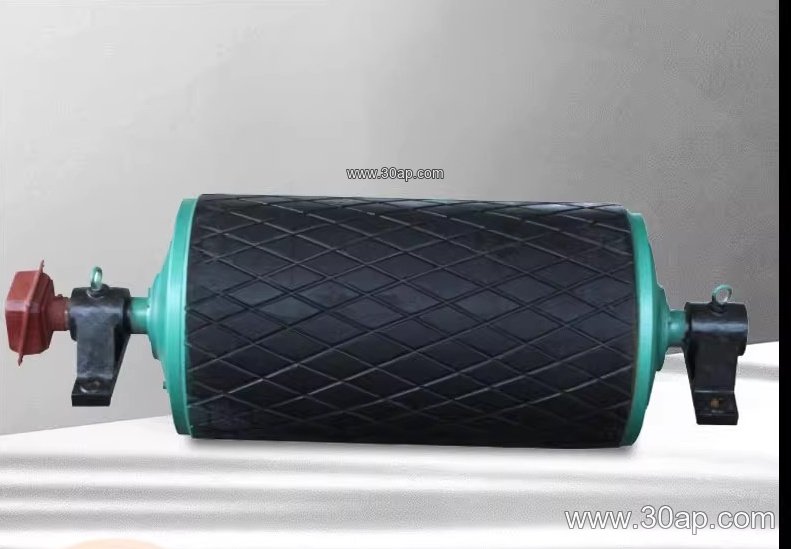
Construction and Key Components
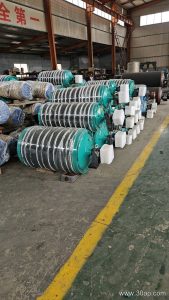
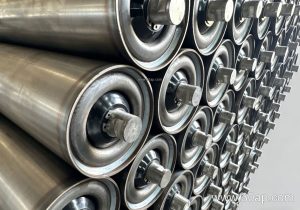
A typical head drive pulley consists of a cylindrical shell, two end discs, a shaft, and bearing housings. The shell is usually machined from steel tube or rolled plate, with the surface prepared for lagging. The shaft is sized by torque and radial load, not by belt width alone; common shaft diameters include Ø80, Ø100, Ø120, Ø140, and Ø160 mm, but the final value must follow the conveyor design.
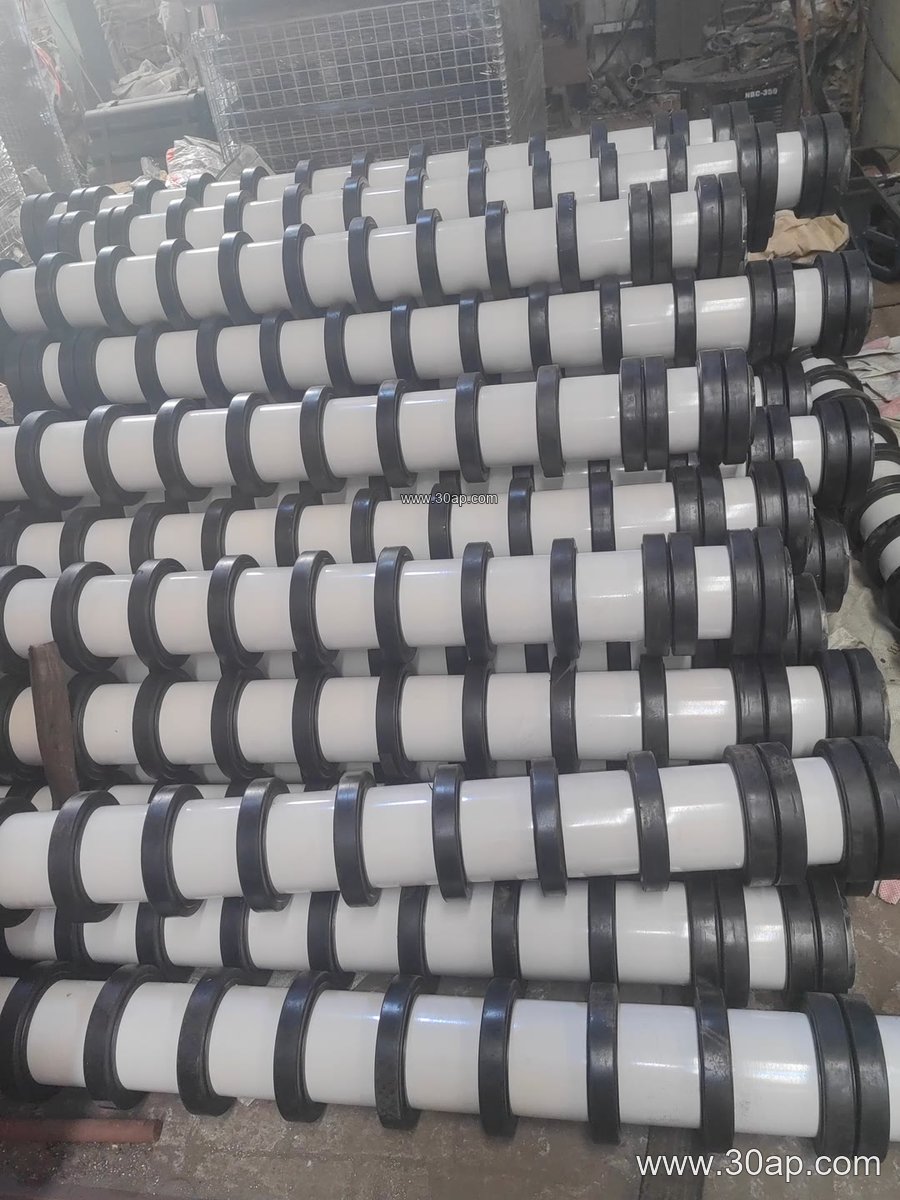
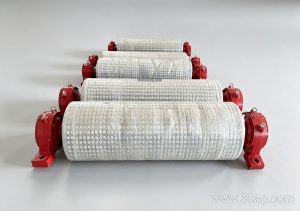
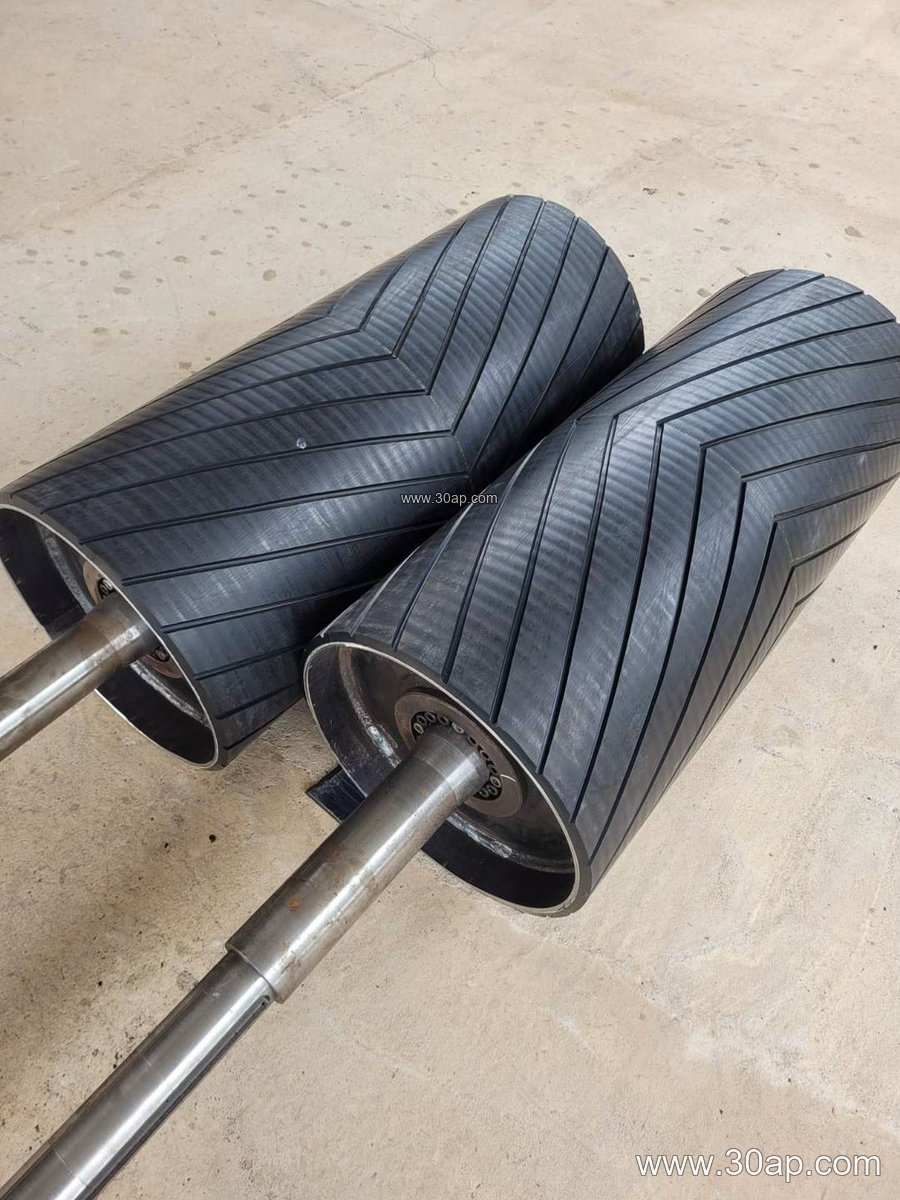
Lagging is a critical feature. Plain steel shells offer limited friction, so most head drive pulleys are covered with rubber, ceramic, or diamond-pattern lagging. Common lagging thicknesses are 8, 10, 12, 15, and 20 mm. Hot-sulphur vulcanized rubber or cold-bonded rubber are both used, while ceramic lagging suits high-torque, wet, or muddy conditions. The pulley face width is normally wider than the belt; for example, a B800 belt typically runs on a pulley face around 950 mm, and a B1200 belt on roughly 1400 mm.
Where It Fits in Bulk Material Handling
Head drive pulleys appear in a wide range of bulk handling systems. In a limestone quarry, they drive the main discharge conveyor after the primary crusher. In a cement plant, they move clinker or raw meal along the clinker cooler and transfer points. In a power plant coal yard, they pull coal from the stockpile to the boiler bunkers. Sand and gravel lines, copper ore concentrators, and port ship-loading conveyors also rely on these drums at the head end.
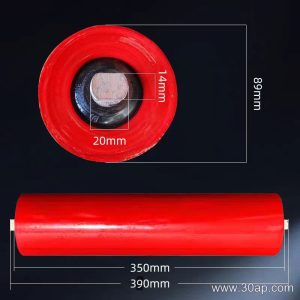
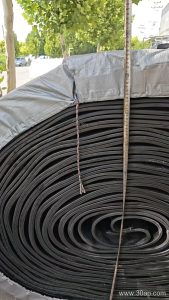
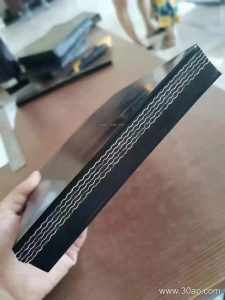
They work together with the conveyor belt, idler roller, and conveyor bracket to keep the system aligned. The belt type matters too: a heavy-duty mining conveyor belt or a steel cord conveyor belt demands a drive pulley with enough lagging friction and shaft strength to handle high tension. For underground coal mining, flame retardant conveyor belt and anti-static conveyor belt are common, and the head drive pulley must be specified to match the belt’s tensile grade and the required starting torque.
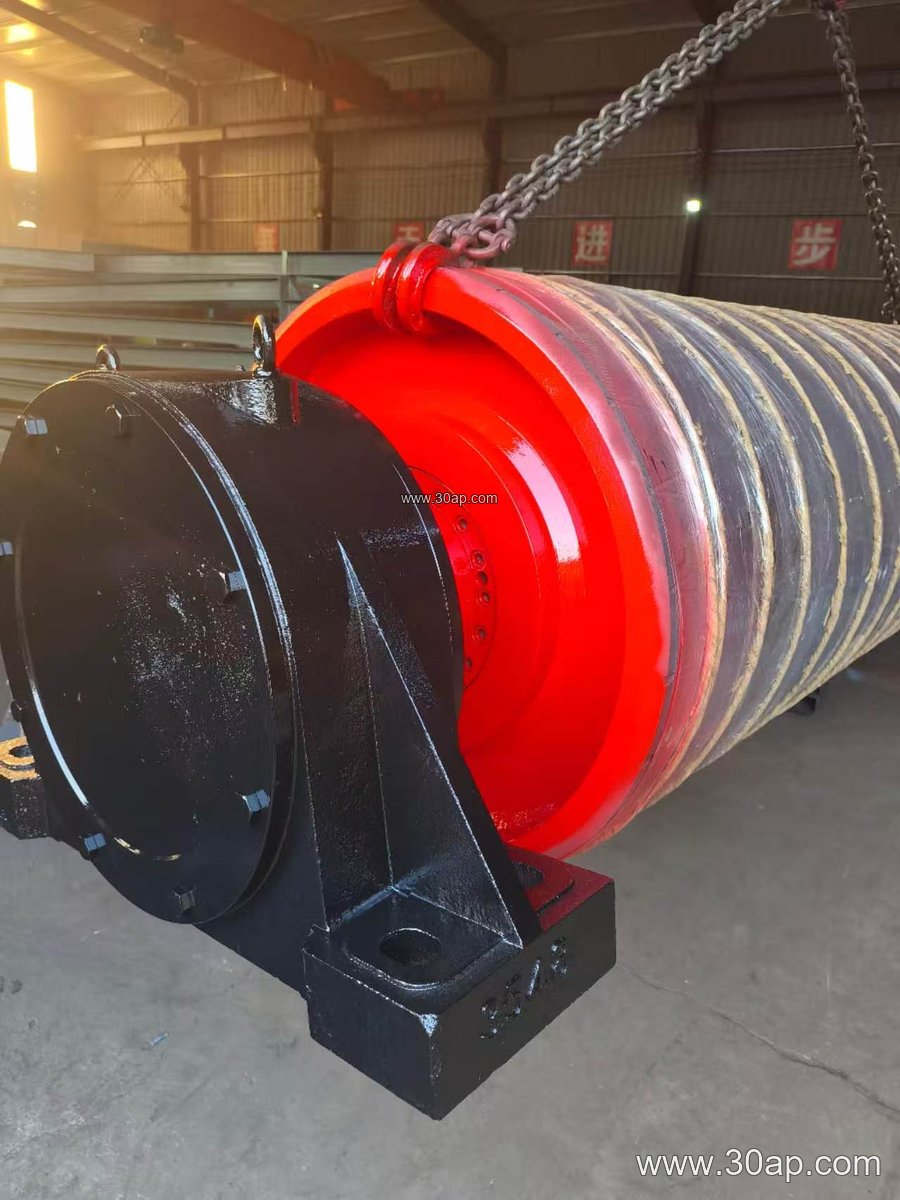
Matching the Pulley to Belt Width and Duty
Buyers often ask how to choose the diameter for a given belt width. There is no single rule that fixes one diameter to one belt width. A B800 conveyor might use a Ø500 mm head drive pulley in a light duty application, while a B800 belt carrying abrasive rock could require Ø630 mm or larger to reduce belt bending stress and improve lagging life. Similarly, B1200 × Ø1000 and B1400 × Ø800 are both possible combinations depending on belt tension, speed, and space.
Common belt widths for conveyors using head drive pulleys include B400, B500, B650, B800, B1000, B1200, B1400, B1600, B1800, and B2000. Diameters commonly range from Ø200 mm up to Ø1800 mm. The table below shows typical reference combinations, but these are not mandatory pairings.
| Belt Width | Typical Pulley Face Width | Example Diameter Range |
|---|---|---|
| B500 | ≈600 mm | Ø250 – Ø400 mm |
| B650 | ≈750 mm | Ø315 – Ø500 mm |
| B800 | ≈950 mm | Ø400 – Ø630 mm |
| B1000 | ≈1150 mm | Ø500 – Ø800 mm |
| B1200 | ≈1400 mm | Ø630 – Ø1000 mm |
| B1400 | ≈1600 mm | Ø800 – Ø1250 mm |
| B1600 | ≈1800 mm | Ø1000 – Ø1400 mm |
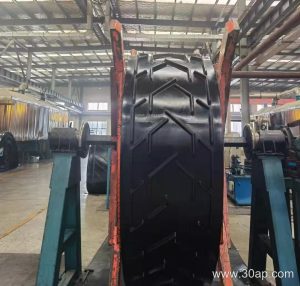
Surface form also needs attention. Diamond lagging improves water drainage in wet quarries, while ceramic lagging resists wear in iron ore or copper ore handling. Plain rubber lagging is often adequate for clean, dry bulk material. The drive pulley should never be selected by belt width alone; torque, belt speed, and lagging friction all play a role.
Buyer Checklist for Head Drive Pulley Selection
- Confirm the conveyor belt type and tensile grade (e.g., EP conveyor belt, steel cord conveyor belt, or multi-ply fabric core conveyor belt).
- Provide the required torque and starting conditions, not just motor power.
- Specify lagging type and thickness based on material and environment.
- Check shaft diameter against the gearbox coupling and bearing bore.
- Verify pulley face width against belt width and troughing transition.
- Consider the conveyor bracket and bearing housing interface for easy installation.
For harsh duty such as aggregate conveyor belt lines or a crusher conveyor belt, a heavier shell and thicker lagging may be justified. In cold climates, cold resistant conveyor belt may be used, and the pulley lagging should remain flexible. A head drive pulley is not interchangeable with a tail or bend pulley, so the specification should always be based on its driven position and load.