What a Belt Conveyor Pulley Does on the Line
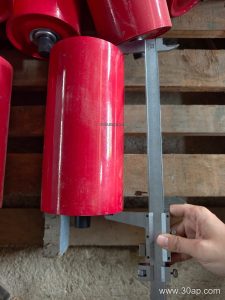
A belt conveyor pulley is the rotating drum that carries and drives the conveyor belt at key points along a conveyor system. It is not the same as an idler roller, which supports the belt along the carrying run. The pulley transmits motion, maintains belt tension, or changes belt direction, and its reliability directly affects how smoothly a quarry, power plant, or crushing circuit runs. In a stone crushing line or a power plant coal yard, a single poorly specified drum can cause belt tracking problems, slip, or premature cover wear.
The product is also called a conveyor pulley in many procurement documents. Both terms refer to the same component. Drive, tail, and bend pulleys are distinct roles and should never be treated as interchangeable names.
How the Drum Is Built
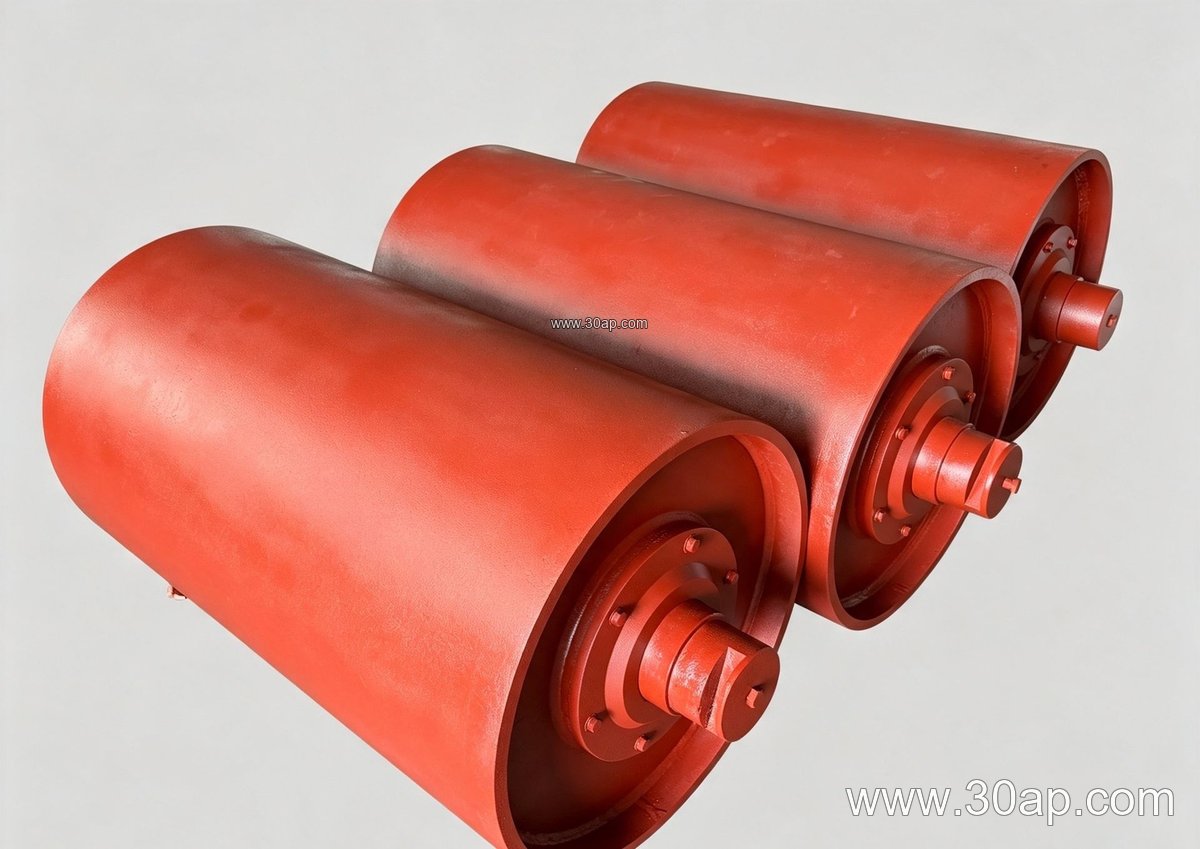
A typical belt conveyor pulley consists of a cylindrical shell, end discs, a shaft, hub, and bearing assemblies. The shell may be seamless tube or rolled plate, and the shaft is sized by torque and load rather than by belt width alone. Common shaft diameters include Ø50, Ø60, Ø80, Ø100, Ø120, Ø140, and Ø160, but the final value is determined by the drive calculation and bearing selection.
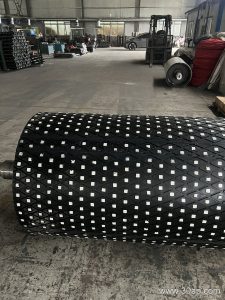
The surface form matters as much as the structure. Plain finish suits many non-drive positions. Rubber lagging improves grip and protects the shell. Diamond and herringbone patterns help shed water and fines, while ceramic lagging is chosen where abrasion is severe. Lagging thickness is often 8, 10, 12, 15, or 20 mm depending on duty.
Common reference combinations
The table below shows indicative pairings only. A given belt width does not lock a pulley to one diameter.
- B800 × Ø500, shell face about 950 mm
- B1200 × Ø1000, shell face about 1400 mm
- B1400 × Ø800, shell face about 1600 mm
- B1600 × Ø1250, shell face about 1800 mm
Face width is usually wider than the belt so the belt stays centred. For example, B500 often corresponds to roughly 600 mm face, and B1000 to roughly 1150 mm face.
Where It Fits in the Conveyor
At the head, a drive pulley pulls the loaded belt. At the tail, a tail pulley reverses the belt path. A bend pulley changes direction without driving, and a take-up pulley maintains tension. Each position imposes different loads, so the lagging and shaft design should follow the duty rather than a catalogue default.
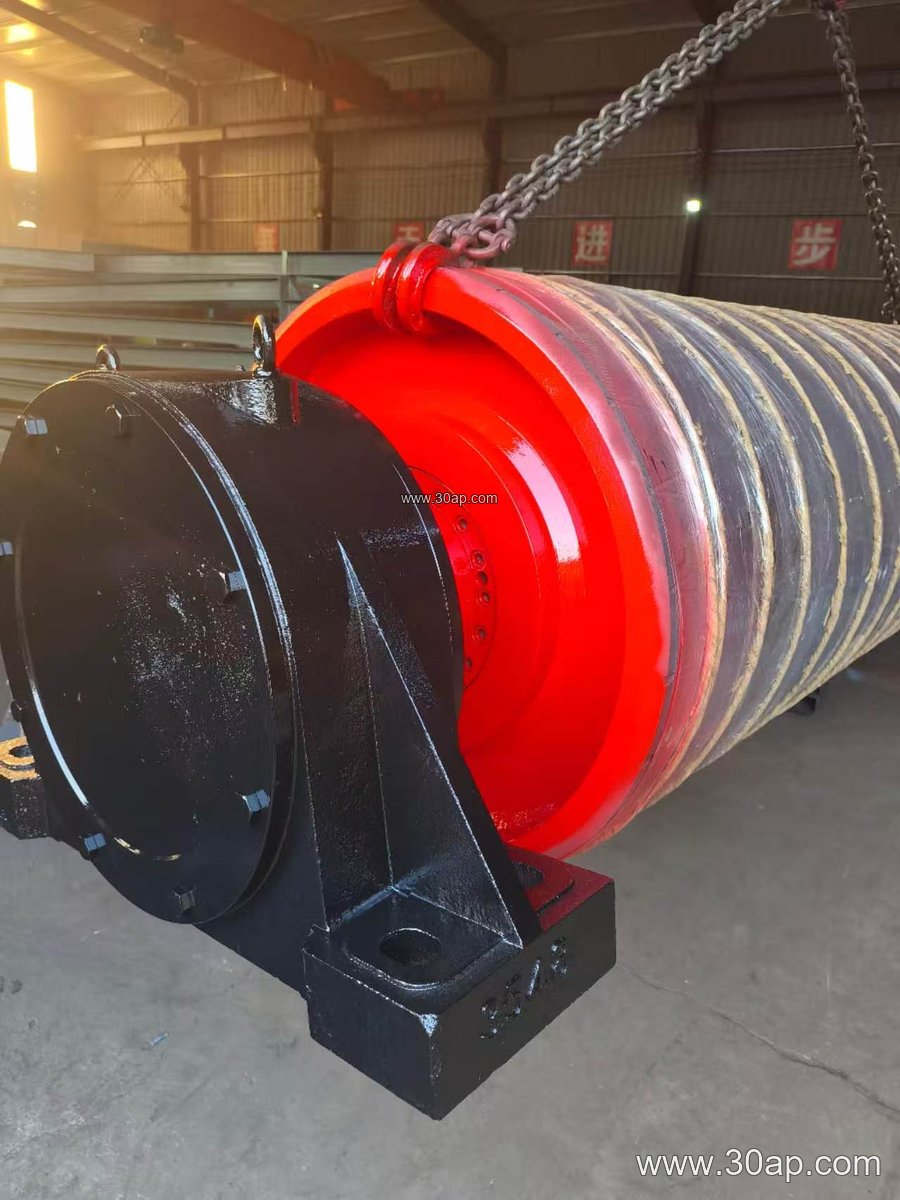
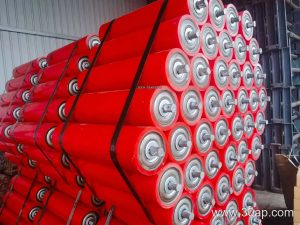
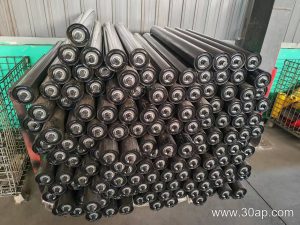
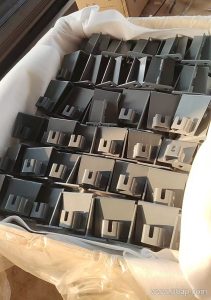
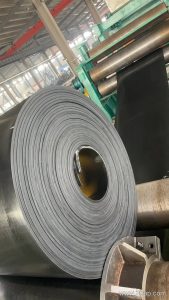
The drum must also match the belt it carries. A heavy-duty mining conveyor belt or an abrasion resistant conveyor belt used in a limestone quarry calls for a robust shell and suitable lagging. In a coal handling system, a flame retardant conveyor belt is often paired with a conveyor pulley whose cover and bearings suit dusty, potentially hazardous conditions. Belt cleaners, conveyor brackets, and conveyor idler rollers all interact with the pulley alignment and should be checked together during installation.
Buyer Checklist Before Ordering
Start with the conveyor duty and the belt specification. Confirm the belt width, the pulley role, the required diameter, and the shaft load. Ask for the lagging type and thickness, the bearing arrangement, and the balance grade. Check that the face width suits the belt and that the mounting dimensions match the conveyor bracket.
For a quarry conveyor belt line, specify whether the pulley will see wet, gritty, or high-impact material. For a power plant coal conveyor, note the fire resistance requirement of the belt and the dust exposure. Buyers comparing a fabric core conveyor belt system with a steel cord conveyor belt system should remember that the pulley diameter and shaft size follow the actual tension and torque, not a rule of thumb tied to belt width.
Ask for the drawing, material certificate, and inspection report before shipment. A well-documented belt conveyor pulley is easier to install, align, and maintain, and it keeps the whole conveying circuit running with fewer surprises.