What a Conveyor Idler Bracket Does on a Belt Conveyor
A conveyor idler bracket is the mounting frame that positions and supports idler rollers under and along the conveyor belt. It holds each roller at the correct height, spacing and trough angle so the belt keeps its shape and tracks smoothly. In practice, this component is also called a conveyor roller bracket or idler frame, and it is one of the small parts that decides how well a whole conveyor line performs.
On a long overland line, a quarry conveyor or a power plant coal handling system, the bracket carries the roller load, keeps the trough profile consistent and allows fast replacement during maintenance. The choice of bracket directly affects belt life, noise, spillage and the amount of wear on the idler roller itself.
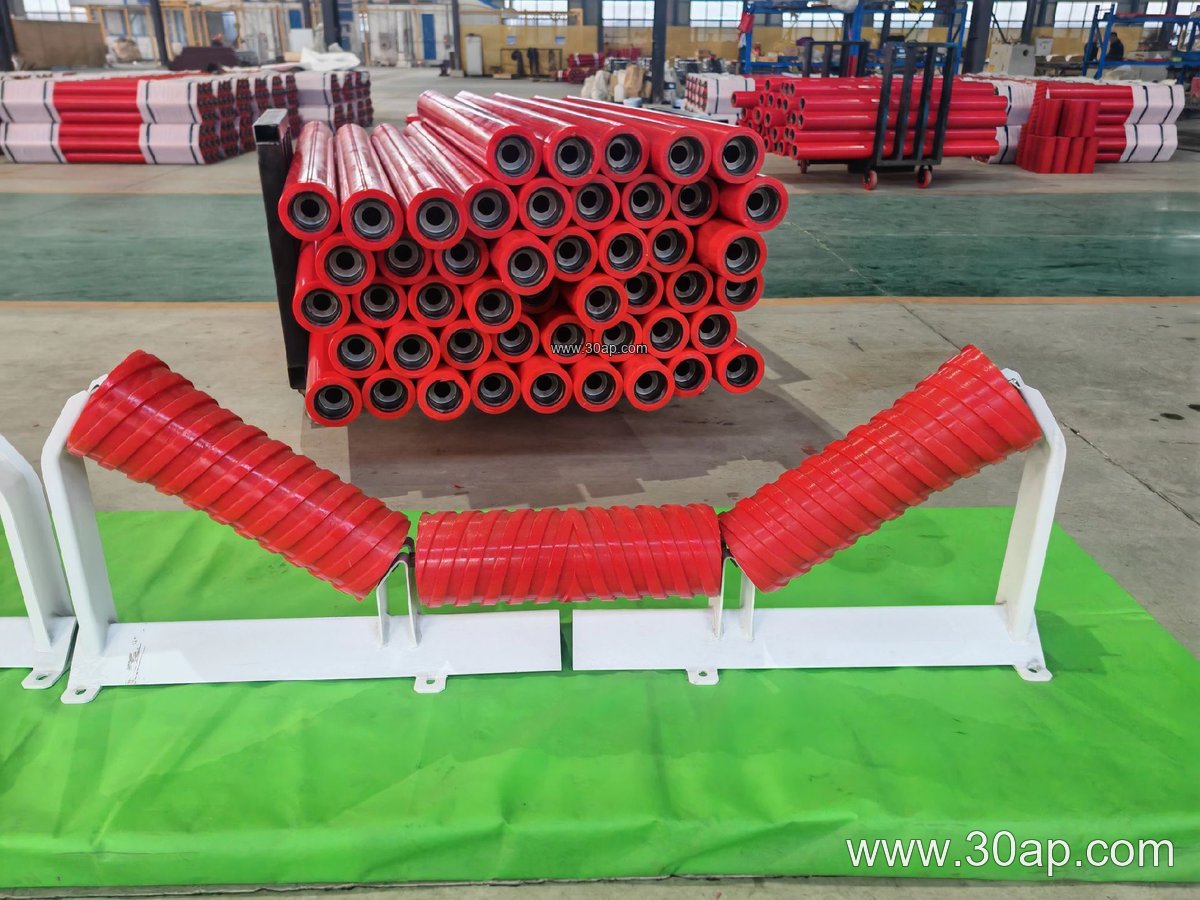
How the Bracket Is Built
Most brackets are fabricated from angle steel, channel steel or folded steel plate. The frame is drilled or slotted so the idler shaft sits in the correct position, and the ends are shaped to bolt onto the conveyor stringer. A well-made bracket keeps its shape under load, resists vibration and allows the roller to be removed without cutting the frame.
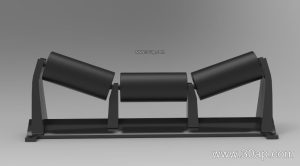
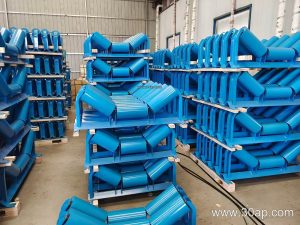
Common forms include the trough bracket for the carrying side, the return bracket for the empty side, transition brackets near the pulleys and self-aligning or training brackets that correct belt drift. Adjustable brackets let maintenance staff change the trough angle on site, which is useful when the same conveyor handles different materials.
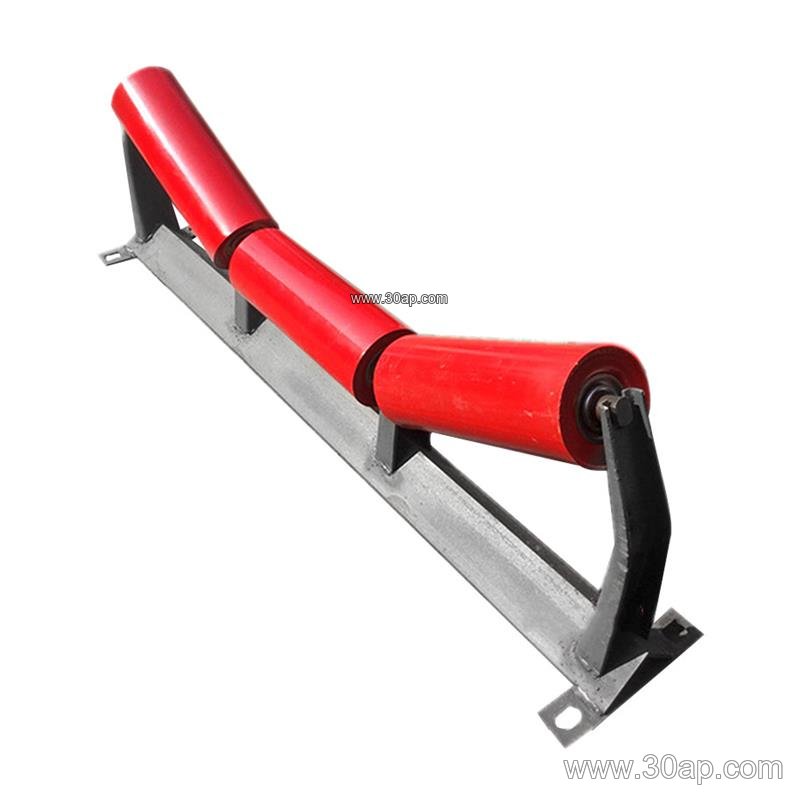
- Trough bracket: supports three rollers in a trough shape
- Return bracket: supports the belt on the return run
- Impact bracket: reinforced for loading points
- Training bracket: helps keep the belt centered
- Transition bracket: smooths the belt path near a conveyor pulley
Typical Applications Across Industries
In a limestone quarry or a sand and gravel line, trough brackets hold the belt steady through crushers and screens. In a coal washing plant or a power plant coal yard, flame retardant and anti-static belts run on brackets designed for dusty, wet conditions. Cement plants use them on clinker and raw meal lines, while steel plants and sintering plants rely on heavy frames in high-temperature zones.
Port terminals, fertilizer plants, grain silos and tunnel muck removal projects all use the same basic bracket idea, but the frame thickness, coating and roller spacing change with the duty. A heavy-duty mining conveyor belt needs a stronger frame than a light aggregate conveyor belt, and the bracket should match the belt width and load.
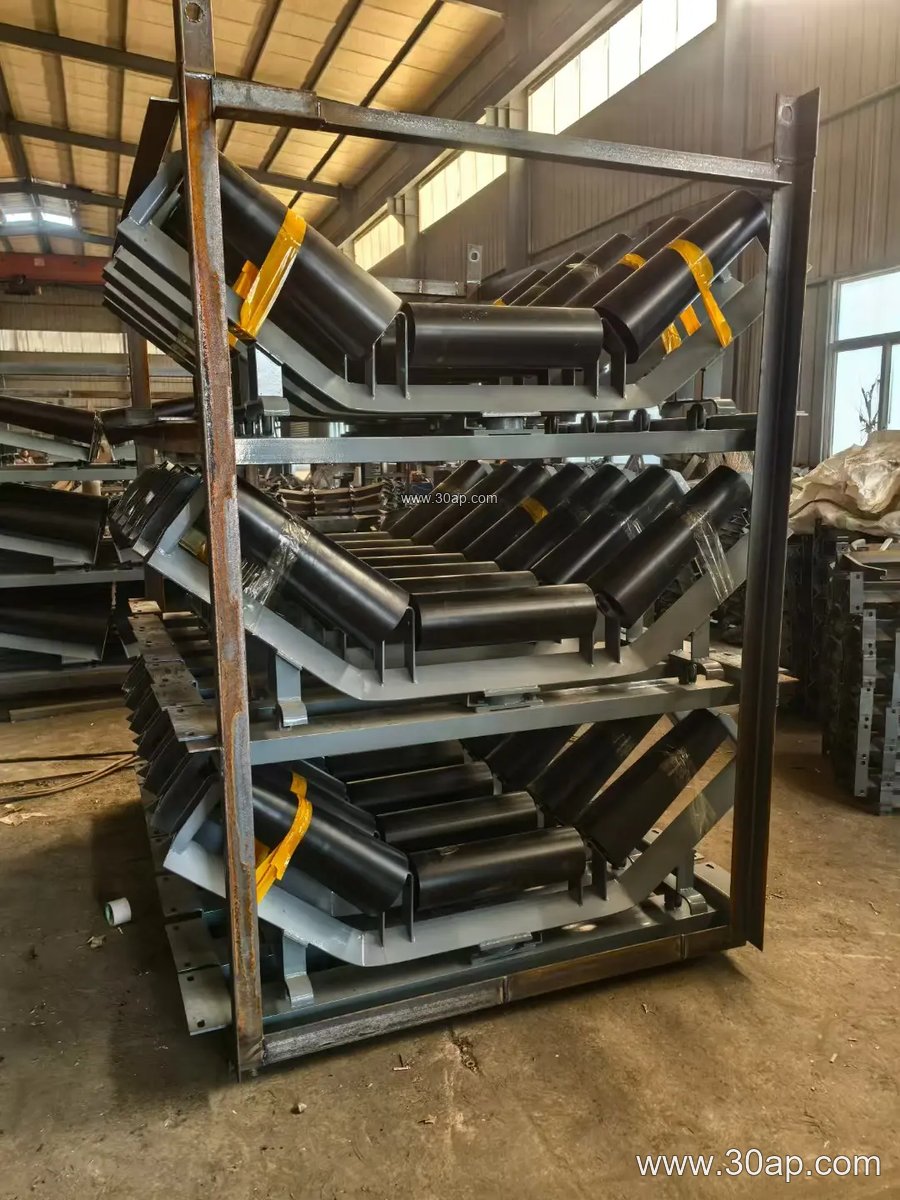
Matching Bracket, Belt and Roller
Bracket selection starts with belt width and roller diameter. The table below shows common reference combinations; actual values are set by the conveyor design, not by a fixed rule.
| Belt Width | Trough Angle | Roller Diameter | Typical Use |
|---|---|---|---|
| B500 / B650 | 20–30 degrees | Ø89 | Small aggregate and light duty lines |
| B800 / B1000 | 30–35 degrees | Ø108 / Ø133 | Quarry, cement and general bulk handling |
| B1200 / B1400 | 35–45 degrees | Ø133 / Ø159 | Mining and heavy-duty conveying |
| B1600 / B1800 | 35–45 degrees | Ø159 / Ø194 | Large ore and port systems |
| B2000 / B2200 | 35–45 degrees | Ø194 | High capacity bulk terminals |
One belt width can work with more than one trough angle or roller diameter. The mounting hole spacing and crossbeam length are determined by the belt width and trough angle together, so buyers should confirm these details before ordering. Forward-leaning brackets, usually set around 1.5 to 2 degrees, can help with belt training on long runs.
Buyer Checklist Before Ordering
- Confirm the belt width and the trough angle used on site.
- Check the idler roller shaft size and mounting hole spacing.
- Ask whether the bracket is fixed or adjustable.
- Match the frame material and surface treatment to the environment.
- Consider impact brackets at transfer points and training brackets on long lines.
- Keep spare brackets for the most heavily loaded positions.
At www.example-conveyor.com, bracket drawings are usually reviewed together with the belt specification, so the frame, roller and belt work as one system. A correct conveyor idler bracket is a low-cost part that protects expensive components such as the conveyor belt, the idler roller and the conveyor pulley, and it keeps the line running in mines, cement works, power stations and ports.