What Is an Industrial Conveyor Idler?
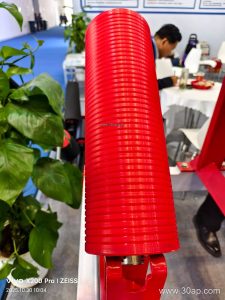
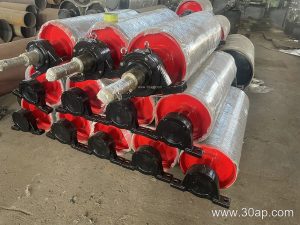
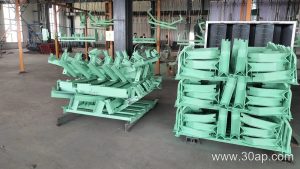
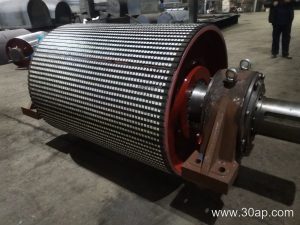
An industrial conveyor idler is the rotating component that supports the conveyor belt along its carrying and return runs. Often called an idler roller, it consists of a steel tube, bearing housings, seals, and a shaft. The idler rotates freely under the belt, reducing friction and keeping the belt aligned. In a typical conveyor system, idlers are mounted on a conveyor bracket or frame at regular intervals. They are distinct from conveyor pulleys: drive, tail, and bend pulleys transmit power or change belt direction, while idlers simply support the belt and material load.
Construction and Key Components
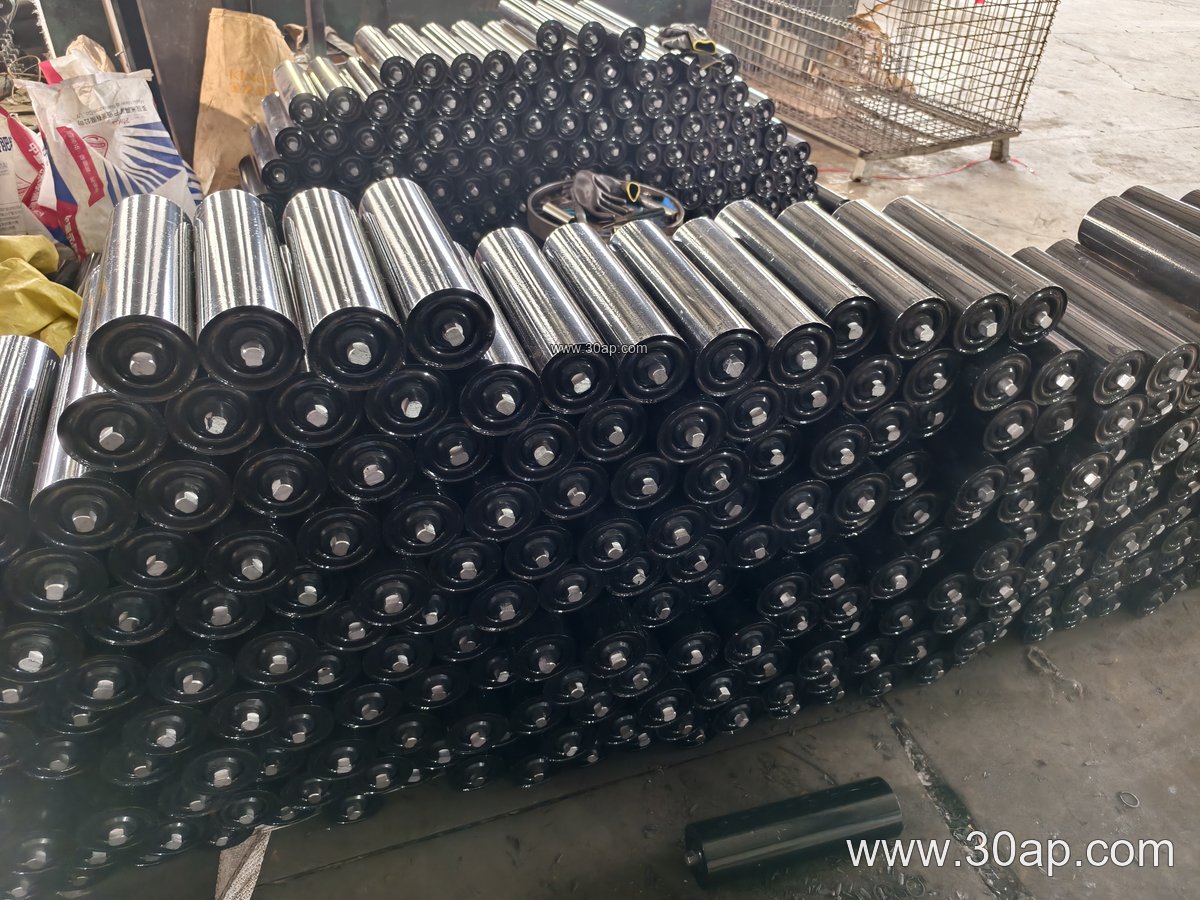
An idler roller is built around a precision bearing, commonly 6204, 6205, 6305, 6306, 6308, or 6310, housed in a sealed enclosure. The roller shell can be made of steel, nylon, ceramic, or rubber rings, depending on the application. Seals protect the bearing from dust and moisture, which is critical in harsh environments such as coal mines, cement plants, and quarries. The shaft is fixed to the conveyor bracket, and the roller shell rotates around it. Proper sealing and bearing selection extend service life and reduce maintenance downtime.
Common Idler Types and Their Roles
Different sections of a conveyor require different idler designs. The table below summarizes common types and their typical use.
| Type | Typical Location | Key Feature |
|---|---|---|
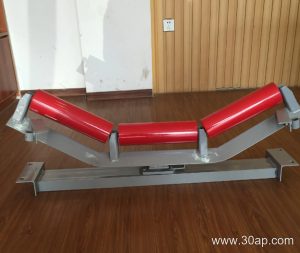
| Troughing idler (3-roll) | Carrying side | Forms a trough to increase material capacity; common trough angles 20°, 30°, 35°, 45° |
| Impact idler (rubber ring) | Loading point | Absorbs impact from falling material; rubber rings protect the belt |
| Return idler (flat or V-type) | Return side | Supports the empty belt; V-type helps with belt tracking |
| Self-aligning idler | Carrying or return side | Corrects belt misalignment; can be friction or conical type |
| Spiral idler | Return side | Helps shed material and reduce buildup |
Other types include transition idlers, comb idlers, and single-roll or two-roll idler sets. The choice depends on belt width, material characteristics, and conveyor layout.
Idler Dimensions and Belt Width Considerations
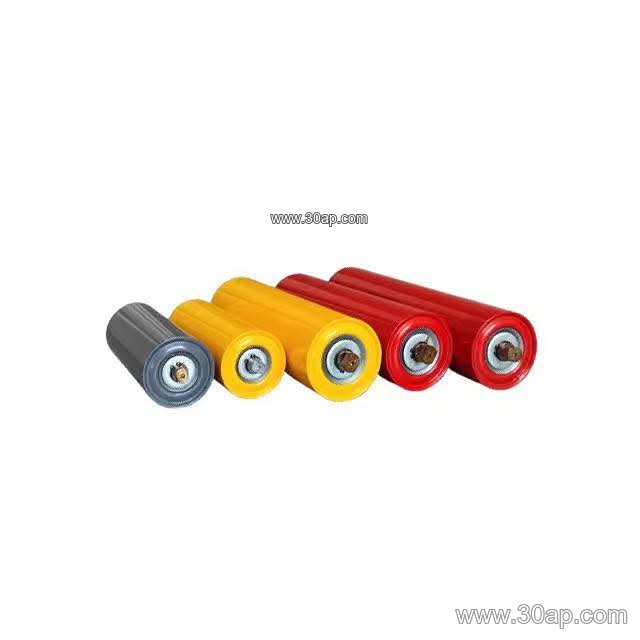
Idler roller diameter and length are matched to the conveyor belt width and trough configuration. Common roller diameters include Ø63, Ø76, Ø89, Ø102, Ø108, Ø127, Ø133, Ø159, Ø178, Ø194, and Ø219 mm. Belt widths range from B400 to B2400. For a three-roll troughing set, the roller length varies with belt width and trough angle. For example, typical roller lengths for B500, B650, B800, B1000, B1200, B1400, B1600, B1800, and B2000 are approximately 200 mm, 250 mm, 315 mm, 380 mm, 465 mm, 530 mm, 600 mm, 670 mm, and 750 mm respectively. These are common examples, not fixed rules; side rollers and center rollers may differ. Always confirm dimensions with the conveyor design.
Where Industrial Conveyor Idlers Are Used
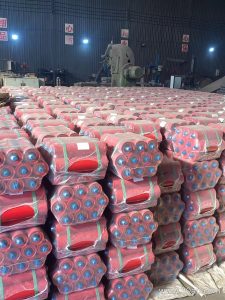
Idlers are essential in bulk material handling across many industries. In a quarry or aggregate plant, they support belts carrying crushed stone and sand. In coal mining, both underground and surface operations rely on idlers to keep coal moving efficiently. Cement plants use idlers on clinker and raw material conveyors, while power plants depend on them for coal handling. Ports and ship loading facilities use heavy-duty idlers for high-capacity belts. Other applications include steel mills, fertilizer plants, and tunnel excavation.
Buyer Checklist for Industrial Conveyor Idlers
When selecting idlers, consider the following:
- Belt width and trough angle: Match idler length and roll configuration to the conveyor belt width and required trough angle (20°, 30°, 35°, or 45°).
- Load and speed: Higher loads and speeds may require larger roller diameters and heavier bearings.
- Environment: For dusty or wet conditions, choose idlers with effective seals. In coal mines, flame retardant and anti-static properties may be required for the conveyor belt, and idler seals should resist dust ingress.
- Impact: At transfer points, use impact idlers with rubber rings to protect the belt.
- Maintenance: Self-aligning idlers reduce belt misalignment and downtime. Spiral idlers help keep the return side clean.
Also consider compatibility with the conveyor bracket and frame. Idlers should rotate freely and be easy to replace. Keep spare idlers on hand for critical conveyors.
Maintenance and Troubleshooting
Regular inspection of idlers helps prevent belt damage and production stops. Check for seized rollers, worn shells, and damaged seals. Misaligned idlers can cause belt mistracking; self-aligning idlers can correct minor misalignment but should not substitute for proper conveyor alignment. Replace idlers showing excessive wear or noise. Lubrication is usually sealed for life, but some designs allow relubrication. Follow the manufacturer’s recommendations.
For reliable conveyor operation, pair quality idlers with the right conveyor belt. Whether you use an EP conveyor belt, steel cord conveyor belt, or flame retardant conveyor belt, idlers play a vital role in keeping the system running smoothly. Explore our range of conveyor components at industrial conveyor idler and conveyor belt.