What a Heavy-Duty Steel Conveyor Bracket Does on a Conveyor Line
A Heavy-Duty Steel Conveyor Bracket is the structural support that holds the idler roller in place and keeps the conveyor belt running at the correct profile. It is not a small accessory. On a crushing circuit, a coal yard, or a sinter plant, a weak bracket can allow the idler to sag, the belt to mistrack, and spillage to build up around the transfer point. The heavy-duty steel conveyor bracket exists to carry those loads with less deflection and a longer service interval.
The bracket is usually bolted to the conveyor frame and positioned at intervals along the run. It forms the interface between the frame and the rotating parts, so the belt rides on a stable line instead of a wandering one. For operators working with abrasion resistant conveyor belt or a heavy-duty mining conveyor belt, this stability directly affects belt edge wear and splice life.
How the Bracket Is Built
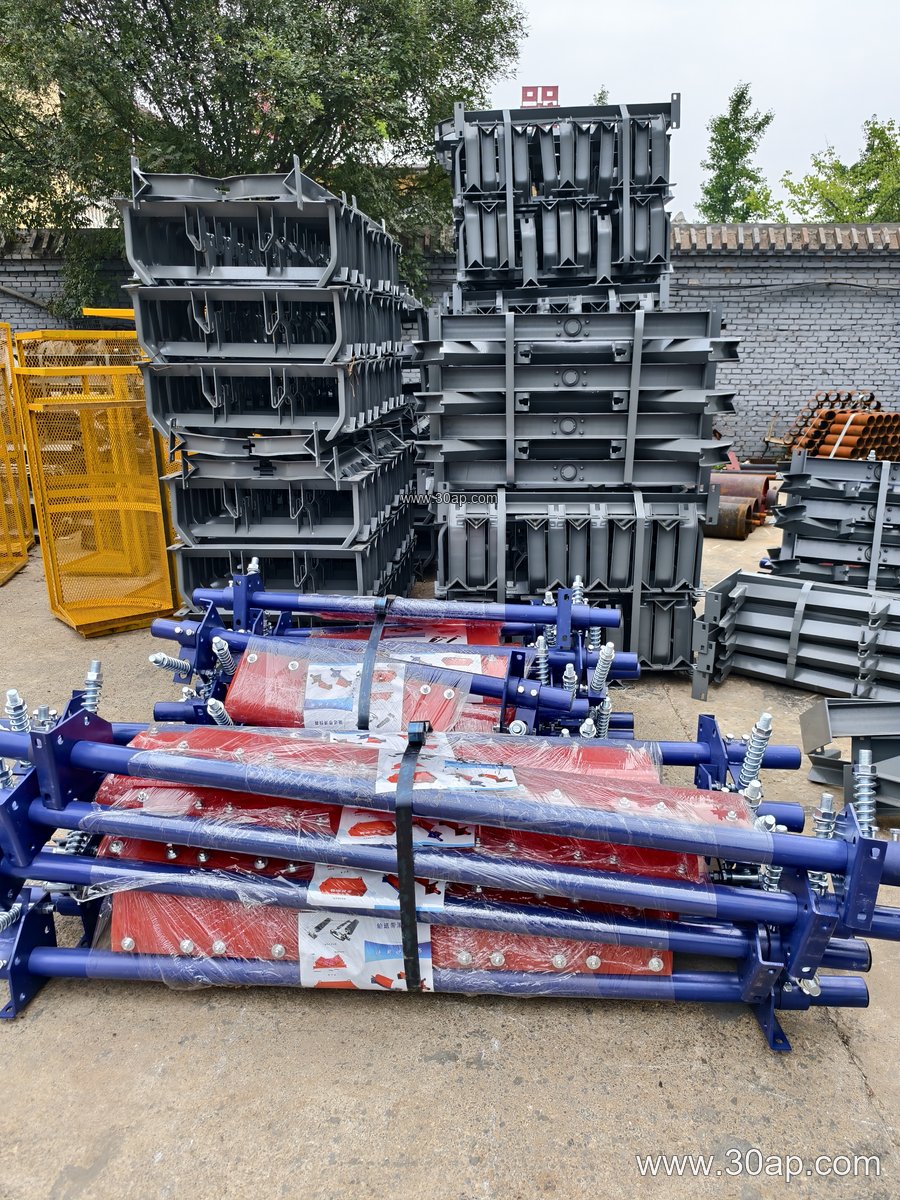
Most units are fabricated from angle steel, channel steel, or bent steel plate. The material choice follows the load case. A light troughing station may use a formed plate, while a high-tonnage transfer point often calls for channel sections with gusseted corners. Welds should be continuous at load-bearing joints, and any sharp edge that could rub the belt should be dressed smooth.
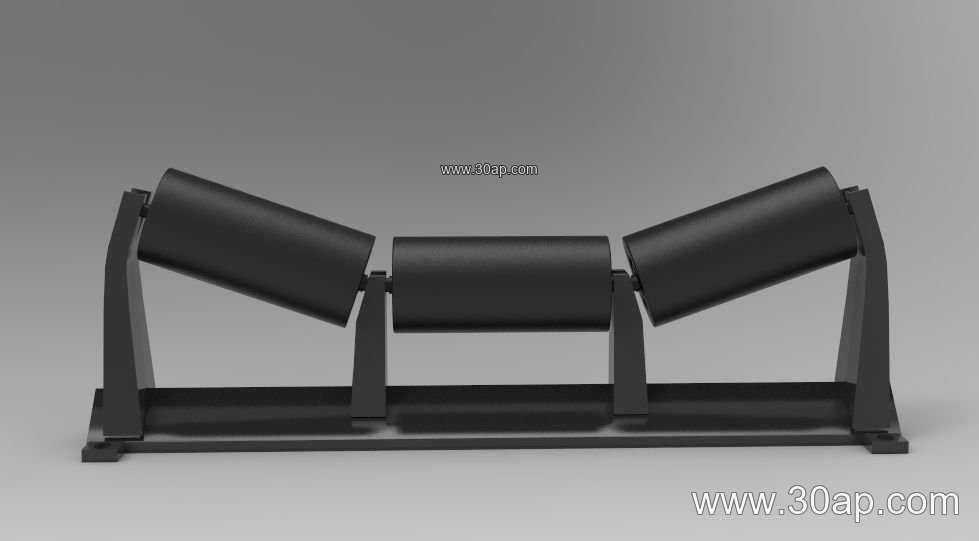
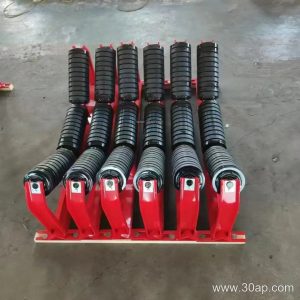
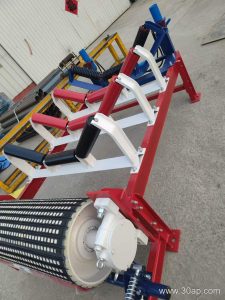
Common bracket families include troughing brackets, transition brackets, return brackets, V-return brackets, impact brackets, self-aligning brackets, and adjustable brackets. Each has a specific job. The troughing bracket sets the trough angle, the transition bracket eases the belt from flat to troughed, and the return bracket supports the empty side.
- Material: angle steel, channel steel, or folded plate
- Trough angles: usually 20, 30, 35, or 45 degrees
- Adjustable versions allow the angle to be changed within a range
- Forward tilt is commonly about 1.5 to 2 degrees
- Belt widths: B500 to B2200
- Idler diameters: Ø89, Ø108, Ø133, Ø159, Ø194
Typical combinations such as B800 at 35 degrees with Ø108, B1200 at 45 degrees with Ø133, or B650 at 30 degrees with Ø89 are common references, not fixed rules. Hole spacing and crossbeam length change with belt width and trough angle, so they are always set by design. www.morningconveyor.com/bracket and www.morningconveyor.com/idler show how these parts are usually specified together.
Choosing the Right Trough Angle and Roller Diameter
The trough angle controls how much material the belt can hold. A 20 degree profile suits modest capacity and lighter bulk material, while 35 or 45 degrees is often used where the load is deep and the belt is wide. A steeper angle increases capacity but also increases the side pressure on the belt and the load on the bracket.
Roller diameter and bracket design are linked. Larger diameters such as Ø159 or Ø194 are used in heavy stations where impact and dust are constant. A 1200mm wide conveyor belt on a primary crusher discharge may use a 45 degree bracket with a large roller, while a 650mm belt on a smaller sand line may stay at 30 degrees with Ø89. One belt width can work with several angles and several roller sizes, so selection should follow the actual load, belt tension, and frame layout.
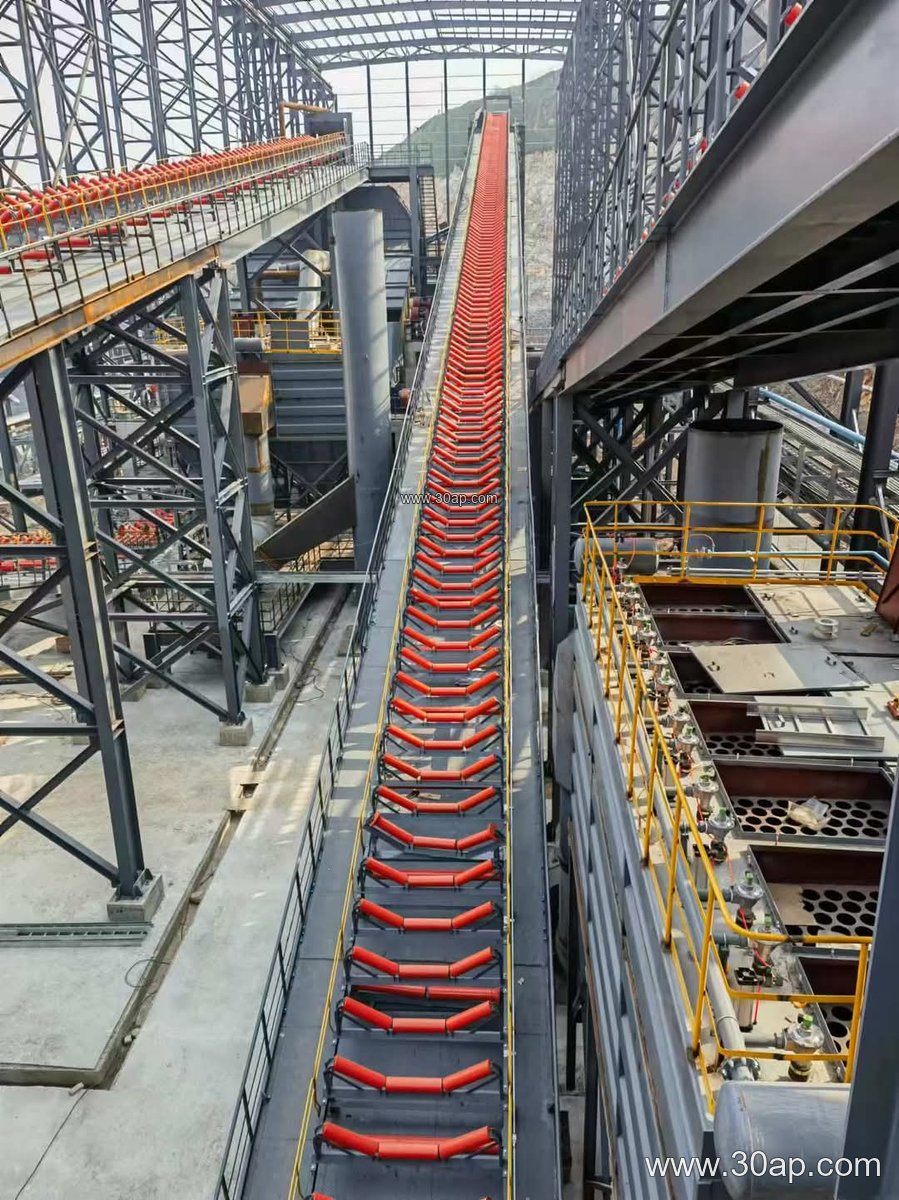
Adjustable brackets help during commissioning. If the material stream shifts or the belt shows edge running, the angle can be corrected without replacing the whole station. On long overland runs with a steel cord conveyor belt, consistent bracket height matters even more, because a small misalignment repeats over hundreds of meters.
Where These Brackets Are Used
Heavy-duty brackets appear in a limited set of demanding locations. In a limestone quarry or an iron ore plant, they support the belt under coarse, sharp rock. In a coal yard or power plant coal handling system, they must tolerate dust and occasional wet material. In a cement plant, the bracket line often runs under clinker and raw meal, where vibration and heat are part of daily operation.
They also work alongside different belt types. A chevron conveyor belt needs a stable trough to keep the cleats aligned, and a corrugated sidewall conveyor belt relies on good bracket geometry to prevent the sidewall from rubbing. In food or fertilizer handling, a fabric core conveyor belt or an EP conveyor belt may run on lighter brackets, but the same alignment principle applies.
What Buyers Should Check Before Ordering
Start with the belt width, the trough angle, and the roller diameter, then confirm the mounting hole pattern against the existing frame. Ask for the material thickness and the weld finish. If the conveyor is being upgraded, specify whether the bracket should be fixed or adjustable. For dusty or corrosive sites, confirm the surface treatment. Finally, check that the bracket is designed as a matched set with the idler roller, because mixing dimensions from different suppliers can cause tracking problems that no amount of adjustment will fix.