What a Lagged Pulley Does on a Conveyor
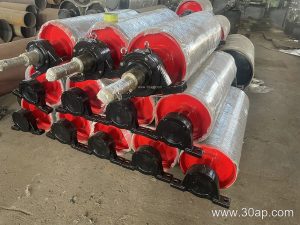
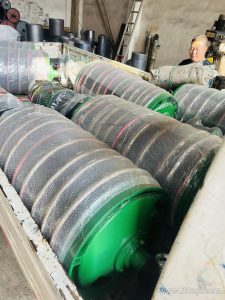
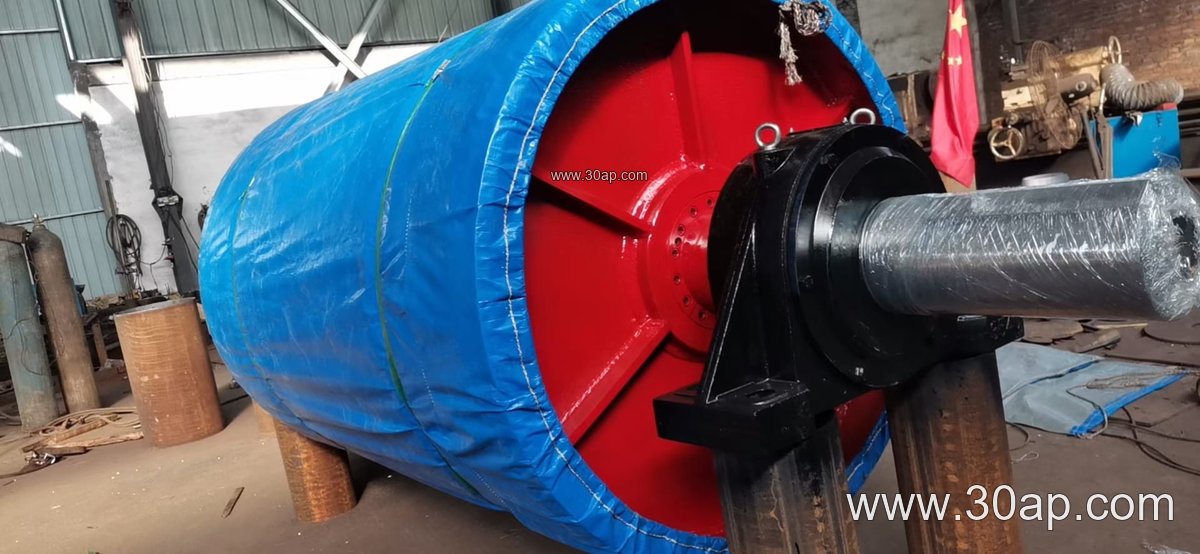
A conveyor belt lagged pulley is a conveyor pulley whose shell carries a rubber or ceramic covering instead of running bare steel against the belt. That covering, usually called lagging, raises friction between the pulley face and the belt, protects the shell from wear and slip damage, and helps shed water, fines and mud in wet or dusty service. In a quarry, a limestone mine or a coal handling plant, the difference between a plain shell and a properly lagged one is often the difference between steady tracking and a belt that slips under load.
The lagged pulley is not a single position on the machine. It can serve as a drive pulley at the head, as a tail pulley at the loading end, or as a bend pulley that redirects the belt through a tensioning or take-up zone. Each position loads the lagging differently, so the surface choice should follow the duty rather than a catalogue default.
How the Pulley Is Built
The core is a steel shell welded to end discs, with a shaft running through hubs on both sides. The shaft diameter is set by torque and radial load, not by belt width alone; common shaft sizes range from Ø50 up to Ø200 depending on the drive power and the pulley’s span. Shell diameter is chosen from a range such as Ø200, Ø250, Ø315, Ø400, Ø500, Ø630, Ø800, Ø1000, Ø1250 and larger where the belt tension and wrap angle demand it.
Lagging is applied in several ways. Cold-bonded rubber sheet is common for general duty, hot-vulcanised rubber gives a stronger bond for heavy shock loads, and diamond or herringbone patterns improve grip in wet conditions. Ceramic tiles set in a rubber matrix suit extremely abrasive service where fine rock dust grinds at the surface. Lagging thickness is usually 8, 10, 12, 15 or 20 mm, and the pulley face width normally runs a little wider than the belt it carries.
- B400 belt on a pulley face of about 500 mm
- B800 belt on a pulley face of about 950 mm
- B1200 belt on a pulley face of about 1400 mm
- B1600 belt on a pulley face of about 1800 mm
These pairings are typical references, not fixed rules. A B1200 x Ø1000 drive pulley and a B800 x Ø500 tail pulley can both be correct on different conveyors, because diameter follows tension, wrap angle and shaft strength.
Matching Lagging to the Duty
The right surface depends on what the belt carries and where the pulley sits. A drive pulley needs the highest friction, especially when the wrap angle is small, so diamond or herringbone rubber is a frequent choice. A tail pulley in a stone crushing line faces impact and dust, and a plain or lightly patterned rubber cover often works well. A bend pulley in a take-up tower may only need a smooth cover to guide the belt without adding drag.
The belt itself matters too. A heavy-duty mining conveyor belt or an abrasion resistant conveyor belt running at high tension will wear a thin cover quickly, while a heat resistant conveyor belt carrying clinker may need a lagging compound that tolerates elevated temperature. On a coal mining conveyor belt system, flame retardant conveyor belt grades are often paired with anti-static lagging to keep the whole assembly consistent with underground safety practice.
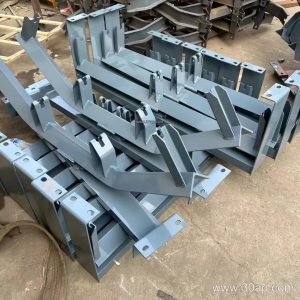
For a wider view of matching belt and pulley hardware, see conveyor pulley guidance and the conveyor bracket options that hold the bearing housings.
Where Lagged Pulleys Are Used
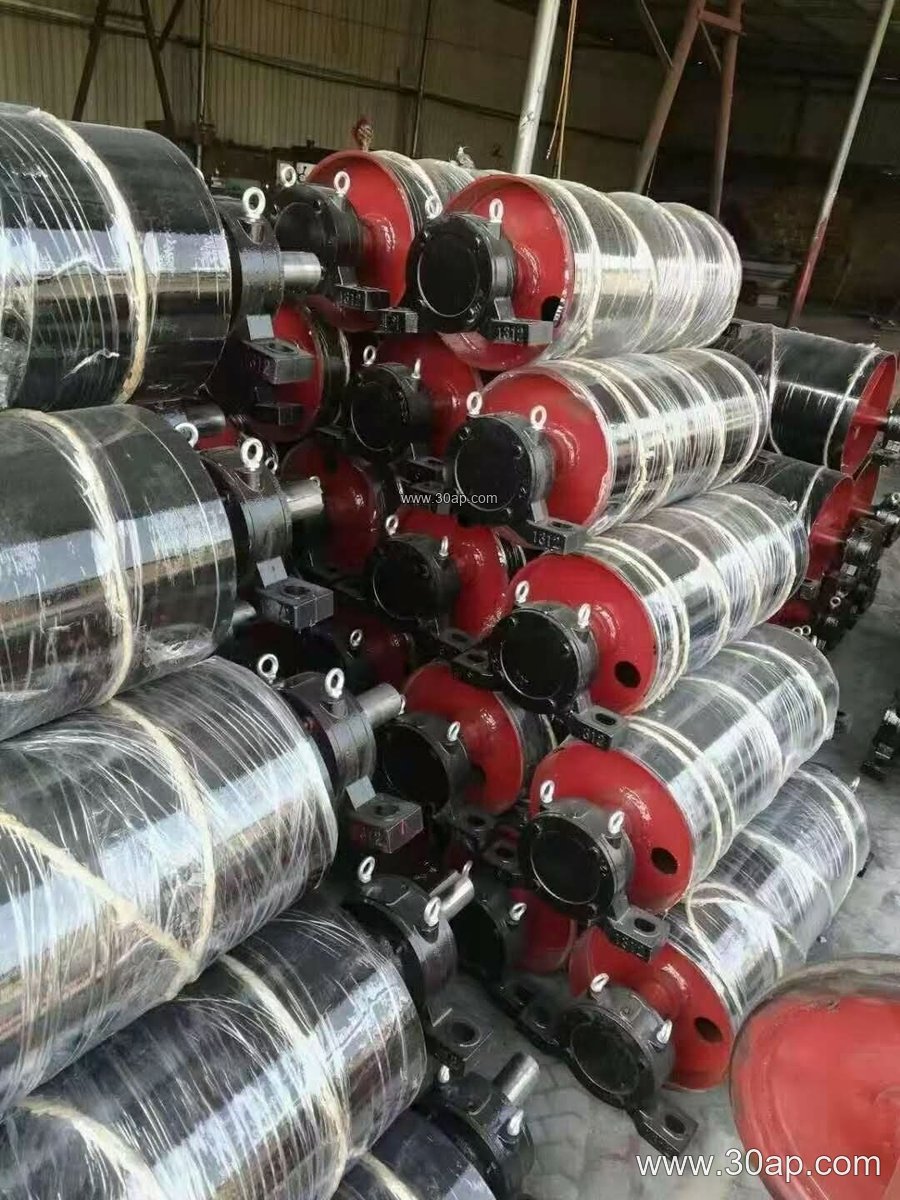
In a sand and aggregate line, the head drive pulley usually carries diamond lagging to keep the belt from slipping when the crusher surges. In a cement plant, clinker conveyors use heat-tolerant covers, while raw material conveyors lean on abrasion resistant rubber. Port bulk terminals handling iron ore or copper ore favour ceramic lagging on drive pulleys because the ore dust is sharp and persistent. Power plant coal handling and underground coal mining both call for flame retardant conveyor belt and fire resistant conveyor belt grades alongside lagging that will not build up static.
Smaller operations, such as a concrete mixing station or a grain silo, often use a smooth or lightly patterned lagged pulley where the material is not sharply abrasive and the belt runs at moderate tension.
What Buyers Should Check Before Ordering
Start with the belt width and the pulley position. A drive pulley and a tail pulley of the same width may need different diameters and different lagging. Confirm the shaft size from the drive calculation, not from a width table. State the lagging thickness and pattern you want, and confirm whether the cover should be cold bonded, hot vulcanised or ceramic.
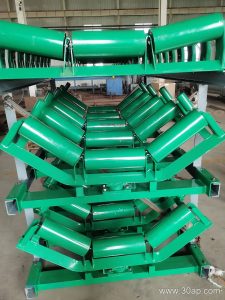
Ask how the pulley will be balanced and whether the lagging is grooved to shed water. Check that the face width suits the belt, and that the bearing housings fit the conveyor bracket on site. If the conveyor runs an EP conveyor belt or a steel cord conveyor belt at high tension, mention it so the supplier can confirm shell thickness and shaft diameter. For belt-side details, see conveyor belt and idler roller references.
Maintenance Notes
Inspect lagging for cuts, glazing and embedded stone. Worn lagging loses grip before it fails visibly, so measure thickness at each service interval. Keep the pulley face clean and check that the belt tracks centrally; off-centre running wears one edge of the lagging fast. Replace damaged lagging before it exposes the shell, and re-check shaft and bearing condition whenever the pulley is removed.