What a Guide Idler Bracket Does
A guide idler bracket is the mounting component that holds a guide idler in position along a conveyor and lets it steer the belt back toward the center line. In practice, the bracket ties the idler to the conveyor frame while keeping the roller at the angle the designer intended. On aggregate, cement and power plant conveyors, belt drift is a common cause of edge damage and spillage, so this bracket is often the first line of defense. It is a locating and training accessory rather than a load-bearing frame member, and it should be treated that way when specifying it.
Construction and Mounting Position
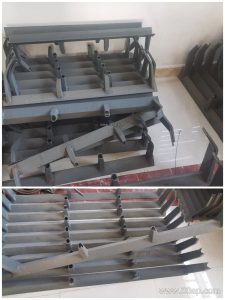
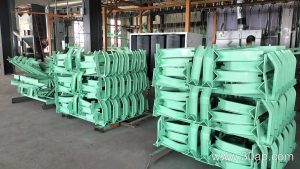
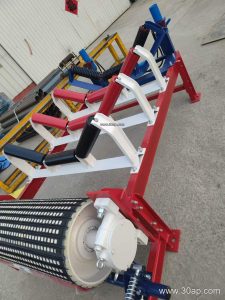
Most brackets are fabricated from angle steel, channel steel or folded plate, then drilled for the idler shaft and for fixing to the stringer or cross beam. A typical unit has a base plate, an upright or gusset, and a slotted or multi-hole mounting face so the guide idler can sit at the correct angle. Slots also allow minor adjustment after installation.
Guide idler brackets are commonly installed on the carrying side just ahead of a transfer point or after a curve, where the belt is most likely to wander. Some plants fit them on the return strand as well. They are not a substitute for a bend pulley or a tail pulley; those change belt direction, while the guide bracket only influences tracking. Similarly, a training idler bracket and a guide idler bracket may look alike but should be matched to the idler design actually supplied.
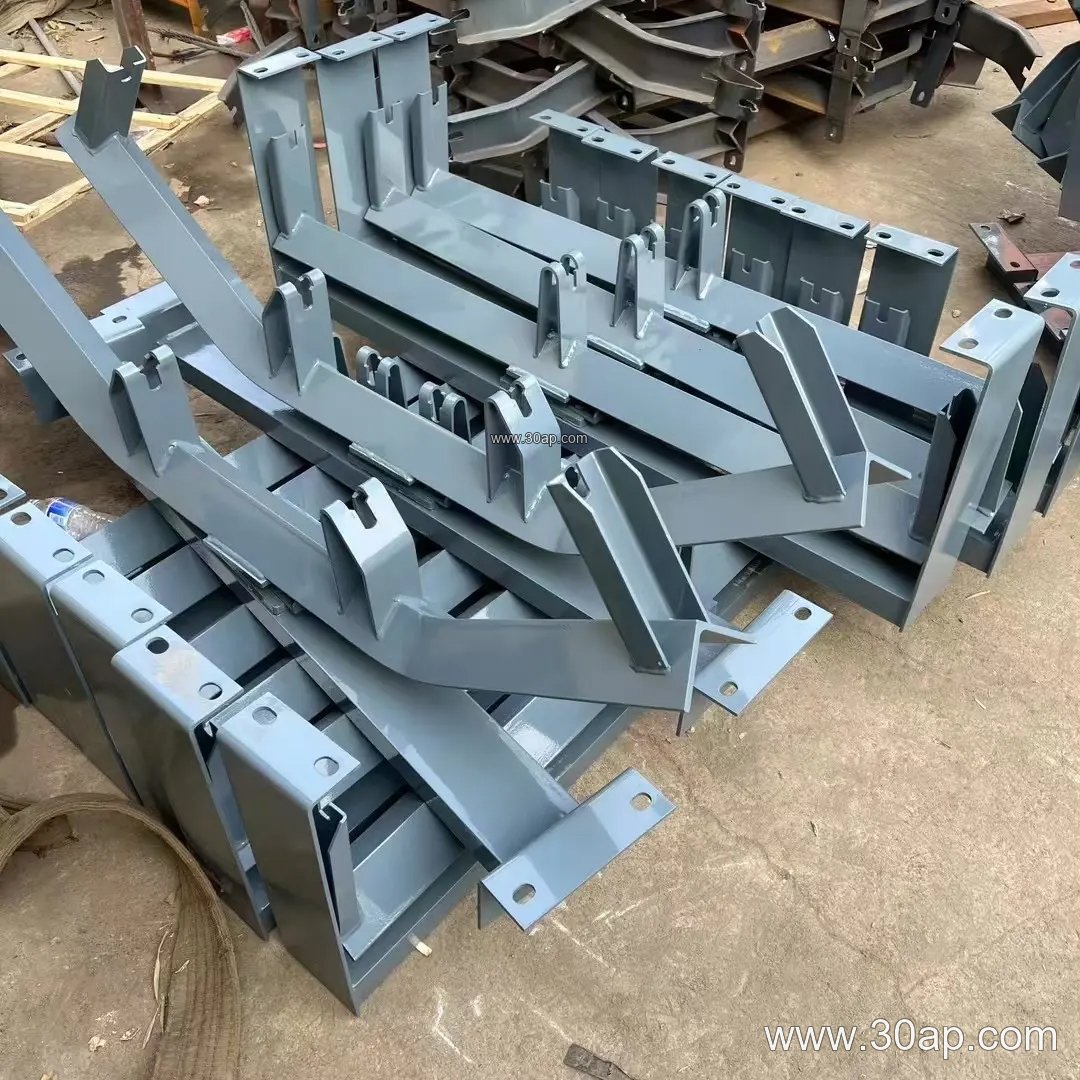
Where It Fits in the System
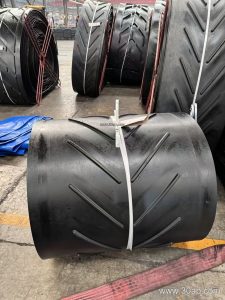
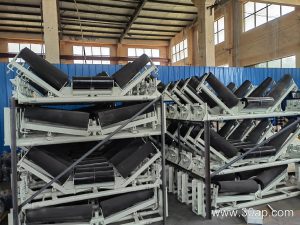
In a quarry or sand and gravel line, a guide idler bracket is usually paired with a troughing set and an abrasion resistant conveyor belt that carries sharp, heavy rock. In a coal washing plant, the same component may sit near a flame retardant conveyor belt and a set of return rollers. In a cement plant, dust and fine material make free movement important, so the bracket should allow the idler to pivot without binding. Port and ship loading conveyors often use wide belts, and here the bracket must be stiff enough to resist side loads without flexing.
The bracket works together with the conveyor belt, the idler roller and the conveyor pulley. If the belt is a steel cord conveyor belt or an EP conveyor belt running at high tension, the guide bracket should be checked for bolt torque and frame squareness during commissioning. A poorly aligned bracket can push the belt harder than the idler would on its own.
Common Reference Sizes
The table below lists reference ranges only. Actual mounting hole spacing and beam length follow belt width, trough angle and frame design, so they should be confirmed against the drawing.
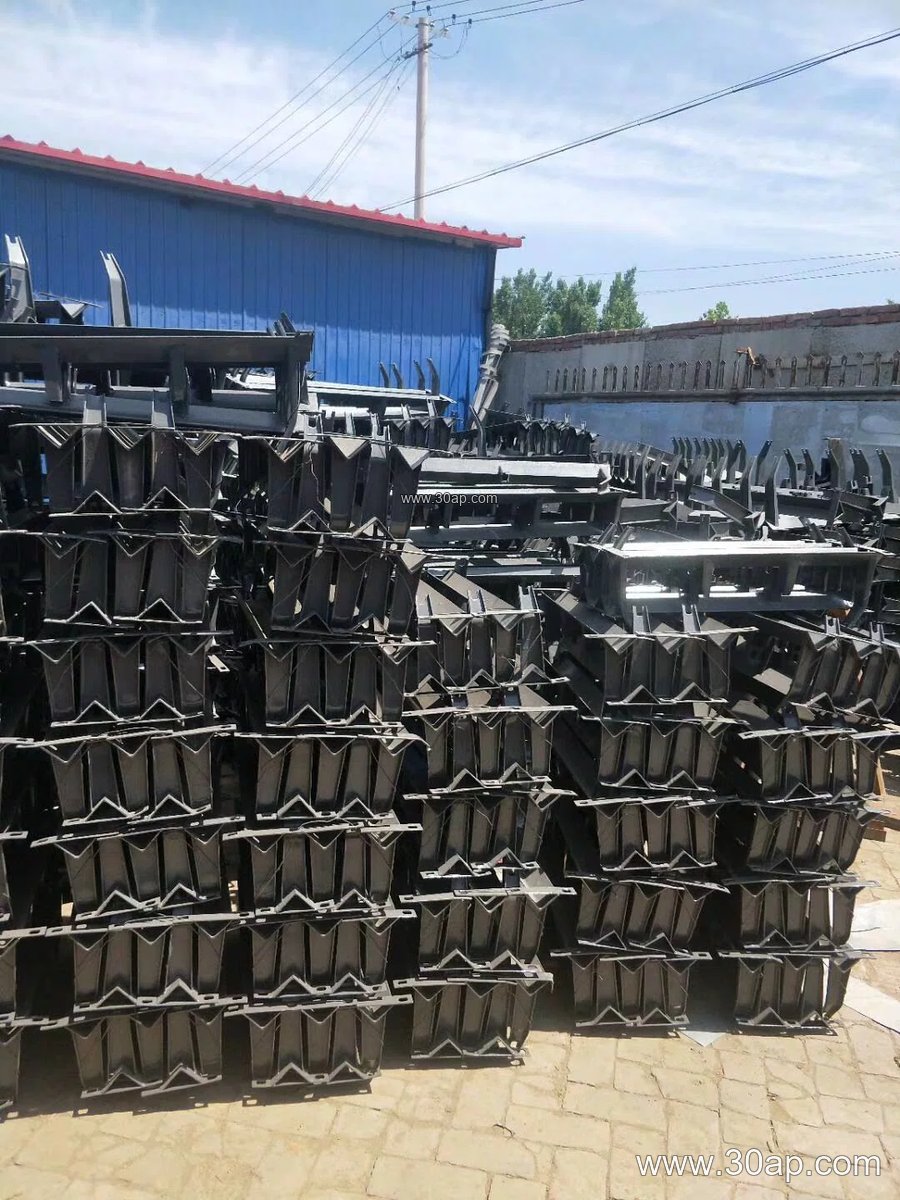
- Belt width: B500, B650, B800, B1000, B1200, B1400, B1600, B1800, B2000, B2200
- Trough angle: 20, 30, 35 and 45 degrees; adjustable brackets can move between these
- Idler diameter: Ø89, Ø108, Ø133, Ø159, Ø194
- Material: angle steel, channel steel, folded plate
Useful combinations seen in practice include B800 with 35 degrees and Ø108, B1200 with 45 degrees and Ø133, or B650 with 30 degrees and Ø89. These are examples, not fixed rules. A wider belt does not automatically require a larger roller, and one belt width can be paired with more than one trough angle depending on the material and load.
Buyer Checklist
Before ordering, confirm the idler shaft diameter, the mounting hole pattern, the frame beam section and the required trough angle. Ask whether the bracket is fixed or adjustable, and whether the slot length allows later correction. Check the surface treatment against the site: a wash plant or port with salt air needs better protection than a dry limestone shed. For high-tonnage lines using a heavy-duty mining conveyor belt, specify a heavier section rather than a light folded plate.
During maintenance, inspect the bracket for bent ears, elongated holes and loose bolts. A guide idler bracket that has shifted will often show uneven belt edge wear before any roller failure appears. Keep spare brackets on hand for the sizes used most often, and record the belt width, angle and roller diameter on the tag so replacements match.