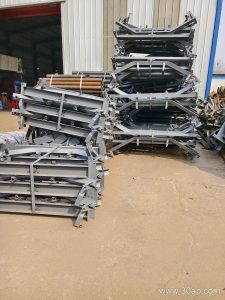
What a Heavy-Duty Trough Idler Does
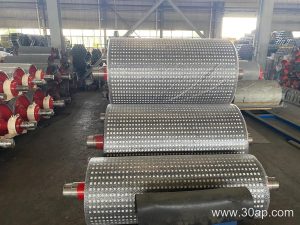
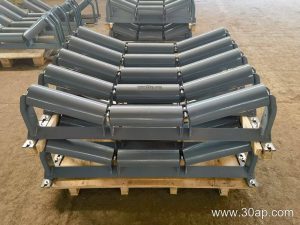
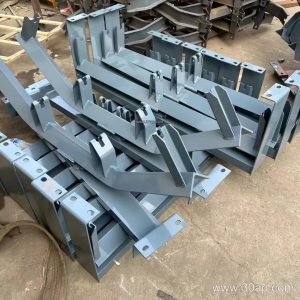
A heavy-duty trough idler is the carrying idler that shapes a conveyor belt into a trough so bulk material stays centered on the line. In a quarry, limestone mine or aggregate plant, the belt may be 1200mm or 1400mm wide and loaded with sharp rock, so the idler frame, roller shell and bearings must take impact and continuous load without flexing out of alignment. The trough idler works together with the conveyor pulley at the head and tail, the conveyor bracket that fixes the frame to the stringer, and the belt itself. A heavy-duty trough idler is also called a heavy-duty carrying trough roller or heavy-duty troughing idler, and those names describe the same product.
Construction Details That Matter
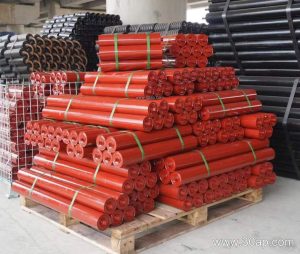
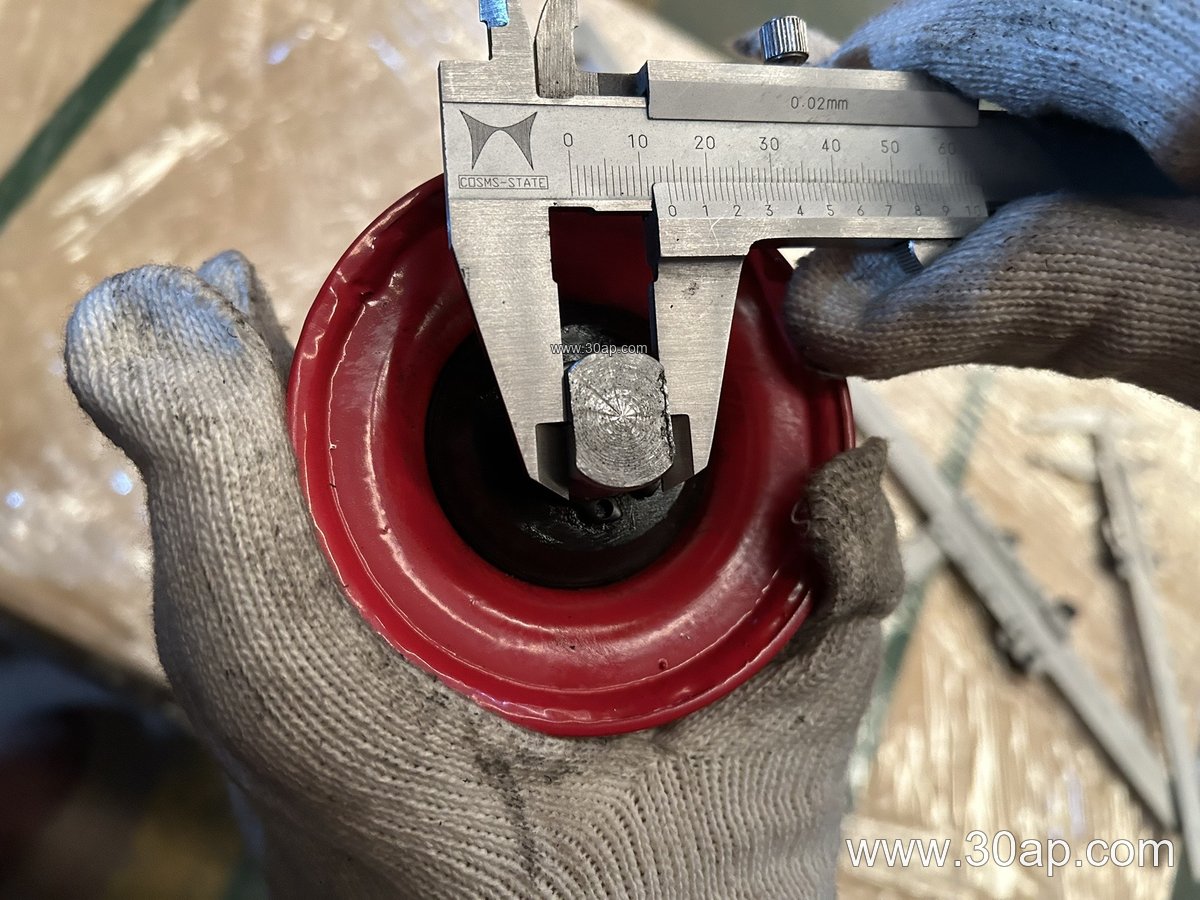
Most heavy-duty trough idlers use a three-roll arrangement with a 30 degree or 35 degree trough angle; 45 degree sets appear where material must be contained on a fast, wide belt. Roller diameters commonly run from Ø89 to Ø159, with Ø127 and Ø133 frequent on medium and large installations. The shaft, bearing housing and seal are the parts that decide service life in dusty, wet or abrasive conditions. Bearing numbers such as 6205, 6305, 6308 and 6310 are common, and the correct bearing depends on load and speed rather than on roller diameter alone.
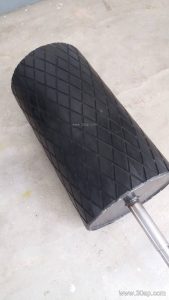
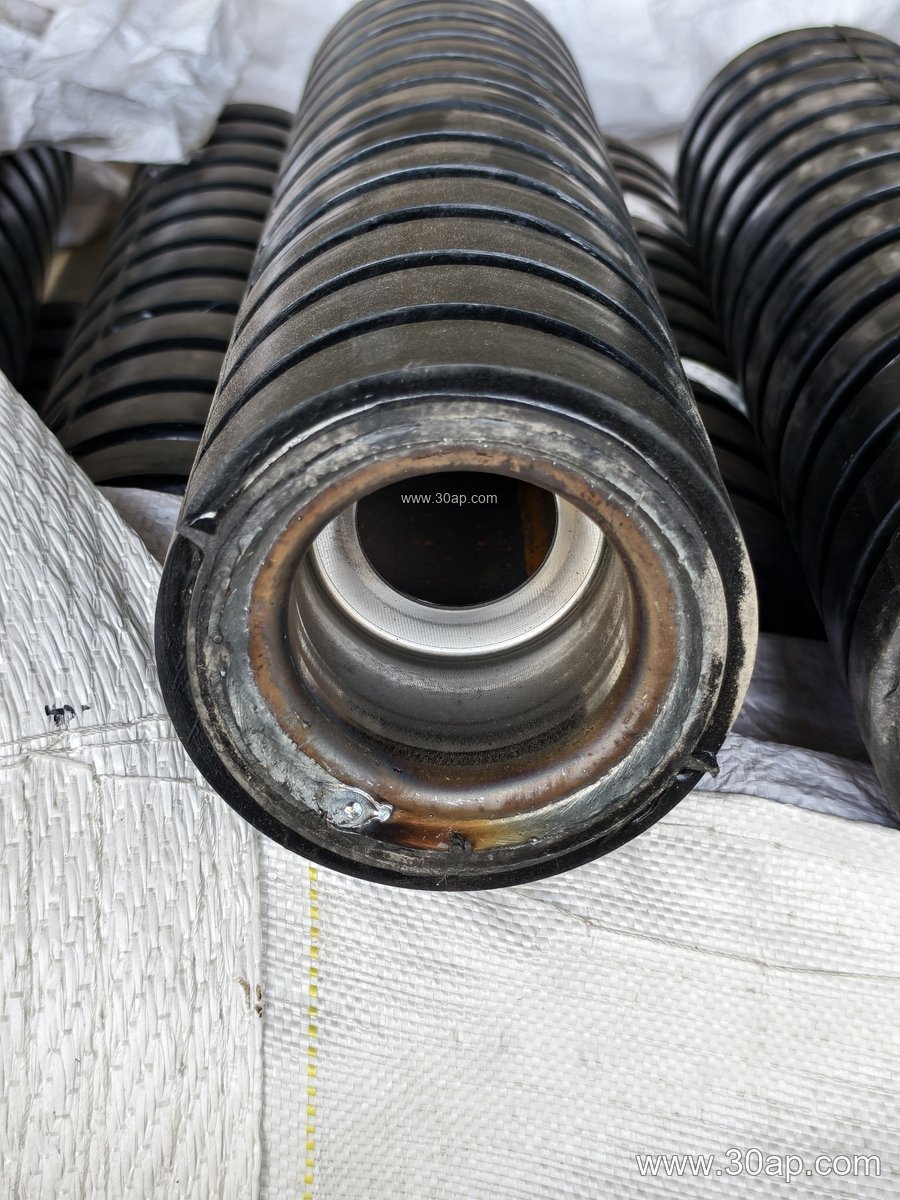
Roller faces may be plain steel, nylon, ceramic or rubber-ringed. Rubber rings help at transfer points where falling ore or coal strikes the belt; in that position a rubber-disc impact idler is often compared with the standard trough idler, but it is a different subtype and does not replace the carrying idler along the full run.
Common Sizes and Reference Data
Dimensions follow belt width, trough angle and frame design. The values below are typical references, not fixed matches, and side rolls may differ from the center roll.
| Belt width | Typical center roll length (three-roll trough) | Common trough angle |
|---|---|---|
| B500 | about 200 mm | 20 to 35 degrees |
| B650 | about 250 mm | 20 to 35 degrees |
| B800 | about 315 mm | 30 to 35 degrees |
| B1000 | about 380 mm | 30 to 35 degrees |
| B1200 | about 465 mm | 30 to 45 degrees |
| B1400 | about 530 mm | 30 to 45 degrees |
| B1600 | about 600 mm | 35 to 45 degrees |
| B1800 | about 670 mm | 35 to 45 degrees |
Roller diameter, shaft size and bearing type are selected from the calculated load and belt speed. No single shaft diameter should be assumed from belt width alone. A 1200mm wide conveyor belt running at high tonnage needs a heavier frame than a lightly loaded line of the same width.
Where Heavy-Duty Trough Idlers Are Used
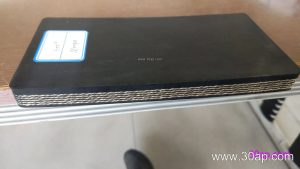
These idlers suit the main carrying run in a crusher circuit at a stone crushing plant, the raw-material conveying section of a cement plant, and coal handling at a power plant. In a copper or iron ore operation, a heavy-duty trough idler may sit under an abrasion resistant conveyor belt or a steel cord conveyor belt carrying dense, sharp material. The same frame style appears under a fabric core conveyor belt in a smaller sand and gravel line. Matching the idler to the belt type, load and environment is more useful than choosing by width alone.
Buying and Maintenance Notes
- Confirm belt width, trough angle and frame fixing centers before ordering; the conveyor bracket must match the stringer hole pattern.
- Check seal design for dusty or wet service, and specify bearing clearance suited to the running temperature.
- Ask for roller balance and runout information when belt speed is high.
- Keep spare rollers for the busiest transfer sections, and check alignment after any belt tracking adjustment.
- Look at the whole line: the conveyor pulley, belt splice and loading point all affect idler life.
For buyers sourcing through a supplier of conveyor components, a clear specification of diameter, length, bearing, seal and surface form prevents mismatched deliveries. A well-chosen heavy-duty trough idler keeps the belt profile stable, reduces spillage and supports reliable transport from the pit to the stockpile.