What the 2400mm Conveyor Belt Is
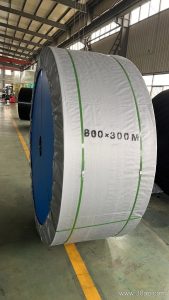
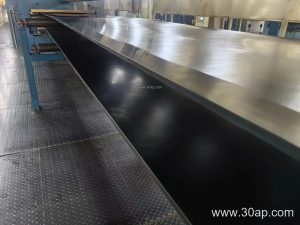
A 2400mm conveyor belt is an extra-wide belt built for conveyor lines that must move large volumes of bulk material in a single pass. At 2.4 meters across, it sits at the wide end of standard belt production and is usually specified where a plant wants high throughput without running several narrower lines side by side. You will see it in mine haulage galleries, cement clinker transport, power plant coal yards, port ship loading systems, and large sand and aggregate plants.
The belt is not simply a scaled-up version of a 1200mm or 1400mm belt. Wider belts carry more load per meter, need more careful tracking, and place higher demands on the idler roller frames, conveyor pulley alignment, and conveyor bracket structures that support them.
Construction and Core Options
A wide belt can be built on several carcass types, and the choice follows the duty rather than the width alone.
- Fabric core belts such as EP Conveyor Belt and NN Conveyor Belt constructions use polyester or nylon plies. These are common in quarry and aggregate duty where moderate tension and good troughability are needed.
- Multi-Ply Fabric Core Conveyor Belt builds with two to six plies are typical, with cover grades selected for abrasion, heat, oil, or flame resistance.
- Steel Cord Conveyor Belt constructions are used on long, high-tension routes where a fabric carcass would need too many plies.
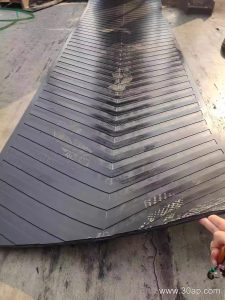
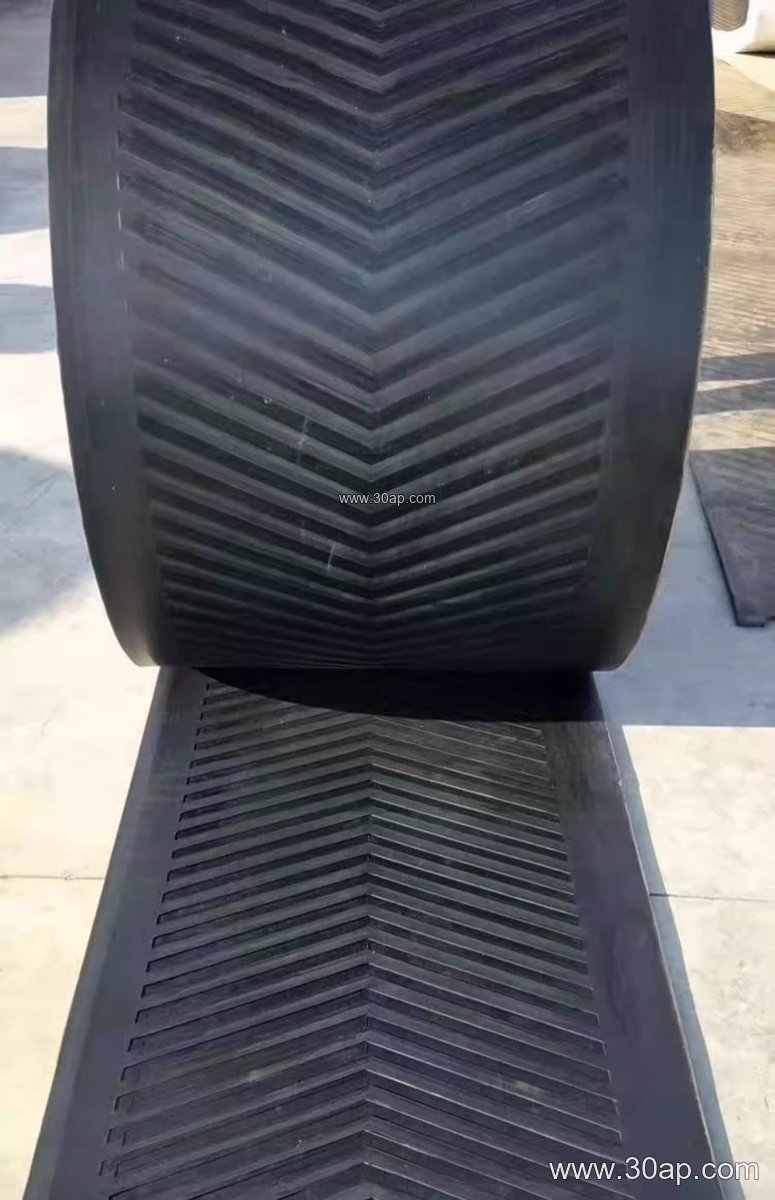
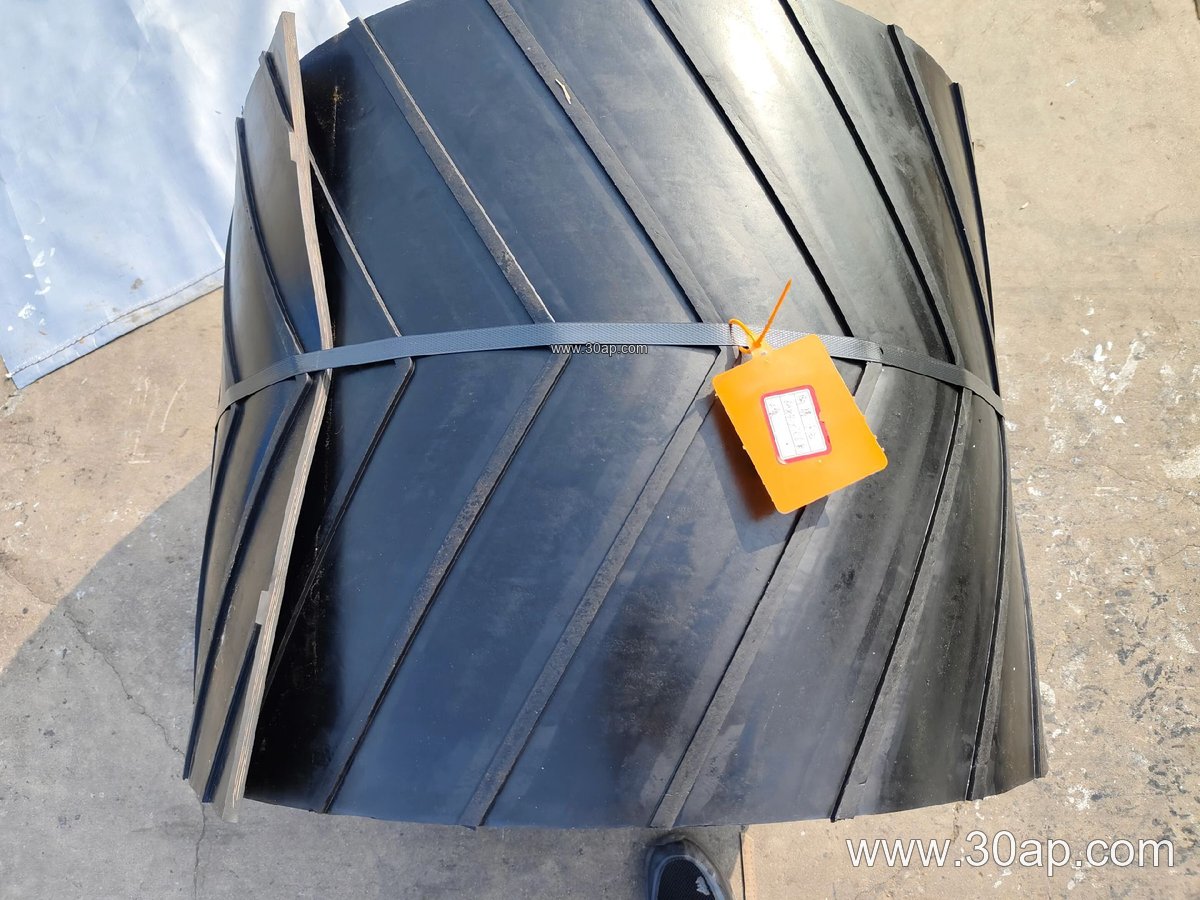
- Special surface forms include Chevron Conveyor Belt, Corrugated Sidewall Conveyor Belt, and Skirted Conveyor Belt designs for inclined or contained transport.
Cover rubber is usually specified as a top and bottom thickness pair. Common combinations include 4+2, 5+2, 6+2, and 8+3 mm, with the heavier covers used where lump size and abrasion are severe. A High Abrasion Resistant Conveyor Belt cover is often chosen in ore and rock handling, while a Heat Resistant Conveyor Belt grade suits clinker and sinter service.
Typical Specification Reference
The table below shows reference values often discussed for wide belting. These are examples only; final values are set by the conveyor design and confirmed with the manufacturer.
| Parameter | Common Reference Range |
|---|---|
| Belt width | 2400mm (B2400) |
| Carcass type | EP, NN, steel cord, PVC/PVG |
| Fabric strength grades | EP200 to EP2000, NN100 to NN400 |
| Steel cord grades | ST1000 to ST3150 |
| Number of plies | 2 to 6 for fabric cores |
| Cover thickness | 4+2, 5+2, 6+2, 8+3 mm |
| Surface options | Plain, chevron, sidewall, skirted |
Note that belt width and pulley diameter are separate design decisions. A 2400mm belt may run on a range of pulley sizes depending on tension, wrap angle, and shaft load, so no single diameter should be assumed from width alone.
Where It Fits in the Plant
Wide belting is most at home in high-capacity trunk routes. In a coal mining or underground mining layout, a 2400mm belt can form the main haulage artery feeding a transfer tower. In cement plants it may carry limestone from the crusher or clinker from the cooler. In ports, it supports ship loading conveyors where a wide, flat profile helps spread material evenly. Aggregate and sand making plants use it on primary discharge lines where rock and stone arrive in large lumps.
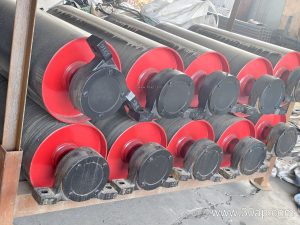
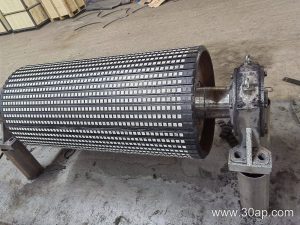
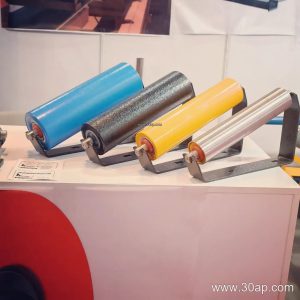
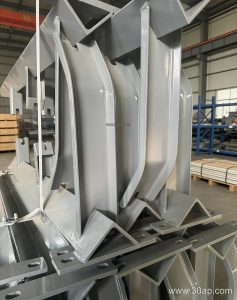
Because the belt is wide, the supporting hardware matters. Idler roller sets should be selected for the load and trough angle, conveyor pulley faces must be wide enough with proper lagging, and conveyor bracket spacing should follow the belt sag limits. Misalignment on a 2.4 meter belt shows up quickly as edge wear, so training idlers and careful splice alignment are worth the effort.
Buyer Checklist
- Confirm the actual duty: material, lump size, tonnage per hour, incline, and ambient conditions.
- Choose the carcass and cover grade together, for example an abrasion resistant cover on an EP carcass, or a flame retardant grade for underground service.
- Check whether a smooth belt or a profiled design is needed; a Corrugated Sidewall Conveyor Belt may replace a steep incline that a plain belt cannot handle.
- Verify pulley and idler roller compatibility with the full belt tension, not just the width.
- Ask about splice method, edge condition, and delivery in the required roll length.
For more on wide belting, pulley matching, and idler selection, visit conveyorbeltingpro.com for belt guidance, or check the roller and pulley sections at conveyorbeltingpro.com when planning a complete conveyor upgrade.