What a Belt Conveyor Rubber Lagged Pulley Does
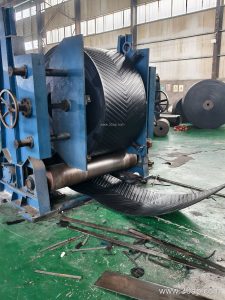
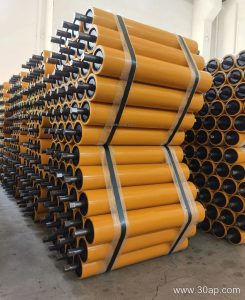
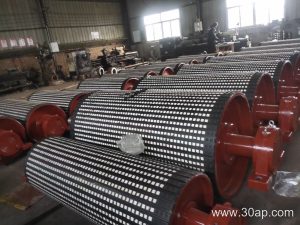
A belt conveyor rubber lagged pulley is a drive or tail pulley whose cylindrical shell is covered with a rubber layer to improve friction between the pulley and the conveyor belt. This rubber lagging helps prevent belt slip, protects the pulley shell from wear, and can extend the service life of both the pulley and the belt. In quarry, cement, and power plant conveyor systems, a lagged pulley is often a practical choice where dust, moisture, or high torque demand reliable traction.
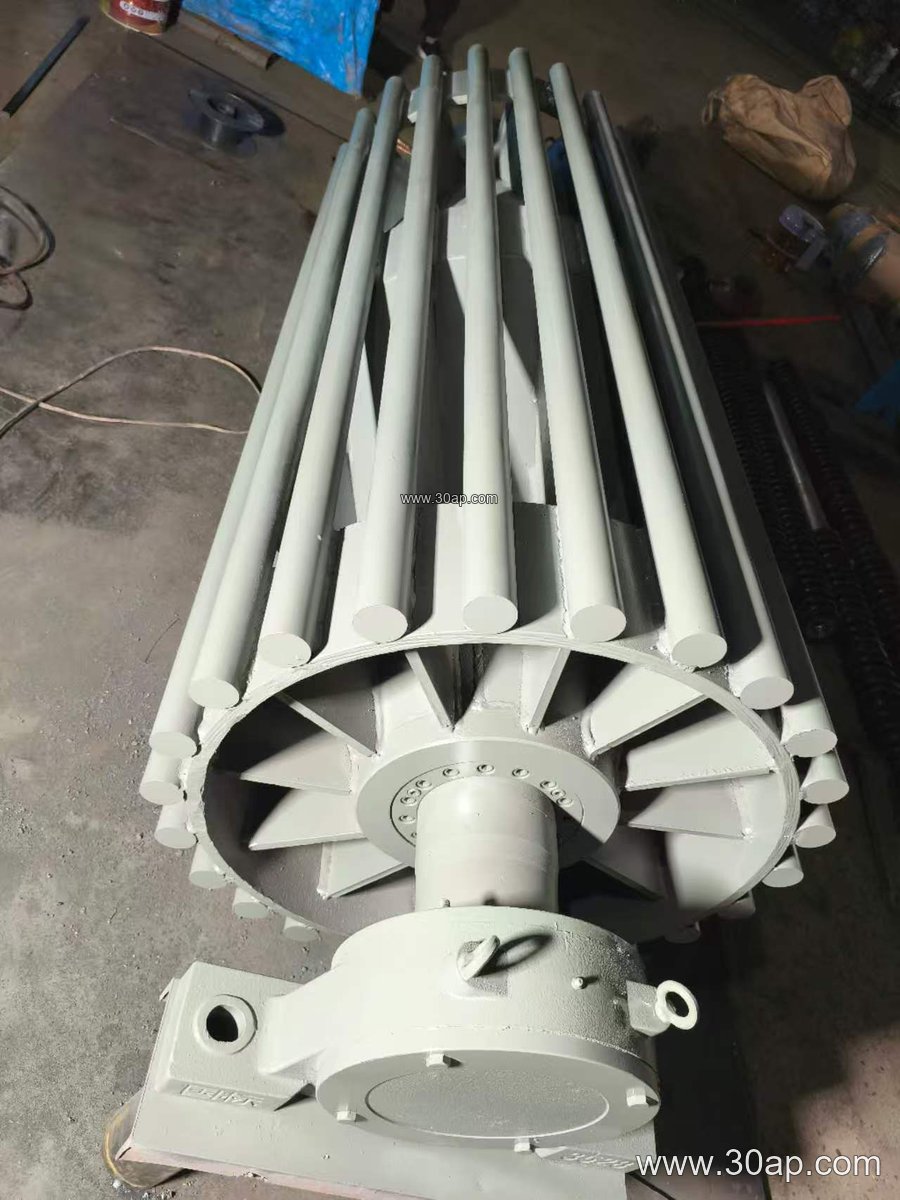
The rubber lagged pulley is not a substitute for a bend pulley or a tension pulley; each has its own role. A drive pulley with rubber lagging transmits power, while a bend pulley changes belt direction and a tail pulley returns the belt. When specifying, keep these functions separate.
Construction and Surface Options
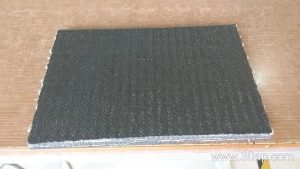
Construction begins with a steel shell, shaft, and end discs. The rubber lagging is applied either as cold-bonded rubber sheets, hot-vulcanized rubber, or cast rubber. Common surface patterns include plain, diamond, and herringbone. Diamond lagging improves water drainage in wet conditions, while herringbone lagging can help with directional grip. Ceramic lagging is used in extremely abrasive service, but for many bulk material conveyors, rubber lagging offers a good balance of grip and cost.
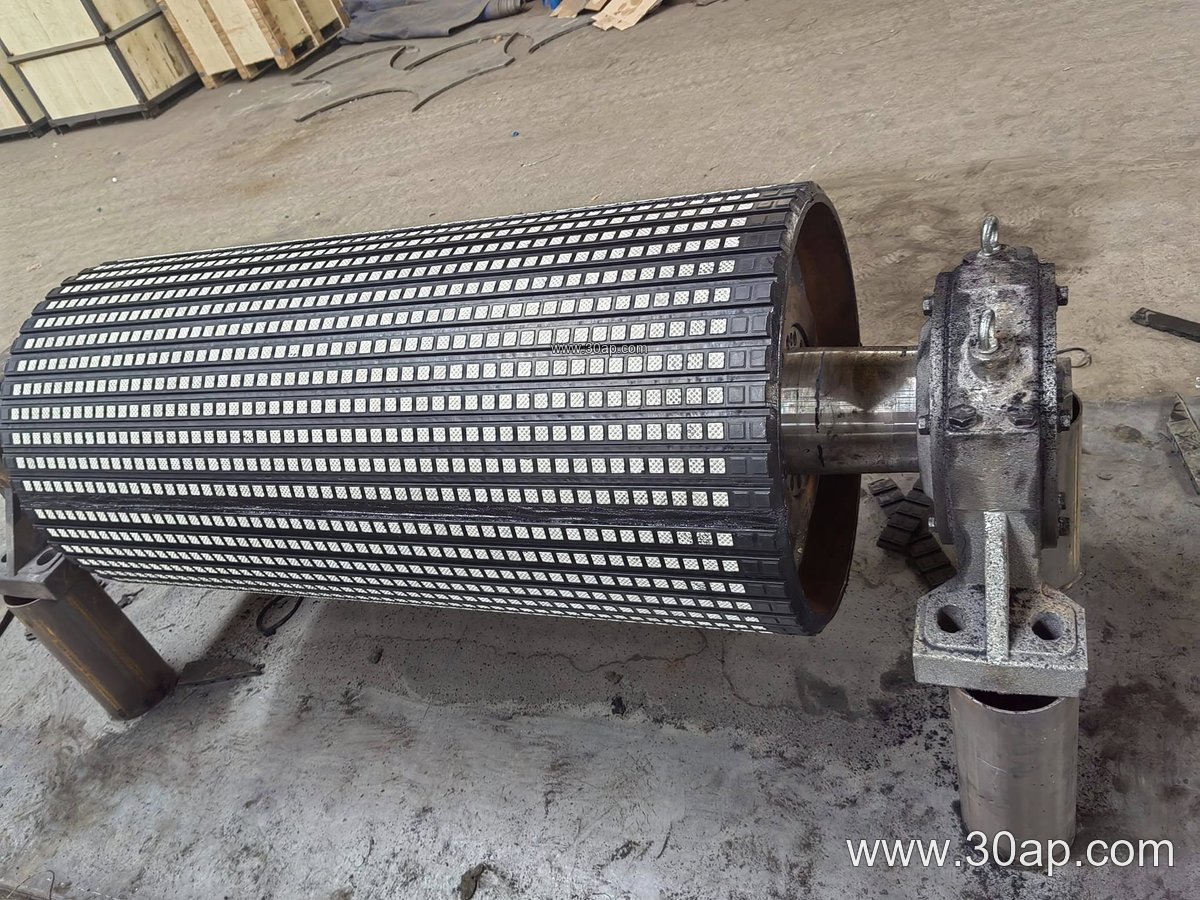
Lagging thickness is often 8, 10, 12, 15, or 20 mm, selected according to belt tension and pulley diameter. The pulley face width is usually wider than the belt width to allow for belt tracking. For example, a B800 belt may use a pulley face around 950 mm, and a B1200 belt may use about 1400 mm. Shaft diameter is determined by torque and load, not by belt width alone, so it should be confirmed by the conveyor designer.
Where It Is Used
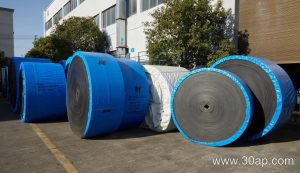
Rubber lagged pulleys appear in limestone quarries, coal washing plants, cement clinker lines, and power plant coal handling systems. In a crusher conveyor, the drive pulley must grip a heavily loaded belt, and rubber lagging helps maintain traction under start-up loads. In aggregate lines, a lagged tail pulley can reduce material buildup and belt misalignment. For underground coal mining, flame retardant rubber lagging may be required, and the pulley should be matched with a suitable flame retardant conveyor belt such as PVG800S or a steel cord conveyor belt like ST1000, depending on the system design.
Matching the Pulley to the Belt and Duty
The pulley is only one part of the conveyor. The conveyor belt, idler roller, and conveyor bracket all interact with it. A heavy-duty mining conveyor belt or abrasion resistant conveyor belt may need a larger pulley diameter to reduce bending stress. A fabric core conveyor belt such as EP200 or NN300 may suit medium-duty lines, while a steel cord conveyor belt like ST1600 handles high tension. The lagging surface should be chosen to match the belt cover and environmental conditions. In oily or chemical environments, an oil resistant conveyor belt and a compatible rubber lagging help avoid swelling and slip. For hot materials, a heat resistant conveyor belt and a heat-resistant lagging compound may be needed.
Buyer Checklist
- Confirm the pulley function: drive, tail, bend, or take-up. Do not interchange these terms.
- Provide belt width, belt type, and maximum belt tension so the pulley diameter and shaft can be checked.
- Specify lagging type and thickness: plain, diamond, or herringbone; 8 to 20 mm common.
- State the environment: wet, dusty, oily, or high temperature, as this affects rubber grade.
- Check compatibility with the conveyor belt and idler roller spacing to avoid tracking issues.
- Ask for the pulley drawing showing face width, shaft diameter, and bearing size before ordering.
For bulk material conveyors in quarry, cement, or power plant service, a properly specified belt conveyor rubber lagged pulley helps keep the belt running true and reduces downtime. Review the full conveyor layout, including conveyor bracket and pulley alignment, before finalizing the order.