What a Thermal Power Plant Conveyor Pulley Does
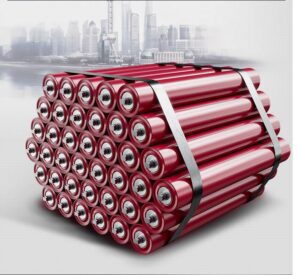
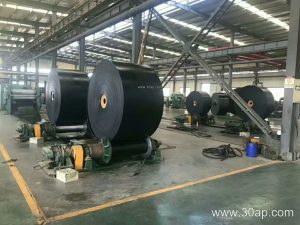
A thermal power plant conveyor pulley is the rotating drum that turns the conveyor belt and keeps coal moving from the stockyard or unloading point to the bunkers and crushers. In a coal-fired station, this component works under continuous load, coal dust, and heat, so the drum body, shaft, bearings, and lagging all need to suit the duty. The same pulley family also appears in limestone handling, ash removal, and biomass feed lines, but coal handling remains the main application. Buyers often search for a power plant conveyor pulley or a coal conveyor pulley when replacing a worn unit, and the two names usually refer to the same drum assembly used on the belt conveyor.
Understanding where the pulley sits on the conveyor helps with selection. A drive pulley transmits torque from the gearbox to the belt, a tail pulley returns the belt at the loading end, and a bend pulley changes belt direction. These are separate positions with different loads, and one should not be ordered as a substitute for another.
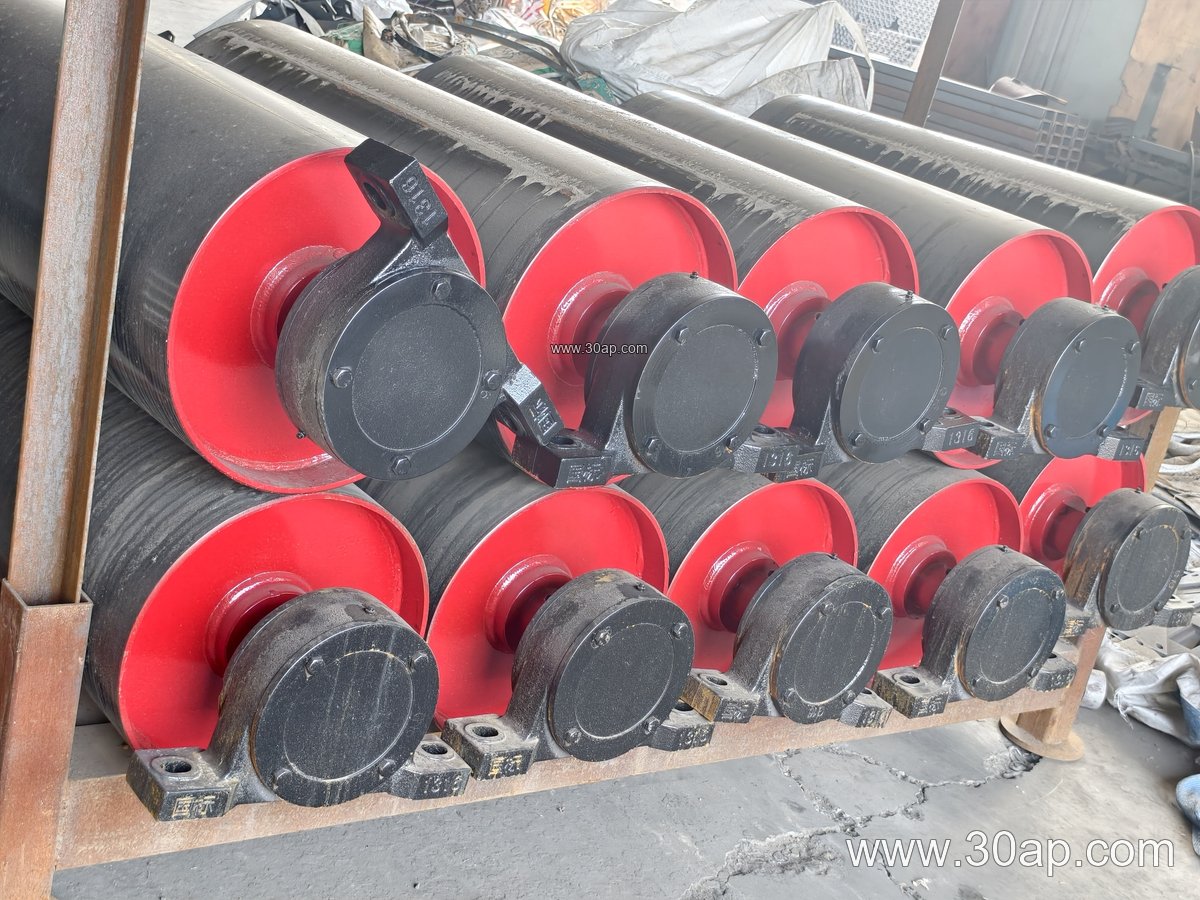
Construction Details That Matter in Coal Handling
Most units use a welded steel shell with dished or flat end plates, a through shaft or stub shafts, and bearing housings mounted on a sturdy frame. The shell is machined to keep the belt tracking straight, and the surface may be plain, rubber lagged, or ceramic lagged depending on grip and wear. Lagging thickness is often 8, 10, 12, 15, or 20 mm, and the pattern can be plain, diamond, herringbone, or ceramic. In a power plant, diamond lagging is common on drive pulleys where coal dust reduces friction.
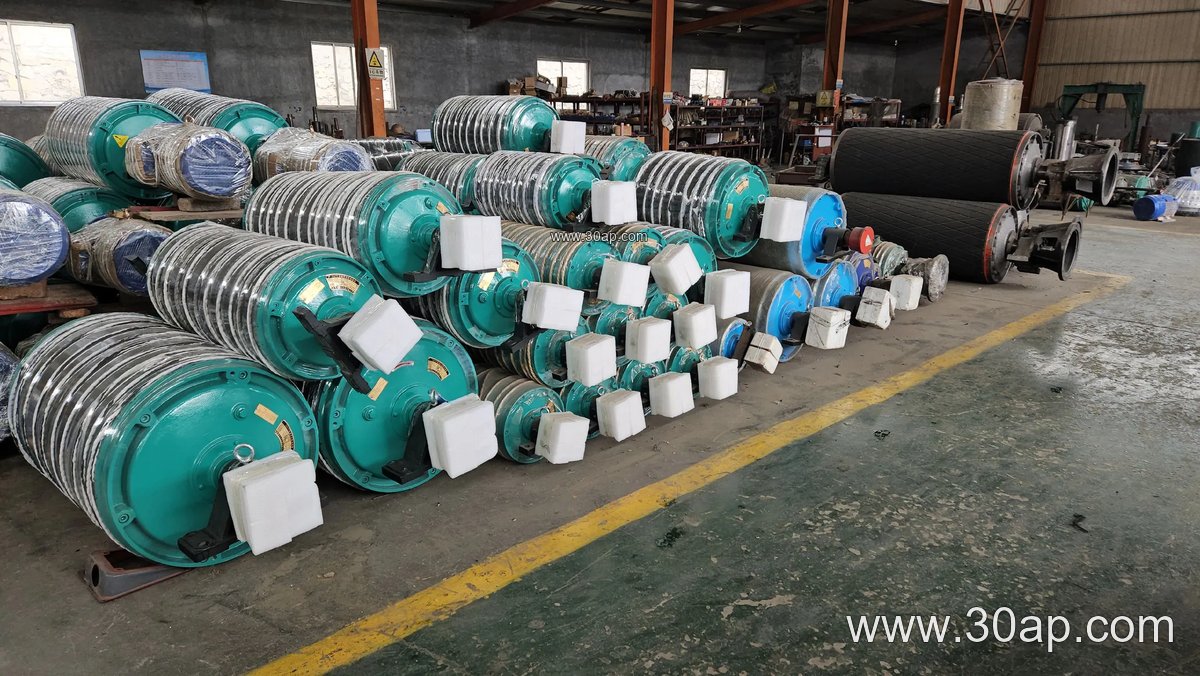
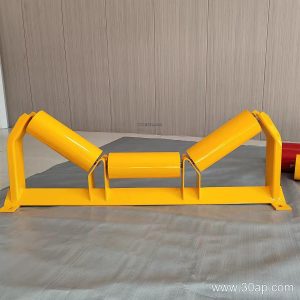
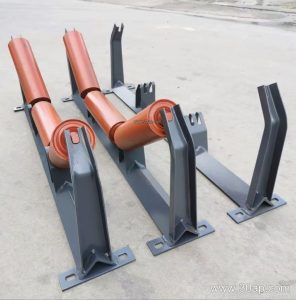
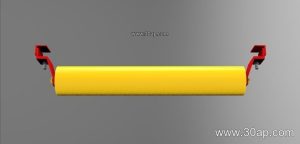
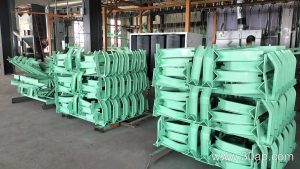
The conveyor bracket that carries the bearing housing should be checked together with the pulley, because misalignment there causes edge wear on the belt and premature bearing failure. A conveyor pulley that is well built but poorly supported will not last, and the belt will drift toward one side of the idler roller frame.
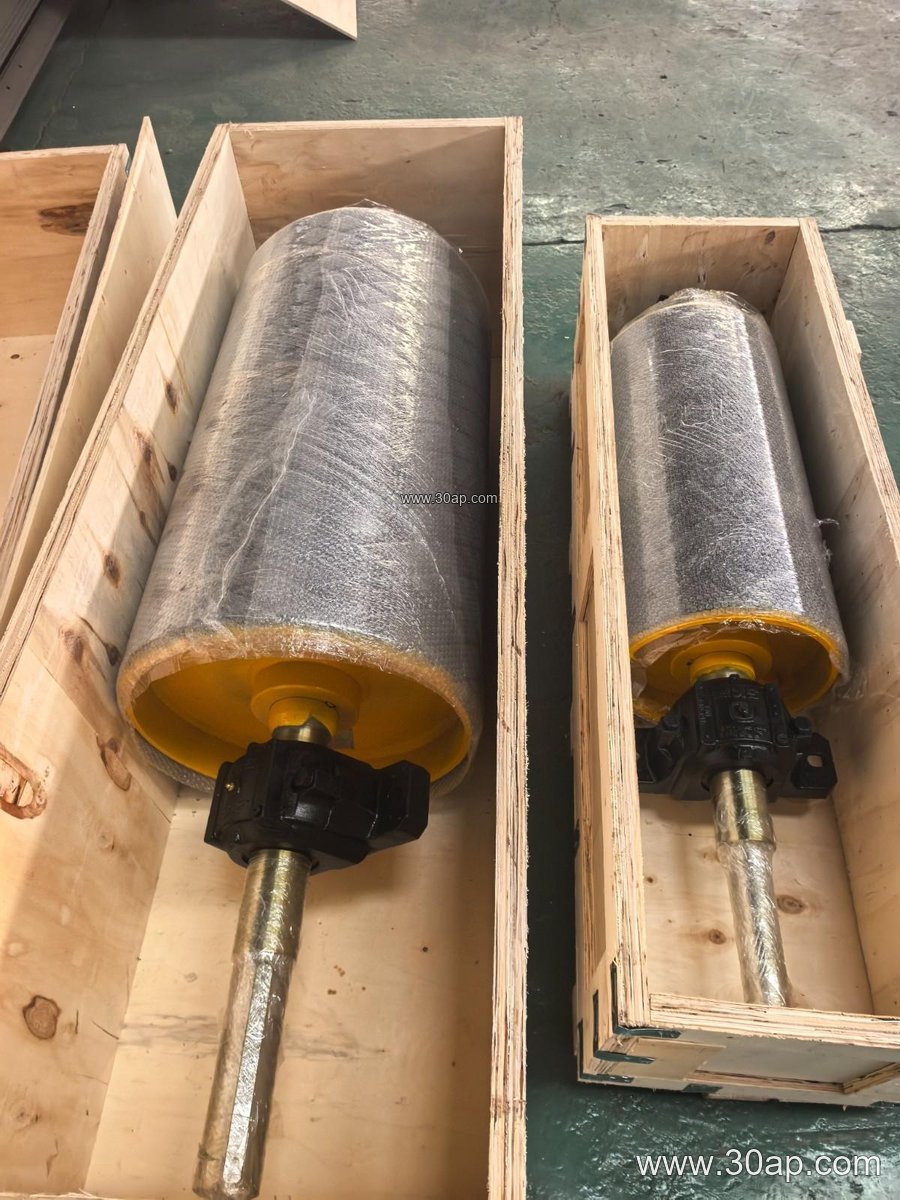
Common Sizes and Surface Options
Belt width and pulley diameter are chosen together with the conveyor design, not by a fixed rule. The drum face is usually wider than the belt, and the shaft diameter is set by torque and load rather than by belt width alone. The table below gives reference combinations that appear in plant specifications.
| Belt width | Typical pulley face | Common diameter | Typical lagging |
|---|---|---|---|
| B800 | about 950 mm | Ø500 | 10 mm diamond rubber |
| B1000 | about 1150 mm | Ø630 | 12 mm diamond rubber |
| B1200 | about 1400 mm | Ø800 to Ø1000 | 12 to 15 mm rubber or ceramic |
| B1400 | about 1600 mm | Ø800 to Ø1250 | 15 mm ceramic or rubber |
| B1600 | about 1800 mm | Ø1000 to Ø1400 | 15 to 20 mm ceramic |
Shaft sizes such as Ø100, Ø120, Ø140, Ø160, and Ø180 are common in medium and heavy drives, but the final value should come from the torque calculation. A B1200 × Ø1000 drive pulley and a B800 × Ø500 tail pulley are realistic pairings on the same conveyor line, showing that diameter changes with position and duty.
Matching the Pulley to the Belt and the Plant
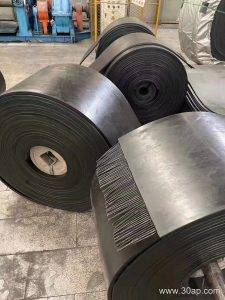
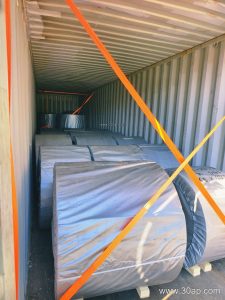
The belt itself affects pulley choice. A steel cord conveyor belt is stiff and needs a larger diameter to avoid excessive bending stress, while an EP conveyor belt or NN conveyor belt can run over smaller drums. A flame retardant conveyor belt is standard in coal handling for safety, and a heat resistant conveyor belt may be needed near hot ash or clinker. On steep inclines, a chevron conveyor belt or a corrugated sidewall conveyor belt changes the load pattern and should be reviewed with the pulley supplier.
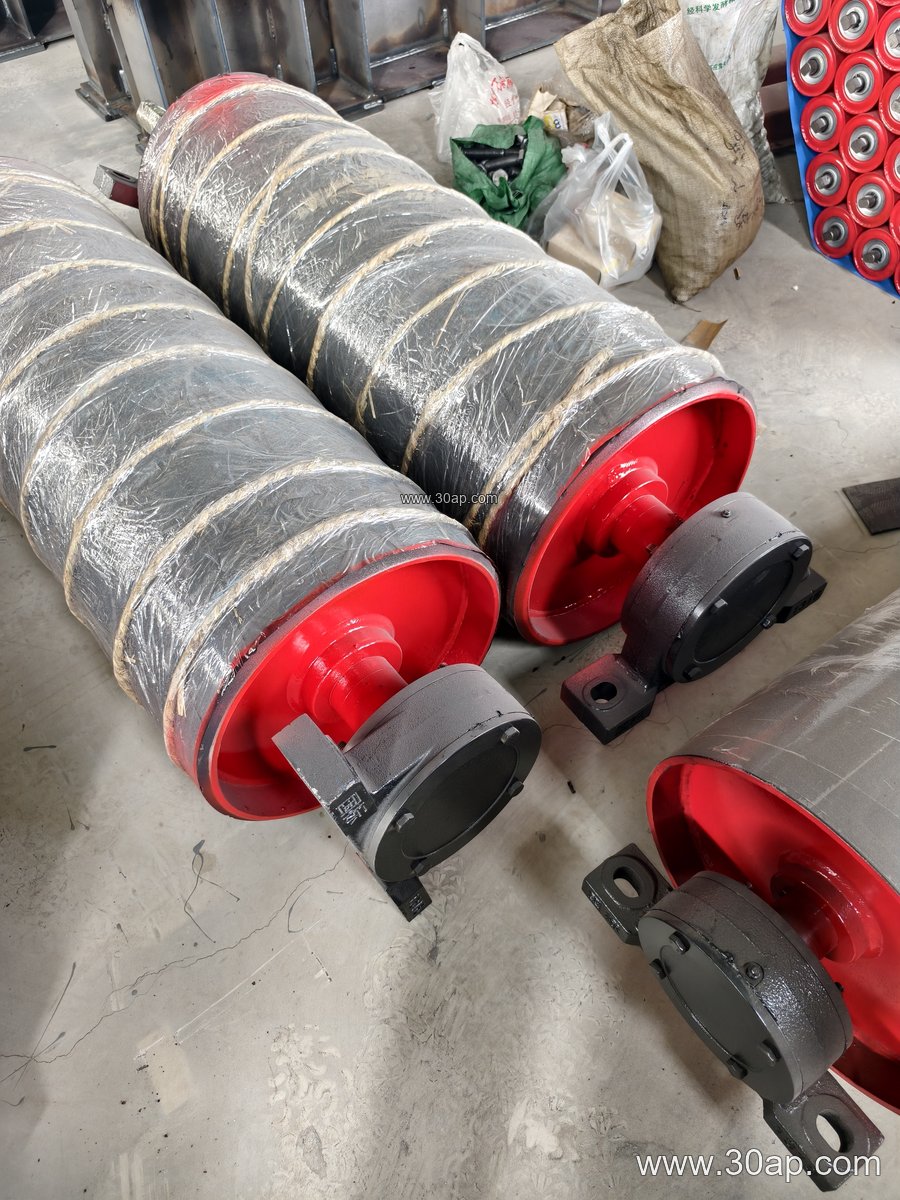
At a coal-fired plant, the drive pulley usually sits at the head end, the tail pulley at the loading point, and take-up or bend pulleys along the return strand. In a limestone or gypsum yard, the same arrangement applies, but abrasion may call for ceramic lagging and a high abrasion resistant conveyor belt. Port bulk terminals and ship loading conveyors often use wider belts, where a B1800 or B2000 pulley with a larger diameter is more suitable.
Buyer Checklist Before Ordering
- Confirm the pulley position: drive, tail, bend, take-up, or snub, and state it clearly in the inquiry.
- Provide belt width, belt type, and belt speed so the drum face and diameter can be reviewed together.
- Specify lagging pattern and thickness, plus the environment: coal dust, moisture, heat, or oil.
- Give the shaft diameter or the torque and radial load if the shaft is to be sized by the supplier.
- Check bearing type, housing, and conveyor bracket dimensions against the existing frame.
- Ask for balancing, runout, and surface finish details rather than assuming them.
A thermal power plant conveyor pulley is a long-life component when the diameter, lagging, shaft, and support frame are treated as one system. Reviewing belt type, drum position, and plant conditions together gives a more reliable result than choosing a drum by width alone.