What a Striped Lagged Pulley Does
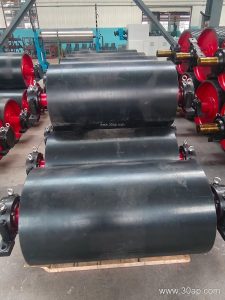
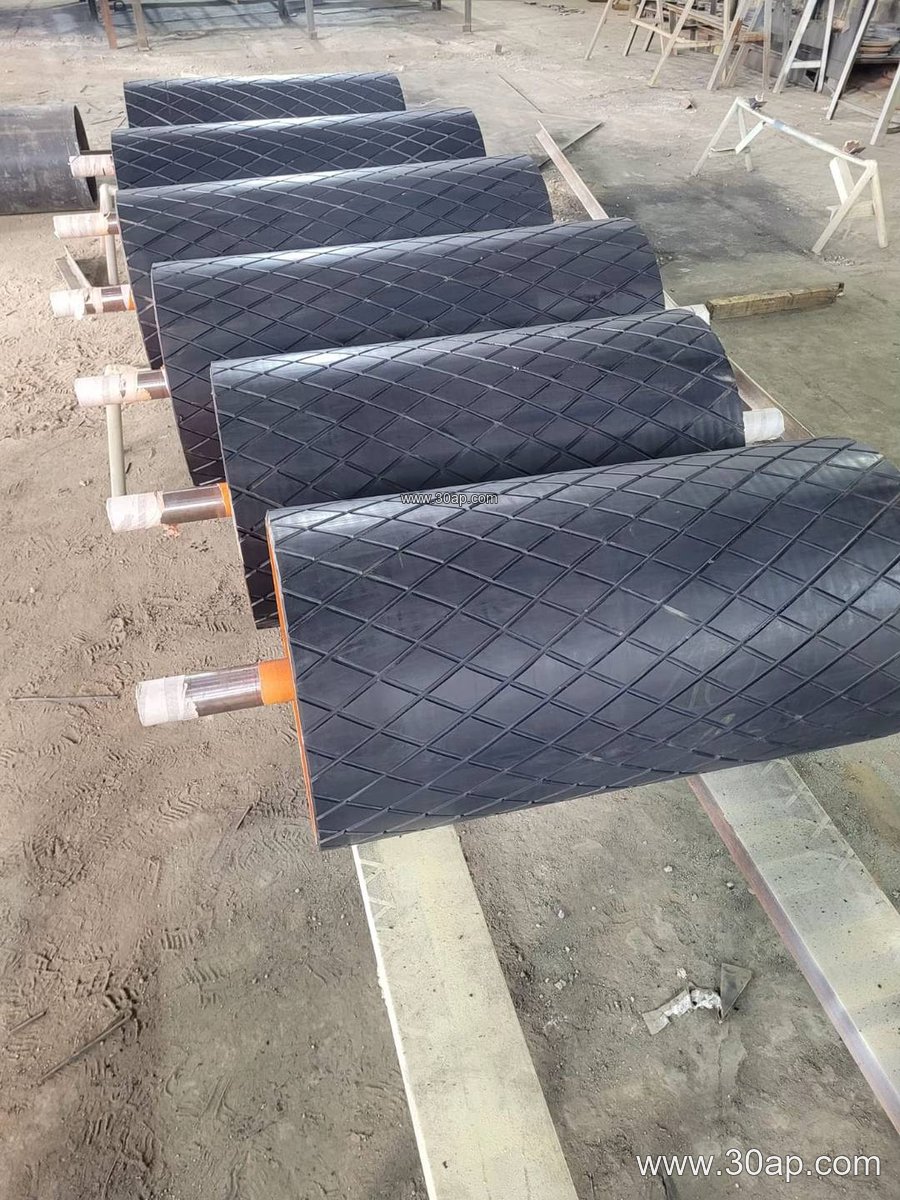
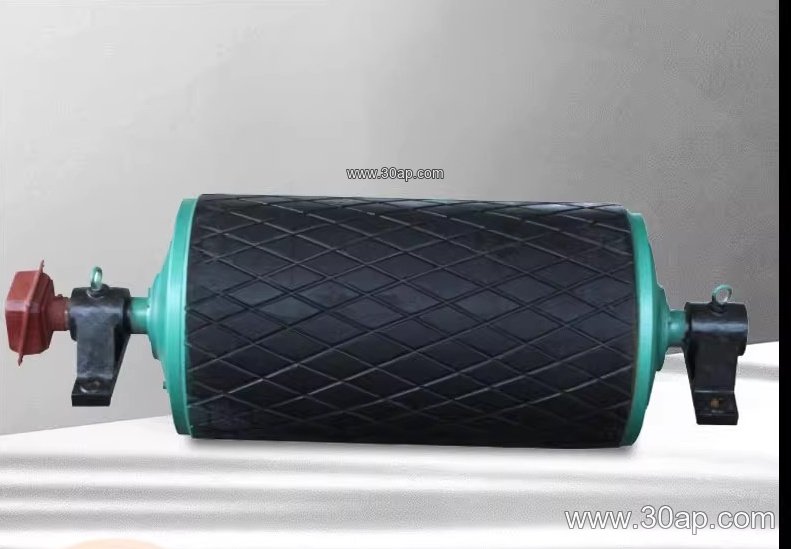
A striped lagged pulley is a conveyor pulley whose shell is covered with a rubber or ceramic lagging applied in a striped pattern. The raised ribs run across the face, usually in a herringbone or straight arrangement, leaving open channels between them. That pattern is the defining feature, and it separates the product from a plain smooth-drum conveyor pulley. The stripes improve friction between the drum and the belt while giving water, dust and fine slurry somewhere to escape instead of being trapped under the belt.
In practice the pulley is a welded steel shell with end discs, a shaft, hubs and bearing housings. Lagging is bonded to the shell, then the stripe profile is cut or molded. Stripe count, rib height, pitch and hardness are set by the application rather than by a single catalog rule. Buyers often describe the same item as a striped rubber lagged pulley or a grooved lagged drum, so the naming varies, but the product is the same.
How the Pattern Is Built
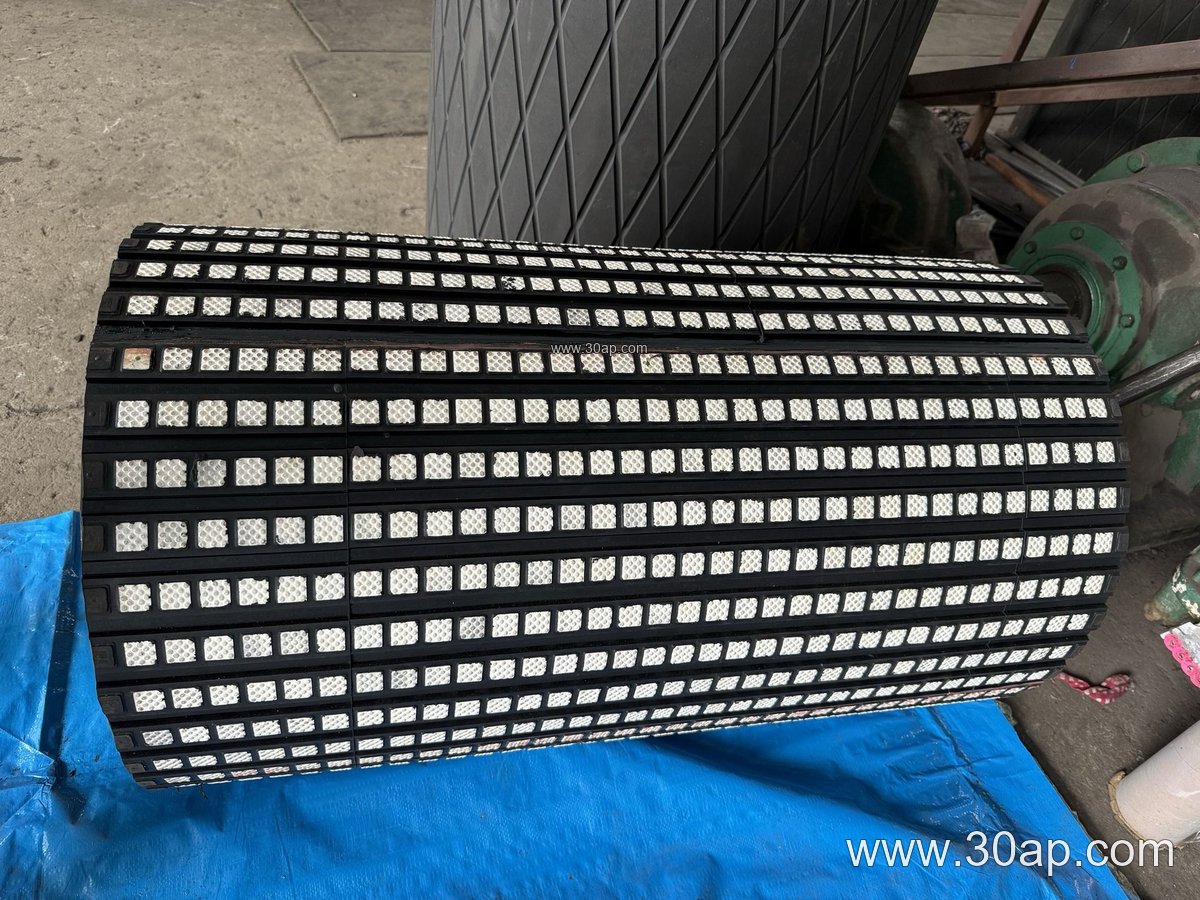
The shell is machined before lagging so the rubber sits flat and the finished diameter stays true. Common surface options include cold bonded rubber, hot vulcanized rubber and cast rubber, and ceramic tiles may be set into the rubber for very abrasive duty. Lagging thickness is frequently 8, 10, 12, 15 or 20 mm. Stripe geometry matters more than thickness alone: deep, widely spaced ribs clear debris well, while finer stripes give more uniform contact on a clean belt.
Balance and concentricity are checked after covering because an uneven lagged surface causes vibration and premature wear on the conveyor belt. The shaft diameter is chosen from torque and radial load, not from belt width. Typical shaft sizes run from Ø50 to Ø200, but the correct value depends on the drive calculation.
Where the Striped Surface Helps
Wet or dirty conditions are the natural home for this pulley. In a sand and gravel plant, a wash plant or a limestone quarry, the return side of the belt often carries moisture and grit. A striped lagged pulley sheds that material through the grooves rather than building a slippery film. The same logic applies at a coal preparation plant, a power station coal yard and a port bulk terminal handling damp cargo.
It is also useful at the head or drive position on medium-duty conveyors where slip is a concern. A tail or tension pulley may use the striped pattern to keep the belt centered during starting, though a bend pulley usually needs only a plain or lightly lagged face. Drive, tail and bend pulleys are not interchangeable, and each position should be specified separately. In a cement plant, a clinker conveyor may combine a heat resistant conveyor belt with a lagged drum that tolerates warm fines, while a crusher discharge line might pair an abrasion resistant conveyor belt with a heavier striped cover.
Matching the Pulley to the Belt
Face width is normally slightly greater than belt width. Reference combinations include B400 with roughly 500 mm face, B500 with about 600 mm, B650 with about 750 mm, B800 with about 950 mm, B1000 with about 1150 mm, B1200 with about 1400 mm, B1400 with about 1600 mm, B1600 with about 1800 mm, B1800 with about 2000 mm and B2000 with about 2200 mm. Diameter and width are independent choices: B1200 x Ø1000, B800 x Ø500 and B1400 x Ø800 are all plausible designs, and no single belt width locks the pulley to one diameter.
| Belt width | Typical pulley face | Common diameter range |
|---|---|---|
| B500 | about 600 mm | Ø200 to Ø400 |
| B650 | about 750 mm | Ø250 to Ø500 |
| B800 | about 950 mm | Ø315 to Ø630 |
| B1000 | about 1150 mm | Ø400 to Ø800 |
| B1200 | about 1400 mm | Ø500 to Ø1000 |
| B1400 | about 1600 mm | Ø630 to Ø1250 |
| B1600 | about 1800 mm | Ø800 to Ø1400 |
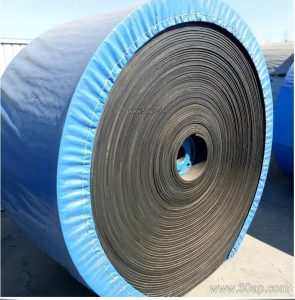
These figures are reference data, not verified universal specifications. A heavy-duty mining conveyor belt with high tension may call for a larger diameter and a thicker lagging than a light aggregate line using a 2-ply fabric core conveyor belt. Where the belt is an EP conveyor belt or an NN conveyor belt, check the recommended minimum pulley diameter from the belt maker, since carcass fatigue depends on it.
Selection and Maintenance Notes
- Confirm the position: head, drive, tail, tension or snub. Each has different traction and wrap requirements.
- State the material: wet fines, sticky clay, hot clinker or oily scrap changes the lagging compound.
- Choose stripe depth and pitch to suit belt speed and the amount of carryback.
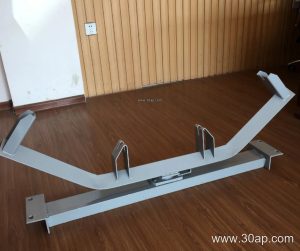
- Check that the conveyor bracket and bearing housing fit the existing frame before ordering.
- Inspect ribs for wear, cracking and debonding; worn stripes lose grip and allow the belt to wander.
- Keep the associated idler roller and skirt rubber in good order so debris does not reach the drum face.
A striped lagged pulley is a small part of the conveyor but a decisive one. Specified with the right face width, diameter, shaft and stripe pattern, it protects the belt, holds traction and keeps a dusty or wet line running straight.