What a Chevron Conveyor Belt Is
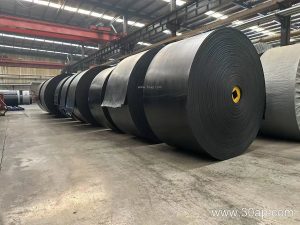
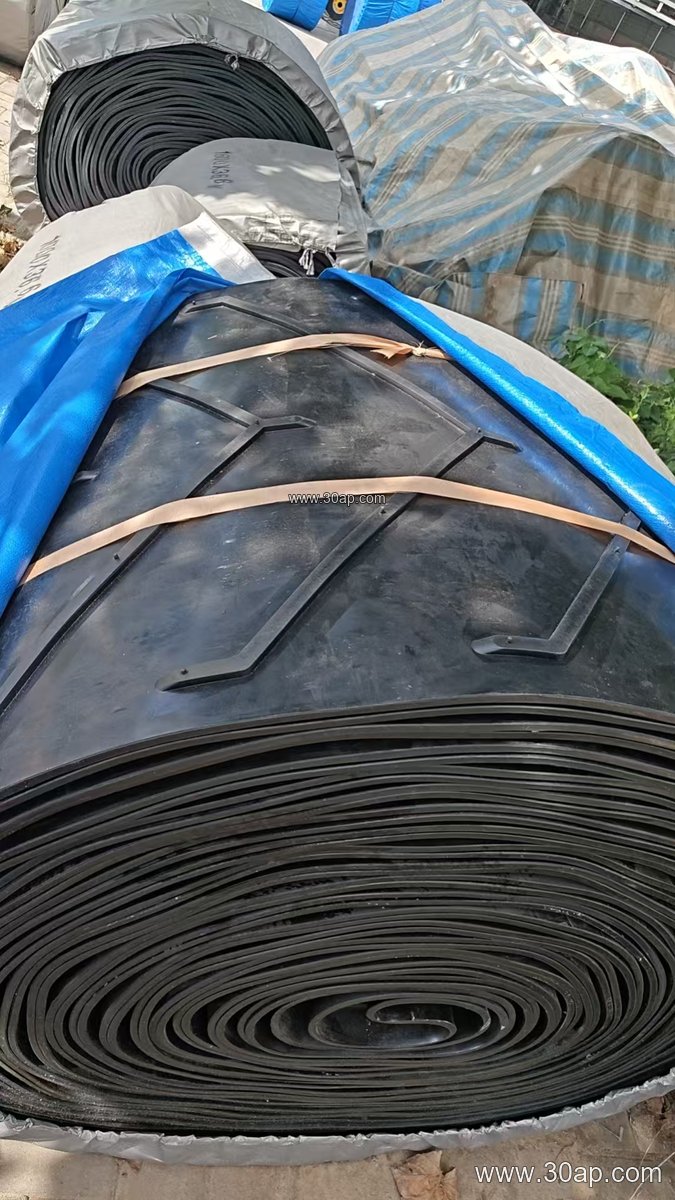
A Chevron Conveyor Belt is a rubber conveyor belt with raised pattern profiles molded onto the top cover. The pattern is usually a V shape, and the raised ribs help grip bulk material when the conveyor runs on an incline. Because the cleats sit above the cover surface, they reduce the tendency of loose material to slide back down the belt. This makes the belt a practical choice for stockpiles, crusher discharge lines, and inclined transfer points in mines, quarries, cement plants, and sand and gravel yards.
The same product is also called a chevron patterned conveyor belt or a V-profile belt. These are equivalent names for the same item; they are not different product families. In many plants it is simply ordered as a patterned rubber belt for inclined conveying.
How the Belt Is Built
The construction is similar to a standard fabric-reinforced belt, with one important addition: a molded chevron profile on the carrying side. A typical build includes:
- A top cover of abrasion resistant rubber, often with a chevron pattern
- A fabric core, commonly EP or NN, with 2 to 6 plies depending on load
- A bottom cover for pulley contact and protection
- Optional covers for heat, oil, flame, or cold service
The profile is usually molded rather than glued, so the ribs stay attached under repeated flexing. Pattern height and pitch vary by maker and by the material being carried. Open V, closed V, and interrupted chevron patterns are common; some designs leave a center channel to help the belt track and to allow material to settle.
Where It Fits in the Plant
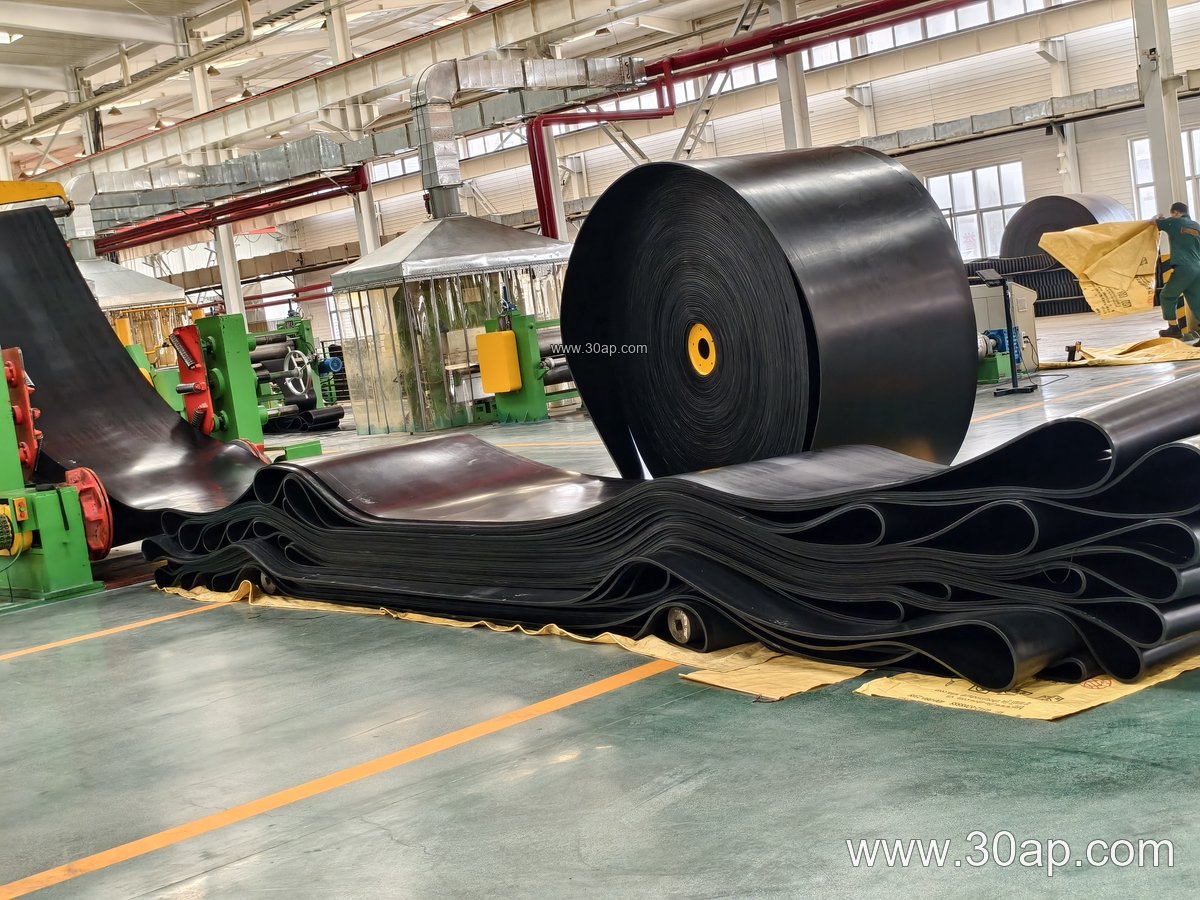
Inclined conveyors are common in mining, coal preparation, cement production, power plants, and aggregate processing. A Chevron Conveyor Belt suits those lines where the angle is too steep for a smooth belt and where material is loose, granular, or lumpy. It is frequently used after a crusher, on yard conveyors, and on ship loading or port transfer systems.
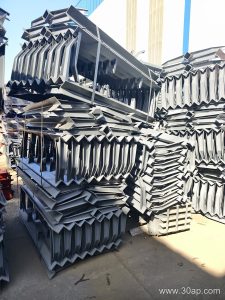
It is not a replacement for every belt type. Where a fully enclosed material path is required, a pipe conveyor belt may be considered; where a very steep, contained lift is needed, a corrugated sidewall belt with raised edges can be a better fit. Those are different designs with different jobs, and the chevron belt remains the subject here.
Typical Reference Data
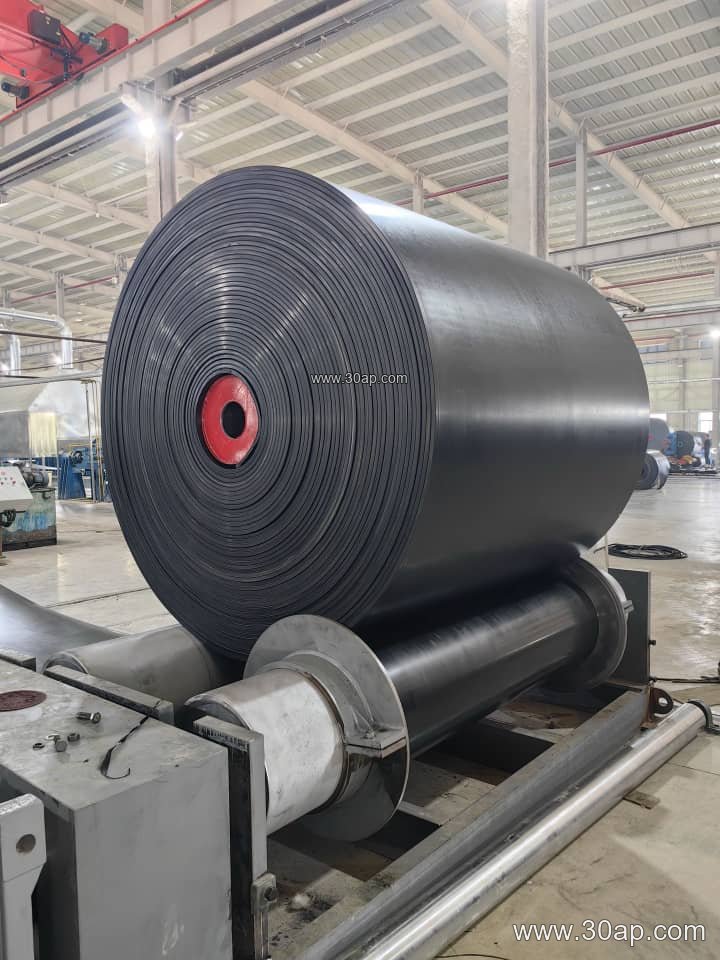
The values below are common reference ranges, not fixed supply promises. Actual construction follows the duty, the material, and the conveyor design.
| Item | Common reference |
|---|---|
| Belt width | B500, B650, B800, B1000, B1200, B1400, B1600 |
| Fabric core | EP or NN, 2 to 6 plies |
| Strength grades | EP200, EP400, EP630, EP800, EP1000, EP1250 |
| Cover thickness | 4+2 mm, 5+2 mm, 6+2 mm |
| Profile form | Open V, closed V, interrupted chevron |
For a heavy-duty mining conveyor belt, a higher-strength EP or steel cord carcass may be needed on the long straight runs, while the inclined section uses the patterned belt. Belt width and pulley diameter are matched by conveyor design, not by a single fixed rule.
Buyer Checklist
Before ordering, confirm the incline angle, the lump size, the material temperature, and whether oil, chemicals, or fines are present. A flame retardant conveyor belt or fire resistant conveyor belt grade is often specified for coal mining conveyor belt service underground. An abrasion resistant conveyor belt cover helps in quarry conveyor belt and crusher conveyor belt duty. Heat resistant conveyor belt covers suit cement plant conveyor belt and steel plant conveyor belt lines.
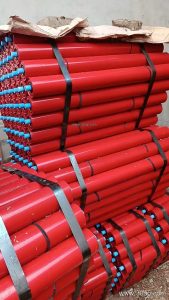
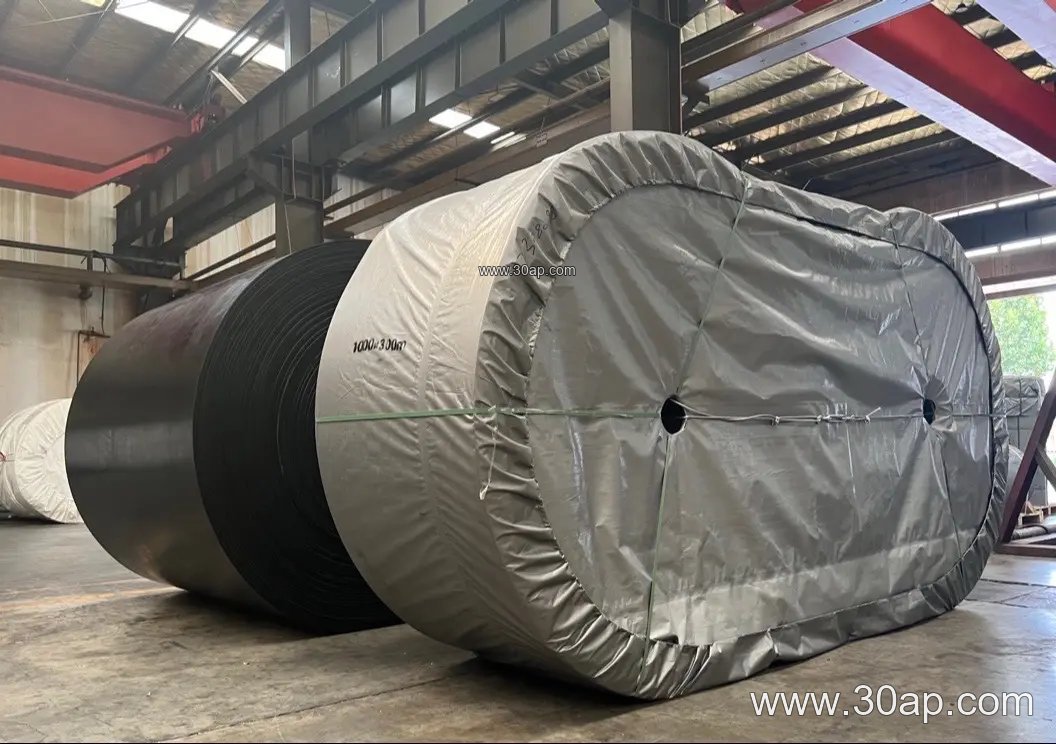
Also check the pulley diameters, the idler roller spacing, and the conveyor bracket condition. A worn conveyor pulley or misaligned idler roller can damage the chevron ribs quickly. The belt should be stored flat, kept away from sunlight and ozone, and spliced by a method suited to the pattern so the ribs stay continuous across the joint.
For matching belts, rollers, and drums, buyers can review options at www.beltconveyorparts.com and confirm the chevron profile, cover grade, and width before shipment.