What an HDPE Idler Is
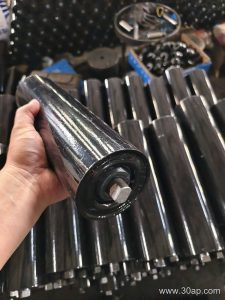
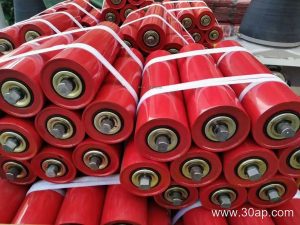
An HDPE idler is a conveyor idler roller whose shell or outer surface is made from high-density polyethylene. It sits under or over the conveyor belt and carries the moving belt and its load with low friction. In many layouts the roller is used as a carrying idler on the upper run or as a return idler on the lower run. The polymer surface gives it a different wear and material-handling profile than a steel-shelled roller, especially where sticky or wet bulk material tends to build up.
The term is often used alongside HDPE idler roller or polymer idler roller. In an installation you may also hear it called a plastic idler, but the material behind the name is HDPE. The idler itself is only one part of the line; the conveyor belt, conveyor pulley and conveyor bracket all have to be matched to the same duty.
How an HDPE Idler Is Built
Most HDPE idlers combine a metal shaft, bearing housings, sealed bearings and an HDPE shell or sleeve. The shell may be a thick-walled HDPE tube, while some designs use an HDPE roller body over a steel core. Sealing is important because fine dust from a quarry, cement plant or coal handling line will shorten bearing life if it gets inside.
Common bearing sizes include 6204, 6205, 6305, 6306, 6308 and 6310. These are matched to the shaft and load, not to one fixed roller diameter. Roller diameters for conveyor idlers commonly run from Ø63 mm up to Ø219 mm, and the choice depends on belt speed, load and the idler frame. An HDPE roller for a heavy-duty mining conveyor will usually be larger in diameter than one used on a light bulk handling line.
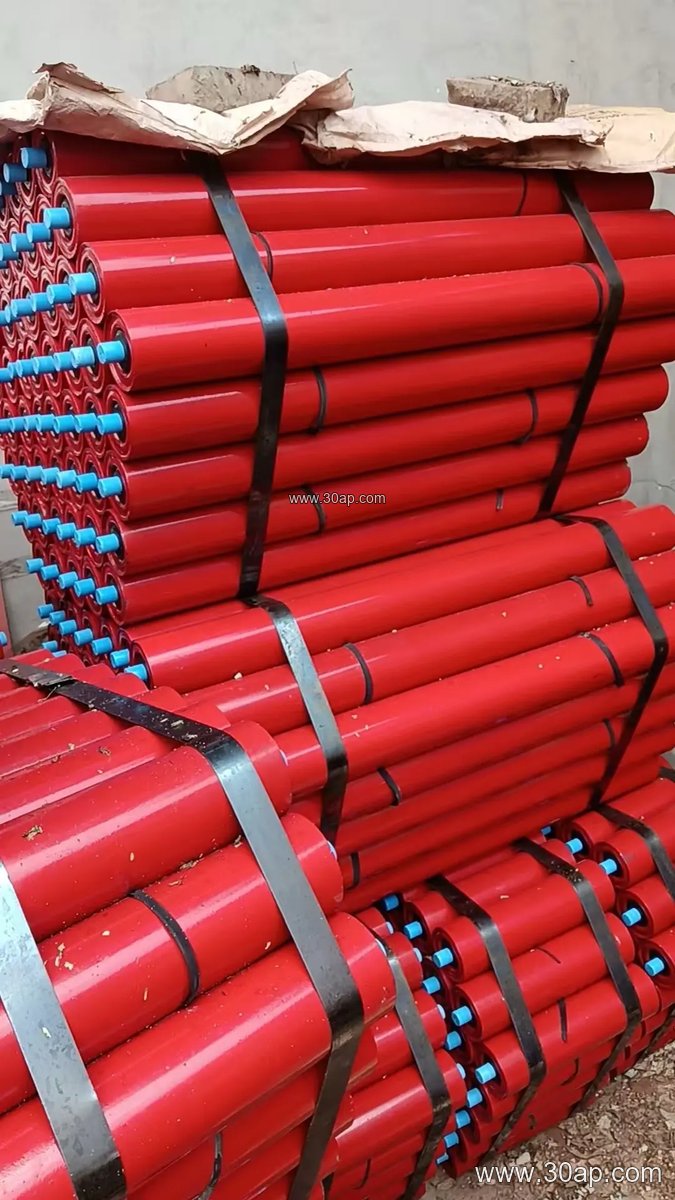
Typical reference values for HDPE idlers
| Parameter | Common reference range |
|---|---|
| Roller diameter | Ø63, Ø76, Ø89, Ø102, Ø108, Ø127, Ø133, Ø159, Ø178, Ø194, Ø219 mm |
| Belt width | B400, B500, B650, B800, B1000, B1200, B1400, B1600, B1800, B2000, B2200, B2400 |
| Bearing | 6204, 6205, 6305, 6306, 6308, 6310 |
| Trough angle | 20°, 30°, 35°, 45° |
| Idler set | single roll, two-roll, three-roll troughing |
These are reference values, not a fixed catalogue pairing. A B800 belt does not automatically call for one roller length or one shaft diameter; the trough angle, idler set form and frame design all change the result. For a three-roll troughing set, common roll lengths are around 200 mm for B500, 250 mm for B650, 315 mm for B800, 380 mm for B1000, 465 mm for B1200, 530 mm for B1400, 600 mm for B1600, 670 mm for B1800 and 750 mm for B2000. Side rolls and centre rolls can differ, so the set should be confirmed by design.
Where HDPE Idlers Fit in a Conveyor Line
HDPE idlers are often chosen for bulk material lines where the belt surface stays damp or where spillage is fine and abrasive. A sand and gravel plant, a limestone quarry or a cement plant may use them on carrying and return runs. In a coal handling system or power plant coal yard, the non-stick surface can help reduce material build-up on the roller. They are also seen in fertilizer and grain handling, where a smooth polymer surface is easier to keep clean than a bare steel shell.
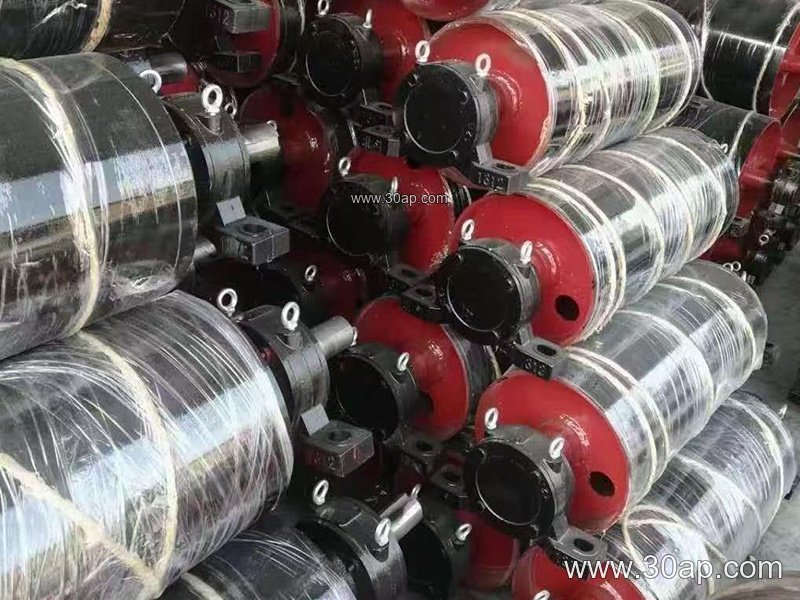
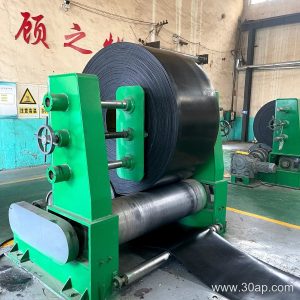
On the same conveyor, the drive pulley, tail pulley and bend pulley are separate components and are not interchangeable with an idler. The HDPE idler only supports the belt; it does not transmit drive torque. A conveyor pulley at the head end does that job, while the idler set keeps the belt in a stable trough. If the line carries a heavy-duty mining conveyor belt or an abrasion resistant conveyor belt, the idler should be selected for the same load and dust conditions.
Selection Points for Buyers
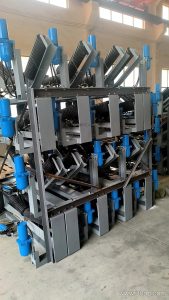
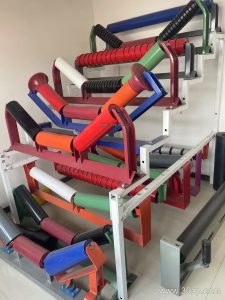
Start with the belt width and the idler set form. A three-roll troughing set with a 35° trough is common on bulk lines, while a 45° trough may suit a narrower belt handling a deep material bed. For the return run, a flat return idler or a V-return idler may be used, and a rubber-disc impact idler is a different item used at load points. None of these should be treated as a replacement for the HDPE carrying idler when the duty calls for polymer.
Check the shaft and bearing arrangement, the sealing method and the wall thickness of the HDPE shell. Ask for the roller diameter, roll length, bearing number and frame fixing dimensions in writing. On a long overland line or a high-lift conveyor, confirm that the selected idler is compatible with the belt tension and the conveyor bracket spacing. For a food grade conveyor belt or a heat resistant conveyor belt, confirm that the HDPE grade and the bearing lubricant suit the environment.
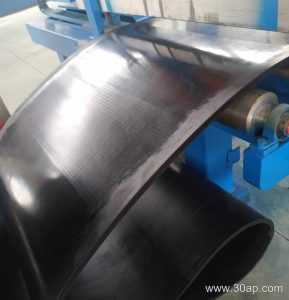
Finally, match the idler to the belt. A steel cord conveyor belt, an EP conveyor belt or an NN conveyor belt each has its own stiffness and tracking behaviour, so the same HDPE idler set may not suit every belt type. Buyers can find matching conveyor components, including idler roller options, at HDPE idler and related pages for conveyor belt and conveyor pulley selection.