What a Bend Pulley Does on a Conveyor
A bend pulley is a direction-changing roller that guides the conveyor belt around a turn without driving it. It is often confused with a drive pulley or a tail pulley, but these are not interchangeable: the drive pulley transmits power, the tail pulley returns the belt at the loading end, and the bend pulley simply redirects the belt path. In a typical conveyor layout, a bend pulley may sit near the take-up system, at a transfer point, or where the belt must wrap around an obstacle. In quarry and aggregate lines, it helps route the belt around crusher structures; in coal mining and underground coal mining conveyor systems, it keeps the belt aligned in tight galleries. Unlike an idler roller that supports the belt along its carry or return run, a bend pulley carries a significant wrap angle and must be built for sustained belt tension.
Construction and Surface Options
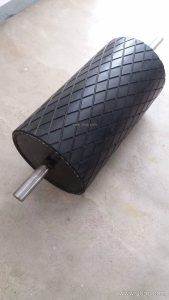
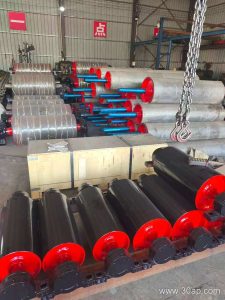
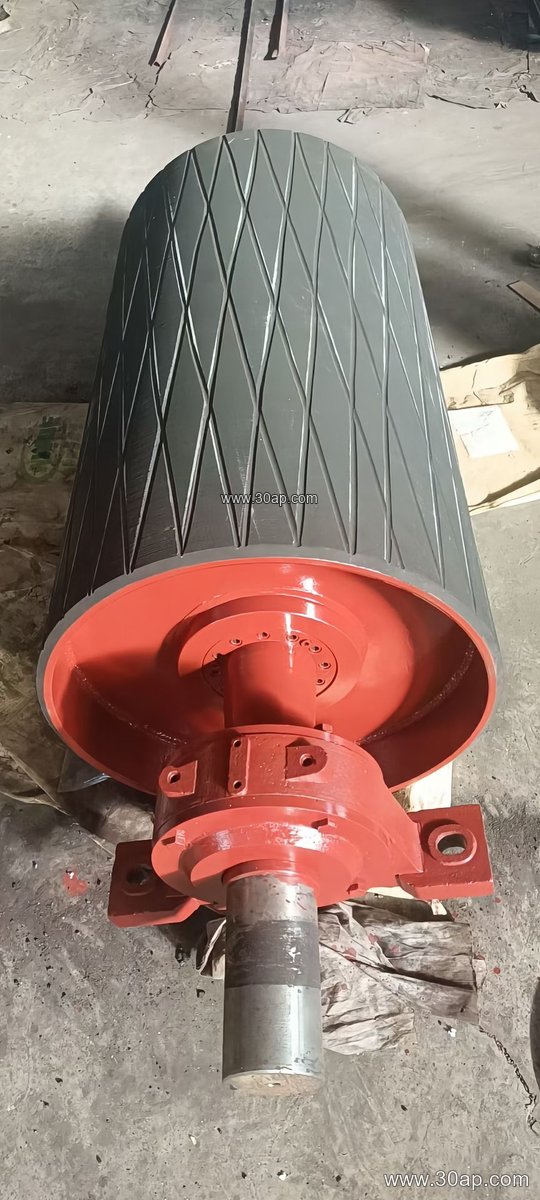
The core of a bend pulley is usually a welded steel drum with a shaft, bearing housings, and a lagged surface. Common surface forms include plain, cold-bonded rubber, hot-vulcanized rubber, diamond lagging, herringbone lagging, and ceramic lagging. Lagging thickness often ranges from 8 mm to 20 mm depending on the duty. For abrasive bulk material such as iron ore or copper ore, a rubber or ceramic lagging helps protect the shell and improve belt tracking. In dusty cement plant or power plant coal handling areas, plain or lightly lagged bend pulleys may be sufficient where belt slip is not a concern. The pulley face width is normally wider than the belt: for example, a B800 belt typically matches a pulley face around 950 mm, while a B1200 belt may use a face width near 1400 mm. Diameter and shaft size are not fixed by belt width alone; they are determined by torque, belt tension, and bearing load. A B1200 × Ø1000 bend pulley is a common combination in heavy-duty service, but a smaller diameter may suit a lighter conveyor with the same belt width.
Where It Fits in the Conveyor Layout
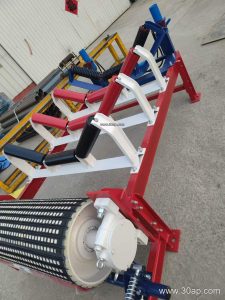
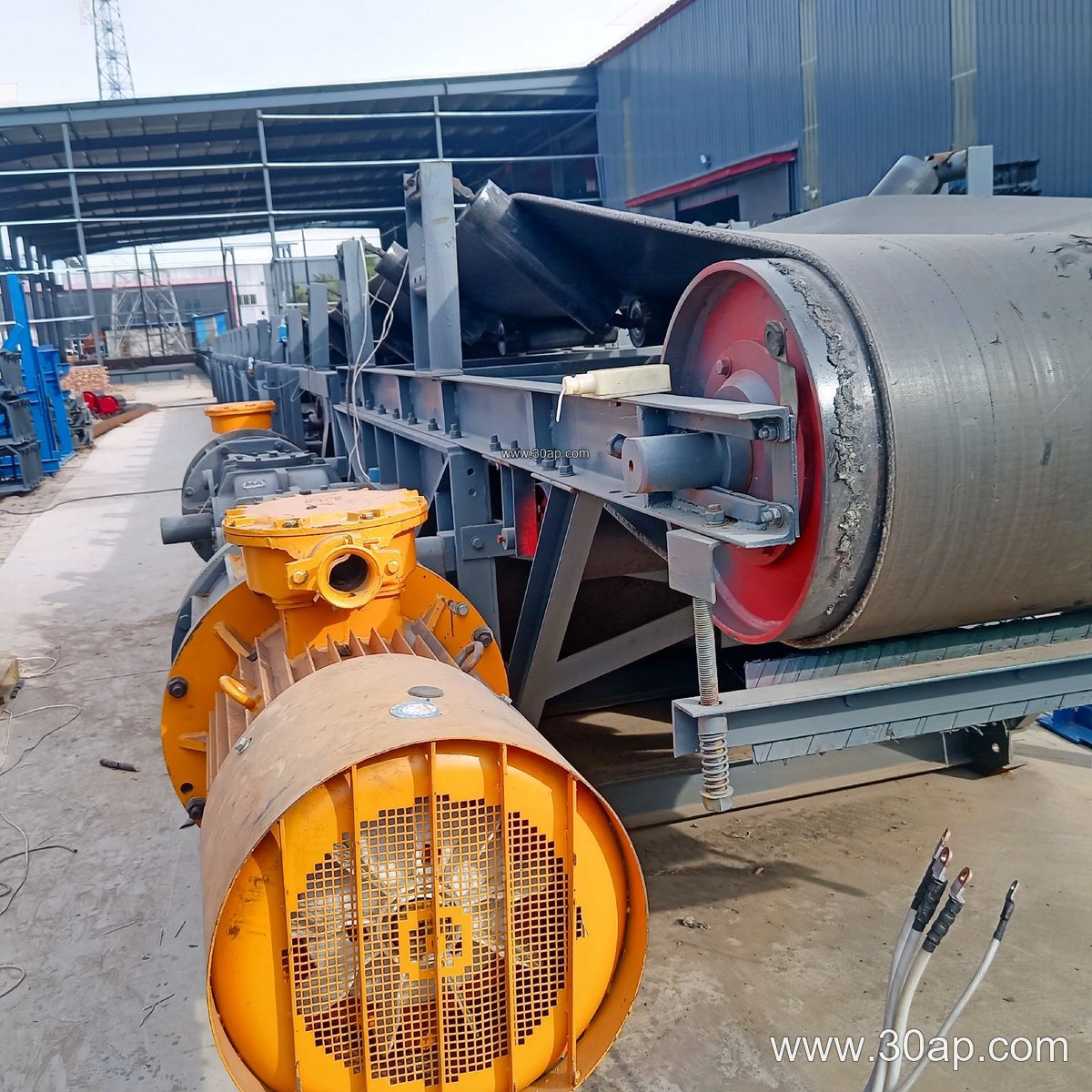
Bend pulleys appear in several positions. A take-up bend pulley works with a tensioning device to maintain belt slack. A snub pulley increases wrap angle on the drive pulley for better traction. A return bend pulley guides the empty belt back to the tail. In port bulk handling and ship loading conveyors, bend pulleys help route long belts through transfer towers. In stone crushing and sand making plants, they keep the belt clear of structural beams. The same component can be called a redirect pulley or angle pulley, but it remains a bend pulley—not a drive or tail pulley. When specifying, note the wrap angle and belt direction, because a bend pulley in a high-tension return run may need a larger shaft and heavier bearings than one in a low-tension position.
Selection and Maintenance Notes
Buyers should match the bend pulley to the conveyor belt type and service conditions. An abrasion resistant conveyor belt or a heavy-duty mining conveyor belt may require a lagged bend pulley to reduce wear and improve tracking. For heat resistant conveyor belt applications near kilns or sinter plants, choose a lagging compound that tolerates heat. A flame retardant conveyor belt used in underground mining does not automatically dictate the pulley surface, but fire safety practices may call for non-sparking or static-dissipative components. Check shaft diameter against actual torque and load, not just belt width. Common shaft sizes include Ø80, Ø100, Ø120, and Ø160 mm, but the final value comes from the conveyor design. During maintenance, inspect lagging wear, bearing condition, and alignment. A worn bend pulley can cause belt mistracking and edge damage, especially on long overland or quarry conveyor routes.
- Confirm belt width and pulley face width as a pair, not a fixed rule.
- Specify lagging type and thickness for the material being carried.
- Verify shaft and bearing capacity with the conveyor designer.
- Check that the bend pulley is not being used as a drive or tail pulley.
For more information on conveyor pulleys, idler rollers, and conveyor brackets, visit our site at www.example.com/conveyor-pulley or www.example.com/bend-pulley. Related equipment such as conveyor belt, idler roller, and conveyor bracket should be selected as part of the complete conveyor system, with the bend pulley sized to its specific redirect duty.