What a Ceramic Lagged Drive Pulley Does
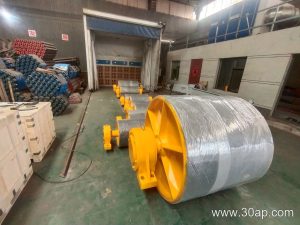
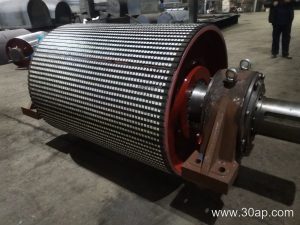
A ceramic lagged drive pulley is the power-transmitting drum at the head of a conveyor. Its lagging — a rubber or polymer layer studded with ceramic tiles — grips the conveyor belt so the drum can pull the loaded belt without slipping. In a quarry, limestone mine or cement clinker line, the drive pulley often works in wet, gritty conditions where plain rubber would polish and lose friction. The ceramic studs bite into the belt cover and channel water and fines away from the contact patch, which is why this surface form is chosen for high-torque, high-tension drives.
Do not confuse it with a tail pulley or a bend pulley. Those wheels guide and return the belt and carry little or no drive torque. A ceramic lagged drive pulley is specifically the driving drum, and its lagging is selected for grip, not just wear protection.
How the Lagging Is Built
The drum shell is usually a welded steel cylinder with machined end discs and a shaft sized by torque and bearing load, not by belt width alone. Lagging is applied in one of two common ways:
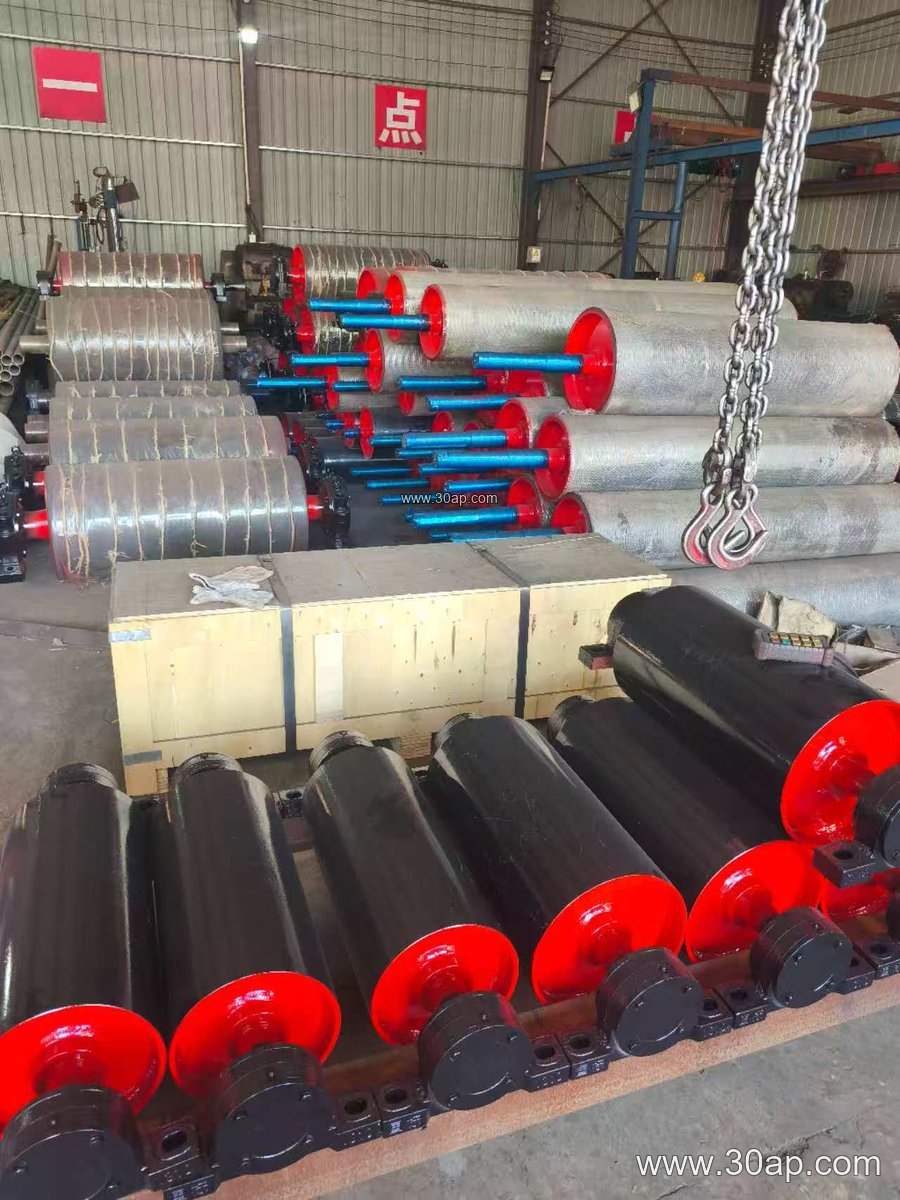
- Vulcanized rubber layer with embedded ceramic tiles, bonded under heat and pressure
- Ceramic tiles set into a rubber or polymer backing that is cold-bonded or hot-spliced to the shell
Tiles are commonly square or rectangular with raised profiles, set in a staggered pattern. Grooves between tiles let water, slurry and fine dust escape as the belt wraps the drum. Lagging thickness is often 8, 10, 12, 15 or 20 mm depending on duty; heavier drives in iron ore or copper ore plants tend toward thicker lagging and larger tile coverage.
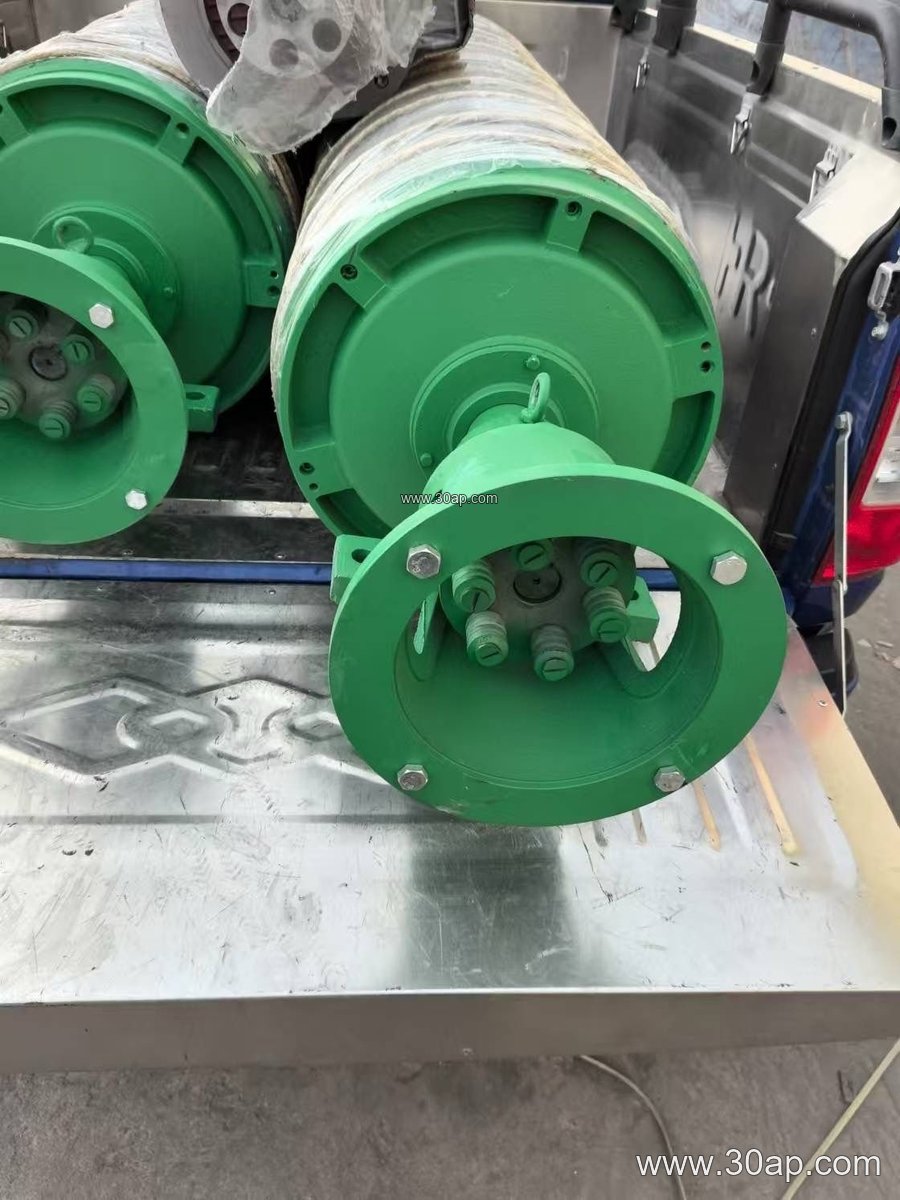
Sizes and Matching to the Belt
There is no single rule that ties one belt width to one drum diameter. A B800 conveyor might run a Ø500 drive pulley in a light aggregate line, while a B800 drum in a crusher discharge could be Ø630 or larger. Typical reference combinations include B800 × Ø500, B1200 × Ø1000 and B1400 × Ø800, but final diameter follows belt tension, wrap angle and shaft load.
Shell face width is normally a little wider than the belt, for example:
- B650 belt — about 750 mm face
- B1000 belt — about 1150 mm face
- B1400 belt — about 1600 mm face
- B1800 belt — about 2000 mm face
Shaft ends are commonly Ø80 to Ø200 on medium and large drums, again set by torque and bearing selection. Buyers should supply belt tension, belt speed, wrap angle and driven load so the supplier can size the shaft properly.
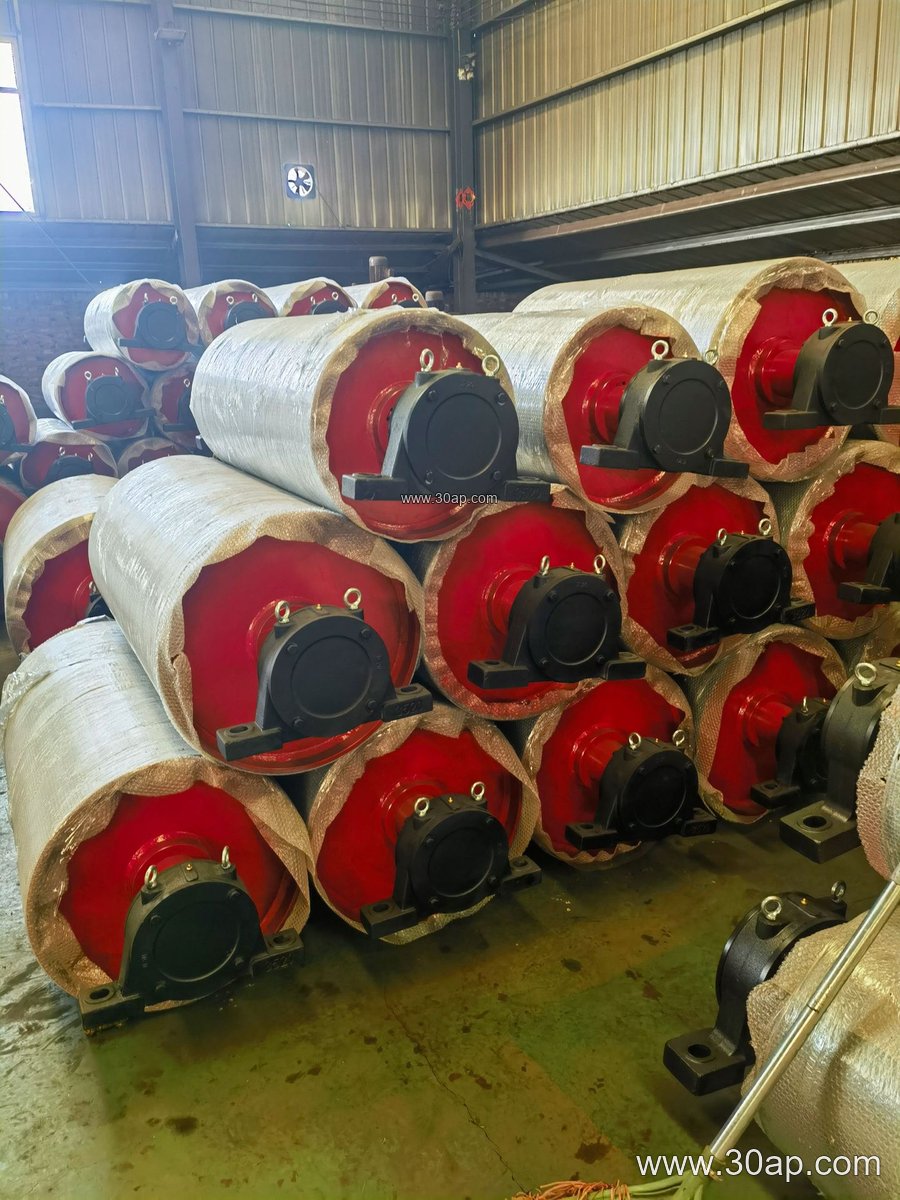
Where It Fits in the Plant
The most common home for this drum is the head drive of a main haulage conveyor. In a coal washing plant or power station coal yard, a ceramic lagged drive pulley on a flame retardant conveyor belt handles wet, dusty feed. In a sand and gravel pit, it drives an abrasion resistant conveyor belt carrying screened aggregate. In a cement plant it may sit behind a heat resistant conveyor belt on clinker duty, though heat is handled mainly by the belt cover, not the lagging.
It also suits long overland lines using steel cord conveyor belt, where high tension demands reliable friction, and pipe conveyor belt systems where the drive drum must hold grip without damaging the belt edge. A chevron conveyor belt or corrugated sidewall belt is usually not run over ceramic lagging because the cleats and walls cannot seat evenly on the studded surface.
Buyer Checklist
- Confirm the drum is a drive pulley, not a tail or bend pulley, and state its position in the conveyor.
- Give belt width, belt type and belt tension so lagging grip and shaft size can be checked.
- Specify lagging thickness, tile pattern and whether grooving is needed for wet duty.
- Ask how the lagging is bonded and whether tiles can be replaced in the field.
- Check that the conveyor bracket and bearing housing match the shaft diameter and drum face width.
- Plan inspection of tile wear and rubber undercutting; worn lagging reduces grip before the belt itself shows damage.
Used well, a ceramic lagged drive pulley extends the interval between belt slip problems and keeps the head drive pulling steadily in abrasive, wet or dusty service.